CDGA Engine
- Engine
- 1390 cm3
- Aspiration
- Turbocharging and Supercharger, Intercooler
- Fuel
- Petrol / CNG
- Fuel injection system
- Direct injection
- Power
- 150 hp @ 5500 rpm
- Torque
- 220 Nm
- Cylinders
- 4
- Valves
- 16, 4 per cylinder
- Cylinders position
- Inline
- Oil capacity
- 3.6 l
# Vehicles powered by this engine
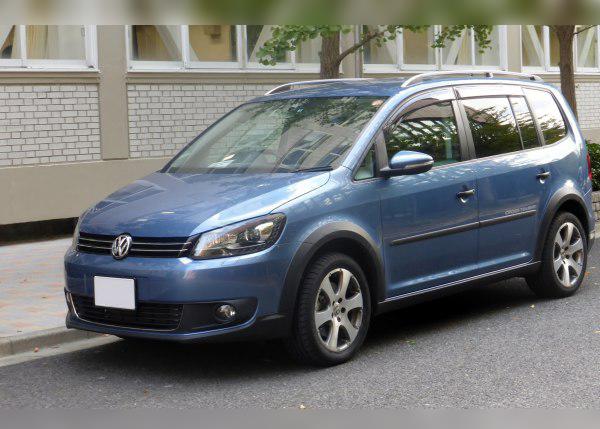
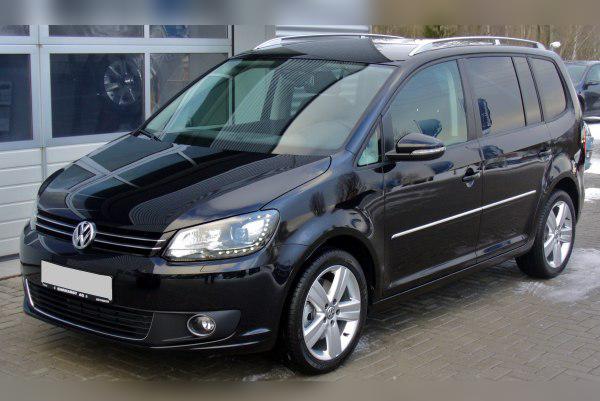
VW 1.4 TSI CDGA (EcoFuel) engine: Real-world experience, CNG issues, fuel consumption and used car buying guide
Key points (TL;DR)
- Factory CNG setup: This engine is primarily designed to run on compressed natural gas, with a small petrol tank as backup.
- Twincharger technology: It has both a turbocharger and a supercharger. Great performance, but complex and more expensive to maintain.
- Timing chain: The Achilles’ heel of this engine. Prone to stretching, needs to be checked at every service.
- Efficiency: Extremely cheap to run on CNG (significantly cheaper than diesel).
- Cylinder lifespan: On used cars you must check the condition and certification of the CNG cylinders (corrosion is a common issue).
- DSG gearbox: Often paired with the DQ200 gearbox, which requires specific care.
Contents
- Introduction and applications
- Technical specifications
- Reliability, maintenance and failures
- Specific parts and costs
- Fuel consumption and performance
- Additional options (LPG/Tuning)
- Gearboxes: Manual and DSG
- Buying used and conclusion
Introduction: A bridge between performance and eco-friendliness
The engine with the code CDGA belongs to Volkswagen’s EA111 family, but it is specific because it is factory-adapted to run on CNG (compressed natural gas/methane). It was mainly installed in the VW Touran and Passat models around 2010. This is not a simple conversion; the engine has reinforced valves, valve seats and pistons to withstand the higher combustion temperatures of methane.
What makes it interesting from an engineering standpoint, but also complicated, is the “Twincharger” system. To extract 150 horsepower from a small 1.4-liter displacement and cope with the weight of the Touran, VW combined a supercharger (for low revs) and a turbocharger (for higher revs). The result is linear power delivery, but also a very crowded engine bay full of hoses, sensors and valves.
Technical specifications
| Specification | Data |
|---|---|
| Engine displacement | 1390 ccm |
| Power | 110 kW (150 hp) |
| Torque | 220 Nm at 1500–4500 rpm |
| Engine code | CDGA |
| Injection type | Direct injection (TSI/TGI) |
| Forced induction | Twincharger: Turbo + Roots-type supercharger |
| Fuel | Petrol / CNG (methane) |
Reliability and maintenance
Chain or belt?
The CDGA engine uses a timing chain. This is a critical point of the whole EA111 generation. The chain is prone to stretching and the hydraulic tensioner can fail.
Symptoms: Metallic rattling on cold start that lasts a few seconds (or longer). If you hear the chain “grinding” when starting, that’s a sign for immediate replacement. Ignoring it can lead to the chain skipping teeth and catastrophic engine damage (pistons and valves “meeting”). Preventive replacement of the complete timing chain kit is recommended between 120,000 and 150,000 km, or earlier if you hear noise.
Oil and service intervals
This engine takes approximately 3.6 liters of oil. The recommended grade is 5W-30 or 5W-40 (VW 502.00 or 504.00 standard). Due to the high thermal load when running on CNG and the presence of two chargers, oil changes should be done strictly every 10,000 km up to a maximum of 15,000 km.
Oil consumption: These engines are known to consume oil. Consumption up to 0.5 liters per 2,000–3,000 km is often considered “acceptable” by factory standards, but in practice, a sudden increase in oil consumption can indicate problems with piston rings or the turbocharger.
Spark plugs and ignition coils
CNG is harder to ignite than petrol and requires a perfect spark. Spark plugs need to be replaced more often than on pure petrol engines. The recommendation is to replace them every 30,000 to 45,000 km. Use only spark plugs designed for CNG (usually iridium). A faulty spark plug or coil will immediately trigger the “Check Engine” light and switch the engine to petrol.
Specific CNG system issues
The biggest problem on used cars are the steel CNG cylinders. On older models (including model year 2010), the cylinders were prone to corrosion because they are mounted under the vehicle. VW issued recalls to replace these cylinders.
Symptom: Visible corrosion at the technical inspection means the vehicle cannot be registered. Cylinder replacement is very expensive (often over 1500–2000 EUR, depending on the market). Also check the gas pressure regulator (vaporizer). If the engine struggles to switch to gas or jerks, the regulator is often the culprit.
Specific parts (costs)
Dual-mass flywheel
Yes, this engine in the Touran (both with manual and DSG gearboxes) uses a dual-mass flywheel. Its role is to dampen engine vibrations. On DSG models, a failing flywheel manifests as rattling at idle (as if “nuts are cracking” inside the gearbox). Replacement is expensive.
Turbo and supercharger (Twincharger system)
This is the most complex part. You have a supercharger that works from idle up to about 2400–3000 rpm, and a turbocharger that takes over at higher revs.
Problem: The magnetic clutch on the water pump often fails. The water pump on this engine has an integrated clutch that engages/disengages the supercharger. If you hear a squealing noise or the car lacks low-end power, the problem is often in this water pump assembly (which is more expensive than a regular one). The turbocharger itself is generally durable, but sensitive to poor-quality oil and shutting the engine off when it is very hot.
Fuel injection system
The CDGA uses direct petrol injection. The injectors are generally reliable, but they are sensitive to carbon buildup on the intake valves, which is a common drawback of all direct-injection engines. Occasional intake cleaning may be necessary at higher mileages.
DPF, EGR and AdBlue
Good news: This engine DOES NOT have a DPF filter (that’s for diesels) and DOES NOT have an AdBlue system. It does have a catalytic converter specific to CNG. EGR function is often achieved through variable valve timing (internal EGR), so there is no classic EGR valve that clogs with soot like on diesels, which is a big advantage for city driving.
Fuel consumption and performance
Is the engine “lazy”?
Absolutely not. Thanks to the supercharger, the engine pulls strongly right from idle, with no “turbo lag”. 150 hp and 220 Nm are more than enough to move a Touran even when fully loaded. The driving feel is similar to a 2.0-liter engine.
Real-world fuel consumption
This is where the CDGA shines. CNG consumption is measured in kilograms (kg).
City driving: Expect around 5.5 to 6.5 kg of CNG per 100 km.
Highway / open road: It can go down to 3.8 to 4.5 kg per 100 km with moderate driving.
If you drive on petrol (when you run out of gas), consumption is significantly higher: 8 to 10 liters in the city. That’s why this car is meant to be driven primarily on CNG.
Motorway driving
At 130 km/h the engine is quiet and relaxed, usually spinning at around 2,800–3,000 rpm (in 6th gear or 7th on the DSG). There is enough power reserve for overtaking without needing to switch to petrol.
Additional options and modifications
Installing LPG on a CNG engine?
It makes no sense and is technically complicated. This car already has two fuel systems (petrol + CNG). Installing a third one (LPG) would require removing the CNG cylinders (which are heavy and integrated into the chassis) to free up space, plus reprogramming a complex ECU. Driving on CNG is already as cheap or cheaper than LPG, so this is simply not done.
Remapping (Stage 1)
This engine can be tuned via software to around 170–180 hp. However, it is not recommended. Reasons:
1. Pistons on 1.4 Twincharger engines are known to be fragile and can crack under increased pressure.
2. The DSG gearbox (DQ200) has a torque limit of 250 Nm. A remap would likely exceed that limit and drastically shorten the gearbox’s lifespan.
The stock 150 hp is the sweet spot for the durability of this setup.
Gearboxes: Manual and DSG
Options
- Manual (6-speed): Precise and robust. Requires regular clutch and flywheel replacement, but is cheaper to maintain. Gearbox oil change is recommended every 60,000 km even though VW claims it is “lifetime”.
- DSG (7-speed, code DQ200): This is a gearbox with “dry” clutches.
DSG DQ200 issues
This gearbox is quick and comfortable, but has a bad reputation for reliability in the early years.
Failures: Wear of the clutch pack (symptoms: slipping, shuddering when taking off) and failure of the mechatronics unit (the gearbox “brain”). Mechatronics repair is expensive (very expensive, depending on the market).
The oil in the gearbox itself (gears) and in the mechatronics hydraulics are separate systems. Even though it is “dry”, inspection and servicing every 60,000 km at a specialist for automatic gearboxes is recommended.
Buying used and conclusion
Before buying a Touran with the CDGA engine, make sure to check:
- Cylinder certification and condition: Ask for documentation showing when the cylinders were replaced or certified. Look under the car to see if the cylinder covers are damaged.
- Cold start: The engine must be completely cold. Listen to the chain. If it rattles for more than 2–3 seconds, walk away or significantly lower the price to cover chain replacement.
- Operation on both fuels: Check whether the car switches smoothly from petrol to CNG. If it jerks or refuses to run on CNG, the pressure regulator is likely faulty.
- Water pump: Listen for squealing noises when blipping the throttle at idle (the supercharger sound should be smooth, not intermittent with scraping from the clutch).
Conclusion:
The 1.4 TSI CDGA is a technological gem that offers incredibly cheap running costs with excellent performance. It is ideal for taxi drivers or families who cover a lot of mileage. However, it is not for those who want a “drive and forget” car with no maintenance. The savings on fuel can easily evaporate if you are hit with timing chain, cylinder or DSG failures. Only buy a car with a fully documented service history and proof that the cylinders have been replaced.
Was this content useful to you?
Your opinion helps us to improve the quality of the content.