CFJB Engine
- Engine
- 1968 cm3
- Aspiration
- Turbocharger, Intercooler
- Fuel
- Diesel
- Fuel injection system
- Diesel Commonrail
- Power
- 177 hp @ 4200 rpm
- Torque
- 380 Nm
- Cylinders
- 4
- Valves
- 16, 4 per cylinder
- Cylinders position
- Inline
- Oil capacity
- 4.3 l
- Systems
- Particulate filter
# Vehicles powered by this engine
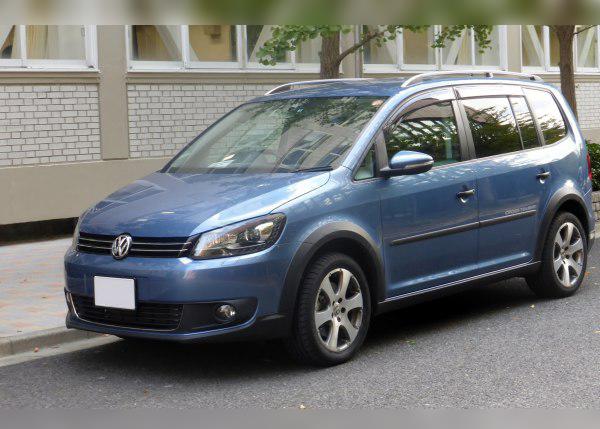
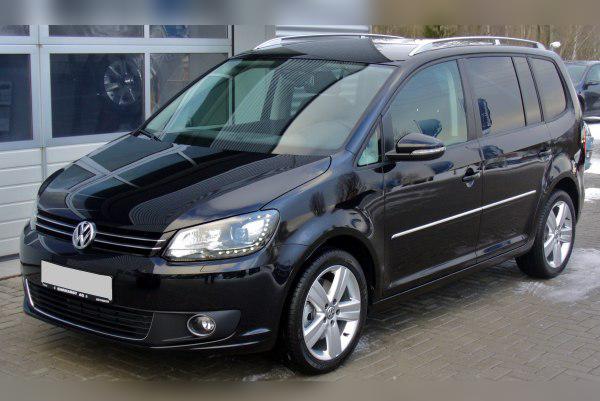
VW 2.0 TDI CR (CFJB) 177 HP – Experiences, Problems, Fuel Consumption and Maintenance
Key points in short (TL;DR)
- Power and Purpose: The most powerful diesel version in the Touran of that generation (177 HP). Excellent for overtaking and driving under full load.
- Gearbox: Almost exclusively paired with the DSG automatic gearbox (DQ250). Requires regular oil changes every 60,000 km.
- Timing service: The engine uses a timing belt. It is recommended to shorten the factory interval to around 160,000–180,000 km.
- Weak points: EGR valve, water pump (leaks), DPF filter in city driving and potentially the dual-mass flywheel.
- Fuel consumption: Economical on the open road (around 6L), but in the city, with the heavy Touran body, it can go up to 8.5L.
- Recommendation: An ideal family cruiser, but avoid cars with a suspicious DSG maintenance history.
Contents
Introduction and Overview
The engine with the code CFJB represents the very top of the diesel range for the first-generation Volkswagen Touran (facelift, known as 1T3). It is a two-liter Common Rail diesel engine that delivers 177 horsepower. It was installed towards the very end of this generation’s production cycle (typically 2010–2015), which means that many of the “childhood diseases” of earlier 2.0 TDI engines (such as those with PD injection) have been resolved here.
This engine is aimed at drivers who do not want to compromise between MPV practicality and performance. With 380 Nm of torque, this is a unit that does not struggle even when the car is fully loaded with passengers and luggage, or when towing a trailer. However, higher power and complexity also bring certain demands in terms of maintenance.
Technical Specifications
| Characteristic | Data |
|---|---|
| Engine code | CFJB (EA189 generation) |
| Displacement | 1968 cc (2.0 L) |
| Power | 130 kW (177 HP) |
| Torque | 380 Nm at 1750–2500 rpm |
| Fuel type | Diesel |
| Injection system | Common Rail (Direct injection) |
| Charging | Turbocharger (VGT) + Intercooler |
| Emission standard | Euro 5 |
Reliability and Maintenance
Timing belt or chain?
The CFJB engine uses a timing belt for the valvetrain. This is good news because the system is quieter and generally more predictable than some of the problematic chains from VW Group of that era. However, a snapped belt leads to catastrophic engine failure (pistons hitting valves), so regular replacement is imperative.
Major timing service
For newer CR engines, the factory often states optimistic intervals of 210,000 km. However, any experienced mechanic will tell you that this is too long. The recommendation is to do the major timing service at a maximum of 160,000–180,000 km or every 5 to 6 years, whichever comes first. During the timing service, the water pump must also be replaced, as it is a known weak point (it can start leaking or seize).
Oil and oil consumption
This engine takes approximately 4.3 liters of engine oil. You must use fully synthetic oil of grade 5W-30 that meets the strict VW standard 507.00 (especially because of the DPF filter). As for oil consumption, TDI engines are known for “liking to drink” a bit of oil.
Consumption of around 0.5 liters per 3,000–5,000 km can be considered acceptable, especially if driven more aggressively. If the engine uses a liter per 1,000 km, it is a sign that the piston rings are worn or the turbocharger is letting oil through. Regularly check the level on the dipstick.
Injectors and common failures
The injectors on the CFJB engine are of the Common Rail type (usually Bosch solenoid or piezo, depending on the series). They are significantly more durable than the old Siemens injectors on PD engines. They can last well over 250,000 km with good-quality fuel. Symptoms of bad injectors are rough idle, increased smoke and harder starting.
Most common failures:
- EGR valve: Soot builds up and blocks the valve. The symptom is a “Check Engine” light and loss of power.
- EGR cooler: Often tends to leak, which leads to loss of coolant.
- High-pressure fuel pump (CP4): Although less often than on the first series, the Bosch CP4 pump can “self-destruct” and send metal shavings through the entire fuel system if poor diesel is used or the car is frequently driven on reserve. This is a very expensive repair (depends on the market).
Specific Parts (Costs)
Dual-mass flywheel
Yes, this engine uses a dual-mass flywheel. Given the high torque of 380 Nm, it is under heavy load. On models with a DSG gearbox, the flywheel is specific and serves to absorb vibrations before they reach the gearbox. Symptoms of failure are metallic knocking at idle (especially when cold) and vibrations when switching the engine off. Replacement is not cheap (depends on the market).
Turbocharger
The engine uses a single VGT turbocharger (variable geometry). Its service life is long (over 200,000 km) if the rules are followed: regular oil changes and letting the engine idle to cool down after fast driving. Symptoms of failure are whistling, blue smoke from the exhaust or the engine going into “safe mode” at higher speeds (due to clogged geometry).
DPF and AdBlue
The CFJB engine in the Touran (Euro 5 standard) has a DPF filter. The DPF often clogs if the car is driven exclusively in the city on short trips where it cannot reach the temperature needed for regeneration. The solution is occasional driving on the open road.
As for the AdBlue system: Most Touran models with this engine (up to 2015) do not have an AdBlue (SCR) system, and rely only on the DPF and EGR to meet Euro 5 standards. This is an advantage because you have one less system to maintain (no AdBlue fluid heaters, pumps, etc.). Still, always check by VIN, because there were specific “BlueTDI” variants for certain markets that could have SCR.
Fuel Consumption and Performance
City driving
Do not expect miracles. The Touran is heavy (boxy shape, poorer aerodynamics), and the engine is powerful. Realistic city fuel consumption is between 7.5 and 8.5 liters/100 km. If traffic is heavy and the A/C is on, it can reach 9 liters. The start-stop system can help a bit, but many drivers switch it off.
Open road (Highway)
This is where the engine shines. On the highway at 130 km/h, the engine runs at pleasantly low revs (thanks to the long 6th gear of the DSG), usually around 2,200–2,400 rpm. Fuel consumption then is around 5.5 to 6.5 liters/100 km. The engine is anything but “lazy”; on the contrary, in-gear acceleration from 80 to 120 km/h is strong and inspires confidence.
Additional Options and Modifications
Chiptuning (Remap)
This engine has huge potential. From the factory, it is “detuned” by software. A Stage 1 remap can safely raise power to around 205–210 HP and torque to over 420 Nm. However, be careful: although the engine can handle it, the extra torque puts more stress on the dual-mass flywheel and the clutches in the DSG gearbox. It is recommended to do the remap only with reputable tuners who also know how to adjust the gearbox software (DSG tune).
Gearbox
Manual vs Automatic
With the 177 HP engine in the Touran, you most often (almost always) get a 6-speed DSG automatic gearbox (code DQ250). This is a gearbox with “wet” clutches, which means the clutch packs are immersed in oil.
Gearbox maintenance and failures
Maintenance: Unlike the “dry” DSG (DQ200) used in lower-powered engines, the DQ250 requires a mandatory oil and filter change every 60,000 km. If this is not done, the mechatronics unit and clutches will fail.
Failures: The most common problem is the mechatronics unit (the brain of the gearbox), whose repair or replacement falls into the “very expensive” category. Symptoms are jerking when setting off, hesitation when shifting or thumps when shifting from P to D. The clutch pack also wears, but usually lasts over 200,000 km with regular oil changes.
Clutch replacement: In a DSG there is no traditional clutch pedal, but the clutch pack is replaced. This is an expensive job (depends on the market), but it is done rarely.
Buying Used and Conclusion
When buying a used Touran with the CFJB engine, it is crucial to focus on the DSG gearbox maintenance history. If there is no proof that the gearbox oil was changed on time, skip that car. Also, a cold start will tell you a lot about the condition of the flywheel and injectors. The engine must run smoothly immediately after starting, without metallic noises.
Conclusion: The VW 2.0 TDI (177 HP) in the Touran is a fantastic powertrain for those who need a family “bus” that goes like a sedan. Although maintenance is more expensive than on the weaker 1.6 TDI (because of the DSG, larger oil quantity, more expensive tires and registration), the difference in driving is dramatic. This is an engine for long distances and highways; it is not an ideal choice if you will only drive it to the market and kindergarten.
Was this content useful to you?
Your opinion helps us to improve the quality of the content.