CAVB, CTHB Engine
- Engine
- 1390 cm3
- Aspiration
- Turbocharging and Supercharger, Intercooler
- Fuel
- Petrol (Gasoline)
- Fuel injection system
- Direct injection
- Power
- 170 hp @ 6000 rpm
- Torque
- 240 Nm @ 1500 rpm
- Cylinders
- 4
- Valves
- 16, 4 per cylinder
- Cylinders position
- Inline
- Valvetrain
- DOHC
- Oil capacity
- 3.6 l
# Vehicles powered by this engine
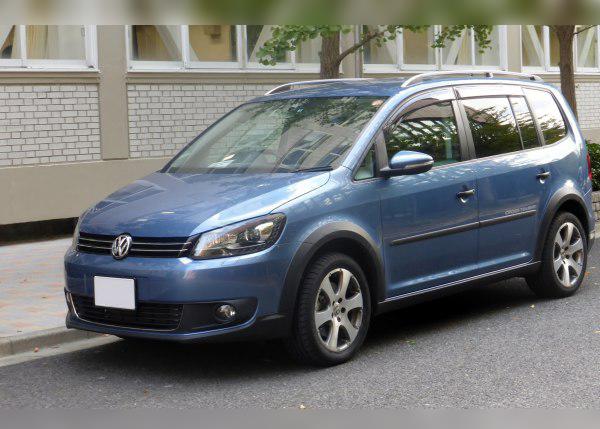
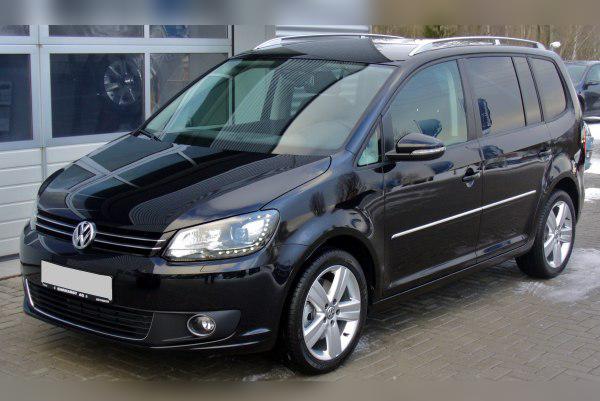
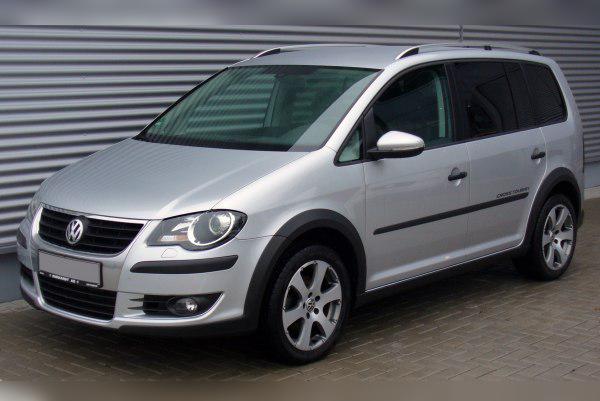
1.4 TSI (170 HP) Twincharger – Experiences, issues, fuel consumption and used car buying guide (Codes: CAVB, CTHB)
Key points (TL;DR)
- Complexity: This is a "Twincharger" engine – it has both a mechanical supercharger and a turbocharger. Performance is excellent, but the system is complicated.
- Achilles' heel (Pistons): On the CAVB version, piston and ring failures are common. The CTHB version (from 2012) is significantly improved in this regard.
- Timing chain: The timing chain is prone to stretching, which can lead to skipping and severe engine damage if not detected in time.
- Oil consumption: A frequent issue, mostly due to piston rings or the PCV system.
- Gearbox: At this power level (170 HP) it almost always comes with the DSG 7 (DQ200) dry-clutch gearbox, which requires special attention and has an expensive "Mechatronic" unit.
- Recommendation: This engine is for enthusiasts who want performance in an MPV and are ready for preventive maintenance. It requires strict adherence to service intervals.
Contents
- Introduction and applications
- Technical specifications
- Reliability, maintenance and failures
- Specific parts and fuel injection system
- Fuel consumption and performance
- Additional options (LPG and tuning)
- Gearbox (DSG and manual)
- Used car buying tips and conclusion
Introduction and applications
The 1.4 TSI engine with 170 horsepower (codes CAVB and CTHB) represents the pinnacle of Volkswagen Group engineering from the "downsizing" era (EA111 generation). Installed in heavy vehicles such as the VW Touran and Cross Touran, this engine was tasked with replacing large naturally aspirated engines, offering diesel-like torque with petrol-engine refinement.
The key characteristic of this engine is twin charging. A mechanical (Roots-type) supercharger works at low revs to eliminate turbo lag, while the turbocharger takes over at higher revs. This results in linear acceleration, but also brings complexity in terms of maintenance.
Technical specifications
| Specification | Value |
|---|---|
| Displacement | 1390 cc (1.4 L) |
| Power | 125 kW / 170 HP |
| Torque | 240 Nm at 1500–4750 rpm |
| Engine codes | CAVB (older version), CTHB (newer, improved version) |
| Injection system | Direct injection (TSI / FSI) |
| Forced induction | Twincharger: Mechanical supercharger + Turbocharger + Intercooler |
| Emission standard | Euro 5 |
Reliability and maintenance
Timing system: chain or belt?
This engine (EA111) uses a timing chain. Unfortunately, the chain is a weak point of this engine. Chain stretch often occurs as early as 60,000 - 100,000 km. The cause is often poor chain tensioner design or extended oil change intervals.
Symptoms: Metallic rattling on cold start that lasts a few seconds. If ignored, the chain can skip, causing piston-to-valve contact (catastrophic engine failure).
Most common failures and symptoms
- Piston cracking (Ring Land Failure): This is specific to the CAVB engine code. Due to high thermal load and poor fuel quality, detonation can occur, breaking piston ring lands or rings. Symptom: Loss of compression, rough running, high oil consumption. The CTHB version has reinforced pistons and this problem is rarer.
- Magnetic clutch on the water pump: The water pump on this engine is complex because it has a magnetic clutch that engages and disengages the mechanical supercharger. It often fails, causing the supercharger not to work or the pump to leak. Symptom: Loss of power at low revs or coolant leakage.
- Rear crankshaft oil seal: Oil leakage at the joint between the engine and gearbox.
Service intervals and oil
Minor service: Although the manufacturer recommends "Long Life" intervals (30,000 km), for this engine that is a death sentence. Due to the high specific output and turbocharger, the oil must be changed at a maximum of 10,000 km or once a year.
Oil quantity and type: The engine takes about 3.6 litres of oil. Only fully synthetic oil of grade 5W-30 (VW 504.00/507.00 standard) is recommended. High-quality oil is crucial for the longevity of the chain and turbocharger.
Oil consumption
Yes, this engine tends to consume oil. Consumption of up to 0.5 litres per 1,000 km is considered "acceptable" by the (very tolerant) factory specifications, but in practice, if it uses more than 1 litre per 3,000–4,000 km, this indicates a problem with piston rings, valve stem seals or the turbocharger.
Spark plugs and ignition coils
Spark plugs are replaced at 60,000 km, but due to the high performance it is recommended to shorten this to 30,000 - 40,000 km. Use only iridium/platinum plugs according to the catalogue (NGK/Bosch). Coils are also wear items – if the engine misfires under acceleration, one of the coils is often at fault.
Specific parts (Costs)
Dual-mass flywheel
Yes, models with the DSG gearbox (which are the most common with this engine) have a dual-mass flywheel. It serves to dampen engine vibrations towards the gearbox. When worn, you can hear knocking at idle which disappears when you rev the engine or change gear. Replacement is expensive (varies by market).
Injection system and injectors
This is a high-pressure direct-injection engine. Injectors are generally reliable, but sensitive to poor fuel quality. They can start "leaking" (staying open), which washes oil off the cylinder walls and can lead to engine seizure. Also, direct injection causes carbon build-up on the intake valves, which requires mechanical cleaning ("walnut blasting") every 100,000+ km.
Turbocharger and supercharger
The system consists of two parts:
- Mechanical supercharger: Operates up to around 3,500 rpm. It is more robust than the turbo, but depends on the proper operation of the magnetic clutch on the water pump.
- Turbocharger: Standard turbo. Its lifespan is around 150,000 - 200,000 km, depending on driving style and oil change regularity. Rebuilding is possible.
DPF, EGR and AdBlue
Since this is a petrol engine, it has no DPF filter and no AdBlue system. However, it does have a catalytic converter and an EGR valve (or recirculation system). The EGR valve can get clogged with soot, which triggers the "Check Engine" light and causes rough running.
Fuel consumption and performance
Real-world fuel consumption
Do not expect miracles. The Touran is heavy and has poor aerodynamics (a "boxy" shape).
- City driving: Realistically between 9 and 11 litres/100 km. In heavy traffic it can go up to 12 l.
- Open road: Around 6.5 to 7.5 litres/100 km with moderate driving.
- Motorway (130 km/h): Around 8 litres/100 km.
Is the engine "lazy"?
Absolutely not. With 170 HP and 240 Nm available from low revs (thanks to the supercharger), this engine moves the Touran surprisingly easily. The driving feel is better than with the 2.0 TDI engines of the same generation due to the wider rev range and quieter operation. Overtaking is safe.
Motorway behaviour
The engine is very refined. Thanks to the 7th gear in the DSG gearbox, at 130 km/h the engine runs at relatively low revs (around 2,800 - 3,000 rpm), which reduces cabin noise.
Additional options and modifications
LPG conversion
It is possible, but expensive and complicated. Due to direct injection, a special system is required that either injects liquid gas directly through the petrol injectors (the best but most expensive solution) or a system that uses a mixture of gas and petrol (e.g. 80% gas, 20% petrol) to cool the petrol injectors. A standard sequential LPG system cannot be installed. The cost-effectiveness is questionable if you do not cover high annual mileage.
Remapping (Stage 1)
Not recommended. Although around 200 HP can be extracted via software, this engine (especially CAVB) is already highly stressed from the factory (120+ HP per litre of displacement). Further increasing boost pressure and combustion temperatures drastically raises the risk of piston failure and damage to the DSG gearbox, whose torque limit is close to the stock values.
Gearbox
Type of gearbox
With the 170 HP engine in the Touran, it was supplied almost exclusively with the 7-speed DSG automatic gearbox (code DQ200). This is a gearbox with dry clutches.
Problems with the DSG (DQ200) gearbox
This gearbox is quick and efficient, but has a poor reputation for reliability, especially in earlier model years (up to 2012/2013).
- Mechatronic unit: The brain of the gearbox. Electronics or hydraulics inside the unit often fail. Symptoms include dropping out of gear, flashing gear indicators or complete loss of drive. Repair is very expensive.
- Clutch pack: As the clutches are dry (like in a manual), they wear out. In stop-and-go city driving they can be worn out as early as 100,000 km. Symptoms are shuddering when taking off or slipping under hard acceleration.
Gearbox maintenance
Although VW often states that the DQ200 is "sealed for life" (maintenance-free), in practice the oil in the mechatronic unit and the gearbox itself should be changed. Service recommendations are to check and, if necessary, replace it every 60,000 km to extend service life.
Used car buying guide and conclusion
Before buying a Touran with this engine, pay attention to the following:
- Cold start: The engine must be completely cold. Listen to the chain during the first 3 seconds. Any metallic rattling is a red flag.
- Test drive: The DSG must shift smoothly. If it jerks when taking off or when shifting from 1st to 2nd gear, the clutch pack is due for replacement.
- Engine code: Check the sticker in the boot or on the engine. If it is CTHB, that is the better option (stronger pistons). If it is CAVB, ask for proof that the engine has already been overhauled or that it has been regularly serviced with top-quality oil.
- Compression test: This is the most reliable way to check the condition of the pistons and rings.
Conclusion: The VW 1.4 TSI Twincharger (170 HP) is an engine with fantastic performance that turns a family MPV into a real little rocket. However, it is not for those who want a "fill up and drive" experience. It requires meticulous maintenance, high-quality fuel and awareness of potential costs (chain, DSG). If you find a car with a complete service history (preferably the CTHB version), you will enjoy driving it.
Was this content useful to you?
Your opinion helps us to improve the quality of the content.