EA188 / BRS Engine
- Engine
- 1896 cm3
- Aspiration
- Turbocharger, Intercooler
- Fuel
- Diesel
- Fuel injection system
- Pump-nozzle (Unit Injector)
- Power
- 102 hp @ 3500 rpm
- Torque
- 250 Nm @ 2000 rpm
- Cylinders
- 4
- Valves
- 8, 2 per cylinder
- Cylinders position
- Inline
- Valvetrain
- SOHC
- Oil capacity
- 6.3 l
- Coolant
- 7.1 l
- Systems
- Particulate filter
# Vehicles powered by this engine
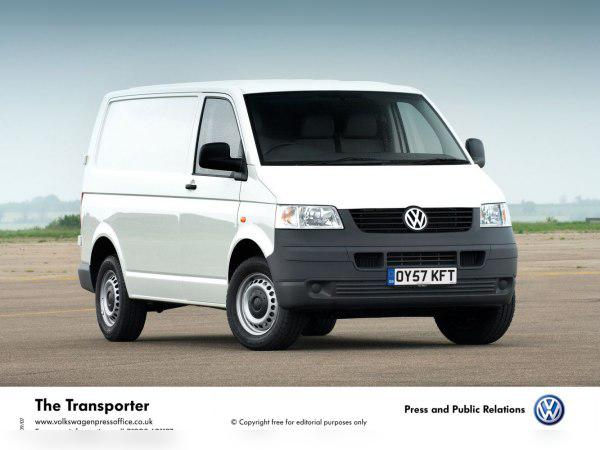
VW 1.9 TDI (BRS) 102 HP in the Transporter T5 – Experiences, problems, fuel consumption and buying used
Key points (TL;DR)
- Sweet spot: The 102 HP (BRS) version is considered the best balance between power and maintenance costs for the T5, more reliable than the 2.5 TDI engines.
- Sensitive camshaft: As with most PD (Pumpe-Düse) engines, using the wrong oil leads to camshaft and hydraulic lifter failure.
- DPF filter: The BRS code implies the presence of a DPF filter, which means that city driving requires regular trips on open roads for regeneration.
- Dual-mass flywheel: It is present and represents a standard expense at higher mileage, especially if the van is often heavily loaded.
- Gearbox: The five-speed manual gearbox is robust, but it lacks a sixth gear for quieter motorway cruising.
- Recommendation: An ideal engine for work vehicles or light camper conversions, provided that 507.00 oil has been used.
Contents
- Introduction: Why is BRS important?
- Technical specifications
- Reliability and maintenance
- Specific parts and costs
- Fuel consumption and performance
- Gearbox and drivetrain
- Additional options and modifications
- Buying used and conclusion
Introduction: Why is BRS important?
The Volkswagen Transporter T5 is Europe’s workhorse, and the engine with the code BRS (1.9 TDI with 102 HP) represents one of the last evolutions of the legendary 1.9 block before the switch to the Common Rail system. It was primarily installed in T5 models before the major facelift (up to 2009). Unlike the weaker versions (84 HP or 86 HP), the BRS offers enough torque to cope with the weight of the van, while avoiding the complexity and higher maintenance costs of the larger 2.5 TDI five-cylinder. This is an engine for drivers who value simplicity and parts availability.
Technical specifications
| Characteristic | Value |
|---|---|
| Engine code | EA188 / BRS |
| Displacement | 1896 cc (1.9 L) |
| Power | 75 kW / 102 HP |
| Torque | 250 Nm at 2000 rpm |
| Injection type | Pumpe-Düse (PD) – unit injector system |
| Charging | Turbocharger (VTG – variable geometry) + intercooler |
| Emission standard | Euro 4 (with DPF filter) |
Reliability and maintenance
The 1.9 TDI engine in its BRS version is considered a very durable unit, capable of covering over 500,000 km with proper maintenance. However, it is not without flaws.
Timing belt and timing system
This engine uses a timing belt, not a chain. The manufacturer’s recommendation has changed over the years, but in practice, given the age of the vehicles and the harsh operating conditions (van use), the major service should be done every 90,000 km to 120,000 km or every 5 years, whichever comes first. A snapped belt leads to piston-to-valve contact, which is a catastrophic failure.
Oil and oil consumption
Since the BRS engine has a DPF filter, it is crucial to use only oil that meets the VW 507.00 specification (Low SAPS), most commonly in 5W-30 grade. The engine takes about 5.8 to 6.0 liters of oil (more than passenger cars with the 1.9 engine).
As for oil consumption, PD engines are known to "like to drink" a bit of oil, especially if driven aggressively. Consumption of up to 0.5 liters per 1,000 km is considered acceptable by factory standards, but in reality, a healthy engine should not consume more than 1 liter between two minor services (10–15 thousand km). If it consumes significantly more, suspicion falls on the turbocharger or piston rings.
Most common failures
The biggest enemy of this engine is wear of the camshaft and hydraulic lifters. This occurs due to using the wrong oil or excessively long oil change intervals. Symptoms are a characteristic "tapping" noise from the air intake and loss of power. Also, the tandem pump can start leaking, causing fuel to mix with the oil (oil level rises), which is dangerous for the crankshaft bearings.
Specific parts (costs)
Injection system (injectors)
The BRS uses a PD (Pumpe-Düse) system. These units are generally robust and can last a long time, but they are sensitive to poor fuel quality. The problem is not so much the injectors themselves as their seats in the cylinder head, which can wear out, as well as the seals (O-rings) that deteriorate. Overhauling or replacing a PD unit is expensive (depending on the market, but expect a few hundred euros per unit for quality refurbishment).
Turbocharger and DPF
This engine uses a turbocharger with variable geometry. If the vehicle is driven constantly in the city at low revs, the vanes of the geometry can get stuck due to soot, which leads to "safe mode" (loss of power above 3000 rpm). Turbocharger overhaul is a moderately expensive job.
The DPF filter is standard on the BRS engine. On high-mileage vehicles, the DPF is often clogged with ash that cannot be removed by regeneration. Replacement is very expensive, while machine cleaning is a cheaper alternative (from €100 to €200). The EGR valve is also prone to fouling, but it is relatively easy to clean or replace.
AdBlue
No, this engine (EA188 generation in the T5) does not have an AdBlue system. That is one less worry for the owner compared to newer Euro 6 models.
Fuel consumption and performance
City driving and open road
The T5 is heavy and "boxy". In city driving, it is realistic to expect fuel consumption between 9 and 11 liters/100 km, depending on whether the van is empty or loaded. On open roads, at speeds up to 90 km/h, consumption can drop to around 7–7.5 l/100 km.
Is the engine "lazy"?
With 102 HP and 250 Nm, this engine is adequate, but not fast. For city deliveries and main roads it is perfectly sufficient. However, on the motorway and when overtaking with a full load, the lack of power is noticeable. This is not an engine for racing, but for steady work.
Motorway and cruising
Due to the 5-speed gearbox, at 130 km/h the engine runs at a fairly high ~3000 rpm (depending on the final drive ratio). This means more noise in the cabin and higher fuel consumption (over 10 l/100 km). The ideal cruising speed for the longevity of this engine and for economy is around 110–120 km/h.
Additional options and modifications
Remapping (Stage 1)
This engine responds very well to remapping. A safe Stage 1 can raise power to around 130–135 HP and torque to around 300–320 Nm. This drastically changes the driving dynamics of the T5 van, making overtaking safer. However, keep in mind that the increase in power further stresses the clutch and dual-mass flywheel, which are already under load due to the weight of the vehicle.
Gearbox and drivetrain
Manual gearbox
With the 1.9 TDI in the T5, only a five-speed manual gearbox was installed (often with the code 02Z). The gearboxes are generally reliable, but at high mileage the bearings or the synchronizers for second and third gear can fail (you hear grinding when shifting). The oil in the gearbox should be changed preventively every 100,000 – 150,000 km, even though VW often states it is "lifetime" fill.
Dual-mass flywheel
Yes, this model has a dual-mass flywheel. Symptoms of failure are a metallic knocking noise at idle that stops or changes when the clutch is pressed, as well as vibrations when accelerating from low revs. A clutch kit with flywheel is a significant expense – parts prices range from €400 to €700 (depending on the market and brand: LuK, Sachs, Valeo), plus labor, which is not cheap on the T5 due to poor accessibility.
Buying used and conclusion
Before buying a T5 with this engine, pay attention to the following:
- Engine sound: Listen for "tapping" from the air filter housing (a sign of a worn camshaft).
- Smoke: Black smoke under full throttle may indicate a boost problem (leaking hoses) or injector issues. Blue smoke is a sign of burning oil.
- Cold start: The engine should start instantly. Hard starting may indicate a problem with the tandem pump, injector seals or the injectors themselves.
- Vibrations: Check the condition of the dual-mass flywheel.
Conclusion: The VW Transporter T5 with the 1.9 TDI (BRS) engine is probably the most rational choice for those buying a used van. Although it is not as fast as the 2.5 TDI, it is significantly cheaper to maintain and is free of some expensive engineering solutions (such as the gear-driven timing on the 2.5 engines) that can financially ruin the owner. If you find an example with a proper service history (proof of regular 507.00 oil changes), it is a vehicle that, with regular maintenance, will serve you for hundreds of thousands of kilometers more.
Was this content useful to you?
Your opinion helps us to improve the quality of the content.