DKLC Engine
- Engine
- 999 cm3
- Aspiration
- Turbocharger, Intercooler
- Fuel
- Petrol (Gasoline)
- Fuel injection system
- Direct injection
- Power
- 90 hp
- Torque
- 160 Nm
- Cylinders
- 3
- Valves
- 12, 4 per cylinder
- Cylinders position
- Inline
- Oil capacity
- 4 l
- Systems
- Particulate filter
# Vehicles powered by this engine
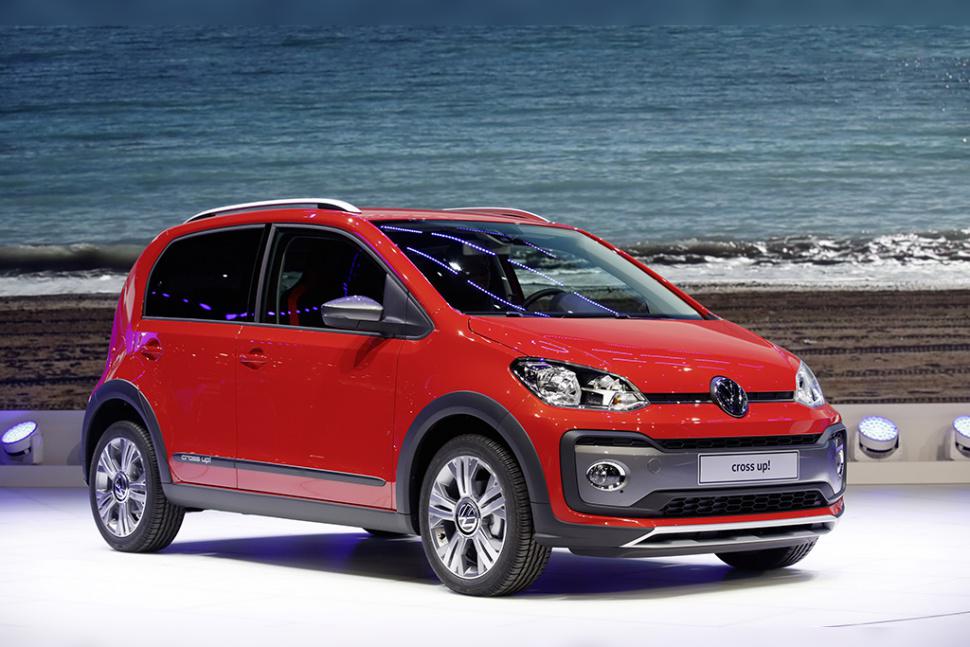
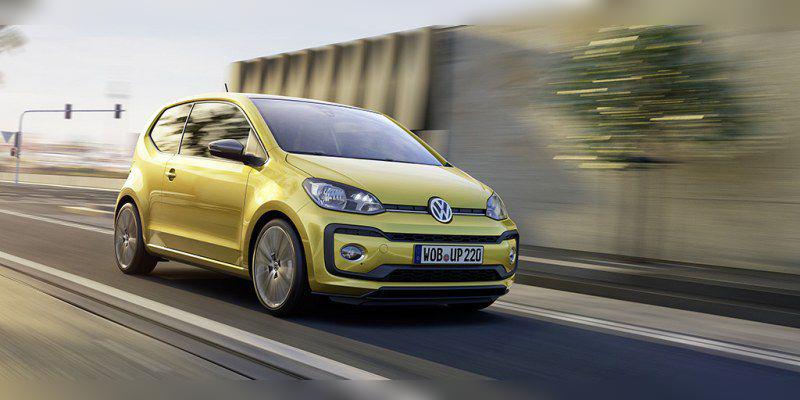
VW 1.0 TSI (DKLC) 90 HP – Experiences, problems, fuel consumption and used car buying guide
If you’re looking for proof that downsizing can put a smile on your face, the engine with the code DKLC is probably the best example. It’s a 1.0 TSI unit from Volkswagen’s EA211 family that breathed completely new life into the VW Up!. Unlike the naturally aspirated versions that “struggle” on uphill sections, this turbo three‑cylinder turns a light city car into a real little rocket.
However, the turbocharger and direct injection bring more complex technology compared to simple MPI engines. In this article we’ll take a detailed look at whether this complexity also means more expensive maintenance, what tends to fail, and what you must pay attention to before buying.
Key points (TL;DR)
- Timing drive: Uses a timing belt (not a chain), which is far more reliable than the old TSI solutions.
- Performance: Excellent power‑to‑weight ratio. In the VW Up! this engine is anything but sluggish.
- Fuel consumption: Extremely economical, real‑world combined consumption around 5.0–5.5 l/100 km.
- Biggest downside: The water pump and thermostat housing are prone to leaks.
- Maintenance: Requires high‑quality oil and regular spark plug changes due to direct injection.
- Dual‑mass flywheel: Fortunately, this power variant usually uses a solid flywheel.
- Recommendation: An excellent choice for city driving and shorter trips, and even for motorway use, provided you strictly follow service intervals.
Contents
- Technical specifications
- Reliability and maintenance
- Specific parts and costs
- Fuel consumption and performance
- Additional options and modifications
- Gearbox and drivetrain
- Buying used and conclusion
Technical specifications
| Feature | Data |
|---|---|
| Displacement | 999 cc (1.0 L) |
| Configuration | R3 (3 cylinders in line), 12 valves |
| Power | 66 kW (90 HP) at 5000–5500 rpm |
| Torque | 160 Nm at 1500–3500 rpm |
| Engine code | DKLC (EA211 family) |
| Injection type | Direct injection (TSI/GDI) |
| Charging | Turbocharger + intercooler (integrated into the intake manifold) |
| Emissions standard | Euro 6 |
Reliability and maintenance
When talking about TSI engines, the first question every driver asks is about the timing system. Here we have good news. The DKLC engine belongs to the EA211 generation, which abandoned the problematic chains and switched to a timing belt. This belt is reinforced and very durable. Although the manufacturer often quotes optimistic inspection intervals of 210,000 km, real‑world experience suggests that the major service should be done between 160,000 km and 180,000 km, or every 5 to 7 years in time, whichever comes first. Belt failure is rare, but ignoring the time interval (rubber aging) can be fatal.
Most common failures and symptoms
Although the engine is generally reliable, it’s not immune to problems:
- Water pump and thermostat housing: This is the “Achilles’ heel” of EA211 engines. The housing is plastic and over time deforms due to heat cycles, which leads to coolant leaks. Symptom: Coolant level dropping in the expansion tank, smell of coolant under the bonnet, or traces of leakage on the engine block.
- Carbon buildup: As a direct‑injection engine, fuel does not wash the intake valves. Over time, carbon deposits build up on them. Symptom: Rough idle (slight vibration), poorer throttle response or increased fuel consumption. This is solved by mechanical cleaning (walnut shell blasting) at higher mileages (usually over 100–150k km).
- Wastegate actuator (turbo boost control): Sometimes the electric actuator on the turbo can stick or the linkage can develop play. Symptom: Rattling when lifting off the throttle, loss of power or the “Check Engine” light (EPC fault) coming on.
Oil and spark plugs
This engine takes a relatively small amount of oil, usually around 3.5 to 4.0 litres (always check the dipstick). The recommended grade is usually 0W‑20 (VW 508.00 standard) for fuel economy, but in warmer climates and for better protection 5W‑30 (VW 504.00) is often used. Oil consumption on DKLC engines is present but not alarming like on older 1.8 or 2.0 TSI units. It’s considered normal for the engine to use up to 0.5 litres per 10,000 km, especially if driven hard. If it uses more than that (e.g. a litre every 2–3 thousand km), that points to an issue with piston rings or the turbo.
As for the spark plugs, they are a critical item. Due to high injection pressures and turbo operation, plugs wear faster than on naturally aspirated engines. It’s recommended to replace them every 60,000 km or 4 years. Use only iridium or platinum plugs to factory spec, because a bad plug can damage the ignition coils (which are individual for each cylinder).
Specific parts (costs)
When it comes to maintenance, it’s important to know what to expect financially. Parts prices for this engine are mid‑range – not as cheap as for an old Fiat Punto, but far from astronomical.
- Dual‑mass flywheel: Great news for your budget – the 90 HP variant in the VW Up! almost always comes with a solid (single‑mass) flywheel. This means clutch kit replacement is significantly cheaper because you don’t have an expensive dual‑mass flywheel to absorb vibrations (that role is taken over by the springs in the clutch disc and the inherent balance of the three‑cylinder).
- Injection system: Uses sophisticated high‑pressure injectors. The injectors are generally durable but sensitive to poor‑quality fuel. A failing injector manifests as jerking, a misfiring cylinder or a thick black smoke cloud when you press the throttle. The price of a new injector can be high (depends on the market), so it’s advisable to use high‑quality petrol with additives.
- Turbocharger: The engine has a small single turbocharger with a water‑cooled intercooler (integrated into the intake manifold). The turbo’s service life is long and usually matches the life of the engine, provided the oil is changed regularly (every 15,000 km at most, not 30,000 km as sometimes stated in the service book).
- DPF / GPF and EGR: Petrol engines don’t have a DPF, but newer models (usually from 2018 onwards) can have a GPF (Gasoline Particulate Filter). The 2016 DKLC often doesn’t have a GPF, which is an advantage as it’s one less thing to go wrong. Check by VIN. A classic EGR valve as a separate part often doesn’t exist, because exhaust gas recirculation is handled via variable valve timing (VVT), which is a more elegant and reliable solution.
- AdBlue: This is a petrol engine, so it does not have an AdBlue system. That’s a concern only for owners of newer diesels.
Fuel consumption and performance
This is where the 1.0 TSI (90 HP) absolutely shines, especially in the VW Up! body, which weighs barely around 1000 kg.
Is the engine “lazy”? Absolutely not. With 160 Nm of torque available from just 1500 rpm, the car pulls very strongly. In the city it’s lively, agile and feels much more powerful than the figures suggest. The driving experience is incomparably better than with the naturally aspirated 60 or 75 HP versions.
Real‑world fuel consumption:
- City driving: Expect between 5.5 and 6.5 l/100 km. If you have a heavy right foot in stop‑and‑go traffic, it can reach 7 litres, but rarely more.
- Country roads: With gentle driving on main roads it’s possible to get down to 4.0–4.5 l/100 km.
- Motorway: At 130 km/h, consumption is around 5.5–6.0 l/100 km. Thanks to the turbo and longer gearing, at 130 km/h the engine spins at a reasonable 2800 to 3000 rpm (in fifth gear), which means it’s not noisy and doesn’t “scream” like weaker naturally aspirated units. Cruising is surprisingly comfortable for a car of this class.
Additional options and modifications
LPG conversion:
Although technically possible, installing LPG on the 1.0 TSI is a costly and complex investment (depending on the market, you’re looking at a liquid‑phase system or a system that also injects petrol to cool the injectors). Due to direct injection, standard cheap sequential systems are not an option. Considering that the engine already sips fuel (around 5 litres of petrol), the payback period for an LPG kit (which costs significantly more than average) would require huge mileage. For the average driver – it’s not worth it.
Chiptuning (Stage 1):
This engine is “software‑detuned”. The same base engine is offered in other models (Polo, Golf) with 110 or 115 HP. That means the tuning potential is huge. With a simple Stage 1 remap, this engine can safely be taken to 110–115 HP and over 200 Nm of torque. Given the car’s low weight, this turns the VW Up! into a proper little pocket rocket. Still, keep in mind that more power wears out the clutch and brakes faster.
Gearbox
With the DKLC engine in the VW Up! you most commonly get a 5‑speed manual gearbox (MQ200 series). Automated gearboxes (ASG robotised) were mostly reserved for the weaker naturally aspirated engines, while a true DSG is rarely found in this specific 90 HP/Up! combination in all markets (it’s more common in the Polo). We’ll focus on the manual gearbox.
- Reliability: The manual gearbox is very precise and robust for this power level. There are no major inherent design flaws.
- Most common issues: On high‑mileage cars driven exclusively in the city, the synchros can wear (making it harder to engage first or second gear).
- Clutch cost: As mentioned, there is no dual‑mass flywheel, so replacing the clutch kit (pressure plate, disc, release bearing) is financially acceptable (falls into the “not expensive” category).
- Gearbox service: VW often states that the oil in the manual gearbox is “lifetime”. Don’t follow that. It’s recommended to change the gearbox oil every 60,000 to 80,000 km. It’s a small expense (usually around 2 litres of oil) and significantly extends the life of the bearings and gears.
Buying used and conclusion
If you’re planning to buy a used VW Up! or Cross Up! with this engine, focus on the following:
- Cold start: The engine must start immediately. Listen to it for the first 30 seconds – there should be no metallic rattling (the chain isn’t an issue here, but hydraulic lifters or the wastegate can be).
- Coolant leaks: Check the coolant level. If it’s below minimum, or you see white dried coolant traces around the engine (on the right‑hand side when viewed from the front), factor in replacement of the water pump/thermostat housing.
- Service history: Check whether the oil has been changed regularly. Extended intervals (Long Life 30k km) are deadly for small turbo engines in city driving.
Conclusion:
The 1.0 TSI (DKLC) engine is probably the best powertrain for the VW Up!. It transforms this car from a basic city runabout into a vehicle you can confidently take to the seaside or the mountains. Maintenance is only slightly more expensive than on the most basic versions (due to the turbo and pricier spark plugs), but the difference in driving and enjoyment is worth every cent. If you find a car that hasn’t been overheated and has had regular oil changes – buy it without overthinking.
Was this content useful to you?
Your opinion helps us to improve the quality of the content.