DSGC Engine
- Engine
- 999 cm3
- Aspiration
- Naturally aspirated engine
- Fuel
- Petrol (Gasoline)
- Fuel injection system
- Multi-port manifold injection
- Power
- 65 hp
- Torque
- 91 Nm
- Cylinders
- 3
- Valves
- 12, 4 per cylinder
- Cylinders position
- Inline
- Oil capacity
- 3.6 l
- Systems
- Start & Stop System, Particulate filter
# Vehicles powered by this engine
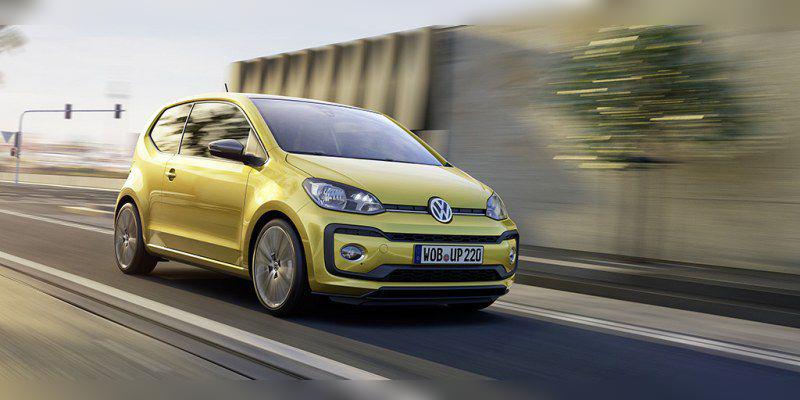
VW 1.0 MPI (DSGC) Experiences, Problems, Fuel Consumption and Buying Used
Key points (TL;DR)
- Reliability: Extremely simple and reliable engine, part of the EA211 family which solved many of the issues of its predecessors.
- Powertrain: Uses a timing belt (not a chain), which ensures quieter operation and cheaper maintenance.
- City driving: This is its natural habitat – lively off the line, but quickly runs out of breath on open roads.
- Maintenance: No dual-mass flywheel, no turbo, no direct injection – running costs are minimal.
- Gearbox: The manual gearbox is excellent, while the automated (robotized) gearbox should be avoided if you want smooth driving.
- LPG: An ideal candidate for LPG conversion.
Contents
- Technical specifications
- Reliability and Maintenance
- Specific Parts and Costs
- Fuel Consumption and Performance
- Additional Options and Modifications
- Gearbox: Manual vs Robotized
- Buying Used and Conclusion
Volkswagen’s 1.0 MPI with the code DSGC is a refreshed version of the three-cylinder naturally aspirated petrol engine fitted to the facelifted VW Up! (from 2016 onwards). Unlike its TSI siblings, this engine relies on simplicity. No turbo, no complicated injection systems, which makes it one of the favourites for buyers looking for cheap running costs in urban conditions. Although 65 hp sounds modest, in the light Up! body it’s a completely different story.
Technical specifications
| Parameter | Value |
| Engine displacement | 999 cc (1.0 L) |
| Power | 48 kW (65 hp) |
| Torque | 91 Nm at 3000 rpm |
| Engine code | DSGC (EA211 family) |
| Configuration | Inline 3-cylinder |
| Injection type | MPI (Multi-Point Injection) – Indirect |
| Air charging | Naturally aspirated (No turbo) |
Reliability and Maintenance
Timing belt or chain?
Unlike older three-cylinders from the VW group (such as the 1.2 HTP engines) which had chain issues, the DSGC engine belongs to the newer EA211 series which uses a timing belt. This is very good news. The belt is quieter and the replacement interval is long. The first serious inspection is recommended at 210,000 km, but in practice the “major service” is done earlier – ideally between 160,000 km and 180,000 km or every 8 to 10 years, whichever comes first. The cost of replacing the timing kit falls into the “affordable” category (depends on the market).
Most common failures
This engine is mechanically very robust, but not entirely flawless:
- Thermostat housing and water pump: They are often made of plastic which becomes brittle over time due to heat cycles. The symptom is loss of coolant. If you notice pink stains under the car, this is suspect number one.
- Ignition coils: As with most petrol engines, coils can fail, causing the engine to run on “two cylinders”, loss of power and the “Check Engine” light to come on.
- Vibrations: Being a three-cylinder, it is naturally not perfectly balanced. Although it has balance shafts, worn engine mounts can transmit unpleasant vibrations into the cabin, especially at idle.
Minor service and oil
This engine takes a relatively small amount of oil, usually around 3.4 to 3.7 litres (always check the dipstick after pouring in 3 litres). The recommended grade is usually 0W-20 (VW 508.00 specification) for newer models to improve fuel economy, but 5W-30 (VW 504.00) is also often used in warmer climates or on higher-mileage engines. Minor service is done every 15,000 km or once a year.
As for oil consumption, DSGC engines are generally “dry”. Consumption of up to 0.5 litres per 10,000 km is considered completely normal and does not require intervention. If it consumes more than that (e.g. a litre every 2–3 thousand km), this points to an issue with piston rings or valve stem seals, but that is rare at low mileage.
Spark plugs
Since this is a petrol engine, spark plugs are crucial. The recommendation is to replace them every 60,000 km or 4 years. Using quality iridium spark plugs can slightly extend this interval and improve idle smoothness.
Specific Parts (Costs)
This is where the 1.0 MPI really shines. Its simplicity means there are no expensive components that are a nightmare for diesel owners.
- Dual-mass flywheel: NONE. This engine uses a conventional solid flywheel. The clutch is cheap to replace.
- Injection system: Uses classic MPI (Multi-Point) injection into the intake manifold. Injectors are simple, inexpensive and very rarely cause problems. Also, this system prevents carbon buildup on the intake valves, which is a common issue on TSI engines with direct injection.
- Turbocharger: NONE. One less thing to worry about. No turbo that can start whining or burning oil.
- DPF and EGR: No DPF filter (reserved for diesels and newer TSI engines with GPF). It does have an EGR valve, but on petrol engines it clogs much less frequently than on diesels because there is far less soot.
- AdBlue: NONE. This is a pure petrol engine, it does not use urea.
Fuel Consumption and Performance
City driving and “sluggishness”
In the city, the 1.0 MPI with 65 hp is surprisingly agile up to speeds of 50–60 km/h. The gearbox has short ratios in the first three gears, which allows it to “jump” off the line at traffic lights. Real-world consumption in heavy city traffic ranges between 5.5 and 6.5 l/100 km. In winter or on very short trips it can go up to 7 litres, but rarely more.
Is it sluggish? For a weight of around 930 kg, 65 hp is “just right” for city use. However, as soon as you load the car with four passengers and turn on the AC, you will feel a drastic drop in performance, especially on inclines. It then demands high revs.
Motorway and cruising
This is not the natural environment for a VW Up! with this engine. Up to 100–110 km/h it is acceptable. At 130 km/h the engine is spinning at a fairly high 3,500 to 3,800 rpm (depending on the gearbox), cabin noise becomes more pronounced, and fuel consumption jumps to the level of larger cars (around 6–7 l/100 km) due to air resistance and engine strain. Overtaking on main roads requires planning and dropping down to third gear.
Additional Options and Modifications
LPG conversion
YES, absolutely. This is one of the best modern engines for conversion to liquefied petroleum gas. Thanks to the MPI injection system, installation is simple, inexpensive (standard sequential systems) and does not require “using petrol” while running on gas (as is the case with TSI engines). Given the already low fuel consumption, you should calculate whether it pays off if you don’t cover many kilometres, but technically – the engine handles LPG very well.
Chiptuning (Stage 1)
On small-displacement naturally aspirated engines, software power increases (“chiptuning”) are basically a waste of money. You might gain 3 to 5 hp, which is imperceptible in real driving. It’s better to invest that money in quality tyres or regular maintenance.
Gearbox: Manual vs Robotized
Manual gearbox (5-speed)
Most models come with a 5-speed manual gearbox. This is a proven, precise gearbox (MQ200 family). Failures are rare. The clutch is light and cheap to replace. A clutch kit without a dual-mass flywheel is affordable (not expensive).
Automatic (ASG/Robotized) gearbox
This is where you should be careful. VW did not fit a conventional automatic or DSG in the Up!, but rather an ASG (automated manual gearbox). It is essentially a regular manual gearbox with a “robot” mounted on it that presses the clutch and shifts gears instead of you.
- Disadvantages: It is slow, “nods” when changing gears (power interruption), and is indecisive in city traffic.
- Failures: The clutch actuator and the electronics that control gear changes are known to cause problems. Also, the clutch disc wears out faster than it would with an experienced driver using a manual gearbox.
- Servicing: VW says the oil in the gearbox (both manual and robotized) is “lifetime”, but mechanics recommend changing it every 80,000–100,000 km. In the ASG system you should also check the level of hydraulic oil for the robot.
Buying Used and Conclusion
When buying a used VW Up! with the 1.0 MPI engine, pay attention to the following:
- Engine sound: A three-cylinder must have a characteristic “frrr” sound, but there should be no metal-on-metal knocking or chain rattling (even though it has a belt, worn hydraulic lifters can rattle).
- Coolant: Check the coolant level. If it is low, look for white traces around the water pump.
- Clutch: A high biting point on the clutch means it is near the end of its life (on manuals). On ASG gearboxes, if the car jerks when setting off or shifts slowly, walk away from that example.
Conclusion: The VW Up! with the 1.0 MPI (DSGC) engine is a fantastic choice as a second family car, for delivery drivers or for novice drivers. Maintenance is laughably cheap compared to diesels, and reliability is at a high level. Just avoid the ASG gearbox if you want peace of mind and accept that this is not a car for high-speed motorway racing.
Was this content useful to you?
Your opinion helps us to improve the quality of the content.