B5234T Engine
- Engine
- 2319 cm3
- Aspiration
- Turbocharger
- Fuel
- Petrol (Gasoline)
- Fuel injection system
- Multi-port manifold injection
- Power
- 240 hp @ 5100 rpm
- Torque
- 330 Nm @ 2700 rpm
- Cylinders
- 5
- Valves
- 20, 4 per cylinder
- Cylinders position
- Inline
- Valvetrain
- DOHC
- Oil capacity
- 5.8 l
- Coolant
- 7 l
# Vehicles powered by this engine
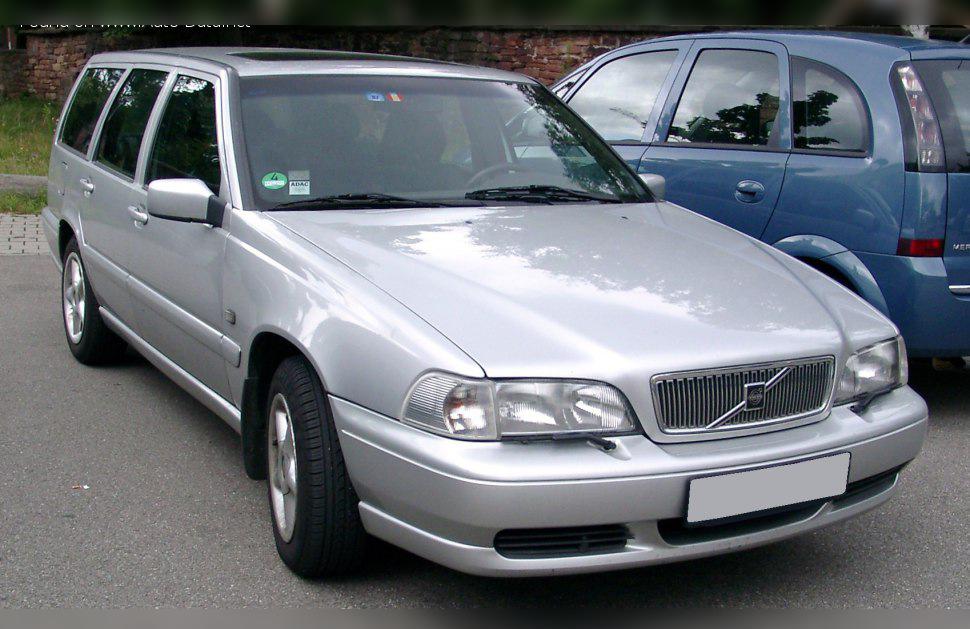
Volvo 2.3 T-5 (B5234T) – Experiences, issues, fuel consumption and used-car buying tips
The Volvo engine with the code B5234T, better known as the 2.3 T-5, is one of the most highly regarded powerplants from the Swedish “kitchen” of the 1990s. This is not an ordinary engine for getting from point A to point B; this is the heart that defined the term “fast wagon” (Flying Brick). Installed in the first generation of the Volvo V70 (as well as in the legendary 850 R models before that), this five‑cylinder offers a distinctive sound, high power and robustness that is rarely seen today. Still, like any high‑performance machine that is more than two decades old, it requires specific knowledge and maintenance.
Key points in short (TL;DR)
- Performance: Explosive 240 hp engine that turns a family wagon into a sports car. Excellent in-gear acceleration.
- Sound: Unique five‑cylinder sound that many enthusiasts love.
- Reliability: Mechanically very durable engine block (“bulletproof”), capable of huge mileage with proper maintenance.
- Main issue: A clogged crankcase ventilation system (PCV/breather) is the most common killer of these engines.
- Fuel consumption: Not for those on a tight budget. Very thirsty in city driving.
- Maintenance: Requires quality oil, regular servicing and attention to the turbocharger. Parts can be expensive (depends on the market).
- Recommendation: Ideal for enthusiasts who want a “sleeper” car (discreet, but fast).
Contents
- Technical specifications
- Reliability and maintenance
- Specific parts and systems
- Fuel consumption and performance
- LPG and tuning
- Gearbox and drivetrain
- Buying used and conclusion
Technical specifications
| Specification | Value |
|---|---|
| Engine code | B5234T (T3/T4 variants) |
| Displacement | 2319 cc (2.3 L) |
| Configuration | Inline 5‑cylinder, 20 valves |
| Power | 176 kW (240 hp) at 5100 rpm |
| Torque | 330 Nm at 2700 rpm |
| Fuel type | Petrol (98 RON recommended, runs on 95) |
| Induction | Turbocharger (High Pressure Turbo) |
| Injection | MPI (Multi‑point injection) – Bosch Motronic |
Reliability and maintenance
Volvo “Whiteblock” engines are known for their longevity, but the B5234T, due to its high output and turbocharger, demands a more meticulous owner. If neglected, repair costs can quickly exceed the value of the car.
Timing belt or chain?
This engine uses a timing belt. This is a critical maintenance item. The original recommended replacement interval was around 120,000 km or 8 years, but considering the age of these cars and material fatigue, it is strongly recommended to do a major service every 90,000 to 100,000 km or every 6–7 years. A snapped belt leads to piston‑to‑valve contact, which means total engine failure.
Most common failures
The Achilles’ heel of this engine is the PCV system (crankcase ventilation/breather system). Over time, the oil separator box and hoses get clogged with sludge. Symptoms include: the dipstick being pushed out, oil leaks at the crankshaft seals (because crankcase pressure has nowhere to go) and bluish smoke. If you see oil around the valve cover or camshaft seal, check the PCV first.
Other frequent issues include the ETM (Electronic Throttle Module) – the electronic throttle body (on models from 1999 onwards), which is prone to failure, causing unstable idle and loss of power. Also, oil leaks at the seals between engine and gearbox are common on older examples.
Oil: capacity and consumption
The engine takes approximately 5.8 litres of oil (with filter). Due to the turbocharger and high temperatures, fully synthetic oil is strongly recommended.
- Viscosity: 5W‑40 or 0W‑40 is ideal for European climates and turbo protection. 5W‑30 can be used, but for higher‑mileage engines, a “thicker” oil (xW‑40) provides a better film.
- Oil consumption: These engines tend to “drink” a bit of oil, especially if driven hard. Consumption of 0.5 to 0.8 litres per 10,000 km is considered completely normal. If it uses a litre per 1000 km, you have a problem with piston rings, valve stem seals or the turbo.
Spark plugs and coils
On turbo petrol engines, the ignition system is under heavy load. Spark plugs should be replaced every 40,000 to 60,000 km. It is recommended to use only genuine Volvo plugs (usually made by Bosch), as these engines are picky. Poor‑quality plugs can quickly destroy the coils (each cylinder has its own coil).
Specific parts (costs)
Dual‑mass flywheel
Yes, versions with a manual gearbox do have a dual‑mass flywheel. Its role is to dampen vibrations from the five‑cylinder engine. Symptoms of failure include knocking when starting/stopping the engine and vibrations in the clutch pedal. Replacement is an expensive job (depends on the market, but expect a serious bill).
Turbocharger and fuel injection
The engine uses a single turbocharger, most often from the Mitsubishi TD04 series (e.g. 16T). These turbos are very durable and, with regular oil changes and proper cool‑down before shutting the engine off, can last over 250,000 km. Rebuilds are possible and reasonably priced.
The injection system is classic, indirect. Petrol injectors are robust and rarely cause problems. They don’t need special maintenance apart from occasional cleaning if poor‑quality fuel is used.
Emissions: DPF, EGR, AdBlue
Good news for fans of simplicity:
- No DPF filter.
- No AdBlue system.
- EGR valve: There is an exhaust gas recirculation system, but on petrol engines it gets far less dirty than on diesels and is rarely a major headache.
Fuel consumption and performance
Fuel consumption
Let’s be honest – 240 horses and 5 cylinders need to be fed.
- City driving: Expect between 13 and 16 l/100 km. In winter and heavy traffic, this can easily go higher.
- Highway / open road: Here things look better, with consumption dropping to 8.5 to 10 l/100 km with moderate driving.
- Average: A realistic long‑term average is around 11–12 l/100 km.
Is the engine “lazy”?
Absolutely not. With 330 Nm of torque available from just 2700 rpm, this engine moves the V70 body with ease. 0–100 km/h takes around 7 seconds (depending on the gearbox). Overtaking is lightning‑fast, and the engine has that classic “turbo lag” – a brief pause before it pins you to the seat, which many drivers actually enjoy for the sensation of raw power.
Highway driving
This is the natural habitat of the Volvo V70 T5. At 130 km/h in top gear, the engine spins at about 3000 rpm (depending on whether it’s an automatic or manual). The cabin is quiet, and there is enough power in reserve to accelerate to 200 km/h without even downshifting.
Additional options and modifications
LPG conversion
Yes, the B5234T engine is very suitable for LPG conversion. It has hydraulic lifters, so there is no need for expensive valve clearance adjustment. However, due to the high specific output and turbo, a top‑quality sequential LPG system with fast injectors and a vaporiser capable of supporting 240+ hp is essential. Cheap systems will result in a lean mixture and burnt valves.
Tuning (remapping)
This engine is a legend in the tuning scene. The block is extremely strong.
- Stage 1: With a simple software remap, power can safely be raised to 265–275 hp and torque to nearly 400 Nm.
- Limits: The engine (stock rods) can handle around 300 hp without opening it. Beyond that, forged rods are required.
Gearbox
Manual gearbox (M56)
The five‑speed manual gearbox (code M56) is practically indestructible. It is very precise and durable.
- Failures: Rare. Possibly oil leaks at the driveshaft seals.
- Clutch kit replacement: The cost is significant due to the dual‑mass flywheel, which is usually replaced together with the disc and pressure plate.
Automatic gearbox (AW50‑42 / AW55‑50)
In the first‑generation V70 you most often find a 4‑speed automatic (Aisin Warner). It is robust, but slow and “eats” performance. Later models (1999/2000) may have a 5‑speed automatic which is more modern but more sensitive (issues with the valve body).
- Maintenance: The oil in the automatic gearbox MUST be changed, even if the manufacturer claims it is “lifetime fill”. It is recommended to replace it every 60,000 km using the flush method.
- Failures: Jerks when changing gears (especially from N to D or R) indicate a bad valve body or old oil.
AWD drivetrain (4x4)
If you are buying an AWD version, pay attention to the angle gear. The gears can wear out if the car is driven with different tyre sizes on the axles. Also, the viscous coupling (on older models) must be in good condition. Propshaft failure is also possible and expensive to rebuild.
Buying used and conclusion
What to check before buying?
- PCV test (“glove test”): With the engine idling, place a rubber glove over the oil filler opening. If the glove is sucked in – that’s good. If it inflates like a balloon – the PCV system is clogged and the engine is building pressure (an expensive repair).
- Cold start: Watch the exhaust. Blue smoke at startup means valve stem seals. Blue smoke under full throttle means turbo or piston rings.
- Service history: When was the timing belt last changed? This is the first question to ask.
- AWD (if fitted): Put the car on a lift. When the front wheels are turned, the rear wheels must also turn. Many V70 AWDs are in fact FWD only because the propshaft was removed after a failure.
Conclusion
The Volvo V70 with the B5234T (2.3 T5) engine is not a car for everyone. It is not for those who want cheap transport and low fuel consumption. This is an engine for lovers of mechanics, sound and Swedish steel.
If you find a well‑maintained example, you will get one of the best sleeper cars ever made – comfortable, safe, and faster than many modern sports cars. Maintenance is not cheap, but in return you get reliability and a smile on your face every time you step on the throttle.
Was this content useful to you?
Your opinion helps us to improve the quality of the content.