BZB, CDAA Engine
- Engine
- 1798 cm3
- Aspiration
- Turbocharger, Intercooler
- Fuel
- Petrol (Gasoline)
- Fuel injection system
- Direct injection
- Power
- 160 hp @ 5000 rpm
- Torque
- 250 Nm @ 1500 rpm
- Cylinders
- 4
- Valves
- 16, 4 per cylinder
- Cylinders position
- Inline
- Valvetrain
- DOHC
- Oil capacity
- 4.7 l
- Coolant
- 5.6 l
# Vehicles powered by this engine
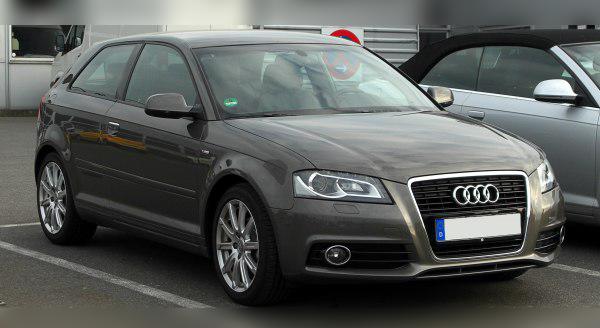
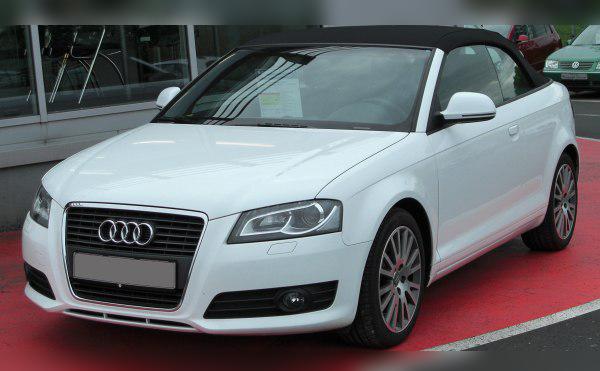
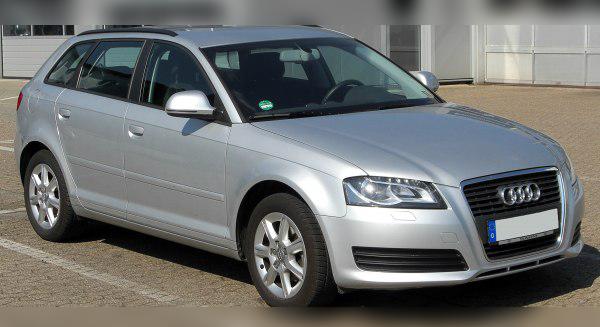
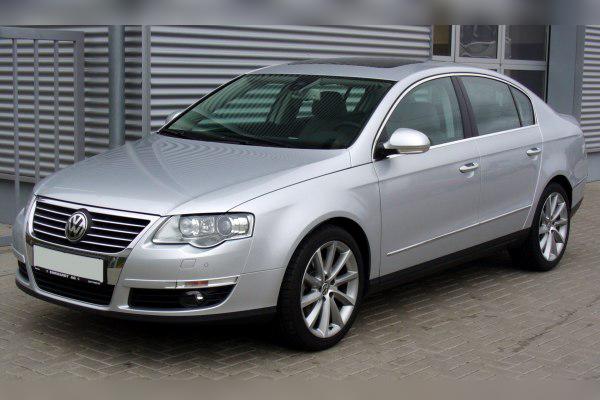
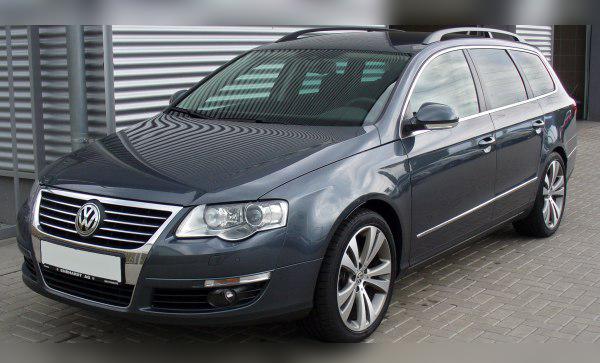
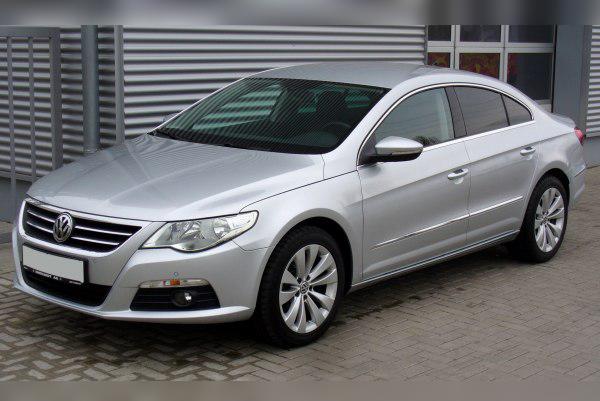
1.8 TSI / TFSI (BZB, CDAA) – Experiences, problems, fuel consumption and buying used
This is an engine that provokes mixed feelings in every experienced VAG enthusiast. On one hand, it offers a fantastic balance of power and refinement, but on the other, certain series (especially CDAA) carry a risk of failures that can cost as much as half the car’s value. If you’re looking at an Audi A3 or VW Passat with this engine, you need to know exactly what you’re buying.
Key points in short (TL;DR)
- Oil consumption (CDAA): Engines with the CDAA code are notorious for a factory defect in the piston rings, which leads to enormous oil consumption. BZB engines are significantly safer in this regard.
- Timing chain: The Achilles’ heel of this engine. The chain tensioner can fail, which leads to the chain jumping teeth and catastrophic engine damage. Mandatory check!
- Water pump: Frequent coolant leaks due to the plastic thermostat housing, which deforms over time.
- Performance: The engine is very lively, quiet and elastic. It feels like driving a more powerful engine.
- Carbon buildup: As a direct-injection engine, it is prone to soot buildup on the intake valves.
- Recommendation: Look for the BZB code if possible, or a CDAA engine with proof that a full overhaul has already been done (pistons and rings replaced).
Contents
- Technical specifications
- Reliability and maintenance
- Specific parts (costs)
- Fuel consumption and performance
- Additional options and modifications
- Gearbox (manual and automatic)
- Buying used and conclusion
Technical specifications
| Parameter | Value |
|---|---|
| Engine displacement | 1798 cc (1.8 L) |
| Power | 118 kW (160 hp) |
| Torque | 250 Nm at 1500–4200 rpm |
| Engine codes | BZB (EA888 Gen 1/Transition), CDAA (EA888 Gen 2) |
| Injection type | Direct injection (FSI / TSI) |
| Charging method | Turbocharger (K03), intercooler |
| Number of cylinders / valves | 4 cylinders / 16 valves |
Reliability and maintenance
Does this engine have a timing belt or a chain?
This engine uses a timing chain. Unfortunately, it is not a “lifetime chain” as it was once marketed. The problem is not so much the chain itself, but the hydraulic chain tensioner. On earlier versions, the teeth on the tensioner would wear out or the mechanism would fail, allowing the chain to jump. The symptom is a characteristic “rattling” noise on cold start that lasts a few seconds. If you hear that, a tow truck is your only option – do not start the engine again.
What are the most common failures on this engine?
Here we need to make a clear distinction between engine codes:
- Oil consumption (CDAA – critical): On CDAA engines (mostly from 2009 to 2012), Volkswagen used pistons with very thin oil rings and small drain holes. These clog up with carbon quickly, and the engine starts burning oil – from 0.5 L up to 2 L per 1000 km. There is only one real solution: opening the engine and replacing pistons and rings with modified versions (very expensive). BZB engines are much better in this regard.
- PCV valve (oil separator): The rubber membrane inside the separator tears. Symptoms are rough idle (whistling sound), increased oil consumption and oil leaks at the crankshaft seals due to excess crankcase pressure.
- Ignition coils: They often fail, causing the engine to run on 3 cylinders (misfire). It’s recommended to always keep a spare coil in the trunk.
- High-pressure fuel pump: It can start leaking or the cam follower that drives it can wear out, although this is less common than on older 2.0 TFSI engines.
At what mileage is the major service due?
Since it has a chain, there is no classic major service with a fixed belt replacement interval. However, experienced mechanics recommend a check of the chain and tensioner condition (through the inspection window on the chain cover or via camshaft phase diagnostics) every 100,000 km. If the chain is replaced, everything should be done at once: chain, guides, tensioner and sprockets. The water pump is driven by a separate small toothed belt on the other side of the engine and is usually replaced when it starts leaking, which often happens around 120,000–150,000 km.
How many liters of oil does this engine take and which grade is recommended?
The sump holds between 4.6 and 5.2 liters (depending on the filter and exact code). The recommended grade is 5W-30 or 5W-40, but the key is that the oil meets the VW 504.00 / 507.00 standard (for LongLife) or VW 502.00 (for fixed interval). Practical recommendation: change the oil every 10,000 km or once a year. LongLife intervals of 30,000 km are “death” for these engines because they accelerate ring clogging.
Does it consume oil between services and what amount is considered normal?
On BZB engines, consumption up to 0.5 liters per 10,000 km is acceptable. However, on CDAA engines, before modification, consumption is often catastrophic. The manufacturer “covers itself” in the manual by stating that up to 0.5 L per 1000 km is normal, but in practice, if you’re adding a liter every 1500–2000 km, the engine is ready for a full overhaul.
At what mileage should the spark plugs be replaced?
Spark plugs are replaced every 60,000 km. Use only iridium or platinum plugs to spec (NGK or Bosch), as the ignition system is sensitive.
Specific parts (costs)
Does this engine have a dual-mass flywheel?
Yes. Both manual and DSG-equipped models (depending on DSG type) have a dual-mass flywheel. Its lifespan is usually 150,000–200,000 km, and symptoms of wear are knocking when switching the engine off and vibrations in the clutch pedal. The price is high (varies by market).
What type of injection system does it have and are the injectors problematic?
This is a direct injection (TSI/TFSI) engine. Fuel is injected directly into the cylinder at high pressure. Injectors are generally durable, but the main issue with this system is carbon (soot) buildup on the intake valves. Since fuel does not flow over the valves to “wash” them, soot accumulates and gradually chokes the engine. The solution is mechanical cleaning (walnut shell blasting) every 80,000–100,000 km.
Does the engine have a turbocharger and what is its lifespan?
It has a single turbocharger (usually a BorgWarner K03). The turbo is water-cooled and quite reliable. It can last over 200,000 km with regular oil changes and proper cooldown after spirited driving. A common issue is “wastegate rattle” – the actuator rod that controls boost gets play and rattles, and sometimes this also leads to power loss (boost leak).
Does this model have a DPF filter or EGR valve?
There is no DPF (that’s for diesels). It has a catalytic converter. As for EGR, petrol engines of this type use variable valve timing (internal exhaust gas recirculation) to achieve a similar effect, although some models may have external EGR valves. A more common issue is the secondary air system (a pump that runs on cold start to heat up the catalytic converter).
Does this engine use AdBlue?
No. AdBlue is an exhaust treatment system for diesel engines. This is a petrol engine and does not use it.
Fuel consumption and performance
What is the real fuel consumption in city driving?
This is not a low-consumption engine, especially in a heavier Passat or an A3 with quattro. Real city consumption is between 9.5 and 11 liters per 100 km. In heavy stop-and-go traffic in winter, it can easily go up to 12–13 liters.
Is this engine “lazy” for the weight of the cars it’s fitted to?
Absolutely not. With 160 hp and, more importantly, 250 Nm of torque available from as low as 1500 rpm, this engine pulls very well. In an Audi A3 it feels like a sporty car, and it carries a Passat with ease. It is much more agile than the old 2.0 FSI naturally aspirated engine.
How does the engine behave on the motorway and at what rpm does it cruise at 130 km/h?
This is its natural habitat. On the motorway it is quiet and refined. Consumption drops to around 7.0–8.0 liters. In sixth gear (manual or DSG), at 130 km/h the engine spins at about 2,800–3,000 rpm, which leaves plenty of power in reserve for overtaking without needing to downshift.
Additional options and modifications
Is this engine suitable for LPG conversion?
Conditionally yes – but it’s expensive. Due to direct injection, you cannot install a regular sequential LPG system. You need a system for direct-injection engines that either uses “Direct Liquid Injection” (injects LPG through the petrol injectors – the most expensive and best option) or a system that runs a mixture (e.g. 80% LPG, 20% petrol) to cool the petrol injectors. The investment is high (often over 800–1000 EUR) and you need to carefully calculate whether it pays off.
How far can this engine be safely tuned (Stage 1)?
This engine has huge potential. With just a software remap (Stage 1), power can be easily raised from 160 hp to 200–210 hp, and torque jumps to over 300 Nm. However, be careful: the clutch (on manuals) and the DSG gearbox (especially the 7-speed DQ200) are subjected to higher loads. Before tuning, the chain and turbo must be in perfect condition.
Gearbox
Which gearboxes are fitted and what are the most common issues?
The situation here varies and depends on the model:
- 6-speed manual: Very reliable and precise. The only major cost is the clutch kit and dual-mass flywheel.
- DSG 7 (DQ200 – dry clutch): Often fitted to the Audi A3 and Passat 1.8 TSI. This is a problematic gearbox. It is designed for torque up to 250 Nm (which is this engine’s limit). Failures include clutch overheating in city driving and mechatronics (control unit) failure. Repairs are expensive.
- DSG 6 (DQ250 – wet clutch): Less common with the 1.8 TSI (more common with 2.0 TSI or diesels), but if you find it (e.g. some Passat CC or quattro versions), it is much more durable and reliable. It requires an oil change every 60,000 km.
- Tiptronic (Aisin 09G): A classic automatic with a torque converter, fitted in the Passat B6 (before everything moved to DSG). It is reliable but slower than DSG and increases fuel consumption by about 1–1.5 liters.
At what mileage should the gearbox be serviced and the oil changed?
- Manual: Officially, the oil is “lifetime”, but the recommendation is to change it at 150,000 km.
- DSG 6 (wet): Oil and filter must be changed every 60,000 km.
- DSG 7 (dry): The oil in the gearbox itself is changed less often, but it’s important to check whether the factory campaign to replace synthetic oil with mineral (due to electronics corrosion) has been carried out.
- Tiptronic: Recommended change every 60,000–80,000 km, even though the manufacturer claims it is “lifetime”.
Buying used and conclusion
Buying a car with the 1.8 TSI engine is a risky sport if you’re not well informed. Before purchase, you must do the following:
- Cold start: Insist that the engine is completely cold. Listen carefully for the first 3–5 seconds. Any rattling, scraping or knocking means a chain problem.
- Exhaust check: Put your finger inside the tailpipe. If the tip of your finger is oily and covered in thick black soot, the engine is probably burning oil (typical for CDAA). Dry grey/black soot is fine.
- VIN and service history: Check whether the engine is CDAA or BZB. If it’s CDAA, ask for proof (invoice) that the pistons have been replaced. If there is no proof, factor in a potential cost of 1500–2500 EUR for an overhaul in the near future.
- Test drive (DSG): If it’s an automatic (DQ200), it must pull away smoothly, without jerks or vibrations, especially when starting uphill.
Conclusion: The 1.8 TSI is a fantastic driver’s engine. In a Passat it offers limousine-like comfort, and in an Audi A3 it brings a sporty character. However, due to chain issues and oil consumption on the CDAA series, this engine is for those who are ready to pay for proper maintenance or for those who find a car with all factory flaws already resolved. If you want peace of mind, look for an older BZB or a thoroughly checked and properly serviced CDAA.
Was this content useful to you?
Your opinion helps us to improve the quality of the content.