K24W Engine
- Engine
- 2356 cm3
- Aspiration
- Naturally aspirated engine
- Fuel
- Petrol (Gasoline)
- Fuel injection system
- Direct injection
- Power
- 188 hp @ 6400 rpm
- Torque
- 245 Nm @ 3900 rpm
- Cylinders
- 4
- Valves
- 16, 4 per cylinder
- Cylinders position
- Inline
- Max engine speed
- 6800 rpm
- Valvetrain
- DOHC, i-VTEC
- Oil capacity
- 4.2 l
- Coolant
- 6.3 l
# Vehicles powered by this engine
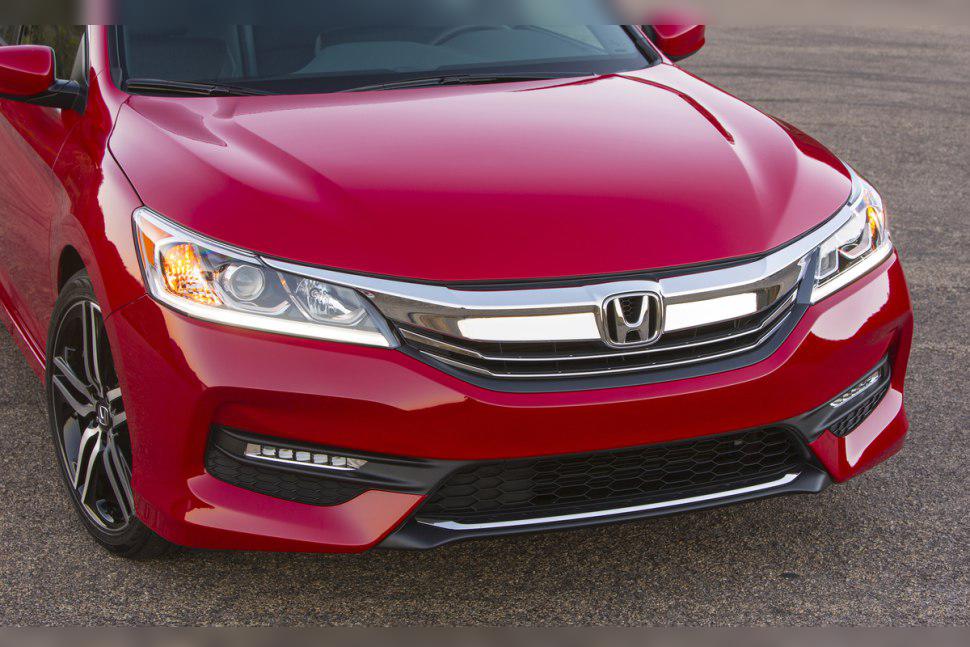


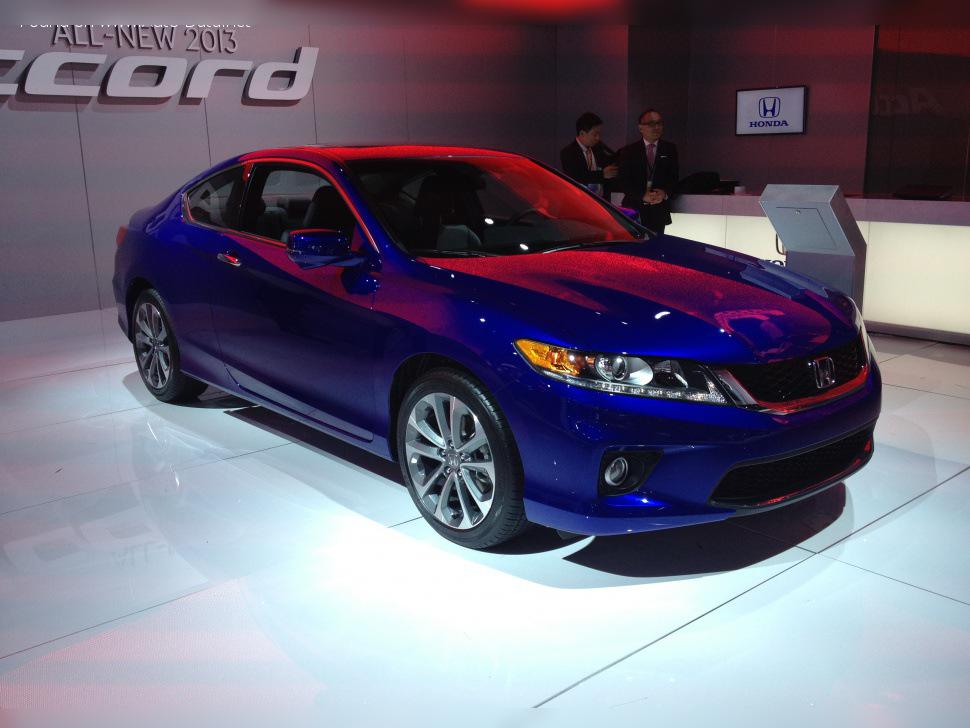
Honda 2.4 (K24W) Earth Dreams – Experiences, Problems, Fuel Consumption and Used Car Buying Tips
If you’re considering a ninth-generation Honda Accord, especially the post-facelift models (2015+), you’ll often find the engine with the code K24W under the hood. This is not “just another” Honda 2.4 petrol. It’s part of Honda’s “Earth Dreams” technology, which brought significant changes compared to the legendary but older K24A/Z engines.
As someone who has spent years analyzing Japanese engineering, I can tell you this is one of the last “true” naturally aspirated engines before the turbo era fully took over the market. Still, direct injection and CVT gearboxes bring specific characteristics you need to know about before buying.
Key points in short (TL;DR)
- Reliability: Extremely high, typical for Honda, but it requires high-quality oil.
- Injection system: Direct injection (GDI) – more efficient, but more prone to carbon buildup on valves.
- Transmission: Comes with an excellent manual gearbox or a solid CVT (not a conventional automatic).
- Most common issue: Noise (rattling) from the VTC actuator on cold start.
- Fuel consumption: Surprisingly economical for a 2.4-liter engine on the open road.
- Recommendation: An excellent choice for those who want a sedan or coupe that will last for years with regular maintenance.
Contents
- Technical Specifications
- Reliability and Maintenance
- Specific Parts (Costs)
- Fuel Consumption and Performance
- Additional Options and Modifications
- Transmission
- Buying Used and Conclusion
Technical Specifications
| Parameter | Value |
|---|---|
| Engine code | K24W (Earth Dreams) |
| Displacement | 2356 cc (2.4 L) |
| Power | 139–140 kW (188–189 hp) |
| Torque | 245 Nm |
| Fuel type | Petrol (Gasoline) |
| Injection | Direct injection |
| Induction | Naturally aspirated |
Reliability and Maintenance
Honda K-series engines are known as “bulletproof”, but the K24W brings modernization that requires a bit more attention from the owner than older models.
Timing drive: Chain or belt?
This engine uses a timing chain. Honda chains are generally very durable and designed to last as long as the engine itself. However, chain life depends directly on regular oil changes. If the oil is not changed on time, the hydraulic chain tensioner can fail, or the chain can stretch (usually only after 200,000–250,000 km). There is no fixed replacement interval; it is replaced only if you hear rattling or if the check engine light comes on due to timing deviation.
Most common failures
Although reliable, the K24W has a few known “weak spots”:
- VTC Actuator (Variable Timing Control): This is the most common issue. The symptom is a short, loud metallic rattle (1–2 seconds) immediately after a cold start. Although Honda says this does not immediately damage the engine, over time it can lead to chain stretch. It is resolved by replacing the actuator.
- Carbon buildup: Due to direct injection, fuel does not wash the intake valves. After 100,000+ km, carbon deposits can form and restrict airflow. Symptoms are rough idle and a slight loss of power. Mechanical cleaning is required (“walnut blasting” or chemical treatment).
- Starter motor: Sometimes it can fail earlier than expected, leaving you with an engine that only “clicks” when you try to start it.
Service intervals and oil
There is no major service in the classic sense (no timing belt replacement). Instead, the focus is on the auxiliary (serpentine) belt that drives the alternator and A/C, which is inspected at every service and replaced as needed (usually around 100,000 km).
Oil is critical for this engine. The engine takes about 4.2 to 4.4 liters of oil. The recommended grade is strictly 0W-20. Due to tight tolerances and the VTC system, thicker oils can cause problems with oil pressure in the variable valve timing system. Oil consumption between services is possible, but on a healthy K24W it should not exceed 0.5 to 1 liter per 10,000 km. If it consumes more, check the PCV valve or the condition of the piston rings (less likely at lower mileage).
Spark plugs: Being a petrol engine, it uses iridium spark plugs. The recommended replacement interval is around 100,000 to 120,000 km. Do not skimp on spark plugs; use NGK or Denso according to specification.
Specific Parts (Costs)
Maintaining a Honda is not the cheapest, but considering it rarely breaks down, the overall cost of ownership is acceptable.
- Dual-mass flywheel: Models with a manual gearbox usually have a dual-mass flywheel for comfort and reduced vibrations. It is a wear item and replacement is expensive (depends on the market, but expect a “costly” job). Models with a CVT gearbox do not have a classic dual-mass flywheel; they use a torque converter and a flex plate instead, which is a more durable solution.
- Injection system: The engine uses a high-pressure pump and injectors for direct injection. The injectors are more sensitive to poor fuel quality than on older engines. Replacing a set of injectors is very expensive (market-dependent). Fortunately, they are not known for widespread failures.
- Turbocharger: This engine does not have a turbocharger. This is a big advantage in terms of longevity – no turbo to fail, no intercooler, no complex pressurized piping.
- EGR and DPF: As a petrol engine, it does not have a DPF filter. It has a catalytic converter that can fail at high mileage. It has an EGR system for exhaust gas recirculation that rarely clogs, but if it does, cleaning is usually sufficient.
- AdBlue: This engine does not have an AdBlue system or any additional exhaust treatment fluids.
Fuel Consumption and Performance
The K24W is one of the most efficient naturally aspirated engines of this displacement.
- City driving: This is where you feel the 2.4-liter displacement. Real-world city consumption is between 10 and 12.5 liters/100 km, depending on traffic and how heavy your right foot is. The CVT helps keep this figure at the lower end.
- Open road and highway: This is where the engine shines. At 130 km/h, thanks to the CVT (or a long sixth gear on the manual), the engine runs at relatively low rpm. Fuel consumption drops to 6.5 to 8 liters/100 km, which is an excellent result.
- Is the engine “lazy”? With 188 hp and 245 Nm, the engine is not lazy, but it has a different character from diesels or turbo petrols. There is no “kick in the back” at 2000 rpm. Power builds linearly. To feel all 188 horses, you need to rev it above 4000–5000 rpm. For the Accord’s body (which is not light), the power is more than sufficient for overtaking and safe driving, but don’t expect race-car-like performance.
Additional Options and Modifications
LPG (Autogas) conversion
Because of direct injection, installing LPG on this engine is more complex and more expensive than on older Hondas. You need a system designed for DI engines. There are two options: a system that uses a mix of petrol and LPG (to cool the petrol injectors) or a liquid LPG injection system using the petrol injectors. Both systems are expensive (market-dependent, but the initial investment is high), and the cost-effectiveness is questionable unless you drive very high mileage.
Remapping (Tuning)
This is a naturally aspirated engine. A “Stage 1” remap will bring negligible gains, maybe 5 to 8 hp, which you won’t really feel in everyday driving. The only real way to increase power is through mechanical modifications (intake, exhaust, camshafts), which is an expensive hobby. The stock map is optimally tuned for longevity and fuel economy.
Transmission
With this engine in the Accord IX (facelift) models, you get two options:
- 6-speed manual gearbox: Honda manual gearboxes are legendary. Precise, with a short throw, a real joy to use. Failures of the gearbox itself are extremely rare. All it needs is a gearbox oil change (Honda MTF oil) every 60,000–80,000 km. The main cost is clutch replacement (disc, pressure plate, release bearing), which depends on driving style.
- CVT (Continuously Variable Transmission): Honda has made one of the better CVT gearboxes on the market. It has no conventional gears, but it simulates gear changes under heavy throttle to avoid the “scooter effect”.
- Failures: If not maintained, the belt can slip or the cones can be damaged. Symptoms are jerking when taking off or delayed response.
- Maintenance: This is critical! The CVT fluid (only Honda HCF-2 fluid) must be changed every 40,000 to 60,000 km (or every 2 years). If you’re buying a used car without proof of CVT fluid changes, it’s a risk.
Buying Used and Conclusion
Before buying a used Honda with the K24W engine, pay attention to the following:
- Cold start: Insist that the engine be completely cold when you arrive. Start it and listen for a short “trrr” (rattle). This is a sign of a bad VTC actuator.
- Service history: Because of the chain and VTC system, regular oil changes are more important than with many other brands. If the oil was changed every 30,000 km (“Long Life” regime), be cautious.
- CVT test drive: Put it in D and release the brake – the car should move off smoothly, without jerks. Under hard acceleration, the revs should rise linearly.
Conclusion: The Honda Accord with the K24W engine is a fantastic choice for drivers who value refinement, comfort and reliability over brute low-end torque. It’s an “old-school” engine with modern technology. Maintenance is not the cheapest due to specific parts and the requirement for genuine fluids, but with proper care this engine will serve you for hundreds of thousands of kilometers without needing anything more than regular servicing under the hood.
Was this content useful to you?
Your opinion helps us to improve the quality of the content.