LFA1 Engine
- Engine
- 1993 cm3
- Aspiration
- Naturally aspirated engine
- Fuel
- Petrol / electricity
- Fuel injection system
- Multi-port manifold injection
- Power
- 141 hp @ 6200 rpm
- Torque
- 165 Nm
- Cylinders
- 4
- Valves
- 16, 4 per cylinder
- Cylinders position
- Inline
- Valvetrain
- DOHC, i-VTEC
- Oil capacity
- 3.7 l
- Coolant
- 5.33 l
# Vehicles powered by this engine
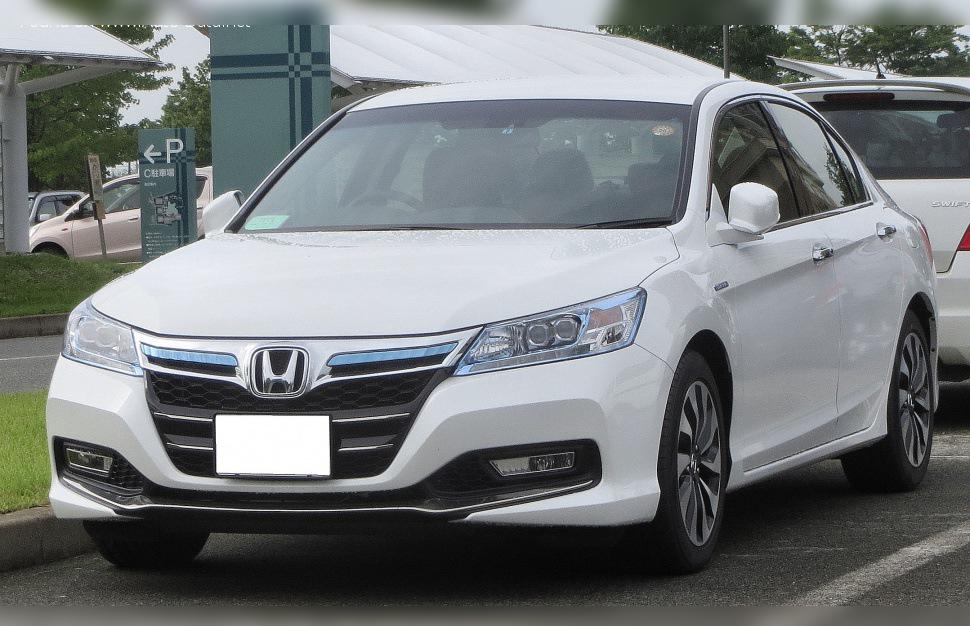
Honda LFA1 (2.0 i-VTEC Atkinson): Experiences, issues, fuel consumption and hybrid technology
Key points (TL;DR)
- Exceptional reliability: The LFA1 is a naturally aspirated petrol engine that runs on the Atkinson cycle, which means less stress on internal components.
- Chain instead of belt: The engine uses a timing chain designed to last as long as the car itself.
- Not a racer, but a generator: Most of the time this engine is used to charge the battery or maintain speed, while acceleration is handled by the electric motor.
- e-CVT transmission: This is not a classic belt CVT, but a system of gears and electric motors (i-MMD) that is mechanically indestructible with regular oil changes.
- The battery is the main expense: On used cars, the condition of the high-voltage battery is more critical than the condition of the petrol engine itself.
- Body parts and specific sensors: They can be expensive and harder to find because this model (Accord IX Hybrid/PHEV) is rarer on many markets.
Contents
- Technical specifications
- Reliability and maintenance
- Specific parts and costs
- Fuel consumption and performance
- Additional options and modifications
- Transmission (e-CVT)
- Buying used and conclusion
Introduction
The engine with the code name LFA1 is not a regular Honda 2.0 petrol unit. It is the heart of Honda’s sophisticated plug-in hybrid system installed in the ninth generation of the Honda Accord. Unlike standard R20 engines, the LFA1 is modified to run on the Atkinson cycle. In practice, this means the engine sacrifices low-end power in favor of maximum thermal efficiency and low fuel consumption.
This engine is crucial because it represents Honda’s transition to serious hybrid technology (i-MMD), where the petrol engine often does not drive the wheels directly, but instead works as a generator for the powerful electric motor.
Technical specifications
| Parameter | Data |
|---|---|
| Engine displacement | 1993 cc (2.0 L) |
| Power (petrol engine) | 105 kW (141 hp) at 6200 rpm |
| Power (system – hybrid) | 143 kW (196 hp) |
| Torque (petrol) | 165 Nm at 4500 rpm |
| Torque (electric motor) | 307 Nm (available from 0 rpm) |
| Engine code | LFA1 |
| Injection type | Multipoint (PGM-FI) |
| Aspiration | Naturally aspirated |
| Valve system | DOHC i-VTEC |
Reliability and maintenance
Timing drive (chain or belt?)
The LFA1 engine uses a timing chain (maintenance-free timing chain). Honda chains on 2.0 engines have proven to be very durable. Since this is a hybrid, the engine frequently stops and starts, but the electronics control the revs so there are no sudden jolts that would stretch the chain. Chain replacement is usually not needed before 300,000 km, unless you hear a characteristic rattling noise on cold start.
Most common issues
Mechanically speaking, the LFA1 is “indestructible” if maintained properly. It operates under lower load than conventional engines. Still, possible issues include:
- VTC actuator (variable camshaft): As with most Honda K and R series engines, you may get a short “rattle” on cold start. This is often just a cosmetic issue (noise), but if it becomes frequent, the actuator needs to be replaced.
- Carbon buildup: Although it is not high-pressure direct injection, frequent start/stop cycles can lead to dirty EGR passages or intake manifold at high mileage.
- Inverter cooling system: Although not part of the engine block itself, the electric water pump for the hybrid system is a critical point. If it fails, the system goes into safe mode.
Major service and oil
On this engine there is no classic “major service” (timing belt replacement). Instead, at around 100,000–120,000 km you check the auxiliary (serpentine) belt that drives peripheral components (although on hybrids many pumps are electric, so the system is simpler). At the same time, the valves must be adjusted (mechanical adjustment, shims/screws) because Honda does not use hydraulic lifters.
Oil: The engine takes approximately 3.7 to 4.0 liters of oil. The recommended grade is strictly 0W-20. Due to frequent engine stop/start during driving, thin oil is necessary for instant lubrication. Oil consumption is minimal and should not exceed 0.5 liters between services (10,000–15,000 km). If it consumes more, the oil control rings have likely stuck due to long use with poor-quality oil.
Spark plugs and injectors
This is a petrol engine, so it uses spark plugs. The factory recommendation is iridium spark plugs (NGK or Denso). Replacement interval is long, usually at 100,000–120,000 km. Do not skimp on spark plugs, because a weak spark directly affects hybrid system efficiency and the health of the catalytic converter.
Specific parts (costs)
Dual-mass flywheel: This engine DOES NOT HAVE a classic dual-mass flywheel like diesels do. Instead, it has a damper plate that connects the engine to the e-CVT transmission. This part is very durable and rarely fails. Replacement cost: Expensive, but rarely needed (depends on the market).
Fuel injection system: It uses reliable electromagnetic petrol injectors. They are not prone to failure like piezo injectors on modern diesels. Ultrasonic cleaning is possible, but rarely needed before 200,000 km.
Turbocharger: The engine is naturally aspirated, it has no turbocharger. That’s one (expensive) worry less. Power is compensated by the electric motor.
EGR and DPF: There is no DPF (because it’s a petrol engine), but it does have a catalytic converter and an EGR valve. The EGR can clog with soot, causing rough running. A GPF (gasoline particulate filter) was generally not fitted on this model year (Accord IX), depending on the market, but check by VIN to be sure.
AdBlue: There is no AdBlue system.
Fuel consumption and performance
Real-world fuel consumption: This is the strongest point of the LFA1 engine in the hybrid system.
- City driving (full battery): 0 l/100 km (up to about 20–25 km of electric-only range).
- City driving (empty battery – hybrid mode): 4.5–5.5 l/100 km. Thanks to regenerative braking, consumption is ridiculously low for a car of this size.
- Motorway (130 km/h): Here physics takes over. Consumption rises to 6.5–7.5 l/100 km. At these speeds the electric motor helps less and the petrol engine runs continuously.
Is the engine “lazy”? The petrol engine alone, with 165 Nm, would be too weak for the heavy Accord body (because of the batteries). HOWEVER, with the help of the electric motor, the car has instant torque of over 300 Nm. Acceleration is linear and convincing, especially at city speeds (0–60 km/h). It’s not a sports car, but it is by no means sluggish.
Cruising: Due to the e-CVT transmission, there is no fixed engine speed. At 130 km/h the engine will seek optimal revs (usually around 2500–3000 rpm), but if you hit an incline, revs will rise so the generator can produce enough power for the electric motor.
Additional options and modifications
LPG conversion: Technically possible because the engine has indirect injection (in most variants), but it is NOT RECOMMENDED. Reasons:
1. The boot is already smaller because of the batteries, you have nowhere to put the tank.
2. The engine constantly starts and stops. LPG systems need a stable coolant temperature, which is hard to achieve on a hybrid in winter.
3. The savings are minimal because the car already uses only about 5 liters of petrol.
Remapping (Stage 1): Pointless. This is a naturally aspirated engine optimized for efficiency. Gains would be negligible (maybe 3–5 hp), and you risk upsetting the complex synchronization between the petrol and electric drive.
Transmission (e-CVT)
The LFA1 engine in the Accord PHEV comes exclusively with an e-CVT.
Important: This is not a classic CVT with “belts and cones” that wear out. It is Honda’s i-MMD system.
How does it work? The transmission consists of two large electric motors and a clutch that, at higher speeds, directly connects the petrol engine to the wheels (one fixed gear ratio, similar to 5th or 6th gear). In the city, the wheels are driven ONLY by the electric motor, while the petrol engine spins the generator.
Failures and maintenance:
This transmission is mechanically simpler and more reliable than classic automatics or DSG gearboxes. There are no clutch packs that wear out, no mechatronics unit that easily fails.
Maintenance: The only requirement is changing the transmission fluid (Honda ATF-DW1 or specific HCF-2, always check the manual). It is recommended to change it every 40,000–60,000 km. The cost is relatively low (just oil and labor) and it extends the life of the electric motors inside the housing.
Buying used and conclusion
Buying a Honda Accord with the LFA1 engine is essentially buying a hybrid system, not just an engine.
What to check before buying?
- Condition of the high-voltage battery: This is the most expensive component. If capacity has dropped significantly, electric range will be minimal and fuel consumption higher. Checking it requires specific diagnostics.
- Inverter and cooling: Check if there is enough coolant in the inverter reservoir and listen for any strange buzzing noises.
- Transmission service history: Has the oil in the e-CVT been changed?
- Signs of accidents: Hybrid components (orange cables) are sensitive and located all over the car. Poor bodywork repairs can be dangerous.
Conclusion: The LFA1 engine is a technological gem for drivers who want comfort, quiet operation and low fuel consumption, and are willing to accept the complexity of a hybrid system. It is not for racers, nor for those who want cheap “backyard” maintenance, but for people who appreciate Japanese engineering. If the battery is in good condition – it comes with a warm recommendation.
Was this content useful to you?
Your opinion helps us to improve the quality of the content.