K24Z3 Engine
- Engine
- 2354 cm3
- Aspiration
- Naturally aspirated engine
- Fuel
- Petrol (Gasoline)
- Fuel injection system
- Multi-port manifold injection
- Power
- 201 hp @ 6800 rpm
- Torque
- 220 Nm @ 4500 rpm
- Cylinders
- 4
- Valves
- 16, 4 per cylinder
- Cylinders position
- Inline
- Valvetrain
- DOHC
- Oil capacity
- 4.2 l
- Coolant
- 6.1 l
# Vehicles powered by this engine
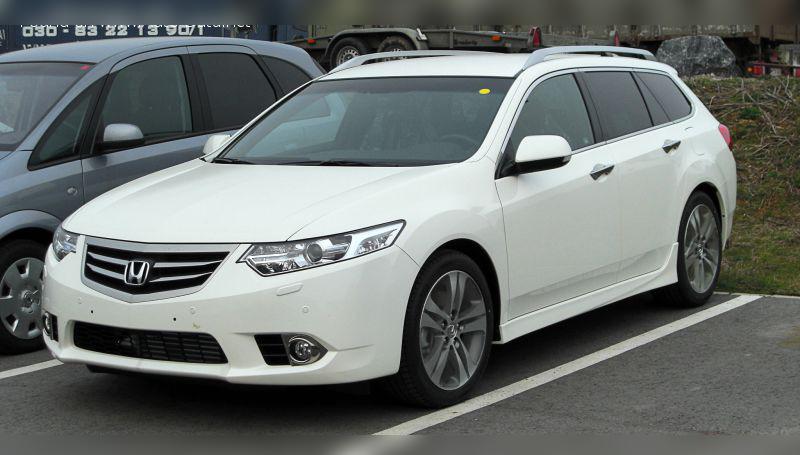
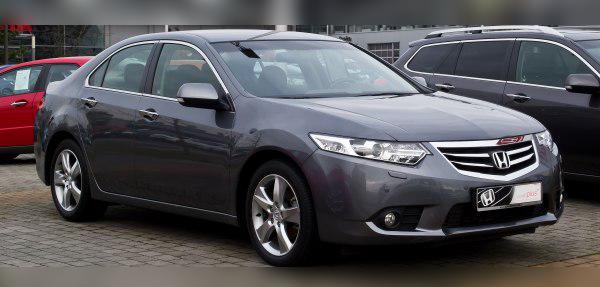

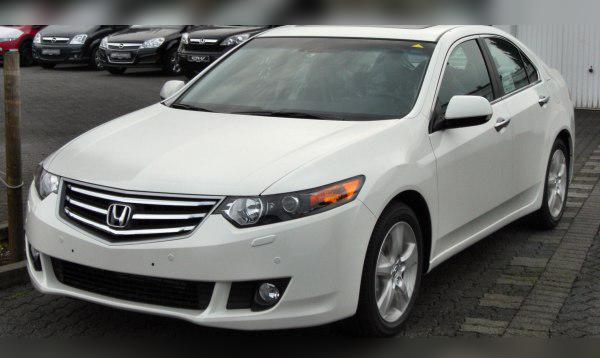
Honda 2.4 i-VTEC (K24Z3) – Experiences, Issues, Fuel Consumption and Buying Tips
Key points (TL;DR)
- Reliability: Extremely robust naturally aspirated petrol engine, one of the best in its class, but not immune to oil consumption.
- Main weakness: The VTC actuator (variable cam gear) often makes noise on cold start (a “rattling” sound).
- Performance: 201 hp looks strong on paper, but it needs high revs. It’s not a low‑rpm “sprinter” because of the Accord’s weight.
- Maintenance: Timing is driven by a chain. Overall maintenance is affordable, unless oil level is neglected.
- Fuel consumption: Thirsty in the city (over 11–12 l/100 km), very economical on the open road for its displacement.
- LPG: Handles LPG well, but requires regular manual valve clearance adjustment.
- Recommendation: An excellent choice for drivers who cover a lot of highway mileage and want a smooth petrol engine without diesel complications.
Contents
- Introduction: About the Engine and the Model
- Technical Specifications
- Reliability and Maintenance
- Specific Parts and Costs
- Fuel Consumption and Performance
- Additional Options and Modifications (LPG & Tuning)
- Gearbox: Manual vs Automatic
- Buying Used and Conclusion
Introduction: About the Engine and the Model
The engine designated K24Z3 represents the top of the four‑cylinder petrol range in the eighth‑generation Honda Accord (the popular “eighth gen” or CU2). This is not just “another petrol engine”, but part of Honda’s legendary K‑series, known for durability and excellent engineering.
It was primarily installed in the Honda Accord VIII (2008–2015), both in sedan and Tourer (wagon) versions. It is often found in “Type S” or “Executive” trim levels. Unlike the smaller 2.0 engine (R20), this 2.4‑liter unit provides the necessary “extra” power that makes the heavy Accord body agile and comfortable for long trips. This is an engine for people who want to avoid modern diesel problems (DPF, sensitive injectors) but still want power and refinement.
Technical Specifications
| Specification | Value |
|---|---|
| Engine code | K24Z3 |
| Displacement | 2354 cc (2.4 L) |
| Power | 148 kW (201 hp) @ 7000 rpm |
| Torque | 220–230 Nm @ 4300–4500 rpm (depending on market) |
| Injection type | Multipoint (indirect injection) |
| Aspiration | Naturally aspirated |
| Timing drive | Chain |
| Emission standard | Euro 5 |
Reliability and Maintenance
Does this engine have a timing belt or a chain?
The K24Z3 engine uses a timing chain. Honda chains are generally very reliable and designed to last “as long as the engine”. However, the chain is not indestructible. Its lifespan directly depends on regular oil changes and keeping the oil level at the maximum mark. Chain stretch can occur at higher mileage (over 200,000 km) if the engine has been driven with low oil.
What are the most common issues with this engine?
Although the engine is a real “workhorse”, there are specific weak points you need to pay attention to:
- VTC actuator (camshaft gear): This is the most well‑known issue of the K24Z series. It manifests as a short, loud metallic noise (rattling) on cold start, lasting 1–2 seconds. The problem lies in the locking mechanism of the gear that fails to hold oil. While it doesn’t cause immediate catastrophic failure, over time it can damage the chain. The fix is to replace the actuator (the genuine part is expensive, but it’s the only permanent solution).
- Oil consumption: Due to the design of the piston rings aimed at reducing friction, this engine can consume oil, especially in VTEC mode (high revs). It’s not as alarming as with some German competitors, but it does require checking the dipstick every 1,000 km.
- Knock sensor: Can trigger the “Check Engine” light, but the repair is relatively simple.
Service intervals and spark plugs
Minor service: Recommended every 10,000 km or once a year. Japanese engines like fresh oil.
Major service: Since the engine has a chain, a classic fixed‑interval “major service” (as with belts) is not performed. The auxiliary belt (serpentine belt), tensioners and water pump are replaced as needed, usually around 100,000–120,000 km or when noise appears.
Spark plugs: Only iridium spark plugs (NGK or Denso) should be used. Replacement interval is long, usually 100,000 to 120,000 km. Do not experiment with standard plugs.
Oil: Quantity and grade
The engine takes about 4.2 to 4.5 liters of oil (with filter).
Recommended grade: Honda recommends 0W‑20 for this engine (for fuel economy and tight tolerances) or 5W‑30. For European conditions and engines with more than 150,000 km, high‑quality 5W‑30 synthetic has proven to be an ideal solution, offering better protection at high temperatures and slightly lower oil consumption.
Does it burn oil and what is considered normal?
Yes, the K24Z3 tends to “drink” some oil; that’s in its nature. Consumption of 0.3 to 0.5 liters per 1,000 km is, according to factory specifications (which are always generous), considered acceptable, but in practice a healthy engine should not require more than 1 liter of top‑up between two services (over 10,000 km) with normal driving. If you often drive it in the “red” (VTEC zone), expect higher consumption.
Specific Parts and Costs
Does the engine have a dual‑mass flywheel?
Yes, versions with a manual gearbox have a dual‑mass flywheel. It serves to dampen vibrations of the strong four‑cylinder. Models with an automatic gearbox do not have a dual‑mass flywheel (they use a torque converter instead).
Injection system and injectors
This is a classic MPi (Multi‑Point Injection) system, not direct injection. That’s excellent news for a used car! The injectors are extremely durable, cheap to maintain and do not suffer from carbon buildup on the intake valves, which is a common issue on newer direct‑injection engines.
Turbo, DPF, EGR, AdBlue?
- Turbo: None. The engine is naturally aspirated. No expensive turbo, intercooler or boost hose repairs.
- DPF / AdBlue: None. This is a petrol engine.
- EGR valve: Present, as part of the exhaust gas recirculation system. It can get dirty at high mileage, but it can be cleaned. Far less problematic than on diesels.
Fuel Consumption and Performance
Real‑world consumption (City vs Highway)
Don’t expect miracles in city driving. A 2.4‑liter displacement needs fuel.
- City driving: Realistically expect between 11 and 14 l/100 km (automatics are at the higher end, more in winter).
- Open road / Motorway: This is where the engine shines. Consumption drops to 7 to 8.5 l/100 km with normal driving.
Is the engine “lazy”?
The term “lazy” is relative. With 201 hp, the engine has plenty of power, but it has a characteristic Honda torque curve. Maximum torque is available only at a high 4300+ rpm. At low revs (below 3000), in the heavy Accord body (around 1500–1600 kg), it can feel tame, even sluggish if you’re used to the low‑rpm “kick” of a turbo‑diesel.
However, once it passes 4500 rpm and VTEC “comes on”, the car becomes very fast and agile. For overtaking, you need to drop one or two gears (with the manual gearbox).
Behaviour on the motorway (130 km/h)
This is an ideal cruiser. Sound insulation in the Accord VIII is excellent.
At 130 km/h:
- Manual (6‑speed): Revs at about 3000–3200 rpm.
- Automatic (5‑speed): Due to long gearing, revs are similar or slightly lower.
The engine is relaxed, quiet and has enough power in reserve to accelerate to 160+ km/h without strain.
Additional Options and Modifications
Is it suitable for LPG?
Yes, but with a strict warning. The K24Z3 runs very well on LPG, but Honda engines use mechanical valve clearance adjustment (they don’t have hydraulic lifters).
LPG burns at a higher temperature, which leads to faster valve seat recession. If you run LPG, valve clearance inspection and adjustment is mandatory every 20,000 to 40,000 km. If you neglect this, the valves will burn, which is a very expensive repair (the cylinder head has to come off).
Remapping (Stage 1)
On a naturally aspirated engine, a typical “Stage 1” does not bring a dramatic increase in peak power (maybe 5–10 hp, which you won’t really feel).
However, a “Honda reflash” or custom mapping can be useful to:
1. Lower the VTEC engagement point (so it “pulls” earlier).
2. Improve throttle response.
For serious power gains, mechanical modifications (intake, exhaust, etc.) are needed, which is an expensive hobby.
Gearbox: Manual and Automatic
Gearbox options
- Manual: 6‑speed gearbox. One of the best in its class. Short, precise throws, a real joy to use.
- Automatic: 5‑speed conventional automatic (torque converter). This is a Honda gearbox, not ZF or Aisin.
Gearbox issues and maintenance
Manual: Almost indestructible. Actual gearbox failures are rare. The main expense is the clutch kit and dual‑mass flywheel. Replacing the kit with the flywheel is a costly job (depends on the market, but count on it being “very expensive”). Gearbox oil should be changed every 60,000–80,000 km (Honda MTF‑3).
Automatic: Very reliable (“bulletproof”), but slower than modern dual‑clutch transmissions. It has no dual‑mass flywheel (clutch‑related maintenance is cheaper).
Failure symptoms: Jerking when shifting, hesitation or slipping.
Maintenance: Oil changes (ATF‑DW1) are mandatory every 40,000 to 60,000 km. Many owners neglect this and destroy the gearbox. The transmission oil filter is external and should also be replaced.
Buying Used and Conclusion
What to check before buying? (Checklist)
- Cold start (MOST IMPORTANT): Insist that the engine is completely cold when you arrive. Start the engine and listen. If you hear a loud metallic rattle (like shaking a box of bolts) in the first 2 seconds, the VTC actuator needs replacing.
- Oil level: Pull out the dipstick. If the level is at minimum or below, it’s a sign the owner doesn’t check the oil, which is deadly for the chain on this engine.
- Steering rack: Not part of the engine, but a known weak point of the Accord VIII. Check for play or knocking when turning the steering wheel at a standstill.
- Vibrations at idle: May indicate worn engine mounts or an issue with the dual‑mass flywheel (on manuals).
Final conclusion
The Honda 2.4 i‑VTEC (K24Z3) is a choice for “gentlemen” and enthusiasts. It is aimed at drivers who want reliability above all, comfort and sufficient power reserves, and who are willing to accept slightly higher registration costs and city fuel consumption.
If you are choosing between the 2.0 and 2.4 petrol in the Accord, the 2.4 is the better choice. Fuel consumption is almost the same (because the 2.0 struggles more with the heavy body), while driving pleasure is dramatically higher. The automatic version is ideal for relaxed driving, while the manual gearbox is a real gem for those who enjoy driving.
Was this content useful to you?
Your opinion helps us to improve the quality of the content.