K24Z2 Engine
- Engine
- 2354 cm3
- Aspiration
- Naturally aspirated engine
- Fuel
- Petrol (Gasoline)
- Fuel injection system
- Multi-port manifold injection
- Power
- 177 hp @ 6500 rpm
- Torque
- 220 Nm @ 4300 rpm
- Cylinders
- 4
- Valves
- 16, 4 per cylinder
- Cylinders position
- Inline
- Valvetrain
- DOHC
- Oil capacity
- 4.2 l
- Coolant
- 6 l
# Vehicles powered by this engine
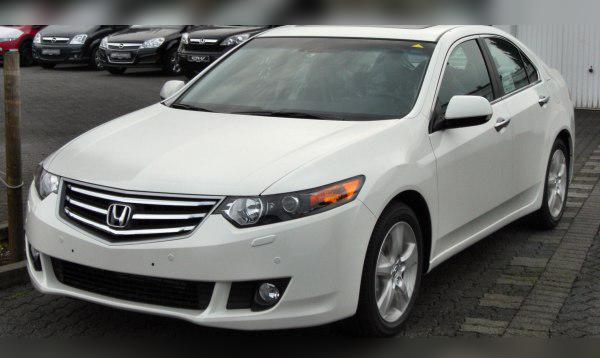
Honda 2.4 i-VTEC (K24Z2) – Experiences, issues, fuel consumption and used-car buying guide
1. Key points in short (TL;DR)
- Reliability: Extremely reliable engine (one of Honda’s best), provided that the oil is changed regularly.
- Biggest downside: The VTC actuator (variable cam gear) often makes noise on cold start – annoying, but fixable.
- Fuel consumption: Not a low-consumption engine. In the city expect a two‑digit figure, especially with the automatic gearbox.
- Maintenance: It has a timing chain, no turbo, no DPF. Maintenance is predictable, but some Honda‑specific parts can be more expensive.
- Gearbox: The automatic is “old school” (5‑speed), slower but nearly indestructible. The manual gearbox is precise and sporty.
- Recommendation: Ideal for people who want a comfortable sedan for highway driving and want to avoid complicated modern diesels.
Contents
- Introduction and applications
- Technical specifications
- Reliability and maintenance
- Specific parts and costs
- Fuel consumption and performance
- Additional options (LPG) and tuning
- Gearbox: Manual vs Automatic
- Used‑car buying tips and conclusion
Introduction: The last samurai of the naturally aspirated school
The engine designated as K24Z2 belongs to Honda’s legendary K‑series. This is an engine that goes against the “downsizing” trend. While European competitors at the time were already switching to 1.8 or 2.0 turbo engines, Honda put this large 2.4‑liter naturally aspirated petrol engine into the Accord VIII (and related models such as the Acura TSX on other markets).
The 177 hp version is a specific “detuned” variant (often seen on the US market or certain European import models, while the pure EU “Type S” had 201 hp). Still, the mechanicals are almost identical. This is an engine for drivers who appreciate linear power delivery, the sound at high revs and mechanical simplicity.
Technical specifications
| Parameter | Value |
|---|---|
| Displacement | 2354 cc (2.4 L) |
| Power | 132 kW / 177 hp (at approx. 6500 rpm) |
| Torque | 220 Nm (at approx. 4300 rpm) |
| Engine code | K24Z2 (Related: K24Z3) |
| Injection type | PGM-FI (multi‑point indirect injection) |
| Induction | Naturally aspirated – no turbo |
| Valvetrain | DOHC, i-VTEC, 16 valves |
Reliability and maintenance
Timing system: Chain or belt?
The Honda K24Z2 uses a timing chain. In general, this chain is very durable and can often last over 250,000 km without replacement. However, it is not “eternal”.
Problem symptoms: If the chain stretches (usually due to poor maintenance or using unsuitable oil), the “Check Engine” light will come on (camshaft/crankshaft correlation error) and you will hear rattling from the side of the engine. Replacing the chain is an expensive job, but it is done rarely.
Most common failures and “Achilles’ heel”
Although the engine is a real “workhorse”, there is one issue that affects almost every Honda with a K24 engine:
VTC actuator (variable cam gear): This is the most common problem. The symptom is a short but loud “grinding” or “rattling” noise (like metal on metal) that lasts 1–2 seconds right after a cold start.
Cause: The oil drains out of the actuator while the car is parked, and when you start the engine the gear “knocks” until oil pressure builds up. Although it sounds scary, the engine rarely suffers catastrophic damage, but it is a sign that the part needs to be replaced.
Oil consumption and servicing
- Oil consumption: Honda engines, especially VTEC, tend to “drink” a bit of oil if driven at high revs. The K24Z series is better than older models, but consumption of 0.5 L to 1 L per 3,000–5,000 km can be considered acceptable on older examples. If it uses a liter per 1,000 km, that points to stuck oil control rings (a common issue if oil changes were neglected).
- Oil quantity and grade: The engine takes about 4.2 to 4.4 liters of oil. The strict recommendation is 0W‑20 or 5W‑30. Thick oils (like 10W‑40) can damage the delicate VTEC mechanism and the chain.
- Major service: Since it has a chain, there is no classic major service at a fixed mileage. The auxiliary (serpentine) belt is replaced and the valve clearance is checked every 40,000–60,000 km (mechanical adjustment, there are no hydraulic lifters).
- Spark plugs: It uses iridium spark plugs (NGK or Denso). Replacement interval is long, usually at 100,000 to 120,000 km.
Specific parts (costs)
Fuel injection system and injectors
This engine uses classic MPi (multi‑point) injection into the intake manifold. This is great news for a used car. The injectors are extremely durable, cheap to clean and rarely fail. There are no issues with carbon buildup on the valves that plague modern direct‑injection engines.
Dual‑mass flywheel and turbo
- Turbocharger: There isn’t one. One worry less. No turbo that can fail, no intercooler that can leak.
- Dual‑mass flywheel:
- If you have a manual gearbox: YES, it has a dual‑mass flywheel. Its lifespan is around 150,000–200,000 km, depending on driving style.
- If you have an automatic gearbox: There is NO dual‑mass flywheel. It uses a torque converter.
Emissions equipment (DPF, EGR, AdBlue)
This is a petrol engine, so it does not have a DPF filter. It has a catalytic converter that can fail if the car is driven with bad spark plugs or coils, but that is rare. It has an EGR valve, but on petrol engines it rarely clogs to the point of causing problems like on diesels. AdBlue: None. The system is simple.
Fuel consumption and performance
Is 177 hp “sluggish”?
It depends on what you drove before. The Honda Accord VIII is a heavy car (around 1500 kg).
The engine is naturally aspirated, which means it does not have a sudden surge of torque at 1800 rpm like a turbo diesel. Up to 3500 rpm it feels tame and quite ordinary. The real power wakes up only above 4500 rpm when VTEC kicks in. For overtaking you need to drop one or two gears. If you like to rev the engine, you will find it fun. If you prefer “torquey” driving (staying in fifth on an uphill), it will feel sluggish.
Real‑world fuel consumption
- City driving: Expect 10.5 to 13 l/100 km. In winter and heavy traffic, the automatic can go over 14 l/100 km.
- Country roads: This is where the engine is most efficient, using about 6.5 to 7.5 l/100 km.
- Motorway (130 km/h): Consumption is around 8–9 l/100 km.
At 130 km/h the engine spins at about 2700–3000 rpm (depending on the gearbox), which is comfortable for cruising. Cabin insulation in the Accord VIII is excellent.
Additional options and modifications
LPG conversion
Yes, this engine can be converted to LPG and it handles it well, BUT under one major condition:
Regular valve adjustment.
Honda engines have relatively “soft” valve seats. On LPG, valve clearances close up faster. If you don’t check the clearances every 20,000–30,000 km, you risk burning a valve, which is a very expensive repair (removing the cylinder head). The recommendation is to install a quality system with OBD connection and possibly a valve lubrication kit (although regular adjustment is by far the most important).
Chip tuning (Stage 1)
Since the engine is naturally aspirated, a classic “Stage 1” remap doesn’t make much sense. You might gain 5–8 hp, which you won’t feel in real driving. The only way to noticeably increase power is a “Honda reflash” that lowers the VTEC engagement point and changes throttle response, but that requires a serious Honda‑specific tuner. For the average user – a waste of money.
Gearbox: Manual or automatic?
Manual gearbox (6‑speed)
Honda’s manual gearboxes are probably the best on the market in this class. Short throw, precise “click” when changing gears.
Failures: Very reliable. The main expense is the clutch kit and dual‑mass flywheel. Replacing the kit together with the flywheel is a costly job (depending on the market, but it falls into the higher expenses, often 600–900 EUR including labor).
Automatic gearbox (5‑speed)
This is a classic hydraulic automatic. It is not as fast as a DSG, and sometimes seems to “think” before downshifting (kickdown), but it is extremely comfortable and durable.
Maintenance: The transmission fluid must be changed! Recommended every 60,000 km, or earlier if the car is used only in the city. Use only Honda ATF‑DW1 or Z1 specification.
Failures: Rare. If the gearbox jerks or slips, it is usually too late for a simple fluid change and a rebuild is needed, but with regular maintenance they cover huge mileages.
Used‑car buying guide and conclusion
Before buying a Honda Accord with the K24Z2 engine, make sure to check:
- Cold start: Insist that the engine is completely cold. Listen for “rattling” in the first 2 seconds (VTC actuator).
- Steering rack: This is a known weak point of the Accord VIII. Check for play in the steering wheel or strange noises when turning the wheel at a standstill. Steering rack rebuild is not cheap.
- Oil level: Pull out the dipstick. If the level is at minimum or below, that’s a bad sign. An owner who doesn’t top up oil in a VTEC engine is not a good owner.
- Rust: Although better than older models, check the wheel arches and underbody, especially if the car was imported from colder regions (Austria, Germany).
Final conclusion
The 2.4 i‑VTEC engine is a choice for enthusiasts and rational buyers at the same time. You get performance close to 3.0 V6 engines, but with lower weight and simpler maintenance (4 cylinders).
It is not for those who want to save every drop of fuel in the city (for that there is the 2.0 petrol or 2.2 diesel). This is an engine for drivers who want reliability, sound and longevity. Maintenance costs are low compared to German premium brands of the same class, but fuel consumption is the price you pay for that peace of mind.
Was this content useful to you?
Your opinion helps us to improve the quality of the content.