R20A3 Engine
- Engine
- 1998 cm3
- Aspiration
- Naturally aspirated engine
- Fuel
- Petrol (Gasoline)
- Fuel injection system
- Multi-port manifold injection
- Power
- 155 hp @ 6000 rpm
- Torque
- 190 Nm @ 4500 rpm
- Cylinders
- 4
- Valves
- 16, 4 per cylinder
- Cylinders position
- Inline
- Valvetrain
- SOHC
- Oil capacity
- 3.7 l
- Coolant
- 5.4 l
# Vehicles powered by this engine
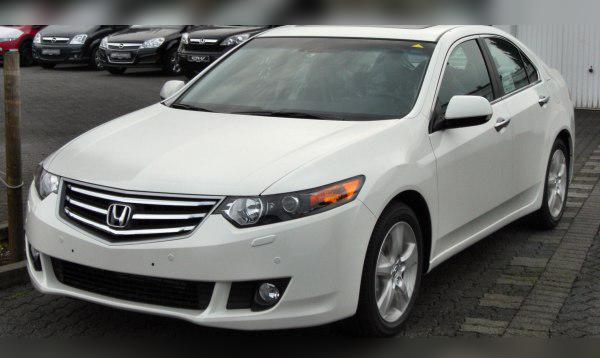
Honda 2.0 i-VTEC (R20A3): Experiences, problems, fuel consumption and buying tips
Key points in short (TL;DR)
- Reliability: This is one of the most reliable petrol engines of its generation. Its “bulletproof” reputation is well deserved with regular maintenance.
- Timing drive: Uses a chain which is long-lasting and rarely causes issues before 200,000 km.
- Performance: The engine likes high revs. In the heavy Accord VIII body it can feel “lazy” at low revs due to modest torque.
- LPG (Autogas): An ideal candidate for LPG conversion thanks to port injection, but it requires regular valve clearance checks.
- Specific issue: The VTC actuator (variable cam gear) often rattles on cold start – annoying, but rarely catastrophic.
- Fuel consumption: Thirsty in city driving, surprisingly economical on the open road.
- Recommendation: An excellent choice for drivers who want peace of mind and don’t rack up huge mileage in heavy city traffic.
Contents
- Technical specifications
- Reliability and maintenance
- Specific parts and costs
- Fuel consumption and performance
- Additional options and modifications
- Gearbox (manual and automatic)
- Buying used and conclusion
The eighth-generation Honda Accord is a car that still looks modern today and drives better than many newer vehicles. For many buyers in Europe, the heart of that car was not the more powerful 2.4 engine, nor the problematic diesel in later years, but precisely this 2.0 i-VTEC (R20A3). This is an “old-school” engine – a naturally aspirated petrol that doesn’t promise explosive acceleration, but does promise it will always get you home. It was fitted primarily in the Accord sedan and Tourer (estate) versions.
Technical specifications
| Specification | Value |
|---|---|
| Displacement | 1998 cc (2.0 L) |
| Power | 115 kW (155 hp) at 6300 rpm |
| Torque | 190 Nm at 4300 rpm |
| Engine code | R20A3 |
| Injection type | Multi-point (port injection) |
| Aspiration | Naturally aspirated |
| Number of valves | 16 (SOHC – single overhead camshaft) |
Reliability and maintenance
Does this engine have a timing belt or chain?
The R20A3 engine uses a timing chain. Honda’s chains in the R-series engines have proven to be very durable and generally do not require preventive replacement. It’s not uncommon for the chain to last over 300,000 km. However, if you hear a metallic rattling noise from the side of the engine where the belt is located (passenger side), that’s a sign the chain has stretched. Symptoms are most common on cars driven with low oil level or where oil was changed at overly long intervals.
What are the most common failures on this engine?
Although very reliable, it does have some specific “weak spots”:
- VTC actuator (rattle on cold start): This is the best-known issue. When starting a cold engine, you hear a short, loud metallic noise (grinding) lasting 1–2 seconds. The cause is the variable cam actuator that loses oil while the engine is off. Although it sounds scary, it rarely leads to major damage, but it should be fixed by replacing the part.
- Auxiliary belt tensioner: The hydraulic tensioner of the auxiliary (serpentine) belt can weaken, causing rattling or squealing from the belt.
- Oil level sensor: On some models it can trigger false warnings.
- Oil consumption (at high mileage): If the oil control rings are clogged due to poor maintenance.
At what mileage is the “major service” done?
Since the engine has a chain, the classic “major service” (belt, tensioner and water pump replacement as a set) is not done preventively at a fixed mileage like on belt-driven engines. However, it is recommended to thoroughly inspect the condition of the chain, tensioner and guides at around 200,000 km. What is mandatory on this engine is valve adjustment. The R20A3 does not have hydraulic lifters. Valve clearance must be checked and adjusted every 40,000 km (if you run LPG) or every 100,000 km (if you run on petrol). If this is neglected, the valves can burn.
How many litres of oil does this engine take and which grade is recommended?
The sump holds about 3.7 to 4.0 litres of oil (including the filter). Honda strictly recommends low-viscosity oils for proper VTEC operation and reduced fuel consumption. The best choice is 0W-20 or 5W-30. It is important to use high-quality, fully synthetic oil that meets API SN/SM standards.
Does it consume oil between services?
Honda VTEC engines tend to “drink” a bit of oil if driven aggressively at high revs (in the VTEC zone). Consumption of up to 0.5 litres per 5,000 km is perfectly acceptable and normal. However, if the engine uses a litre per 1,000 km, that points to stuck rings or worn valve stem seals. Regular oil level checks (every 2–3 fuel fill-ups) are mandatory because the VTEC system operates on oil pressure – low oil level can damage the mechanism.
At what mileage should the spark plugs be replaced?
This engine uses iridium spark plugs (NGK or Denso as OEM). Their replacement interval is long, usually 100,000 to 120,000 km. Don’t experiment with cheap copper plugs – this engine needs a strong, stable spark.
Specific parts (costs)
Does the engine have a dual-mass flywheel?
It depends on the gearbox. Versions with the automatic gearbox do not have a dual-mass flywheel (they use a torque converter). Versions with the manual gearbox in the eighth-generation Accord usually have a dual-mass flywheel. However, unlike diesels where the flywheel fails due to huge torque, here the dual-mass flywheel lasts much longer, often over 200,000 km, because the engine runs smoothly and has lower torque. Replacement is expensive (varies by market), but it’s rarely needed.
What kind of injection system does it have and are the injectors problematic?
The R20A3 uses a classic MPI (Multi-Point Injection) system with injection into the intake manifold. This is great news for owners. The injectors are extremely durable, not as sensitive to fuel quality as direct injection systems (GDI/FSI), and they are cheap to clean or replace. Injector problems are very rare.
Does the engine have a turbocharger, DPF or EGR?
This is a naturally aspirated engine, so it does not have a turbocharger. That’s one (expensive) worry less. Also, as a petrol engine, it does not have a DPF filter. The engine does have an EGR valve (exhaust gas recirculation). It can get clogged with soot, causing rough idle or a “flat spot” when accelerating. Cleaning is relatively simple and inexpensive.
Does this engine use AdBlue?
No. The AdBlue system is used on newer-generation diesel engines. This petrol engine does not require any exhaust additives.
Fuel consumption and performance
What is the real-world fuel consumption in city driving?
The eighth-generation Honda Accord is a heavy car (around 1.4–1.5 tonnes). In pure city driving (stop-and-go), the R20A3 engine will use between 10 and 12 litres of petrol per 100 km. In winter or in extreme traffic jams, it can go up to 13 litres. If you drive the automatic, add about 1 litre to these figures. It’s not a fuel-efficiency champion in the city.
Is this engine “lazy” for the weight of the car?
The answer is: Yes and no. For an average driver used to turbo diesels, this engine will feel “dead” below 3,000 rpm. With only 190 Nm of torque available high up (at 4300 rpm), in-gear acceleration without downshifting is weak. However, if you’re willing to rev the engine (over 4,000 rpm), the Accord becomes quite lively. VTEC technology needs revs. For relaxed driving it is perfectly adequate, but for overtaking you have to work the gearbox.
What is it like on the motorway and at what revs does it cruise at 130 km/h?
On the open road this engine really shines. Fuel consumption drops to 6.5 to 7.5 litres. With the 6-speed manual gearbox, at 130 km/h the engine spins at about 3,000–3,200 rpm (in sixth gear). The cabin is well insulated, so engine noise is not an issue. The engine is flexible at higher speeds and maintains cruising speed nicely, but for quick overtakes on the motorway you’ll often need to drop to 5th or even 4th gear.
Additional options and modifications
Is this engine suitable for LPG (autogas) conversion?
Absolutely yes. The R20A3 is one of the best modern engines for LPG conversion. Thanks to port injection, installation is standard and reasonably priced (not expensive). Important note: Honda valve seats are more sensitive. If you run LPG, be sure to use a valve lubrication system (“dripper” or electronic additive) and shorten the valve clearance check interval to every 30,000–40,000 km.
How much can this engine be safely “chipped” (Stage 1)?
On naturally aspirated petrol engines, “chipping” (remap) is mostly a waste of money. You might gain 5 to 8 hp and perhaps slightly better throttle response, but you won’t feel a significant difference like on turbo engines. It’s better to invest that money in quality tyres or fresh oil.
Gearbox
Which manual and automatic gearboxes are fitted?
Two options come with this engine:
- Manual: 6-speed gearbox. This is one of the best manual gearboxes in its class. The throws are short, precise and give a very mechanical “click-clack” feel.
- Automatic: 5-speed conventional automatic (torque converter). This is Honda’s own gearbox, not a DSG/DCT.
What are the most common issues?
Manual: Almost indestructible. Occasional problems with synchros, but rare. The clutch is a wear item. Automatic: Very reliable, but slow. Not known for failures if the oil is changed regularly. Its “downside” is that it kills some of the engine’s performance and increases fuel consumption because it has only 5 gears with long ratios.
How much does clutch replacement cost?
The clutch kit (disc, pressure plate, release bearing) is not excessively expensive. However, if the dual-mass flywheel on the manual version also needs replacing, the price rises sharply and falls into the “very expensive” category (varies by market). Still, for an average user this is usually done once in the car’s lifetime.
At what mileage should the gearbox be serviced?
Manual: Oil change is recommended every 60,000–80,000 km (Honda MTF-3 oil). It is often neglected, but fresh oil protects bearings and synchros. Automatic: Honda is specific here. The oil is changed partially (only what drains from the pan, about 3 litres) every 40,000–60,000 km. NEVER do a full flush under pressure on older gearboxes – it can clog the fine passages. Use only Honda ATF-DW1 or Z1 oil.
Buying used and conclusion
When buying a Honda Accord with this engine, pay attention to the following:
- Cold start: Insist that the engine is completely cold. Listen for a short “grinding” noise (VTC actuator) right after startup.
- Steering rack: Check for play in the steering or strange noises when turning the wheel – this is a known issue on the Accord VIII and refurbishment is expensive.
- Corrosion: Honda improved rust protection, but check the wheel arches, lower door edges and especially the rear subframe.
- Air conditioning: Check whether the AC compressor works, as this is a common and costly failure on this model.
Conclusion:
The Honda Accord 2.0 i-VTEC (R20A3) is a car for people who value engineering integrity and peace of mind more than raw power. It’s not the fastest sedan on the road, nor does it sip fuel in the city, but it offers a fantastic balance of comfort, handling and legendary reliability. If you find a car with a well-documented service history, buy it without overthinking – engines like this are no longer being made.
Was this content useful to you?
Your opinion helps us to improve the quality of the content.