K24A4 Engine
- Engine
- 2354 cm3
- Aspiration
- Naturally aspirated engine
- Fuel
- Petrol (Gasoline)
- Fuel injection system
- Multi-port manifold injection
- Power
- 160 hp @ 5500 rpm
- Torque
- 218 Nm @ 4500 rpm
- Cylinders
- 4
- Valves
- 16, 4 per cylinder
- Cylinders position
- Inline
- Valvetrain
- DOHC, i-VTEC
- Oil capacity
- 4.2 l
- Coolant
- 7.1 l
# Vehicles powered by this engine
Honda K24A4 2.4 i-VTEC: Experiences, issues, fuel consumption and buying guide
Key points in short (TL;DR)
- Reliability: The K24 series is considered one of Honda’s most reliable engine platforms; with regular maintenance it easily exceeds 400,000+ km.
- Timing chain: The engine uses a timing chain which is durable, but sensitive to low oil level.
- Oil consumption: On older units, oil consumption is possible, so checking the dipstick every 1,000 km is “mandatory”.
- VTC actuator: A characteristic metallic noise (rattling) on cold start is the most common issue.
- Performance: The K24A4 is tuned for efficiency and low-end torque; it’s not a “sportsman” like the Type-S (K24A3), but it has plenty of power for everyday driving.
- LPG: It handles LPG well, but requires strict valve clearance checks every 40,000 km.
Contents
Introduction and engine applications
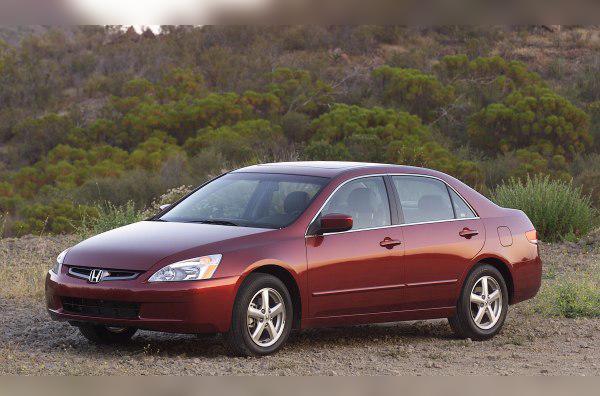
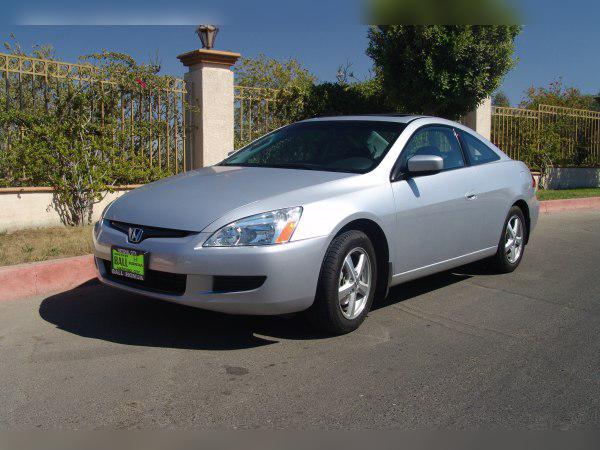
The K24A4 engine belongs to Honda’s famous K-series, which in the early 2000s redefined standards for four-cylinder engines. Specifically, this 160 hp version was the “heart” of the American-market Honda Accord seventh generation (both sedan and coupe), as well as the Honda Element. Unlike the European K24A3 (found in the Accord Type S with 190 hp), the K24A4 is focused on efficiency and emissions (ULEV standard) and better low-end response rather than high-rpm performance in the “redline zone”. Although it was designed for the US market, many of these cars have been imported into Europe or share mechanical components with European models (such as the CR-V), so maintenance is absolutely feasible on our continent.
Technical specifications
| Parameter | Data |
|---|---|
| Engine code | K24A4 |
| Displacement | 2354 cc (2.4 L) |
| Power | 118 kW (160 hp) @ 5500 rpm |
| Torque | 218 Nm @ 4500 rpm |
| Configuration | Inline 4-cylinder, DOHC, i-VTEC |
| Induction | Naturally aspirated |
| Fuel injection | Multipoint (port injection) |
Reliability and maintenance
Timing system: Chain or belt?
This engine uses a timing chain, not a belt. That’s great news for owners, because there is no fixed replacement interval like with a belt. The chain is designed to last the life of the engine, but in practice this depends on maintenance. If the oil is changed regularly and a quality grade is used, the chain can last over 300,000 km. However, chain stretch can occur if the engine is driven with a low oil level, which is deadly for the hydraulic chain tensioner. The symptom is rattling from the passenger side and the “Check Engine” light (camshaft/crankshaft correlation error).
Most common issues and problems
Although the K24A4 is “bulletproof”, it has a few specific weak points:
- VTC actuator (cam gear): This is the best-known problem of the K-series. On cold start you hear a short, loud metallic noise (like “rattling”) for 1–2 seconds. The cause is an actuator that doesn’t hold oil. While the noise is annoying, it rarely leads to catastrophic failure, but it should be replaced if it becomes frequent.
- Oil leak at the VTEC solenoid: The gasket behind the VTEC solenoid hardens over time and starts to leak oil. The repair is cheap and simple.
- Oil consumption: On high-mileage engines, stuck oil control rings can lead to increased oil consumption.
- Camshaft/crankshaft position sensors: They can fail, causing hard starting or stalling.
Service intervals and oil
Minor service: Recommended every 10,000 km or once a year. The amount of oil needed for a change is about 4.2 to 4.4 liters (with filter).
Oil grade: Honda’s factory recommendation is 5W-20 (for fuel economy and tight tolerances), but in European climate conditions and on higher-mileage engines, 5W-30 or even 5W-40 (full synthetic) are often a better choice for engine protection in summer.
Oil consumption: Is it normal?
K24 engines are known to “drink” a bit of oil, especially in VTEC mode (high rpm). Consumption up to 0.5 liters per 3,000–5,000 km can be considered acceptable for an older engine. However, if it uses a liter per 1,000 km, that points to problems with piston rings or valve stem seals. Honda owners must check the oil level on the dipstick at least twice a month.
Spark plugs and valves
Spark plugs: Iridium spark plugs are used (NGK or Denso). Replacement interval is long, usually around 100,000 to 120,000 km.
Valve adjustment: This is crucial! Honda engines do not have hydraulic lifters, but mechanical ones. Valve clearance must be checked and adjusted every 40,000–60,000 km (or sooner if you hear ticking). Neglecting this can lead to burnt valves.
Specific parts (Costs)
Flywheel and clutch
This model (US Accord VII) most commonly comes with an automatic transmission that uses a torque converter, so there is no dual-mass flywheel. Manual versions (rarer) usually use a single-mass flywheel or a classic setup, which is far cheaper to maintain than diesel variants. The clutch itself is standard and replacement costs are in the mid-range (depending on the market).
Fuel injection system
The K24A4 uses classic multipoint (MPI) fuel injection into the intake manifold. This is a robust system, far less sensitive to fuel quality than modern direct injection (GDI). Injectors are extremely durable and rarely cause problems. Injector cleaning is only recommended at very high mileage.
Turbo, DPF, EGR, AdBlue
- Turbo: The engine is naturally aspirated, there is no turbocharger. That means fewer parts that can fail and a linear power delivery.
- DPF and AdBlue: Being a petrol engine, it has no DPF filter and does not use AdBlue.
- EGR valve: There is an EGR system. EGR passages in the intake manifold can clog with soot, causing rough running or engine fault codes. Cleaning is relatively simple and inexpensive.
Fuel consumption and performance
Real-world fuel consumption
This is a large engine (2.4L), so don’t expect miracles, but it is efficient for its displacement.
- City driving: Expect between 10 and 13 liters/100 km, depending on traffic and how heavy your right foot is. The automatic is closer to the upper end.
- Highway / open road: This is where it shines. Consumption drops to 7 to 8.5 liters/100 km.
Is the engine “lazy”?
With 160 hp and 218 Nm, the engine is not lazy. The K24A4 is tuned to have more low-end torque than the sportier versions, which makes it excellent for moving the heavy Accord body. In the city it feels lively. On the motorway there is enough power for overtaking, although for brisk acceleration you will need to downshift (or rely on kickdown on the automatic) so the engine enters the VTEC zone.
Motorway driving
At 130 km/h the engine runs smoothly and quietly. With the 5-speed automatic, revs are relatively low (around 2,500–2,800 rpm), which contributes to comfort and lower fuel consumption. It’s an ideal cruiser.
Additional options and modifications
LPG conversion
Yes, it is suitable, but with CAUTION. Honda engines have somewhat “softer” valve seats. LPG conversion is possible and cost-effective given the fuel consumption, but it is mandatory to install a quality system (preferably with a valve saver/additive system) and, most importantly, to check valve clearances more frequently (every 30,000–40,000 km). If this is neglected, the valves will “sink” and the cylinder head will be damaged.
Remap (Stage 1)
Since this is a naturally aspirated engine, a remap (Stage 1) does not bring significant gains. You may get better throttle response and maybe 5–8 hp, but that is barely noticeable in real driving. Your money is better spent on quality tires and regular maintenance. Serious power increases require mechanical changes (cams, exhaust manifold), which is an expensive hobby.
Gearbox
Manual and automatic transmissions
Paired with this engine in the US Accord VII you could get:
- 5-speed manual: Extremely precise, light and reliable. It has virtually no weaknesses.
- 5-speed automatic: A classic hydraulic automatic. Much more reliable than the notorious 4-speed automatics from the previous generation (Accord VI), but it still requires attention.
Transmission maintenance and failures
Automatic: Transmission fluid should be changed every 60,000 km (or more often if mostly city driven). Use only genuine Honda fluid (ATF-DW1 or the older Z1). Never perform a high-pressure machine flush; do only a simple drain and fill. Symptoms of failure are slipping during gear changes or a harsh jolt when engaging “D” or “R”.
Manual: Change the oil every 80,000–100,000 km (Honda MTF). Clutch life depends on the driver, usually 150,000+ km.
Buying used and conclusion
Before buying, do the following:
- Cold start: Insist that the engine is completely cold. Listen for chain rattle or VTC actuator “rattling” in the first 2 seconds.
- Oil check: Pull out the dipstick. If the oil is at minimum or below, that’s a bad sign for the chain and camshafts.
- Test drive: The automatic must shift smoothly, without jerks, both uphill and downhill. Check whether VTEC “kicks in” (change in sound and power) above 4,500 rpm.
- Check for leaks: Look at the power steering pump (hoses often leak) and the rear of the engine around the VTEC solenoid.
Conclusion: The Honda Accord with the K24A4 engine is an excellent choice for drivers looking for comfort, reliability and longevity, and who are willing to accept slightly higher registration costs (due to the 2.4L displacement) and city fuel consumption. Maintenance is not expensive compared to German competitors, and the engine itself, with regular oil checks, is practically indestructible.
Was this content useful to you?
Your opinion helps us to improve the quality of the content.