K24 Engine
- Engine
- 2354 cm3
- Aspiration
- Naturally aspirated engine
- Fuel
- Petrol (Gasoline)
- Fuel injection system
- Multi-port manifold injection
- Power
- 160 hp @ 5500 rpm
- Torque
- 218 Nm @ 4500 rpm
- Cylinders
- 4
- Valves
- 16, 4 per cylinder
- Cylinders position
- Inline
- Valvetrain
- DOHC
- Oil capacity
- 4.2 l
- Coolant
- 7.2 l
# Vehicles powered by this engine
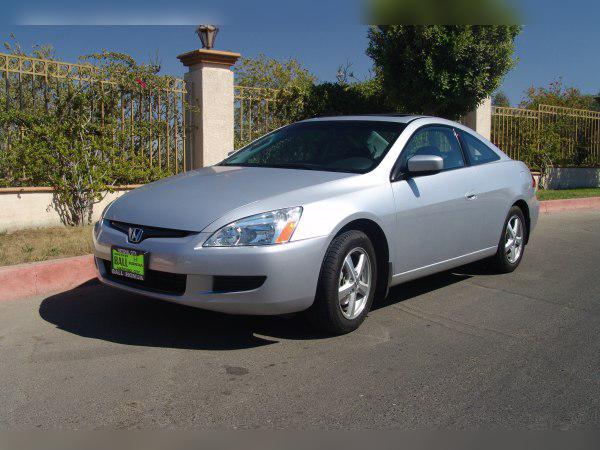

Honda 2.4 i-VTEC (K24) 160 HP: Experiences, problems, fuel consumption and used-car buying tips
Key points (TL;DR)
- Reliability: The K24 series is considered one of Honda’s most reliable platforms, capable of very high mileage with regular maintenance.
- Timing drive: Uses a chain, which lowers major service costs, but requires high-quality oil.
- Oil consumption: Older units can consume oil, especially if driven hard or if the valve stem seals have hardened.
- Performance: The 160 HP version is tuned for torque, not high revs. It’s not a sports engine, but a cruiser.
- Gearbox: Automatic gearboxes require regular oil changes (every 40–60,000 km), otherwise they become rough.
- LPG (Autogas): Suitable, but Honda valves are sensitive – valve clearance must be checked more often than on petrol.
- Maintenance: Requires mechanical valve adjustment (no hydraulic lifters), which many owners neglect.
Contents
Introduction: About the K24 engine
Honda’s K-series engines are legendary among enthusiasts, but the K24 160 HP version (often labeled K24A4, K24A8 or similar variations depending on the market) was not built for racing, but for comfortable everyday driving and heavier bodies. This 2.4-liter engine is the “big brother” of the popular 2.0 and brings what smaller petrol engines lack – torque at lower revs.
It was installed in models such as the Honda Accord Coupe (North American market), as well as in heavy MPVs like the Honda Odyssey. Its purpose is to pull weight without having to rev the engine to the redline, making driving quieter and more relaxed. Although it doesn’t have that aggressive “VTEC kick” like Type-R models, it is an extremely refined powerplant.
Technical specifications
| Displacement | 2354 cc (2.4 L) |
| Configuration | Inline 4-cylinder, 16-valve |
| Power | 118–119 kW (160 HP) @ 5500–6000 rpm |
| Torque | 218 Nm @ 4500 rpm |
| Engine codes | K24A4, K24A8, K24Z (variations) |
| Injection type | MPI (Multi-Point Injection) – indirect |
| Induction | Naturally aspirated |
| Cam drive | Chain |
Reliability and maintenance
Timing system: Chain or belt?
The K24 engine uses a timing chain to drive the valves. This is generally a “maintenance-free” system that should last as long as the engine. However, the chain is sensitive to oil quality. If the oil is not changed regularly or the wrong viscosity is used, the hydraulic chain tensioner can fail, or the chain can stretch.
Symptoms of problems: Rattling at cold start or a “Check Engine” light with a camshaft/crankshaft correlation error. If you hear a metallic noise for the first 2–3 seconds after starting, it is often a sign that the VTC actuator (variable cam gear) is losing oil pressure or that the chain is stretched.
Most common failures
Although the engine is “bulletproof”, there are some specific weak points:
- VTC actuator: A known issue on K24 engines. At cold start you can hear a short, loud “grinding” noise. It’s not fatal, but it’s irritating and gets worse over time.
- Oil leaks: The VTEC solenoid gasket and the front crankshaft seal tend to start leaking with age.
- Valves: This engine does not have hydraulic lifters. This means valve clearance must be checked and adjusted mechanically. If neglected, the valves (especially exhaust valves) can burn.
- Starter motor: Often fails at higher mileage.
Service intervals and oil
Minor service: Recommended every 10,000 km or once a year. The engine takes about 4.2 to 4.4 liters of oil (with filter).
Oil grade: Honda recommends thin oils. Most commonly 0W-20 or 5W-20 for newer/well-maintained engines, while for higher-mileage engines in warmer climates you can use 5W-30. Do not use thick oils (10W-40), because the VTEC system and chain tensioner rely on oil pressure and require fast flow.
Oil consumption
Does it burn oil? Yes, it can. K24 engines are known to consume oil, especially if driven at high revs (in the VTEC zone). Consumption of 0.3 to 0.5 liters per 1,000 km is often considered “within normal limits” by manufacturers, but in practice, a healthy engine should not need more than 1 liter between services if driven normally. The cause of increased consumption is often oil control rings that get clogged due to poor fuel/oil, or hardened valve stem seals.
Spark plugs
This petrol engine uses iridium spark plugs (NGK or Denso). Their replacement interval is long, usually around 100,000 to 120,000 km. Do not experiment with cheap copper plugs.
Specific parts (costs)
Dual-mass flywheel and clutch
If you have a manual gearbox, the situation depends on the specific model. Accords with the K24 engine often have a dual-mass flywheel for comfort, although some USDM or cheaper variants may have a solid flywheel. Checking by VIN is essential. Replacing the clutch kit together with the flywheel is expensive (varies by market). Automatic gearboxes do not have a dual-mass flywheel (they use a torque converter).
Fuel injection system
It uses conventional port injection (into the intake manifold). The petrol injectors are extremely durable and rarely cause problems. They are not as sensitive as on direct-injection engines. Injector cleaning is only needed if there are symptoms of rough running.
Turbo, DPF, EGR, AdBlue
This is a naturally aspirated petrol engine.
- Turbo: None. Its lifespan is infinite because it doesn’t exist.
- DPF: None.
- AdBlue: None.
- EGR valve: It has one. It can get clogged with soot; symptoms are hesitation at light throttle or stalling at idle. Cleaning is relatively cheap and simple.
Fuel consumption and performance
City and highway driving
The 160 HP K24 is a large-displacement engine.
City driving: Expect consumption between 11 and 14 l/100 km, depending on how heavy your right foot is and on traffic. In a heavy Honda Odyssey, this can easily reach 15 l/100 km in winter.
Highway: This is where the engine shines. At 130 km/h it uses about 7.5 to 9 l/100 km.
Is the engine “lazy”?
With 160 HP and 218 Nm, the engine is not “lazy”, but it’s not explosive either. In the Honda Accord Coupe, performance is perfectly adequate for overtaking. However, in the Honda Odyssey (a heavy minivan), the engine has to work harder to pull a full load uphill. Still, thanks to its 2.4-liter displacement, it has enough low-end torque to make driving effortless. On the motorway, at 130 km/h, the engine spins at about 2,500–3,000 rpm (depending on the gearbox), which is quiet and comfortable.
Additional options and modifications
LPG conversion (autogas)
Yes, the engine is suitable for LPG, but with one big WARNING. Honda valves and valve seats are relatively “soft”. If you run on LPG, valve adjustment is mandatory every 20,000 to 30,000 km! If you don’t do this, the valves will “sink”, you’ll lose compression and eventually the cylinder head will be damaged. A valve lubrication system (“valve saver” drip) is also recommended.
Remap (Stage 1)
On naturally aspirated petrol engines, and especially on this 160 HP version which is factory “detuned” on the intake and exhaust for economy, a remap doesn’t make much sense. The realistic gain is 5 to 8 HP, which you won’t feel. Your money is better spent on quality tyres or refreshing the suspension.
Gearbox
Manual and automatic gearboxes
This engine is most commonly paired with:
- 5-speed manual gearbox: Precise and robust. Failures are rare.
- 5-speed automatic gearbox: Classic Honda automatic.
Gearbox issues and maintenance
Manual: The most common “failure” is simply a worn clutch. Sometimes the 2nd or 3rd gear synchro can grind if the car has been driven aggressively. Oil should be changed every 60,000–80,000 km (Honda MTF).
Automatic: Honda automatics from this era are sensitive. The oil must be changed every 40,000 to 60,000 km (drain-and-fill method, not pressure flushing with a machine). Use only genuine Honda oil (ATF-Z1 or the newer ATF-DW1). Symptoms of failure are slipping during shifts, jolts when engaging “D” or “R”, and delayed response. Rebuilding the automatic is very expensive.
Buying used and conclusion
When buying a used car with the 160 HP K24 engine, pay attention to the following:
- Cold start: Insist that the engine is completely cold. Listen for a short “krrrh” (VTC actuator) or chain rattling.
- Oil: Check the oil level. If it’s at minimum or below, the owner probably doesn’t check oil consumption, which is risky on this engine.
- Test drive: Check how the automatic shifts (it should be smooth, without jerks). Accelerate hard – if you see blue smoke from the exhaust, the engine is burning oil.
- Idle: The engine should run smoothly. Vibrations may indicate worn engine mounts (they are hydraulic and expensive).
Conclusion: The Honda K24 (160 HP) is an excellent choice for drivers who want reliability, longevity and comfort, and are willing to accept slightly higher fuel consumption and the need for regular oil checks. This is not an engine for racing, but a faithful workhorse that, with proper maintenance, can cover half a million kilometers without being opened.
Was this content useful to you?
Your opinion helps us to improve the quality of the content.