D16B6 Engine
- Engine
- 1590 cm3
- Aspiration
- Naturally aspirated engine
- Fuel
- Petrol (Gasoline)
- Fuel injection system
- Multi-port manifold injection
- Power
- 115 hp @ 6500 rpm
- Torque
- 140 Nm @ 5100 rpm
- Cylinders
- 4
- Valves
- 16, 4 per cylinder
- Cylinders position
- Inline
- Valvetrain
- OHC
- Oil capacity
- 3.3 l
- Coolant
- 4.6 l
# Vehicles powered by this engine
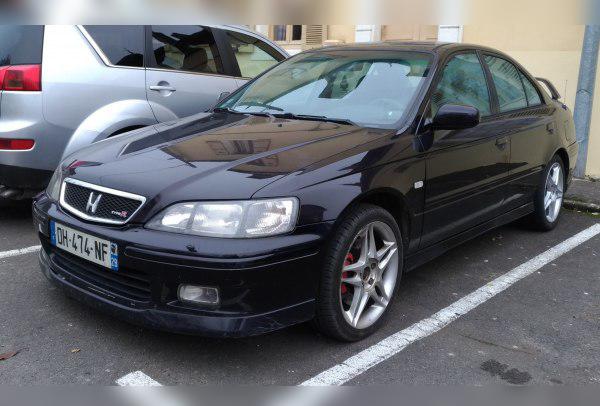
Honda D16B6 1.6i – Experiences, problems, fuel consumption and used car buying guide
If you are considering buying a sixth-generation Honda Accord (models from 1998 to 2002) with the base petrol engine, you are probably wondering whether the 1.6-liter unit is sufficient for this sedan. The D16B6 engine belongs to Honda’s legendary D-series, known for its “indestructibility”, but also for a specific character that demands revs.
This is not a racer, but a workhorse that will cover huge mileage with proper maintenance. Still, time takes its toll, so it’s important to know what to expect.
Key points in short (TL;DR)
- Reliability: Extremely high. This is one of the most reliable petrol engines from that period.
- Performance: The engine is a bit “lazy” for the Accord’s body, especially when the car is fully loaded. For overtaking you must downshift.
- Maintenance: Cheap and simple. No expensive systems like a turbo or dual-mass flywheel.
- LPG: Works well on LPG, but requires regular valve clearance adjustment.
- Main drawback: Oil consumption on high-mileage examples (valve stem seals and piston rings) and body corrosion around the engine bay.
- Recommendation: Ideal for drivers who just want simple transport from point A to point B and don’t mind a bit of noise on the motorway.
Contents
- Technical specifications
- Reliability and maintenance
- Specific parts and costs
- Fuel consumption and performance
- Additional options (LPG and tuning)
- Gearbox: manual and automatic
- Conclusion and buying tips
Technical specifications
| Specification | Value |
|---|---|
| Engine code | D16B6 |
| Displacement | 1590 cc (1.6 L) |
| Power | 85 kW (115 hp) at 6300 rpm |
| Torque | 140 Nm at 5100 rpm |
| Injection type | PGM-FI (Multi-point injection) |
| Configuration | I4, SOHC (single camshaft), 16 valves |
| VTEC system | Yes (SOHC VTEC) |
| Turbo / Supercharger | No / No (naturally aspirated) |
Reliability and maintenance
Honda’s D-series engines are engineering gems when it comes to longevity. The D16B6 is a simple SOHC (single cam) engine with VTEC, designed to last rather than impress with numbers.
Timing belt or chain?
This engine uses a timing belt. This is a key maintenance item. The replacement interval is usually every 100,000 km or 5 years (whichever comes first).
Warning: This is an interference engine. If the belt snaps, the pistons will hit the valves and the engine will suffer major damage. When buying, if you don’t have written proof of replacement, do a full timing service immediately.
Most common issues
Although the engine is robust, age brings specific problems:
- Distributor: One of the few weak points of older Hondas. Symptoms are hard starting, stalling while driving or rough idle. The distributor bearing or electronics often fail.
- Main fuel pump relay: A well-known issue on 90s Hondas. When it’s hot outside or the car is heat-soaked, the engine cranks but won’t start. The cause is cracked solder joints in the relay. The fix is cheap (re-soldering).
- Thermostat: If it gets stuck open, the engine never reaches operating temperature, which increases fuel consumption and wear.
- Oil leaks: The valve cover gasket, crankshaft oil seal and VTEC solenoid gasket are the first places to start leaking.
Service intervals and oil
An oil change service is recommended every 10,000 km or once a year. The engine takes about 3.6 to 4.0 liters of oil (including the filter).
The recommended grade is 5W-40 or 10W-40 (semi-synthetic), depending on engine condition and climate. For older, high-mileage engines, 10W-40 is more common.
Oil consumption
Does it burn oil? Yes, probably. Honda’s VTEC engines are known to “drink” some oil, especially if driven in the VTEC zone (high revs).
Up to 0.5 liters per 1,000 km under aggressive driving is considered normal, although a healthy engine shouldn’t use more than about 1 liter between services. If it blows bluish smoke on cold start, the valve stem seals are worn. If it smokes under full throttle, the problem is with the oil control rings.
Spark plugs and valves
Spark plugs should be replaced every 30,000 - 40,000 km if you use standard (copper/nickel) plugs. Iridium plugs last longer (up to 100k km) but are more expensive.
Very important: This engine does not have hydraulic lifters. Valve clearances must be adjusted manually! It’s recommended to check them every 40,000 km. If you hear a “ticking” noise from the engine, it’s time for an adjustment.
Specific parts (costs)
Dual-mass flywheel and clutch
Good news: the D16B6 engine does NOT have a dual-mass flywheel. It uses a conventional solid flywheel.
The clutch kit (pressure plate, disc, release bearing) is relatively affordable. Replacement is a standard procedure.
Fuel injection system
It uses a standard PGM-FI system with port injection. The petrol injectors are extremely durable and rarely cause problems, unless very poor-quality fuel is used for years.
Turbo, DPF, EGR
- Turbo: None. This is a naturally aspirated engine, which means fewer parts to fail.
- DPF / FAP: None (that’s for diesel engines).
- EGR valve: The D16B6 usually has an EGR valve (exhaust gas recirculation system). It can clog with soot, causing “jerking” at low revs while driving. Fortunately, cleaning is simple and cheap.
- AdBlue: None.
Fuel consumption and performance
City driving and “laziness”
Let’s be honest: 115 hp and 140 Nm of torque in a body weighing around 1.3–1.4 tons (Honda Accord) is not a recipe for sporty performance.
Is the engine lazy? Up to 3,500 rpm – yes. You will feel a lack of power when starting uphill or with a full load of passengers. To make this engine pull properly, you have to rev it above 4,000 rpm, where its VTEC character wakes up.
City consumption: Expect between 10 and 12 liters per 100 km. In heavy traffic and with a heavy right foot, it can be even higher. Fuel consumption increases in winter.
Motorway
On the open road things are better, with consumption dropping to around 7–8 l/100 km.
However, the problem is noise. Due to short gearbox ratios (to compensate for the lack of torque), at 130 km/h the engine spins at about 3,800 to 4,000 rpm. This means it’s quite noisy in the cabin at higher speeds, and the engine operates in a range where it starts to use more fuel.
Additional options and modifications
LPG conversion
Is it suitable for LPG? Yes, but with caution. Honda engines have relatively “soft” valve seats.
LPG installation is possible and the system works great, but you must check valve clearances more often (every 20,000 km). If the valves “sink” (clearance disappears), they will overheat and burn, leading to an expensive cylinder head rebuild. Installing a valve lubrication system (“valve saver”) is recommended.
Remapping (Stage 1)
How much power can you gain? Practically none.
On naturally aspirated petrol engines of this displacement, a “Stage 1” remap may give 3 to 5 hp, which you won’t feel in real driving. Don’t waste money on software tuning of this engine. The only way to get more power is classic tuning (exhaust, intake, cams), but that costs more than the car is worth.
Gearbox
Manual gearbox (5-speed)
This is the most common option. Honda manual gearboxes are known for their precision (that “click-click” feel).
Failures: Very rare. Sometimes you may get grinding when shifting quickly into second gear (synchro) or a whine from the input shaft bearing (audible at idle, disappears when you press the clutch).
Maintenance: Gearbox oil (MTF - Manual Transmission Fluid) should be changed every 60,000 to 80,000 km. Use only Honda MTF or a high-quality 75W-80 oil that meets the spec.
Automatic gearbox (4-speed)
A classic automatic with a torque converter.
Failures: Reliable if maintained, but technologically outdated. It shifts slowly and further “kills” the performance of an already not-so-strong engine, while increasing fuel consumption by about 1–2 liters.
Maintenance: ATF fluid must be changed every 60,000 km. A neglected automatic will slip or bang when changing gears.
Used car purchase and conclusion
When buying a Honda Accord with the D16B6 engine, pay attention to:
- Engine noise when cold: Listen for knocking from valves or pistons.
- Exhaust smoke: Rev the engine when it’s warm. Blue smoke = oil consumption.
- Idle speed: It should be stable (around 750–800 rpm). Fluctuating idle often points to a dirty IACV valve or a vacuum leak.
- Rust: This is a bigger problem than the engine itself. Check the wheel arches, sills and engine bay.
Conclusion: The Honda Accord 1.6 (D16B6) is a car for rational buyers. You won’t be the fastest at the traffic lights, but you’ll have a sedan that rarely breaks down. Maintenance is cheap, parts are available, and comfort is high for its age. If you can live with slightly higher city fuel consumption and the need for frequent valve adjustments (especially on LPG), it’s an excellent purchase.
Was this content useful to you?
Your opinion helps us to improve the quality of the content.