F22Z2 Engine
- Engine
- 2156 cm3
- Aspiration
- Naturally aspirated engine
- Fuel
- Petrol (Gasoline)
- Fuel injection system
- Multi-port manifold injection
- Power
- 150 hp @ 5600 rpm
- Torque
- 198 Nm @ 4500 rpm
- Cylinders
- 4
- Valves
- 16, 4 per cylinder
- Cylinders position
- Inline
- Valvetrain
- SOHC
- Oil capacity
- 4.3 l
- Coolant
- 6.9 l
# Vehicles powered by this engine
Honda F22Z2 2.2i VTEC: Experiences, problems, fuel consumption and buying tips
Key points (TL;DR)
- Tank-like reliability: This is an engine from Honda’s “golden era”. With regular maintenance, mileages over 400,000 km are completely normal.
- VTEC technology: Although designed for comfort (SOHC VTEC), it offers excellent throttle response at higher revs.
- Timing belt service is crucial: The engine uses a timing belt. If it snaps, it will destroy the engine.
- Fuel consumption: It’s not a low-consumption engine. In the city you should expect double-digit figures.
- Suitable for LPG: It runs very well on LPG, but requires regular valve adjustment.
- No expensive modern failures: No dual-mass flywheel, no turbo, no DPF and no complicated injectors.
Contents
- Introduction: Which engine are we talking about?
- Technical specifications
- Reliability and maintenance
- Specific parts and costs
- Fuel consumption and performance
- Additional options (LPG & tuning)
- Gearbox: Manual and automatic
- Buying used and conclusion
Introduction: Which engine are we talking about?
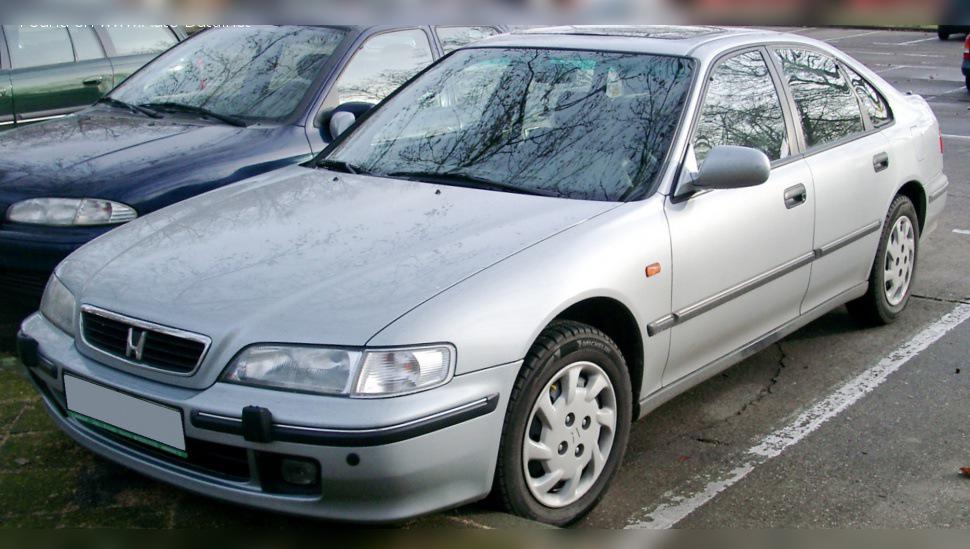
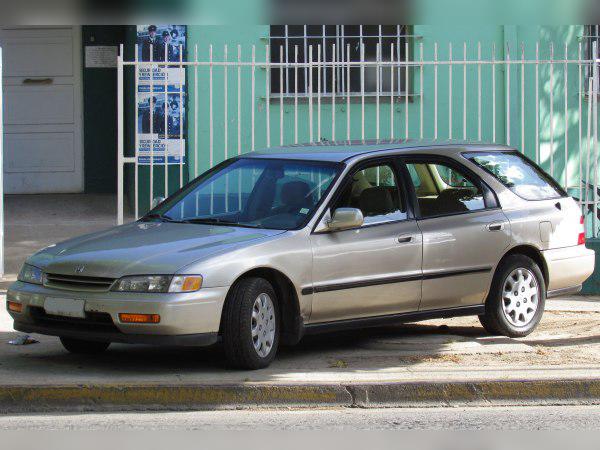
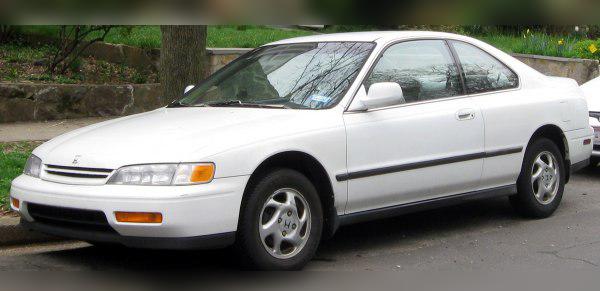
The Honda F22Z2 is a 2.2-liter petrol engine that was installed in the fifth generation Honda Accord (facelift models for the European market, as well as Coupe and Aerodeck/Wagon versions) in the mid-1990s. This is not a racing engine, even though it carries the VTEC badge. Its primary purpose was to offer flexibility, comfortable cruising and enough power for overtaking in the heavier Accord body, positioning itself above the basic 1.8 and 2.0 models.
For Honda enthusiasts, the F-series engines are synonymous with durability. It is less “aggressive” than the famous H-series (used in Type R), but it is more long-lasting and simpler for everyday use.
Technical specifications
| Parameter | Data |
|---|---|
| Engine code | F22Z2 |
| Displacement | 2156 cc |
| Power | 110 kW (150 hp) at 5500 rpm |
| Torque | 198 Nm at 4500 rpm |
| Configuration | Inline 4-cylinder, SOHC (single camshaft), 16 valves |
| Fuel injection system | PGM-FI (multi-point injection) |
| Aspiration | Naturally aspirated (no turbo) |
| Camshaft drive | Timing belt |
Reliability and maintenance
Timing belt or chain?
The F22Z2 engine uses a timing belt to drive the camshaft. This is a critical maintenance point. In addition to the main timing belt, this engine also has a smaller balance shaft belt that drives the balance shafts which smooth out engine operation. If the balance shaft belt snaps, it can get under the main belt and cause catastrophic engine damage.
Major timing service
It is recommended to do the major timing service every 80,000 to 100,000 km or every 5 years, whichever comes first. When replacing, you must change both belts, tensioners, idler pulleys and the water pump. Since this is an interference engine (pistons hit the valves if the belt breaks), do not play with the intervals.
Oil: Capacity and consumption
The engine takes approximately 4.3 liters of oil (with filter). For our climate, the recommended grade is 10W-40 semi-synthetic, although on engines with lower mileage (which is rare today) you can also use 5W-30 or 5W-40.
Does it burn oil? Honda engines from this period, especially those with VTEC, tend to consume some oil if driven at high revs (in the VTEC zone). Consumption of 0.5 to 0.8 liters per 10,000 km is completely acceptable. If it uses a liter per 1,000 km, the usual culprits are valve stem seals (a common issue due to rubber aging) or piston rings if the engine has extremely high mileage.
Most common issues
- Distributor: The O-ring on the distributor often fails and oil starts to leak. Also, the ignition coil or ignition module inside the distributor can fail, causing the car to stall or not start at all.
- Main relay: A legendary problem on older Hondas. The solder joints in the fuel pump relay crack. Symptom: the engine cranks but won’t start when the cabin is hot (e.g. in summer), yet starts normally once it cools down.
- EGR valve and passages: The passages in the intake manifold get clogged with carbon, which leads to rough running and the “Check Engine” light coming on. Cleaning solves the problem.
- Oil leaks: Besides the distributor, leaks are common at the valve cover gasket and the camshaft oil seal.
Spark plugs and injectors
Spark plugs should be replaced every 20,000 to 30,000 km if you use standard copper plugs (NGK ZFR6F-11 is recommended), or every 100,000 km if you use iridium plugs. The injectors are extremely reliable and rarely cause problems unless poor-quality fuel is used for many years.
Specific parts (costs)
The good news is that the F22Z2 belongs to the era of simple mechanics.
- Dual-mass flywheel: This engine DOES NOT HAVE a dual-mass flywheel. It uses a classic solid flywheel, which makes clutch kit replacement significantly cheaper compared to modern diesels or newer petrol engines.
- Turbo and DPF: There is no turbocharger, no DPF filter, no AdBlue system. This drastically reduces potential maintenance costs.
- EGR valve: It does have an EGR system. It can get clogged, but in most cases it can be successfully cleaned and does not require an expensive replacement.
Parts prices are generally affordable (depending on the market), but specific body or interior parts for Coupe/Wagon models can be harder to find and more expensive.
Fuel consumption and performance
City driving and “sluggishness”
Real-world city consumption is high by today’s standards. Expect between 11 and 13 liters per 100 km, depending on how heavy your right foot is and how bad the traffic is. In winter it can go up to 14 liters.
Is the engine sluggish? With 150 hp and almost 200 Nm of torque, the engine is not sluggish. The fifth-generation Accord body is not too heavy (around 1300–1400 kg), so the car pulls well. However, like every naturally aspirated Honda, it shows its real power only above 3,500–4,000 rpm when VTEC “comes alive”. At low revs it is tame, but perfectly adequate for keeping up with traffic.
Highway
This is the natural habitat of this engine. On the highway, fuel consumption drops to 7.5 to 8.5 liters per 100 km. At 130 km/h in fifth gear, the engine spins at about 3,200–3,500 rpm (depending on the gearbox), which is a range where it has enough power for overtaking without needing to downshift.
Additional options and modifications
LPG conversion
This engine is an excellent candidate for LPG. The intake manifold is metal and the electronics are simple. However, there is one crucial rule: Valve adjustment. Honda engines do not have hydraulic lifters; valve clearance is adjusted mechanically. On petrol this is done every 40,000 km, but on LPG it is MANDATORY to check and adjust the valves every 20,000 km. If you ignore this, the valves will “sink”, burn, and you will destroy the cylinder head.
Chipping (tuning)
Naturally aspirated petrol engines do not gain much from chipping. A stage 1 remap might give you 3–5 hp, which is imperceptible in real driving and a waste of money. If you want more power, the only real route is upgrading the exhaust manifold (4-2-1), intake and full exhaust system, but even then the gains are not dramatic compared to the money invested.
Gearbox
Manual vs automatic
This engine most commonly comes with a 5-speed manual gearbox. It is extremely precise, with a short throw and almost indestructible with regular oil changes. Failures are very rare.
The automatic gearbox is a classic 4-speed torque-converter automatic. It is very comfortable, but it “steals” power and increases fuel consumption by about 1–2 liters. It is not sporty and shifts slowly compared to modern gearboxes.
Gearbox maintenance
- Manual: Oil should be changed every 60,000–80,000 km. Use only Honda MTF (Manual Transmission Fluid) or quality 10W-40 engine oil (yes, Honda allowed this in older manuals, but MTF is a better choice in cold weather).
- Automatic: Oil should be changed every 40,000–60,000 km. You must use ATF-Z1 or the newer ATF-DW1 specification. Automatic gearbox failures occur if the oil is not changed, and overhauls are expensive (often more than the value of the car).
The cost of clutch replacement (pressure plate, disc, release bearing) for the manual gearbox falls into the “affordable” category (depending on the market), because there is no dual-mass flywheel.
Buying used and conclusion
When buying an Accord with the F22Z2 engine, pay attention to:
- Bodywork: This is a bigger problem than the engine. Wheel arches, sills and the boot floor are prone to rust.
- Exhaust smoke: Rev the engine when it is warm. Blue smoke at high revs or when lifting off the throttle indicates oil consumption (rings or valve stem seals).
- Cold start: The engine should run smoothly right away. Rough idle can indicate the need for valve adjustment or vacuum leaks.
- Warning lights: Check whether the “Check Engine” light comes on and goes off with ignition. Many sellers remove the bulb to hide faults (often EGR or lambda sensor issues).
Conclusion: The Honda F22Z2 is an engine for those who appreciate old-school engineering – “fill it up and drive”. It is not the most economical in terms of fuel, but it will save you a lot of money on repairs because it simply does not break if basic maintenance is done. It is ideal for drivers who cover moderate annual mileage or for those planning an LPG conversion and who want a comfortable, large sedan or coupe for little money.
Was this content useful to you?
Your opinion helps us to improve the quality of the content.