F18A3 Engine
- Engine
- 1850 cm3
- Aspiration
- Naturally aspirated engine
- Fuel
- Petrol (Gasoline)
- Fuel injection system
- Multi-port manifold injection
- Power
- 115 hp @ 5500 rpm
- Torque
- 158 Nm @ 4200 rpm
- Cylinders
- 4
- Valves
- 16, 4 per cylinder
- Cylinders position
- Inline
- Valvetrain
- OHC
- Oil capacity
- 3.8 l
# Vehicles powered by this engine
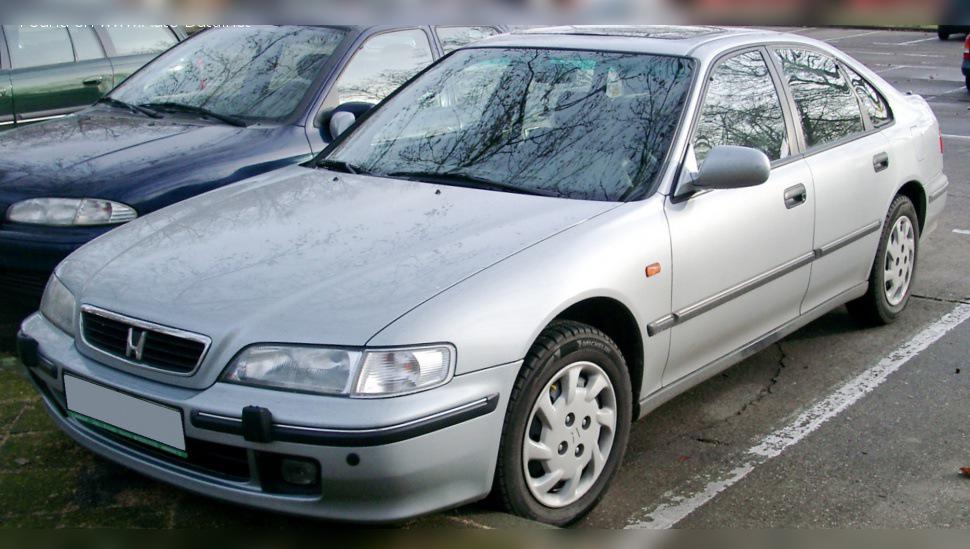
Honda F18A3 (1.8i) – Experiences, Problems, Fuel Consumption and Maintenance
Key points in short (TL;DR)
- Exceptional mechanical reliability: This is “old-school” Honda engineering – if it has oil and coolant, it will most likely run.
- Timing belt and balancer belt: The engine has two belts. Neglecting the smaller (balancer) belt can lead to catastrophic engine failure.
- No expensive modern failures: No dual-mass flywheel, no turbo, no DPF, no direct injection.
- Fuel consumption is not low: Considering the 115 hp output and the weight of the Accord, expect somewhat higher fuel consumption in city driving.
- Sensitivity to LPG (Autogas): Requires regular (mechanical) valve adjustment if driven on LPG.
- Corrosion: Although the engine is excellent, the bodywork around it (Honda Accord V) is prone to rust, which is a bigger issue than the engine itself.
Contents
- Introduction: About the F18A3 Engine
- Technical Specifications
- Reliability and Maintenance
- Specific Parts and Costs
- Fuel Consumption and Performance
- Additional Options and Modifications (LPG/Tuning)
- Gearbox: Manual and Automatic
- Buying Used and Conclusion
Introduction: About the F18A3 Engine
The engine designated as F18A3 belongs to Honda’s famous F-series of engines. It is a 1.8-liter SOHC (single overhead camshaft) engine with 16 valves, which was primarily installed in the fifth-generation Honda Accord (CC7 and CE models, the popular “English Accord”, as it was produced in Swindon, UK) in the mid-1990s. Unlike its more powerful VTEC-equipped relatives, the F18A3 is focused on simplicity and longevity. Although 115 horsepower sounds modest for a D-segment sedan today, at the time it was an adequate and even lively engine.
Technical Specifications
| Specification | Data |
|---|---|
| Engine displacement | 1850 ccm |
| Power | 85 kW (115 hp) at 5500 rpm |
| Torque | 158 Nm at 4200 rpm |
| Engine code | F18A3 |
| Number of cylinders / valves | 4 / 16 |
| Fuel injection system | PGM-FI (Multipoint injection) |
| Induction type | Naturally aspirated |
| Camshaft drive | Timing belt (SOHC) |
Reliability and Maintenance
Timing belt or chain?
This engine uses a timing belt to drive the camshaft. However, what is crucial to know about Honda F engines is that they also have a second, smaller belt for the balance shaft (balancer belt). During a major service, it is MANDATORY to replace both belts, both tensioners and the water pump. If the balancer belt snaps, it often gets caught under the main timing belt, causing the timing to jump and severe engine damage (piston-to-valve contact).
Most common issues
The F18A3 is extremely reliable, but age takes its toll. The most common problems are:
- Distributor: The bearing in the distributor can fail, or engine oil can leak into the distributor cap, causing misfires and stalling.
- Main fuel pump relay (Main Relay): A legendary issue on older Hondas. It manifests as the engine cranking but not starting when the cabin is hot (e.g. in summer). A cold solder joint in the relay fails. The repair is cheap (re-soldering).
- Oil leaks: Most often from the valve cover gasket (into the spark plug wells) and from the crankshaft oil seal.
- EGR passages (if fitted for a specific market): They can clog with soot, causing rough running.
Service intervals
The major service is recommended every 80,000 to 100,000 km or every 5–6 years, whichever comes first. Due to the age of these vehicles, it is advisable to shorten this interval to 80,000 km for safety.
Oil: Quantity and grade
The engine takes approximately 3.8 to 4.2 liters of oil (with filter). The recommended grade for the European climate is 10W-40 semi-synthetic, although 5W-40 can be used in colder regions. This is not an engine that requires expensive “Long Life” oils.
Oil consumption
A healthy F18A3 engine should not consume significant amounts of oil. Consumption of up to 0.5 liters per 10,000 km is acceptable. If it consumes more (e.g. 1 liter per 2,000 km), the problem is usually the valve stem seals (they harden with age), and less often the piston rings, as the bottom end of these engines is very durable.
Spark plugs
Spark plugs should be replaced every 20,000 to 30,000 km if you use standard copper/nickel plugs (NGK or Denso are OEM and highly recommended). There is no need for expensive iridium plugs unless you want longer replacement intervals.
Specific Parts (Costs)
Dual-mass flywheel
No. This engine uses a classic solid flywheel. This is a huge advantage because a clutch kit costs significantly less than on modern diesels or petrol engines with a dual-mass flywheel.
Fuel injection system and injectors
It uses the PGM-FI system with port (indirect) injection into the intake manifold. The injectors are robust and rarely fail. Any clogging can be resolved by ultrasonic cleaning, which is inexpensive. There are no costly high-pressure fuel pumps.
Turbocharger
No. The engine is naturally aspirated. There is no turbo, no intercooler, which means fewer parts that can fail.
DPF, EGR and AdBlue
This engine does not have a DPF filter or an AdBlue system. An EGR valve may be present (depending on market and year), and if it gets dirty, cleaning is straightforward. Emission control systems are minimal (Euro 2 standard), which simplifies maintenance.
Fuel Consumption and Performance
Real-world city consumption
Do not expect miracles. The Honda Accord V is a heavy sedan, and the technology is from the 1990s.
City driving: Expect 10 to 12 l/100 km of petrol, depending on traffic and how heavy your right foot is. In winter this can go up to 13 liters.
Highway / open road: It can drop to around 7–8 l/100 km.
Is the engine “sluggish”?
By today’s standards – yes, it is somewhat sluggish at low revs. With 158 Nm of torque available only at 4200 rpm, the engine needs to be revved to pull strongly. In city driving it is perfectly adequate, but overtaking on country roads requires downshifting and full throttle. It is not a sports engine, but a reliable cruiser.
Behavior on the motorway
At 130 km/h in fifth gear, the engine spins at around 3,500 to 3,800 rpm (depending on the gearbox). This means engine noise is noticeable in the cabin, but the F18A3 loves high revs and can sustain them for hours without issues. It is not the quietest companion, but it is stable.
Additional Options and Modifications
LPG conversion (Autogas)
This engine is suitable for LPG, but with one major caveat: Honda valves are sensitive. Since this engine does not have hydraulic lifters and the valves are adjusted mechanically (screw and locknut), when running on LPG the valve clearances close up faster (“valve seat recession”).
Advice: If you run it on LPG, have the valve clearances checked and adjusted every 15,000 to 20,000 km. If you do this regularly, the engine can cover hundreds of thousands of kilometers on LPG.
Chiptuning (Stage 1)
Not worth it. On a naturally aspirated petrol engine of this displacement and generation, “chipping” might gain you 3–5 hp, which is imperceptible in real driving. You are better off investing in quality tyres or refreshing the suspension.
Gearbox
Types of gearboxes
- Manual: 5-speed gearbox. Precise, with a short throw, typically Honda. A joy to use.
- Automatic: 4-speed conventional hydraulic automatic. Reliable, but slow and increases fuel consumption by about 1–2 liters.
Gearbox issues
Manual: Almost indestructible. If the gear lever feels stiff or gears are hard to engage, the problem is usually with the clutch hydraulics (master or slave cylinder on the gearbox), not the gearbox itself. Replacing the clutch kit is financially acceptable (not expensive, depending on the market).
Automatic: Requires regular oil changes (every 60,000 km). If it starts to “jerk” when shifting, it is often too late for an easy fix. A rebuild is expensive.
Gearbox service
For the manual gearbox, Honda recommends the original MTF (Manual Transmission Fluid) oil. Replacement is recommended every 60,000 to 80,000 km. Many people pour regular 10W-40 engine oil into the gearbox (old-school practice), but the original MTF provides much smoother shifting in winter.
Buying Used and Conclusion
What to check before buying?
- Valve noise: When the engine is cold, a slight “ticking” is normal. Once it warms up, it should run like a clock. Loud knocking indicates poorly adjusted valves or camshaft damage.
- Exhaust smoke: Blue smoke when you blip the throttle or after idling indicates oil consumption (valve stem seals or piston rings).
- Rust (Crucial!): The fifth-generation Honda Accord from this period rusts badly. Check the rear arches, sills, door bottoms and subframes. The engine will outlive the bodywork.
- Fuel pump relay: Try starting and stopping the engine several times in a row when it is hot.
Final conclusion
The F18A3 engine is intended for drivers looking for cheap transportation that does not break down. It is not fast, it uses a bit more fuel by today’s standards, but it offers a sense of mechanical connection and reliability that is rare nowadays. If you find a car with solid bodywork, the engine will serve you faithfully, provided you do not forget about that small balancer belt and regular valve adjustment.
Was this content useful to you?
Your opinion helps us to improve the quality of the content.