F20Z1 Engine
- Engine
- 1997 cm3
- Aspiration
- Naturally aspirated engine
- Fuel
- Petrol (Gasoline)
- Fuel injection system
- Multi-port manifold injection
- Power
- 131 hp @ 5400 rpm
- Torque
- 178 Nm @ 4800 rpm
- Cylinders
- 4
- Valves
- 16, 4 per cylinder
- Cylinders position
- Inline
- Valvetrain
- OHC
- Oil capacity
- 4.9 l
- Coolant
- 7 l
# Vehicles powered by this engine

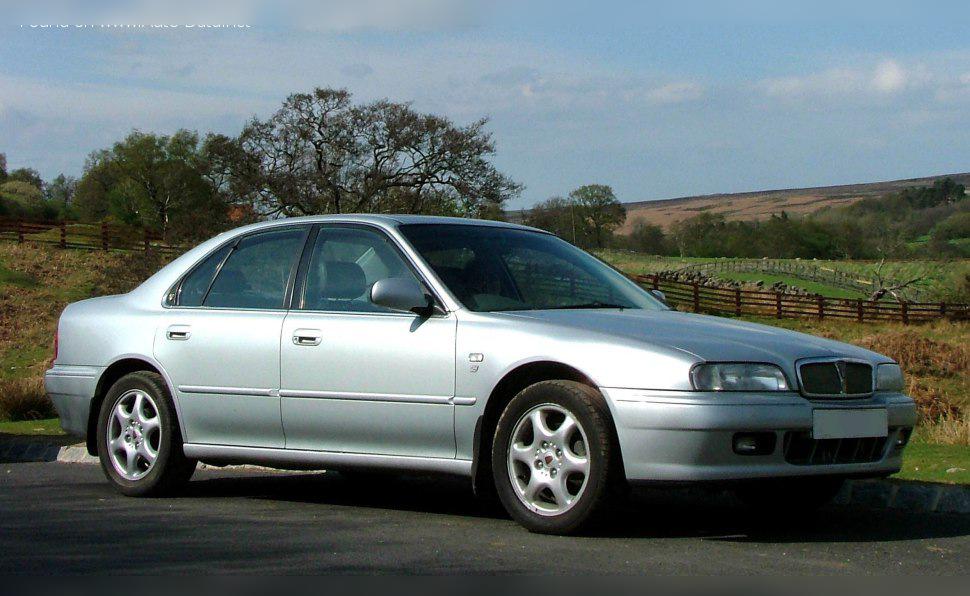
Honda F20Z1 (2.0i) – Experiences, Problems, Fuel Consumption and Used Car Buying Guide
As someone who has spent decades following the development of the Japanese car industry in Europe, I can safely say that Honda’s F engine series, which includes the F20Z1, is one of the pillars on which the brand’s “indestructible” reputation was built during the 1990s. This is not a racing engine like those from the Type-R series, but a workhorse designed for mid-size sedans – specifically for the European Honda Accord (5th generation, CC7 model) and its twin brother, the Rover 600.
If you’re considering buying a car with this engine today, you’re entering the realm of “modern classics.” The F20Z1 is an old-school 2.0-liter petrol engine: simple, robust, but not without quirks that come with age. In this article we’ll take a detailed look at what awaits you under the hood.
Key points in short (TL;DR)
- Exceptional mechanical durability: The engine block and piston assembly can cover huge mileages (over 400,000 km) with regular maintenance.
- Sensitivity of the ignition system: The distributor is a weak point and can cause starting issues.
- Fuel consumption: Not a city fuel-economy champion; expect double-digit consumption.
- Ideal for LPG: The engine handles LPG very well, but requires regular valve adjustment.
- Timing service is crucial: It has two belts (timing and balancer) – failure of either can be fatal.
- Cheap maintenance: No expensive parts like a dual-mass flywheel, DPF, or complex injectors.
Contents
- Technical Specifications
- Reliability and Maintenance
- Specific Parts and Costs
- Fuel Consumption and Performance
- Additional Options and Modifications (LPG/Tuning)
- Gearbox: Manual and Automatic
- Buying Used and Conclusion
Technical Specifications
| Parameter | Value |
|---|---|
| Engine code | F20Z1 |
| Displacement | 1997 cc (2.0 L) |
| Power | 96 kW (131 hp) at 5400 rpm |
| Torque | 178 Nm at 4800 rpm |
| Configuration | Inline 4-cylinder, SOHC (single camshaft), 16 valves |
| Injection type | PGM-FI (multi-point indirect injection) |
| Induction | Naturally aspirated |
| Camshaft drive | Timing belt |
Reliability and Maintenance
The Honda F20Z1 is an engineering gem from an era when engines were built to last, not just to survive the warranty period. However, its maintenance has specific requirements you must respect.
Timing belt or chain?
This engine uses a timing belt. But there’s a catch that inexperienced mechanics can overlook. The engine has two belts: a main timing belt that drives the camshaft and a smaller belt for the balancer shaft (balancers). The balancers serve to smooth out engine vibrations.
Important warning: If the small balancer belt snaps, it often slips under the main timing belt, causes the timing to jump, and leads to catastrophic engine damage (piston-to-valve contact). That’s why during a major timing service you MUST replace both belts, both tensioners, and the water pump.
Major timing service
The recommended interval for the major timing service is every 80,000 to 100,000 km or every 5 years (whichever comes first). Given the age of these cars, rubber ages and cracks even if the car is barely driven, so the time interval is more important than mileage.
Most common failures
Although the core mechanics (pistons, crankshaft) are almost indestructible, the peripherals tend to cause issues:
- Distributor: This is the Achilles’ heel. Symptoms include hard starting (especially in damp weather), jerking while driving, or the engine stalling. The usual culprits are the igniter or the ignition coil inside the distributor.
- Main fuel pump relay: A legendary problem on older Hondas. Symptom: the engine cranks but won’t start when the cabin is hot (in summer), yet starts normally once it cools down. The cause is cracked solder joints on the relay’s circuit board. The fix is cheap (re-soldering).
- Oil leaks: The camshaft seal, crankshaft seal, and valve cover gasket are typical places where, after 20+ years, oil will inevitably start to seep.
Oil: Capacity and consumption
The engine takes approximately 3.8 to 4.2 liters of oil (including the filter). The recommended grade is 10W-40 semi-synthetic, which is ideal for older engines of this design. 5W-40 can also be used if the engine is in excellent condition and driven in colder climates.
Oil consumption: These engines are tolerant of some oil consumption. Up to 0.5 liters per 1,000 km was considered acceptable in the factory manuals, but in practice a healthy F20Z1 should not consume more than 1 liter per oil change interval (10,000 km). If it uses more, the usual issue is valve stem seals. The symptom of worn seals is bluish smoke at the first cold start of the day, which disappears after a minute of running.
Spark plugs and valves
Spark plugs should be replaced every 20,000 to 30,000 km (standard nickel-copper, e.g. NGK ZFR6F-11). This is crucial because bad plugs put extra strain on the sensitive distributor.
Note on valves: This engine does NOT have hydraulic lifters. Valve clearances are adjusted mechanically (screw and locknut). Inspection and adjustment are needed every 40,000 km (or more often if you run the car on LPG).
Specific Parts and Costs
The good news for owners is that the F20Z1 is technologically simple, which means it avoids most of the expensive failures found in modern cars.
- Dual-mass flywheel: NONE. It uses a classic solid flywheel. A clutch kit is relatively cheap and straightforward to replace.
- Turbocharger: NONE. The engine is naturally aspirated, which means one less worry (no turbo rebuilds, intercooler issues, or boost hoses bursting).
- Fuel injection system: It uses Honda’s reliable PGM-FI system. The injectors are extremely durable and rarely cause problems. If they do, ultrasonic cleaning is usually enough. They are nowhere near as expensive as modern piezo injectors.
- DPF / EGR / AdBlue: The engine has NO DPF filter and no AdBlue system (those are technologies from newer diesel engines). As for the EGR valve, some F20Z1 versions do have it. If it clogs with soot, the car may jerk at low revs. Fortunately, cleaning is simple and does not require replacing the part.
Fuel Consumption and Performance
The F20Z1 powers sedans weighing around 1,300 kg. With 131 hp, it’s no sports car, but it’s not slow either.
City driving
Let’s be honest – this is 90s technology. In heavy city traffic with lots of stop-and-go, real-world consumption ranges from 11 to 13 liters per 100 km. In winter it can go up to 14 liters. If someone claims it uses 8 in the city, they’re probably not measuring correctly.
Is the engine “lazy”?
The engine behaves exactly as you’d expect from a naturally aspirated 16V petrol. At low revs (below 2,500) it’s tame and quiet, but doesn’t have explosive torque. To get it to pull strongly, you need to rev it above 3,500 rpm. It’s not lazy, but it does require you to work the gearbox when overtaking. For relaxed driving it’s more than adequate.
On the motorway
This is the natural habitat of the Honda Accord and Rover 600. Cruising is comfortable. At 130 km/h in fifth gear, the engine spins at around 3,500 to 3,800 rpm (depending on the gearbox ratios). That’s a bit higher than in modern 6-speed cars, so you can hear the engine in the cabin, but it’s not annoying. Fuel consumption on the open road is around 7.5 to 9 liters, depending on how heavy your right foot is.
Additional Options and Modifications
LPG conversion
YES, absolutely. The F20Z1 is one of the best engines for conversion to LPG. The intake manifold is metal, the electronics are simple. With a quality sequential LPG system, the engine runs perfectly.
LPG warning: Since the engine has no hydraulic lifters and LPG burns at a higher temperature, valve seat recession occurs more quickly. That’s why valve adjustment every 15,000 to 20,000 km is mandatory when running on LPG. If you ignore this, the exhaust valves will burn.
ECU remap (Stage 1)
On a naturally aspirated petrol engine of this generation, remapping is basically a waste of money. You might gain 3–5 hp and slightly better throttle response, but you won’t feel it in real driving. You’re better off investing in quality spark plugs, leads, and injector cleaning – that will bring back the factory horses that may have “escaped” over the years.
Gearbox
Two transmission options were paired with the F20Z1:
1. Manual gearbox (5-speed)
Honda’s manual gearboxes are legendary for their precision and short throws. The shift feel is mechanically satisfying (a distinct “click-clack” sensation).
- Failures: Very rare. At high mileages you may get grinding when shifting into third gear (synchro wear), but this is usually the result of aggressive driving.
- Oil: Should be changed every 60,000 km or every 3–4 years. Use only Honda MTF (Manual Transmission Fluid) or quality 10W-40 engine oil (yes, in the 90s Honda allowed engine oil in the gearbox, but MTF is the better choice).
- Clutch cost: As mentioned, there is no dual-mass flywheel. Replacing the clutch kit (pressure plate, disc, release bearing) falls into the “affordable” category (exact price depends on the market, but it’s not expensive).
2. Automatic gearbox (4-speed)
A classic torque-converter automatic. Very reliable if maintained properly, but…
- Drawbacks: It “kills” the engine’s performance and increases fuel consumption by 1–2 liters. It has only 4 gears, so on the motorway the engine is noisier. Gear changes are slower than on modern transmissions.
- Maintenance: ATF changes are mandatory every 40,000 to 60,000 km. Use ATF-Z1 or an equivalent. If the oil is black or smells burnt, the gearbox is nearing the end of its life.
Buying Used and Conclusion
If you’re buying a Honda Accord or Rover 600 with the F20Z1 engine, here’s a brief checklist:
- Cold start: Insist that the engine be completely cold. Start it and watch the exhaust. Blue smoke? The valve stem seals are bad.
- Idling: Once warm, the engine should idle smoothly at around 750–800 rpm. If the revs “hunt” (surging up and down), the idle air control valve (IACV) is likely dirty or there’s a vacuum leak.
- Rust inspection: The engine will outlive the body. Be sure to check the rear wheel arches, sills, and under the boot floor. These are critical rust spots on Accords and Rovers of that generation.
- Service history: Ask when the belts were last changed. If the seller doesn’t know or has no proof, immediately factor the cost of a full timing service into the purchase price.
Conclusion:
The F20Z1 engine is an excellent choice for fans of older cars (youngtimers) or for drivers who want cheap transport and are willing to accept higher fuel consumption (or run on LPG). It is reliable, inexpensive to maintain, and offers that genuine mechanical driving feel that has largely disappeared today. Its biggest enemy nowadays is not mechanical failure, but body corrosion around it.
Was this content useful to you?
Your opinion helps us to improve the quality of the content.