L12B4 Engine
- Engine
- 1199 cm3
- Aspiration
- Naturally aspirated engine
- Fuel
- Petrol (Gasoline)
- Fuel injection system
- Multi-port manifold injection
- Power
- 90 hp @ 6000 rpm
- Torque
- 110 Nm @ 4800 rpm
- Cylinders
- 4
- Valves
- 16, 4 per cylinder
- Cylinders position
- Inline
- Valvetrain
- SOHC, i-VTEC
- Oil capacity
- 3.2 l
- Coolant
- 3.32 l
- Systems
- Start & Stop System
# Vehicles powered by this engine

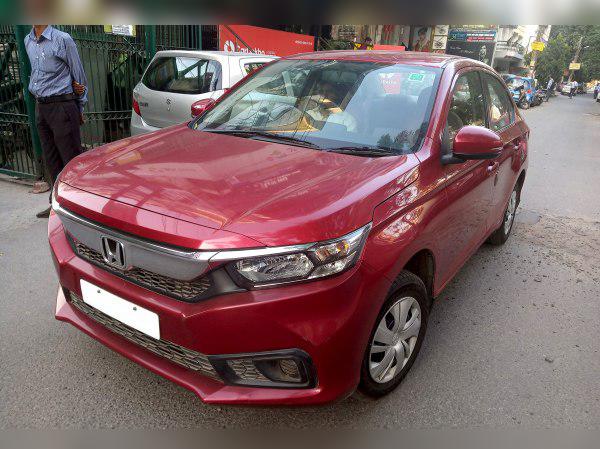
Honda L12B4 1.2 i-VTEC (90 HP) – experiences, issues, fuel consumption and used car buying guide
Key points in short (TL;DR)
- Reliability: Extremely reliable engine, one of those “fill up and drive” units if serviced regularly.
- Timing drive: Uses a timing chain which is long-lasting and rarely causes problems.
- Performance: Lacks torque at low revs; needs to be revved high for safe overtaking.
- Fuel consumption: Very economical, especially in city driving and on secondary roads.
- Maintenance: Cheap to maintain, no expensive failures like dual-mass flywheel, turbo or DPF.
- Gearboxes: Manual is virtually indestructible, while the CVT automatic requires strictly regular oil changes.
- LPG: Excellent candidate for LPG conversion.
Contents
- Introduction and applications
- Technical specifications
- Reliability and maintenance
- Specific parts and costs
- Fuel consumption and performance
- Additional options and modifications (LPG & tuning)
- Gearbox (manual vs automatic)
- Buying used and conclusion
Introduction and applications
The engine designated as L12B4 belongs to Honda’s well-known L-series of engines, famous for their compactness and efficiency. This is a naturally aspirated petrol engine with a displacement of 1.2 litres, equipped with i-VTEC technology (intelligent valve control). It is primarily installed in the second-generation Honda Amaze, a compact sedan designed to offer maximum space and economy. It’s important to note that this engine is a real “little workhorse” – it is designed to endure everyday city driving, traffic jams and poorer-quality fuel, while remaining operational for years.
Technical specifications
| Specification | Value |
|---|---|
| Engine code | L12B4 |
| Displacement | 1199 cc (1.2 l) |
| Power | 66 kW (90 HP) @ 6000 rpm |
| Torque | 110 Nm @ 4800 rpm |
| Induction | Naturally aspirated |
| Injection type | Multipoint (PGM-FI) |
| Number of cylinders/valves | 4 / 16 (SOHC i-VTEC) |
Reliability and maintenance
As someone who has seen many engines opened up, I can say that the L12B4 is an engineeringly “clean” engine without unnecessary complications.
Timing system: This engine uses a timing chain to drive the camshaft. On Hondas, chains are traditionally reliable and often last the entire service life of the engine (over 250,000 km) with regular oil changes. There is no scheduled replacement interval; it is replaced only if you hear rattling at cold start.
Most common issues: Serious mechanical failures are rare. Owners most often encounter a dirty throttle body, which can cause unstable idle. Also, since this is an i-VTEC engine, the VTEC solenoid can sometimes cause problems if the oil is dirty, which manifests as the “Check Engine” light coming on. Engine mounts (rubber) can fail after many years of use, transmitting vibrations into the cabin.
Major service: Since the engine has a chain, there is no classic “major service” (fixed-interval timing belt replacement) in that sense. However, it is recommended to replace the auxiliary (serpentine) belt for the alternator and A/C, the tensioner and the water pump at around 100,000 to 120,000 km or 7–8 years of age, as a preventive measure.
Engine oil: The engine takes approximately 3.2 to 3.6 litres of oil (depending on whether the filter is changed; always check with the dipstick). The recommended grade is 0W-20 (for maximum economy and protection at cold start) or 5W-30. Minor service (oil + filter) is done every 10,000 km or once a year. Do not skip intervals because the VTEC system depends on clean oil pressure.
Oil consumption: The L12B4 generally does not consume oil. Consumption of up to 0.5 litres per 10,000 km can be considered acceptable on higher-mileage engines, but any higher top-ups indicate a problem with piston rings or valve stem seals (which is rare before 200,000 km).
Spark plugs: If standard nickel spark plugs are used, they should be replaced every 40,000 km. If iridium plugs are used (which Honda often recommends for i-VTEC), the replacement interval is 100,000 km. Iridium plugs are more expensive but provide better operation.
Specific parts and costs
This is where things get pleasant for your wallet. This engine is “free” of expensive components.
Dual-mass flywheel: The engine does NOT have a dual-mass flywheel. Versions with a manual gearbox use a conventional solid flywheel, which means clutch kit replacement is significantly cheaper (exact cost depends on the market).
Fuel injection system: It uses the proven PGM-FI multipoint system (port fuel injection). Injectors are robust, not too sensitive to poorer fuel quality and very rarely fail. Injector cleaning is cheap and straightforward.
Turbo and EGR: The engine does NOT have a turbocharger, which is one less thing to worry about. It does have an EGR valve that recirculates exhaust gases, but on petrol engines it rarely clogs to the point of needing replacement (cleaning is usually enough).
DPF and AdBlue: Being a petrol engine, it does not have a DPF filter nor does it use AdBlue fluid. It has a catalytic converter which can fail only if the engine burns a lot of oil or if the ignition system is faulty.
Fuel consumption and performance
Real-world fuel consumption:
In heavy city traffic, you can realistically expect around 6.5 to 7.5 l/100 km. With a CVT gearbox in “Eco” mode, that figure can be even lower if you are gentle on the throttle. On open roads, consumption drops to an impressive 4.5 to 5.5 l/100 km.
Is the engine “sluggish”?
With 90 HP and only 110 Nm of torque at a high 4800 rpm, this engine is no racer. In the city it feels agile and lively thanks to short gearing (or CVT response). However, when the car is loaded with passengers and luggage, the lack of power on uphill sections becomes noticeable. It requires frequent gear changes.
Motorway driving:
This is not an ideal “cruiser”. At 130 km/h, the engine spins at around 3500 to 4000 rpm (depending on the gearbox), which increases cabin noise. Maintaining that speed is possible, but overtaking at those speeds requires patience and dropping down a gear.
Additional options and modifications
LPG (autogas) conversion:
Yes, this engine is an excellent candidate for LPG. Due to port fuel injection, installation is simple and cheaper than on engines with direct injection.
Important note: This engine does not have hydraulic tappets; valve clearances are adjusted mechanically. When running on LPG, it is recommended to check valve clearances every 30,000–40,000 km to prevent valve seat recession.
Chiptuning (Stage 1):
On small-displacement naturally aspirated engines, remapping is basically a waste of money. You might gain 3–5 HP, which you will not really feel in everyday driving. It’s better to invest that money in quality tyres or regular servicing.
Gearbox: manual vs automatic
Two transmission options are available with the L12B4:
1. Manual gearbox (5-speed):
Typical Honda gearbox – precise, with a short throw and very reliable. Failures are extremely rare. Gearbox oil should be changed every 60,000–80,000 km (use genuine Honda MTF oil). Clutch replacement is affordable because there is no dual-mass flywheel.
2. CVT automatic:
The Honda Amaze often comes with a CVT gearbox. This is a transmission without fixed gears.
Reliability: Modern Honda CVTs are good, but they are sensitive to maintenance.
Maintenance: CVT fluid (HCF-2) must be changed every 40,000 km or 2 years. If this is neglected, the gearbox may start to whine, slip and eventually fail, which is a very expensive repair (depending on the market, often over 1500 EUR).
Driving feel: The CVT keeps the engine in the ideal rev range, but under hard acceleration it creates a “scooter effect” (the engine drones while speed rises linearly), which some drivers dislike.
Buying used and conclusion
Before buying a used Honda with this engine, pay attention to the following:
- Service history (especially for CVT): If it’s an automatic and there is no proof of gearbox oil changes, be very cautious.
- Timing chain noise: At cold start (first 3–5 seconds), listen for any metallic rattling. This is a sign that the chain or chain tensioner is nearing the end of its life.
- Idle speed: Once the engine is warm, the rev needle should be rock steady. Fluctuations indicate a dirty throttle body or valve-related issues.
- Check under the oil cap: Look for any “mayonnaise” deposits or black sludge. These engines need clean oil.
Conclusion:
The Honda L12B4 1.2 i-VTEC is a fantastic choice for drivers whose priorities are fuel economy, low running costs and city driving. It is not for those seeking sporty performance or who frequently drive on motorways with a fully loaded car. If you find a car with a well-documented service history, it is a low-risk purchase.
Was this content useful to you?
Your opinion helps us to improve the quality of the content.