L15B7 Engine
- Engine
- 1498 cm3
- Aspiration
- Turbocharger, Intercooler
- Fuel
- Petrol (Gasoline)
- Fuel injection system
- Direct injection
- Power
- 193 hp @ 5600 rpm
- Torque
- 243 Nm
- Cylinders
- 4
- Valves
- 16, 4 per cylinder
- Cylinders position
- Inline
- Valvetrain
- DOHC, VTEC
- Oil capacity
- 3.5 l
- Coolant
- 6.21 l
- Systems
- Start & Stop System
# Vehicles powered by this engine



Honda 1.5 VTEC Turbo (L15B7) – Experiences, problems, fuel consumption and used car buying guide
Key points (TL;DR)
- Impressive power: With 193 hp from 1.5 liters of displacement, this is one of the most powerful versions of this engine, but that comes with higher thermal stress.
- “Oil and fuel mixing” issue: The most well-known flaw (Oil Dilution) – especially in cold climates and with short-distance driving.
- Timing chain maintenance: It has a timing chain which is generally reliable, but sensitive to poor-quality oil.
- Direct injection: Efficient, but prone to carbon buildup on intake valves at higher mileage.
- CVT gearbox: Requires a specific driving style and regular oil changes every 40,000 – 60,000 km at most, in order to last.
- Recommendation: An excellent choice for those who want petrol performance with moderate fuel consumption, provided the car is not used exclusively for short trips in winter.
Contents
Introduction: Honda “Earth Dreams” technology in a heavy body
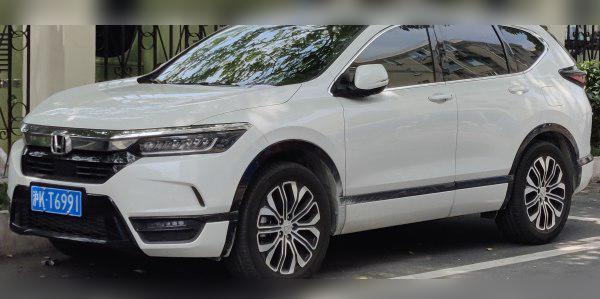
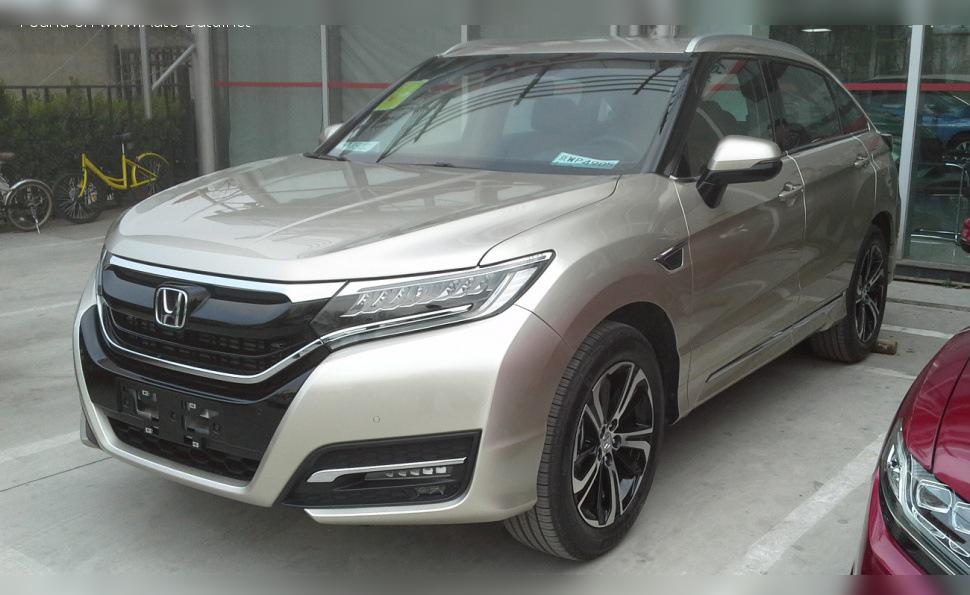
The engine designated L15B7 represents the pinnacle of Honda’s downsizing philosophy within the Earth Dreams series. Although 1.5-liter turbo engines are installed in the Civic and CR-V worldwide, the 193 hp (142 kW) version is specifically tuned for larger and heavier vehicles, primarily for the Asian market, such as the Honda Avancier, UR-V and Breeze. These models are dimensionally larger than or similar to the CR-V, so Honda had to squeeze the maximum out of this unit to provide adequate performance without moving to larger, more heavily taxed displacements. This is an engine that combines Honda’s sporty character with the needs of a modern SUV, but that high specific output also demands specific attention from the owner.
Technical specifications
| Parameter | Value |
|---|---|
| Displacement | 1498 cc (1.5 L) |
| Power | 142 kW / 193 hp |
| Torque | 243 Nm |
| Engine code | L15B7 (High Output variant) |
| Injection type | Direct injection (GDI) |
| Forced induction | Mono-scroll turbocharger with electronic wastegate |
| Camshaft drive | Chain (DOHC, VTEC on the exhaust side) |
Reliability and maintenance
Does this engine have a timing belt or a chain?
Honda’s L15B7 engine uses a timing chain. Honda chains are traditionally reliable and designed to last for the entire service life of the engine, provided the oil is changed regularly. There is no scheduled replacement like with a belt, but you should listen for rattling noises on cold start after about 150,000 km, which may indicate chain stretch or a tensioner issue.
What are the most common failures on this engine?
The biggest and most well-known issue with this engine is oil dilution with fuel. Due to the engine’s high efficiency, it warms up slowly. In cold weather and during short city drives, unburned fuel runs down the cylinder walls into the sump and mixes with the oil.
The symptoms are a rising oil level on the dipstick (“it’s making oil”) and a strong smell of fuel from the oil filler opening. This degrades the oil’s properties and can lead to faster wear of the crankshaft and camshaft bearings. Honda addressed this with software updates that change the injection map and A/C operation so the engine warms up faster, but the problem has not been completely eliminated on all cars. Another potential issue is carbon buildup on the intake valves due to direct injection.
At what mileage is the major service due?
Since the engine has a chain, a classic “major service” (timing belt replacement) does not exist. However, at around 100,000 - 120,000 km a thorough inspection is recommended: checking valve clearances (although hydraulic lifters are rare on some Honda engines, this engine usually requires mechanical clearance adjustment if it becomes noisy), replacing the auxiliary (serpentine) belt and tensioner, as well as replacing the coolant.
How many liters of oil does it take and which grade is recommended?
The L15B7 engine usually takes about 3.5 to 3.7 liters of oil (with filter). The manufacturer strictly recommends 0W-20 oil. This low-viscosity grade is crucial for the turbocharger and VTEC system, as well as for fast lubrication during cold starts. Do not experiment with thicker oils (e.g. 10W-40) as this can damage the turbo and the variable valve timing system.
Oil consumption and spark plugs
This engine generally does not consume oil in significant amounts. In fact, due to the aforementioned dilution issue, you will more often see the level rise than drop. If the level drops by more than 0.5 L per 10,000 km, this may indicate a problem with the turbo or piston rings, but that is not a typical weakness.
As for the spark plugs, since this is a turbocharged petrol engine with direct injection, it uses iridium spark plugs only. The recommended replacement interval is every 100,000 km, but due to fuel quality and the high stress (193 hp), many enthusiasts and mechanics recommend changing them every 60,000 - 80,000 km to protect the ignition coils.
Specific parts (costs)
Dual-mass flywheel and injection system
Avancier, UR-V and Breeze models with this engine come exclusively with automatic transmissions (most commonly CVT). They do not have a dual-mass flywheel in the sense that diesels with manual gearboxes do. Instead, they have a torque converter or a flywheel adapted to the CVT, which rarely fails.
The injection system is direct injection (GDI). The injectors operate at high pressure. They are not prone to frequent failures, but they are sensitive to poor-quality fuel. Replacing a set of injectors is a costly job (depending on the market, expect several hundred euros per injector). Symptoms of problems include rough idle and hesitation/misfiring under acceleration.
Turbocharger, DPF/GPF and AdBlue
The engine has a single turbocharger (Mitsubishi Heavy Industries – MHI TD03 or similar). It is water-cooled and very durable, often lasting over 200,000 km with regular oil changes.
This engine does not use AdBlue because it is a petrol unit. However, newer versions (from 2018/2019 onward, depending on the market and Euro standard) are equipped with a GPF (Gasoline Particulate Filter), which is the petrol equivalent of a DPF. The GPF rarely clogs because exhaust gas temperatures on petrol engines are higher, so regeneration occurs passively while driving. There is an EGR valve which can get dirty from soot, but this is less common than on diesels.
Fuel consumption and performance
Fuel consumption in the city and on the highway
Even though 1.5 liters is a small displacement, do not expect miracles in terms of fuel consumption because models like the Avancier and UR-V are heavy SUVs (over 1600–1700 kg).
- City driving: Real-world consumption is between 10 and 12 l/100 km. In heavy traffic and with a heavy right foot, it can easily reach 13 liters.
- Highway / open road: This is where the engine shines. With moderate driving it uses around 7 – 8 l/100 km.
Is the engine “lazy” and how does it behave on the motorway?
With 193 hp and 243 Nm available from as low as 2000 rpm, this engine is not lazy. Honda has expertly tuned the turbo to spool up early. The car pulls decisively from a standstill. However, during overtaking at higher speeds (over 120 km/h), you can feel the lack of torque compared to 2.0 turbo engines, so the CVT raises the revs high, which creates noise (the “vacuum cleaner” effect).
At 130 km/h, thanks to the CVT gearbox with its “infinite” number of ratios, the engine spins at a relatively low 2200 – 2500 rpm, which makes for quiet and comfortable cruising.
Additional options and modifications
LPG (autogas) conversion
Due to direct injection, LPG conversion is complicated and expensive. It requires “direct liquid” systems or systems that inject a mix of petrol and LPG (to cool the petrol injectors). The savings are smaller than on older engines, while the risk of overheating the cylinder head and injectors is higher. In general, it is not recommended unless you cover very high annual mileage (over 30–40,000 km per year).
Remapping (Stage 1)
The engine has potential, but the limiting factor is the CVT gearbox. A Stage 1 remap can raise power to about 210–220 hp and torque to around 280–300 Nm. However, CVT transmissions are sensitive to a sudden increase in torque. If you decide to remap, do it only with reputable tuners who understand the gearbox limits (torque limiter) and be prepared for more frequent gearbox oil changes.
Transmission: CVT and automatic
Which gearboxes are used?
In Avancier, UR-V and Breeze models with the 1.5T engine, the CVT gearbox (G-Design Shift) absolutely dominates. Although some specifications list it as “automatic”, technically it is a Continuously Variable Transmission. There are also versions with the 9-speed ZF automatic, but those are mostly reserved for the more powerful 2.0 Turbo engine.
Gearbox failures and maintenance
CVT gearbox: Honda’s CVT gearboxes are among the better ones on the market, but they are not indestructible.
- Failure symptoms: Slipping (revs rise but the car does not accelerate), jerking when taking off, or strange whining noises.
- Maintenance: The oil in the CVT (HCF-2 fluid) must be changed every 40,000 km (recommended for long life), even if the manufacturer states a longer interval. The change is relatively cheap (depending on the market) compared to a gearbox failure.
- Manual gearbox: These models are rarely, if ever, found with a manual gearbox in most markets. If you do come across a manual (most likely in the Breeze), it uses a conventional clutch kit that is not excessively expensive.
Buying used and conclusion
Before buying a Honda Avancier or Breeze with the 1.5T engine, make sure you do the following:
- Check the oil level: Pull out the dipstick. If the oil level is above the maximum mark and the oil strongly smells of fuel, the engine is suffering from a serious oil dilution problem. This may mean it has been used for short trips only, without proper servicing.
- Gearbox service history: If there is no proof that the oil in the CVT has been changed and the car has over 100,000 km, that is a major risk.
- Chain noise: Listen to the engine on a cold start. Any metallic rattling in the first 3–5 seconds is a sign that the chain or tensioner needs replacement.
Conclusion: The 193 hp version of the L15B7 is a technological gem that allows a large SUV to have sedan-like performance with acceptable registration costs. It is intended for drivers who spend most of their time on the open road or in mixed driving. If you need a car solely for a 2 km commute to work and back in winter – avoid this engine due to the fuel-in-oil dilution issue. For everyone else, with regular maintenance (especially engine oil and CVT fluid), this is a very reliable and enjoyable powertrain.
Was this content useful to you?
Your opinion helps us to improve the quality of the content.