J30A Engine
- Engine
- 2997 cm3
- Aspiration
- Naturally aspirated engine
- Fuel
- Petrol (Gasoline)
- Fuel injection system
- Multi-port manifold injection
- Power
- 215 hp @ 5800 rpm
- Torque
- 272 Nm @ 5000 rpm
- Cylinders
- 6
- Valves
- 24, 4 per cylinder
- Cylinders position
- V-engine
- Valvetrain
- SOHC
- Oil capacity
- 4.4 l
# Vehicles powered by this engine
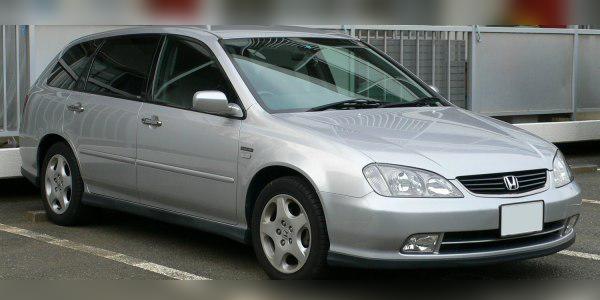
Honda J30A (3.0 V6) – Experiences, Problems, Fuel Consumption and Buying Tips
Key points in short (TL;DR)
- Old-school engine: The J30A is a classic naturally aspirated V6 that offers excellent refinement and linear power delivery.
- Achilles’ heel – Transmission: The engine itself is “bulletproof”, but the automatic transmissions paired with it (especially from that era) are the weak point.
- Timing belt service is mandatory: The engine uses a timing belt. If it snaps, it means catastrophic engine damage.
- Fuel consumption: Not for those with a tight budget. It’s thirsty in the city, but a true cruiser on the open road.
- EGR passages: They often get clogged, which causes rough running, but cleaning is relatively inexpensive.
- Adjustable valves: There are no hydraulic lifters; the valves must be adjusted mechanically.
- Conclusion: An excellent choice for comfort lovers, provided you find a car with a healthy transmission and a well-documented service history.
Contents
- Technical Specifications
- Reliability and Maintenance
- Specific Parts and Systems
- Fuel Consumption and Performance
- LPG and Tuning
- Transmission and Drivetrain
- Used Car Buying Tips and Conclusion
Introduction: Honda J30A in the Avancier
The Honda J-series engines are considered one of the best V6 families ever made. Specifically, the J30A with its 3.0-liter displacement is the heart of models such as the Honda Avancier I (a crossover wagon that was ahead of its time). This is an engine that combines Honda’s VTEC technology with the smoothness of a six-cylinder. Although it was mostly driven on the roads of Japan and North America, enthusiasts in Europe appreciate this powerplant for its refinement. It’s not a raw sports engine like the Type-R units, but more of a gentleman in a suit who can sprint when needed.
Technical Specifications
| Parameter | Value |
|---|---|
| Engine code | J30A |
| Displacement | 2997 cc (3.0 L) |
| Configuration | V6, SOHC VTEC |
| Power | 158 kW (215 hp) |
| Torque | 272 Nm |
| Fuel type | Petrol (Gasoline) |
| Induction | Naturally aspirated |
| Fuel injection | Multi-point (MPFI) |
Reliability and Maintenance
Timing belt or chain?
This is a key question for every owner of a Honda V6. The J30A uses a timing belt. This is not a chain-driven engine you can forget about. It is an interference engine, which means that if the belt snaps, the pistons will hit the valves and the engine will be destroyed. When replacing the belt, you must also replace the hydraulic tensioner, which is known to fail before the belt itself and can cause the belt to jump teeth.
Major service (timing belt service)
It is recommended to perform the major service at 100,000 to 120,000 km or every 5 to 7 years (whichever comes first). During this service, it is wise to replace the water pump as well, since it is driven by the same belt and sits behind it. If the pump starts leaking later, you will pay for the same labor again. The cost of this service falls into the “moderately expensive” category (depending on the market).
Oil: Capacity and consumption
The sump holds about 4.3 to 4.6 liters of oil (with filter). The most commonly recommended viscosity is 5W-30 or 5W-20, depending on the climate. As for oil consumption, the J30A is generally a “dry” engine and does not burn oil the way many modern turbo engines do.
However, oil leaks are common at:
- Valve cover gaskets: Oil can leak directly onto the exhaust manifold, causing a burning smell in the cabin.
- VTEC solenoid: The rubber seal hardens and starts to leak.
Spark plugs and ignition coils
This engine uses 6 spark plugs. Iridium spark plugs (NGK or Denso) are recommended. Replacement interval is around 100,000 km. Since the V6 is mounted transversely, access to the rear bank of cylinders (towards the firewall) is more difficult, and mechanics often charge more labor time for this job.
Most common issues
Besides oil leaks, the most common problem is clogging of the EGR passages in the intake manifold. Symptoms include jerking under light throttle and uneven idle. Cleaning is relatively straightforward. Also, the engine requires valve clearance adjustment (it has no hydraulic lifters) every 40,000–60,000 km (or more often on LPG), which is frequently neglected and can lead to noisy operation or burnt valves.
Specific Parts (Costs)
Fuel injection system and turbo
This is a naturally aspirated engine, so there is no turbocharger, intercooler, or complex boost piping that can crack under pressure. That is a big advantage for long-term ownership. The fuel system is a classic multi-point injection into the intake manifold. The injectors are very durable and rarely cause issues, unless extremely poor-quality fuel is used for many years.
Emissions equipment (DPF, EGR, AdBlue)
Being a petrol engine, it does not have a DPF filter or an AdBlue system. It is equipped with catalytic converters and an EGR valve. As mentioned, the EGR valve is prone to soot buildup, but it is usually cleaned rather than replaced. The catalytic converters are long-lasting but can fail if the engine burns a lot of oil or is driven with bad spark plugs.
Dual-mass flywheel
The Honda Avancier with the J30A engine comes exclusively with an automatic transmission. Therefore, this engine does not use a dual-mass flywheel in the way diesel engines with manual gearboxes do. Instead, it has a flexplate and a torque converter. That’s one less thing for your wallet to worry about.
Fuel Consumption and Performance
City driving and highway
Let’s be honest – a 3.0 V6 petrol engine in a heavy body (the Avancier weighs around 1700 kg) is not economical.
- City driving: Expect 13 to 16 l/100 km. In heavy traffic and winter conditions, this can easily be higher.
- Open road: This is where the engine shines. Consumption drops to 8.5 to 10 l/100 km with normal driving.
Is the engine “lazy”?
Not at all. With 215 hp and 272 Nm, the J30A copes very well with the Avancier’s weight. What some drivers may perceive as “laziness” is actually the character of a VTEC engine – it loves revs. The engine is extremely quiet and smooth at low rpm, while the real power comes alive above 3,500–4,000 rpm. Overtaking is safe and quick, accompanied by the characteristic V6 sound.
Cruising
On the highway at 130 km/h, the engine runs relaxed, usually around 2,500–3,000 rpm (depending on whether it’s the 4-speed or 5-speed automatic), which makes the drive very quiet and comfortable.
Additional Options and Modifications
LPG (Autogas) conversion
This engine is suitable for LPG, but with an important caveat. Honda engines generally have somewhat “softer” valve seats. If you install LPG:
- A quality sequential LPG system is mandatory.
- A valve lubrication system (so‑called “valve saver” or drip system) is recommended.
- Most important: Valve clearance must be checked more frequently, every 20,000 to 30,000 km. If this is neglected, the valves will recede into the seats and the cylinder head will be damaged.
Chip tuning
On naturally aspirated petrol engines, a “Stage 1” remap does not bring dramatic gains like on turbo engines. You can expect an increase of about 10–15 hp and slightly better throttle response, but in practice this is barely noticeable. The cost-effectiveness is questionable. It is usually better to invest that money into high-quality maintenance.
Transmission
Types of transmission
In the Honda Avancier I, the J30A was paired exclusively with an automatic transmission (a conventional torque-converter automatic), usually with 4 or 5 gears (depending on model year and facelift). A manual gearbox was not an option for this particular model.
Automatic transmission issues
This is the weakest point of the whole car. Honda automatic transmissions paired with V6 engines from the late 1990s and early 2000s are known for overheating and failure.
Failure symptoms:
- Delay when engaging “D” or “R”.
- Jerking (harsh shifts) when changing gears, especially from 1st to 2nd.
- “Slipping” (revs rise but the car does not accelerate accordingly).
Transmission maintenance
Changing the transmission fluid is critical. It is recommended every 40,000 to 60,000 km. Use only genuine Honda ATF (e.g. ATF-Z1 or the newer DW-1). Many owners install an additional transmission oil cooler to extend its lifespan, which is highly recommended.
Buying Used and Conclusion
What to check before buying?
- Transmission, transmission, transmission: Test the car both when cold and fully warmed up. Any hesitation or harsh shift is a sign to walk away from that example or to budget 1000+ euros for a rebuild.
- When was the timing belt service done? Ask for proof of timing belt replacement. If there is no proof, immediately factor that cost into the purchase price.
- Oil leaks: Inspect the engine from below and from the sides (around the VTEC solenoid area).
- Valve noise: If you hear loud ticking while the engine is running, valve adjustment is likely needed.
Conclusion
The Honda Avancier with the J30A engine is a car for those who want comfort, quietness, and the reliability of the engine itself. The engine is a mechanical gem that can easily cover 400,000+ km without being opened. However, buying one requires caution due to the potentially fragile automatic transmission and somewhat higher fuel consumption. If you find a well-maintained example and are willing to spend a bit more on fuel to enjoy that V6 sound, it is an excellent choice (expensive to run, reasonable to maintain).
Was this content useful to you?
Your opinion helps us to improve the quality of the content.