L15Z1 Engine
- Engine
- 1497 cm3
- Aspiration
- Naturally aspirated engine
- Fuel
- Petrol (Gasoline)
- Fuel injection system
- Multi-port manifold injection
- Power
- 119 hp @ 6600 rpm
- Torque
- 145 Nm @ 4600 rpm
- Cylinders
- 4
- Valves
- 16, 4 per cylinder
- Cylinders position
- Inline
- Valvetrain
- SOHC, i-VTEC
- Oil capacity
- 3.6 l
- Coolant
- 3.9 l
# Vehicles powered by this engine
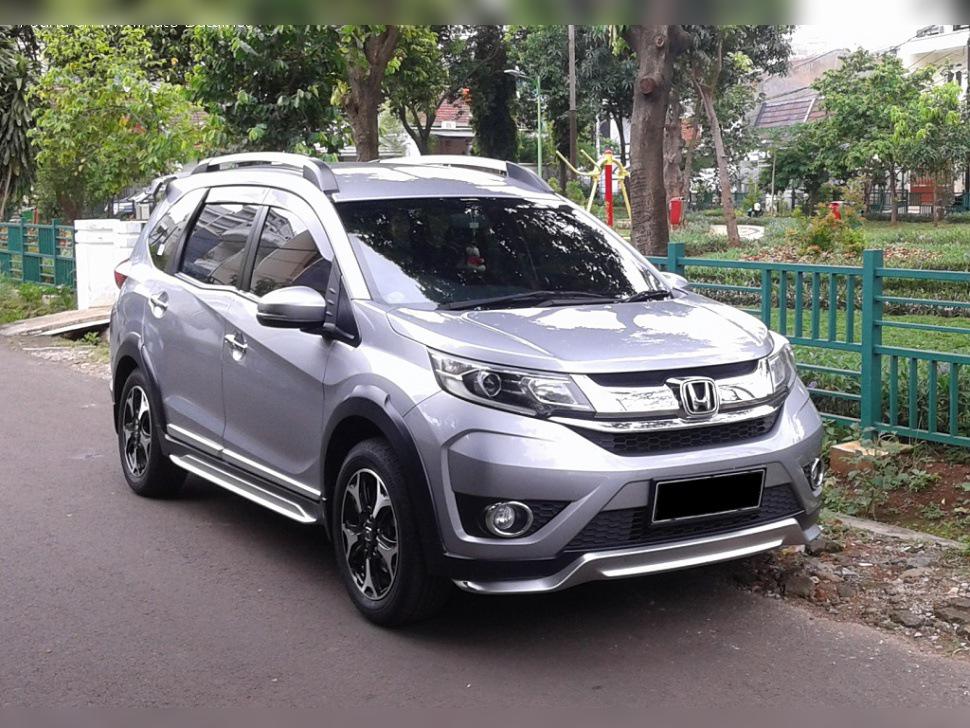
Honda 1.5 i-VTEC (L15Z1) – Experiences, problems, fuel consumption and used car buying guide
Key points (TL;DR)
- Reliability: One of the most reliable petrol engines today. Classic Japanese “old-school” mechanical design.
- Maintenance: Cheap and simple. No turbocharger, no DPF, no complex high‑pressure injection systems.
- Performance: The engine needs high revs. With only 145 Nm of torque, in a model like the Honda BR-V it can feel “lazy” on uphill sections, especially when fully loaded.
- Transmission: The CVT gearbox requires strictly regular oil changes. Manual gearboxes are virtually indestructible.
- LPG (Autogas): An excellent candidate for LPG conversion, but requires valve clearance checks.
- Recommendation: Ideal for drivers who want peace of mind and low running costs, and don’t race from traffic lights.
Contents
- Introduction and applications
- Technical specifications
- Reliability and maintenance
- Specific parts and costs
- Fuel consumption and performance
- Additional options (LPG/Tuning)
- Transmission: Manual vs CVT
- Used car buying tips and conclusion
Introduction and applications
The Honda L15Z1 belongs to Honda’s renowned L-series engines. It is a 1.5‑liter naturally aspirated petrol engine with i-VTEC technology (SOHC – single overhead camshaft). Its primary role is to power compact crossovers and family vehicles in emerging markets, in Asia, but also in parts of Europe and South America.
It is best known for being fitted in the Honda BR-V (first generation), a compact 7‑seater SUV/MPV. Its philosophy is simple: maximum efficiency and longevity with minimal maintenance costs. This is not an engine that will pin you to the seat, but it is an engine that will likely outlive the car’s body itself.
Technical specifications
| Specification | Data |
|---|---|
| Displacement | 1497 cc (1.5 L) |
| Power | 88 kW (119 hp) at 6600 rpm |
| Torque | 145 Nm at 4600 rpm |
| Engine code | L15Z1 |
| Injection type | Multipoint (PGM-FI) – Indirect |
| Aspiration | Naturally aspirated |
| Configuration | Inline 4‑cylinder, SOHC i-VTEC |
Reliability and maintenance
Does this engine have a timing belt or a chain?
The L15Z1 engine uses a timing chain. Honda chains on the L‑series are extremely durable and designed to last the life of the engine. There is no scheduled replacement like with a belt, unless specific rattling appears due to stretching, which is rare before 250,000–300,000 km with regular oil changes.
What are the most common issues with this engine?
This engine is rather “boring” when it comes to failures, which is very good news. Still, you should pay attention to:
- Carbon buildup on the throttle body: Can cause unstable idle. Cleaning is cheap and straightforward.
- Need for valve adjustment: Since this is an SOHC engine without hydraulic lifters, valve clearances must be checked and adjusted mechanically. If you hear “ticking” when the engine is cold or hot, it’s time for an adjustment (usually every 40,000 to 60,000 km). A symptom of out‑of‑spec valves can also be stalling at traffic lights.
- EGR system: Sometimes the EGR passages can clog with soot, which triggers the “Check Engine” light.
At what mileage is the major service done?
Since the engine has a chain, a classic “major service” (timing belt replacement) does not exist. Instead, at around 100,000–120,000 km it is recommended to: check the chain, replace the auxiliary belt (drives alternator and A/C), replace spark plugs, replace coolant and check the water pump.
How many liters of oil does this engine take and which grade is recommended?
The sump holds approximately 3.6 to 3.8 liters of oil (with filter). Honda recommends thin oils for VTEC system efficiency. The most common recommendation is 0W‑20 (fully synthetic), but in hotter climates or on higher‑mileage engines you can also use 5W‑30. Quality oil is crucial for chain longevity.
Does it consume oil between services?
In general, the L15Z1 does not consume oil in significant amounts. Consumption up to 0.5 liters per 10,000 km can be considered acceptable for engines often driven at high revs (in the VTEC zone). If it consumes more than that, the problem is usually the PCV valve or, less often, worn piston rings on very high mileage.
At what mileage should the spark plugs be replaced?
From the factory it comes with iridium spark plugs (NGK or Denso). Their replacement interval is long, usually 100,000 to 120,000 km. Do not try to save money by fitting standard copper plugs, as they can overload the ignition coils (which are expensive).
Specific parts (Costs)
Does the engine have a dual‑mass flywheel?
No. Regardless of whether it is paired with a manual gearbox or a CVT, this engine uses a conventional solid flywheel (or a flexplate on automatics). This significantly reduces clutch replacement costs on manual versions.
What type of injection system does it have and are the injectors problematic?
The L15Z1 uses the proven PGM‑FI (Multipoint) port injection system, not direct injection. This is a huge advantage for a used car. Injectors are robust, don’t clog easily and are cheap to clean or replace. Also, there are no issues with carbon buildup on intake valves like on direct‑injection (GDI) engines.
Does the engine have a turbocharger?
No, this is a naturally aspirated engine. There is no turbocharger, no intercooler, no high‑pressure boost hoses that can burst. One expensive worry less.
Does it have a DPF filter or EGR valve?
Being a petrol engine, it does not have a DPF filter. It has a catalytic converter, which is standard and long‑lasting. It does have an EGR valve for exhaust gas recirculation; it can get dirty, but is often successfully cleaned without needing replacement.
Does it use AdBlue?
No, AdBlue systems are used exclusively on diesel engines. This engine does not have it.
Fuel consumption and performance
What is the real‑world fuel consumption in city driving?
In a model like the Honda BR-V, which is not light and has poor aerodynamics, real‑world city consumption is between 8.5 and 10 liters per 100 km. In winter and in heavy stop‑and‑go traffic, especially with the CVT, it can go up to 11 liters.
Is this engine “lazy”?
Honestly – yes, you could say that, but it depends on your expectations. With 145 Nm of torque available only at a high 4600 rpm, the engine needs to be “wrung out” to pull strongly. In the city it is perfectly adequate, but if you load a Honda BR-V with 7 passengers and head uphill, you will feel the lack of power. You have to keep it at high revs (over 4000 rpm) to get decent acceleration.
What is it like on the highway?
On the highway it is stable but noisy. Due to the lack of a 6th gear on some manual versions or the nature of the CVT, at 130 km/h the engine spins at around 3000 to 3500 rpm (depending on the gearbox). Fuel consumption on open roads is around 6.5–7.5 l/100 km.
Additional options and modifications
Is it suitable for LPG (autogas) conversion?
Yes, extremely suitable. Thanks to port injection, installation is simple and cheaper (standard sequential systems). However, Honda engines are sensitive to valve clearances when run on LPG. It is mandatory to check and adjust the valves more frequently (every 20,000–30,000 km) to prevent valve seat recession. A valve lubrication system (“valve saver”) is also recommended.
How much power can you gain with a remap (Stage 1)?
On small‑displacement naturally aspirated engines, remapping doesn’t make much sense. The gain is negligible, maybe 3–5 hp and slightly better throttle response, but you won’t get noticeably better performance. Your money is better spent on quality tires or proper maintenance.
Transmission: Manual and CVT
Which gearboxes are fitted?
With the L15Z1 in the Honda BR-V you get two options:
- 6‑speed manual gearbox: Precise, light and typically Honda‑like.
- CVT (Continuously Variable Transmission): Automatic transmission from Honda’s “Earth Dreams” series.
Most common issues and gearbox maintenance?
- Manual: Almost no failures. A clutch kit lasts a long time (over 150,000 km with normal driving). Gearbox oil should be changed every 60,000 km (Honda MTF oil).
- CVT: This is the more sensitive point. Symptoms of problems are juddering when setting off, slipping (engine “roaring” without acceleration) or whining noises. Regular oil changes are crucial. CVT fluid (only Honda HCF‑2) must be changed every 40,000 km or 2 years (even if the service book says otherwise for severe conditions). If it is not changed regularly, the metal belt inside the gearbox can damage the cones, leading to a failure that is very expensive to repair (often more than the value of a used engine).
Clutch replacement cost (Manual)?
Not expensive (depends on the market). Since there is no dual‑mass flywheel, only the pressure plate, disc and release bearing are replaced.
Used car buying guide and conclusion
Before buying a used car with this engine, make sure you do the following:
- Listen to the engine on a cold start: Chain rattling can indicate poor maintenance (infrequent oil changes).
- Test the CVT (if automatic): Put it in D and release the brake. The car should start moving immediately and smoothly, without jerks. Under hard acceleration, revs should rise and speed should follow them linearly, without “surging”.
- Check the service history: If it has a CVT, ask for proof of gearbox oil changes. If the oil hasn’t been changed for 100,000 km, walk away from that car.
Conclusion: The Honda L15Z1 is a great choice for sensible buyers. If you don’t mind revving it to go faster and you change the oil regularly (especially in the CVT), this engine will serve you for years with minimal costs. It is ideal as a family car for city use and occasional trips, but it is not a high‑speed highway cruiser.
Was this content useful to you?
Your opinion helps us to improve the quality of the content.