LEB8 Engine
- Engine
- 1498 cm3
- Fuel
- Petrol (Gasoline)
- Power
- 98 hp
- Torque
- 131 Nm
- Cylinders
- 4
- Valves
- 16, 4 per cylinder
- Cylinders position
- Inline
- Valvetrain
- DOHC, VTEC EVTC
- Oil capacity
- 3.6 l
- Coolant
- 3.85 l
- Systems
- Start & Stop System
# Vehicles powered by this engine
Honda LEB8 1.5 i-MMD (e:HEV): Experiences, issues, fuel consumption and used-car buying guide
Key points (TL;DR)
- Hybrid system: This is not a conventional engine that always drives the wheels. It runs on the Atkinson cycle and most of the time works as a generator that produces electricity for the electric motor.
- Reliability: Extremely high. The engine is under less stress because there is no turbocharger, no conventional gearbox, and it does not suffer sudden load changes.
- Timing: It uses a timing chain designed to last as long as the engine itself.
- Fuel consumption: A champion in city driving (below 4.5 l/100 km), but on the motorway consumption rises because the engine then directly drives the wheels.
- Transmission: There is no conventional gearbox (neither manual nor standard automatic). It uses an e-CVT drive with a fixed ratio, which means fewer moving parts that can fail.
- Maintenance: Requires specific low-viscosity oils (0W-20) and regular checks of the coolant for the hybrid system.
- Recommendation: Ideal for city and suburban driving. Not the best choice for drivers who spend 90% of their time on the motorway at speeds above 140 km/h.
Contents
Introduction: What is the LEB8 engine?
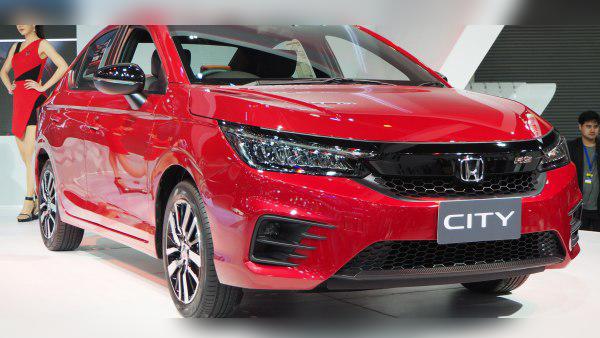
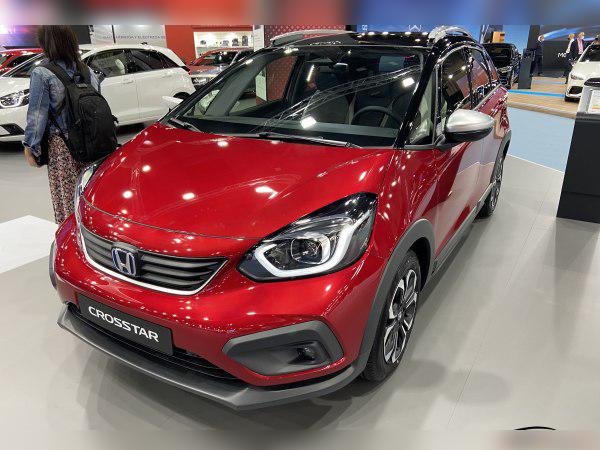
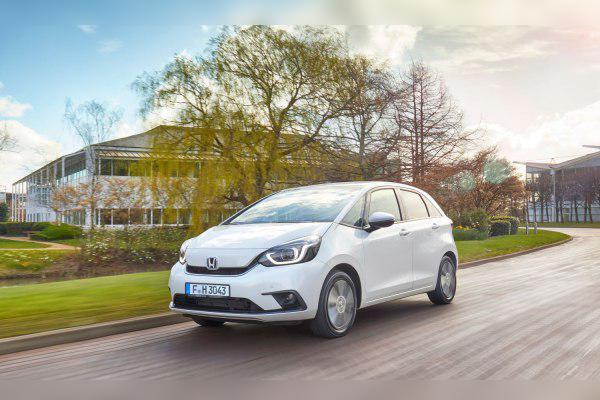
The engine designated as LEB8 (and related variants in the LEB family) is the heart of Honda’s modern e:HEV (formerly i-MMD) hybrid system. It is primarily installed in the fourth-generation Honda Jazz and the seventh-generation City. Unlike older hybrids where the electric motor only "assisted" the petrol engine, here the situation is reversed.
This 1.5-liter naturally aspirated petrol engine most of the time works as a generator unit that produces electricity, while the wheels are driven by the electric motor. Only at higher speeds (usually above 80 km/h) does it connect directly to the wheels via a clutch. Because of this, it is one of the most technically interesting, but also one of the most reliable powertrains on the market today.
Technical specifications
| Characteristic | Value |
|---|---|
| Engine displacement | 1498 ccm |
| Power (petrol engine) | 72 kW (98 hp) @ 5500-6400 rpm |
| Power (drive electric motor) | 80 kW (109 hp) *This is the power the system delivers to the wheels |
| Torque (petrol engine) | 131 Nm |
| Torque (electric motor) | 253 Nm (available from 0 rpm) |
| Engine code | LEB8 (LEB family) |
| Injection type | PGM-FI (indirect/multi-point) – depending on the market it can also be DI |
| Induction | Naturally aspirated (no turbo), Atkinson cycle |
| Camshaft drive | Chain |
Reliability and maintenance
Does this engine have a timing belt or a chain?
The LEB8 engine uses a timing chain. Honda is known for durable chains, and in this hybrid system the chain is under less stress than in conventional cars because there are no sudden rpm changes during shifting (there is no classic shifting) and the engine often runs in an optimal regime. Chain replacement is not planned as a regular service item and it usually lasts over 250,000 km, unless you can hear rattling.
What are the most common issues with this engine?
The engine "core" itself (block, pistons, head) is extremely reliable. Still, drivers should pay attention to the following:
- Noise at high revs: This is not a fault, but a characteristic. When you accelerate hard or drive uphill, the engine runs at high rpm to produce enough electricity for the electric motor. The sound can seem disconnected from the vehicle speed ("rubber band effect"), which some drivers mistakenly interpret as clutch slip.
- 12V battery: As with most hybrids, the small 12V battery can discharge if the car is left standing for a long time, which prevents the system from starting even if the main hybrid battery is full.
- GPF filter (on newer models): With frequent short city trips in winter, the engine may not get hot enough to regenerate the particulate filter, which can trigger a warning light.
Service intervals and oil
An oil service is recommended every 10,000 km to 15,000 km or once a year. Since the engine often runs cold (it frequently switches on and off in city driving), fresh oil is crucial.
Oil: This engine takes approximately 3.4 – 3.8 liters of oil (always check the exact figure in the owner’s manual or by VIN). The recommended grade is strictly 0W-20. Honda insists on this low-viscosity oil ("Green Oil") for maximum efficiency and fast lubrication during cold starts in the hybrid system.
Oil consumption: LEB8 engines generally do not consume oil in worrying amounts. Consumption of up to 0.5 liters per 10,000 km can be considered acceptable, especially if the car is driven a lot on the motorway where the engine runs at higher revs.
Spark plugs
They use iridium spark plugs (NGK or Denso). The replacement interval is usually at 100,000 km. Although they are more expensive (depending on the market: very expensive at official dealers), their longevity justifies the price. Do not experiment with standard plugs.
Specific parts (costs)
Dual-mass flywheel and clutch
This engine does not have a dual-mass flywheel in the conventional sense, nor does it have a clutch kit like a manual gearbox. There is a flywheel with a vibration damper which is part of the e-CVT assembly, but it very rarely fails. This is a big saving in maintenance compared to diesels or turbo petrol engines.
Turbocharger and injection
The engine is naturally aspirated, so it does not have a turbocharger. This eliminates potential expensive failures of the turbo, intercooler and hoses.
The injection system is most often PGM-FI (port fuel injection) in the intake manifold. This is great news because it prevents carbon build-up on the intake valves, which is a common problem with direct-injection engines. The injectors are robust and rarely cause problems before 200,000 km.
EGR and GPF/DPF
Yes, it has an EGR valve and, since it meets the Euro 6d standard, it has a GPF (Gasoline Particulate Filter). The EGR can get dirty, but since the engine runs on the highly efficient Atkinson cycle, issues are less frequent than on diesels. The GPF filter does not require additive-based maintenance; it regenerates passively while driving.
Fuel consumption and performance
Real-world fuel consumption
- City driving: This is the LEB8’s home turf. Expect consumption between 3.5 and 4.5 l/100 km. In stop-and-go traffic, the electric motor does most of the work and the petrol engine switches off.
- Country roads: Consumption is around 4.0 – 4.5 l/100 km.
- Motorway (130 km/h): Here the hybrid advantage is lost. Consumption rises to 6.0 – 7.0 l/100 km.
Performance: Is it "sluggish"?
On paper, 98 hp sounds modest, but in practice the car is driven by an electric motor with 109 hp and 253 Nm of torque available instantly. Because of this, 0–60 km/h acceleration is excellent and the car feels very lively in the city. It is not sluggish.
However, on the motorway, when the petrol engine connects directly to the wheels (because it is then more efficient than the electric motor), at speeds above 130 km/h or on long climbs you can feel the lack of power and torque of a naturally aspirated engine.
Cruising at 130 km/h: At this speed, the system often uses direct drive from the petrol engine. Revs can vary, but are usually around 3000–3500 rpm, which can be noisier than modern turbo engines with 7+ gears.
Additional options and modifications
LPG (autogas) conversion
Absolutely not recommended. Technically it is possible, but economically and logically it makes no sense for several reasons: 1. In city driving the engine switches on and off hundreds of times. LPG systems struggle to keep up with this switching of fuels. 2. Petrol consumption is already ridiculously low. 3. Loss of boot space (the battery is already in the back). 4. Risk of cylinder head overheating because the Atkinson cycle is precisely calibrated for petrol.
Remapping (Stage 1)
This engine cannot and should not be remapped in the traditional way. As a naturally aspirated engine, the gains would be negligible (maybe 2–3 hp), and you risk upsetting the complex synergy between the petrol and electric drive. The software controls not only the engine, but also battery charging and the operation of the electric motor.
Transmission: e-CVT
Design and maintenance
The transmission is designated as e-CVT, but this is NOT a conventional CVT with a belt and pulleys that many people dislike. In fact, technically it is not even a gearbox. It is a gearset that connects the petrol engine, two electric motors (generator and drive motor) and the wheels.
There is only one gear ratio (fixed ratio) for the petrol engine at higher speeds. In all other situations, the drive is purely electric.
Failures and servicing
Since there is no belt, clutch packs or variator, mechanical failures are extremely rare. The most important maintenance item is changing the transmission fluid (Honda-specific fluid, often ATF DW-1 or dedicated e-CVT fluid).
- Transmission fluid change interval: Recommended every 40,000 km to 60,000 km. This is crucial for cooling the electric motor inside the housing. The cost is not high and it extends the life of the system.
Buying used and conclusion
When buying a used Honda Jazz or City with the LEB8 engine, the focus should be on checking the hybrid system rather than the petrol engine itself.
- Battery check: Ask for a hybrid battery "Health Check" at an authorised dealer. Honda often offers an extended warranty on the battery (up to 10 years) if the car is serviced regularly.
- Service history: Check whether the oil in the e-CVT transmission has been changed and whether 0W-20 oil has been used in the engine.
- Test drive: Pay attention to the transition between electric and petrol drive. It should be almost imperceptible, without jerks. High-rev noise during acceleration is normal.
Conclusion: The LEB8 1.5 i-MMD is an engineering gem for those who seek reliability and low fuel consumption. It does not have the expensive diesel parts (turbo, dual-mass flywheel, high-pressure injectors), yet it offers lower city fuel consumption than a diesel. It is ideal for taxi drivers, urban families and drivers who value peace and quiet. It is not for those who want sporty performance or drive almost exclusively on the motorway at high speeds.
Was this content useful to you?
Your opinion helps us to improve the quality of the content.