L15B7 Engine
- Engine
- 1498 cm3
- Aspiration
- Turbocharger, Intercooler
- Fuel
- Petrol (Gasoline)
- Fuel injection system
- Direct injection
- Power
- 180 hp @ 5500 rpm
- Torque
- 240 Nm
- Cylinders
- 4
- Valves
- 16, 4 per cylinder
- Cylinders position
- Inline
- Max engine speed
- 6600 rpm
- Valvetrain
- DOHC
- Oil capacity
- 3.5 l
- Coolant
- 4.92 l
- Systems
- Start & Stop System
# Vehicles powered by this engine
Honda 1.5 VTEC Turbo (L15B7) – Experiences, issues, fuel consumption and used-buying tips
Key points in short (TL;DR)
- Performance and efficiency: Excellent balance of power (180 hp) and fuel consumption. The engine is lively and flexible.
- Oil dilution issue: With short trips in cold conditions, fuel can end up in the oil sump.
- Camshaft drive: Uses a timing chain which is generally reliable and does not require frequent replacement.
- Direct injection: Prone to carbon buildup on intake valves at higher mileage.
- CVT gearbox: Requires strict oil changes every 40,000–60,000 km at most, for long life.
- LPG (Autogas): Not an ideal candidate due to direct injection (expensive installation).
- Recommendation: One of the best small-displacement turbo engines on the market, provided it is regularly maintained and not driven exclusively on short, cold trips.
Contents
- Introduction and applications
- Technical specifications
- Reliability and maintenance
- Specific parts and costs
- Fuel consumption and performance
- Options and modifications
- Gearbox (manual and CVT)
- Buying used and conclusion
Introduction and applications
With the L15B7 engine Honda made a significant step forward, moving from its legendary naturally aspirated VTEC engines into the era of mass-produced turbocharging. This 1.5‑liter four‑cylinder, part of the "Earth Dreams" technology line, was designed to replace larger 2.0 and 2.4 naturally aspirated engines, offering better low‑end torque and lower fuel consumption.
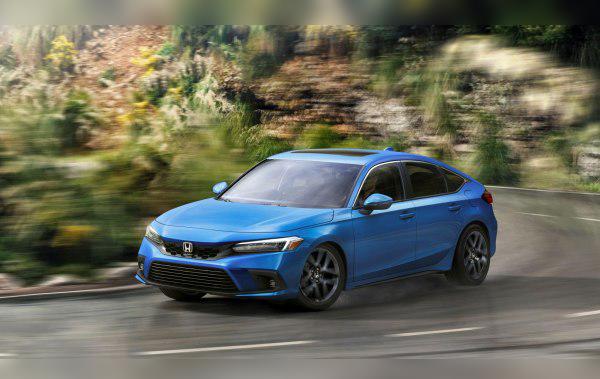
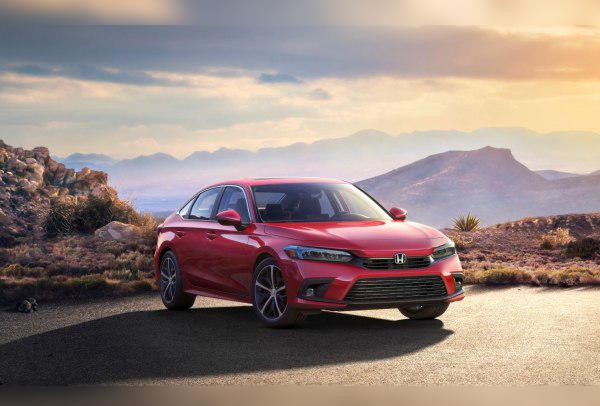
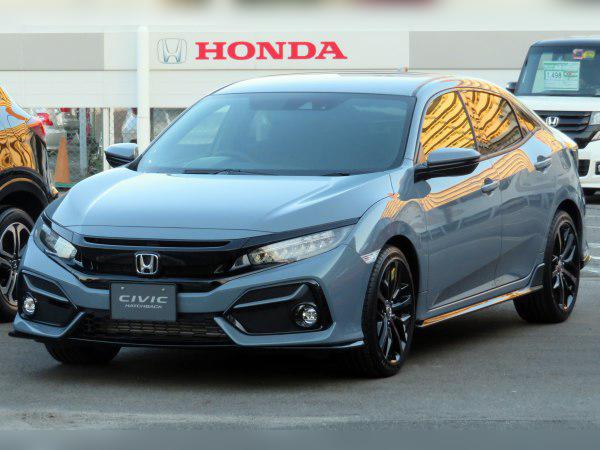
It is primarily installed in the tenth‑generation (X) and eleventh‑generation (XI) Honda Civic. It matters to drivers because it offers a genuinely sporty driving feel, unusual for today’s downsized engines, but it also comes with specific maintenance requirements that older Honda engines did not have.
Technical specifications
| Specification | Data |
|---|---|
| Engine code | L15B7 |
| Displacement | 1498 cc (1.5 L) |
| Power | 134 kW (180–182 hp) |
| Torque | 240 Nm (220 Nm on some CVT variants) |
| Injection type | Direct injection (GDI) |
| Charging method | Turbocharger (mono‑scroll MHI TD03) with intercooler |
| Camshaft drive | Chain (DOHC) |
Reliability and maintenance
Does this engine have a timing belt or a chain?
The L15B7 engine uses a timing chain for valve timing. Honda chains are traditionally very durable and there is no fixed replacement interval. In practice, the chain should last as long as the engine itself, often over 250,000 km, provided the oil is changed regularly. Rattling on cold start is the first sign that the chain or chain tensioner needs to be checked.
What are the most common issues with this engine?
The best‑known issue with this engine is oil dilution with fuel. This occurs primarily in cold climates and with short city trips where the engine does not reach operating temperature.
Symptoms: The oil level on the dipstick rises above the maximum mark and the oil smells of gasoline. The cause is condensation of unburnt fuel on the cylinder walls, which then runs down into the sump. Honda has issued software updates (ECU reprogramming) to help the engine reach operating temperature faster and thus mitigate the problem. In the long term, diluted oil lubricates the turbo and bearings poorly.
Another issue is carbon buildup on the intake valves due to direct injection, which can lead to rough running at higher mileage.
At what mileage is a “major service” needed?
Since the engine has a chain, the classic “major service” (timing belt replacement) does not exist. However, the auxiliary (serpentine) belt and water pump should be inspected and replaced as needed, usually around 100,000–120,000 km. At this mileage it is also recommended to adjust the valves if you can hear characteristic ticking. Even though some iterations have hydraulic lifters, Honda often requires mechanical valve clearance checks.
How many liters of oil does this engine take and which grade is recommended?
The engine takes approximately 3.5 to 3.7 liters of oil (with filter). The recommended grade is strictly 0W‑20. This thin oil is crucial for turbocharger operation and the "Earth Dreams" technology. Do not experiment with thicker oils (such as 10W‑40) unless absolutely necessary in an emergency.
Does it consume oil between services?
Paradoxically, with this engine it is more common for the oil level to rise (due to the aforementioned fuel dilution issue) than to drop. Actual oil consumption due to burning is minimal and negligible on healthy examples. If you notice the level rising, that is a sign to change the oil immediately, regardless of the service interval.
At what mileage should the spark plugs be replaced?
The engine uses high‑quality iridium spark plugs (NGK or Denso). The recommended replacement interval is usually 100,000 to 120,000 km. However, on tuned engines or with aggressive driving, it is recommended to shorten the interval to 60,000 km to protect the ignition coils.
Specific parts (costs)
Does the engine have a dual‑mass flywheel?
It depends on the gearbox. Versions with a manual gearbox have a dual‑mass flywheel. It is there to absorb vibrations and provide smooth driving. Its lifespan is usually 150,000–200,000 km, but aggressive driving can destroy it earlier. Versions with a CVT automatic do not have a classic dual‑mass flywheel; instead, they use a torque converter.
What kind of injection system does it have and are the injectors problematic?
The L15B7 uses high‑pressure direct fuel injection. The injectors are generally reliable but sensitive to poor fuel quality. Replacing injectors is expensive (varies by market), as they are sophisticated components. It is recommended to occasionally use fuel system cleaning additives to prevent clogging.
Does this engine have a turbocharger and what is its lifespan?
Yes, it has a single MHI TD03 turbocharger with an electronic wastegate. The turbo is small (low‑inertia), which allows for quick response. Its lifespan is closely tied to regular oil changes. If the oil is changed on time and the engine is not shut off immediately after full‑throttle runs, the turbo can last over 200,000 km. Turbo overhaul or replacement falls into the category of very expensive repairs.
Does this model have a DPF filter or EGR valve?
Being a petrol engine, it does not have a DPF (which is for diesels), but newer models (especially from 2018 onward and Euro 6d‑TEMP standard) have a GPF (Gasoline Particulate Filter). A GPF is much less prone to clogging than a DPF because exhaust gas temperatures on petrol engines are higher. An EGR system is present and serves to recirculate exhaust gases; it is not known as a common failure point on this engine.
Does this engine use AdBlue?
No. AdBlue is used exclusively on diesel engines. This is a petrol engine and does not require any additional fluids besides fuel, oil and coolant/brake fluid.
Fuel consumption and performance
What is the real‑world city fuel consumption?
This is one of the strongest points of this engine. In real‑world city driving (depending on traffic), consumption ranges between 7.5 and 9.0 l/100 km. With very careful driving and using ECON mode, it is possible to get down to about 7 l/100 km, which is an excellent result for 180 hp.
Is this engine “lazy” for the weight of the car?
Absolutely not. With 180 hp and 240 Nm of torque available from around 1,900 rpm, a Civic with this engine accelerates from 0–100 km/h in about 8 seconds (depending on gearbox and body style). The driving impression is that the car is very light and eager, and in‑gear acceleration is excellent, making overtaking safe.
What is it like on the motorway and at what rpm does it cruise at 130 km/h?
On the motorway the engine is in its element. Thanks to the Civic’s good aerodynamics and efficient gearbox, at 130 km/h:
- With the CVT gearbox, revs are very low, around 2,000–2,200 rpm, which contributes to low noise and low fuel consumption.
- With the 6‑speed manual gearbox, revs are somewhat higher, around 2,800 rpm.
Fuel consumption on the open road at 130 km/h is around 6.0 to 6.5 l/100 km.
Options and modifications
Is this engine suitable for LPG (autogas) conversion?
Due to direct fuel injection, LPG conversion is complex and expensive. It requires a special “direct injection kit” that either uses liquid‑phase LPG or mixes petrol and LPG (e.g. 80% LPG, 20% petrol) to cool the petrol injectors. Given the relatively low petrol consumption, the payback period (ROI) of an LPG conversion is very long, so it is not worthwhile for most drivers.
How far can this engine be safely tuned (Stage 1)?
The L15B7 is very popular for tuning. A Stage 1 remap (software only) can raise power to a safe 200–215 hp and torque close to 300 Nm. However, care must be taken with the CVT gearbox, as it handles sudden torque increases poorly. With the manual gearbox, the stock clutch can become a weak point with more aggressive maps.
Gearbox
Which manual and automatic gearboxes are fitted?
Two options are available with this engine:
- 6‑speed manual gearbox: Known for its short and precise throws, one of the best in its class.
- CVT (Continuously Variable Transmission): Honda’s automatic that simulates 7 gear steps to avoid the “scooter” feel and provide a more natural driving experience.
What are the most common failures of the manual and automatic gearboxes?
Manual gearbox: Very reliable. The main issue can be premature clutch wear if the engine is tuned or driven aggressively. Also, the second and third gear synchros can suffer with rough shifting (grinding).
CVT gearbox: More sensitive than the manual. If not maintained, the internal belt can start slipping, which is a catastrophic failure. Symptoms include juddering when taking off, delayed response or whining noises.
Cost of clutch replacement (manual)?
A clutch kit with dual‑mass flywheel for this model falls into the expensive category (varies by market), but is on par with competitors such as the VW Golf or Ford Focus. Expect that replacing the complete kit will cost significantly more than on older naturally aspirated engines.
At what mileage should the gearbox be serviced and the oil changed?
- Manual: Recommended oil change every 60,000–80,000 km (Honda MTF‑3).
- CVT: This is critical. Although some workshops say otherwise, experience shows that CVT fluid should be changed every 40,000 km (HCF‑2 fluid), and at most every 60,000 km. Often, fresh oil is the only thing standing between this gearbox and either a long life or failure.
Buying used and conclusion
What should you check before buying?
- Oil dipstick: Pull out the dipstick and smell the oil. If it strongly smells of fuel and the level is well above the maximum mark, this indicates an oil dilution issue.
- Cold start: Listen to the engine at first start‑up. Any rattling that lasts longer than 2–3 seconds may indicate a problem with the chain or variable valve timing system.
- Air conditioning: On the Civic X, the A/C condenser and compressor are known weak points (often leaking condensers), so be sure to check whether the A/C cools effectively.
- CVT service history: If you are buying an automatic, proof of gearbox oil changes is essential.
Conclusion: The 1.5 VTEC Turbo (L15B7) engine is a fantastic engineering achievement that combines hot‑hatch performance with the fuel consumption of a city car. It is aimed at drivers who enjoy driving but need a practical car.
However, it requires a meticulous owner. This is not an engine you simply fill with fuel and forget about opening the bonnet. If you are prepared to change the oil regularly (every 10,000 km) and keep an eye on fluid levels, this engine will serve you for hundreds of thousands of kilometers with a smile on your face.
Was this content useful to you?
Your opinion helps us to improve the quality of the content.