P10A2 Engine
- Engine
- 988 cm3
- Aspiration
- Turbocharger, Intercooler
- Fuel
- Petrol (Gasoline)
- Fuel injection system
- Direct injection
- Power
- 129 hp @ 5500 rpm
- Torque
- 180 Nm @ 2250 rpm
- Cylinders
- 3
- Valves
- 12, 4 per cylinder
- Cylinders position
- Inline
- Valvetrain
- DOHC
- Oil capacity
- 3.8 l
- Coolant
- 5.9 l
# Vehicles powered by this engine
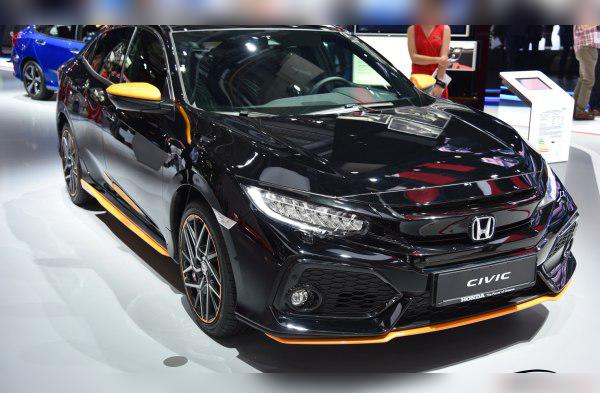
Honda 1.0 VTEC Turbo (P10A2) – Experience, issues, fuel consumption and maintenance
1. The most important in short (TL;DR)
- Achilles' heel: The engine uses an oil-immersed timing belt ("Wet Belt"). Using the wrong oil can lead to belt disintegration and clogging of the oil pump.
- Performance: Surprisingly lively at low revs thanks to the turbo, but runs out of breath at higher speeds.
- Sound: The characteristic three-cylinder sound ("snorting") is present, while vibrations are fairly well damped by the engine mounts.
- Transmissions: Excellent 6-speed manual or CVT automatic, comfortable in the city but requires regular oil changes.
- Fuel consumption: Higher than factory claims, especially if you have a heavy right foot.
- Recommendation: Buy only examples with 100% verifiable service history due to sensitivity to oil quality.
Contents
- Introduction and application
- Technical specifications
- Reliability and maintenance
- Specific parts and costs
- Fuel consumption and performance
- Additional options and modifications
- Transmission (manual and CVT)
- Buying used and conclusion
Introduction and application
The engine designated as P10A2 represents Honda’s entry into the world of downsized engines. It is a three-cylinder 1.0-liter turbo petrol unit that came as a replacement for the legendary but outdated 1.8 naturally aspirated engine. This move divided Honda enthusiasts – some praised the torque, while others were skeptical about the small displacement in a not-so-light car like the Civic.
This engine is primarily installed in the tenth-generation Honda Civic (Civic X), both in Hatchback and Sedan versions (depending on the market), and can also be found in some other models on the Asian market, but in Europe it is synonymous with the “base” Civic.
Technical specifications
| Feature | Data |
|---|---|
| Engine code | P10A2 |
| Displacement | 988 cc (1.0 L) |
| Configuration | R3 (3 cylinders in-line) |
| Power | 95 kW (129 hp) at 5500 rpm |
| Torque | 180 Nm at 1700–4500 rpm |
| Fuel injection | Direct injection (GDI) |
| Forced induction | Mono-scroll turbocharger + intercooler |
| Camshaft drive | Timing belt in oil (Wet Belt) |
Reliability and maintenance
Does this engine have a timing belt or a chain?
This is the most important technical question for this engine. The P10A2 uses a timing belt that “bathes” in oil (belt-in-oil). Although Honda claims this solution is durable and reduces friction and noise, in practice it has proven to be sensitive. If the strictly specified oil is not used, the belt material can start to crumble, and those rubber particles clog the oil pump strainer (in the oil pan), which leads to a drop in oil pressure and catastrophic engine failure.
At what mileage should the major service (timing) be done?
The factory recommendation is often optimistic (100,000 km or more), but experienced mechanics recommend replacing the belt at a maximum of 100,000 km or 6 years (whichever comes first). This is an expensive and complex job because it requires special tools and many labor hours. Do not postpone this service.
What are the most common failures on this engine?
In addition to the aforementioned belt issue, owners have reported:
- Cooling problems: Early production runs suffered from coolant leaks or overheating issues.
- Carbon build-up: Like every direct-injection engine, the valves are prone to carbon deposits, which can lead to rough running.
- Sensors: Occasional issues with oil pressure sensors or camshaft sensors.
How many liters of oil does this engine take and which grade is recommended?
The engine holds a small amount of oil, approximately 3.5 to 3.7 liters (with filter). Due to the “belt in oil” system, it is MANDATORY to use 0W-20 oil with the specific Honda specification (e.g. Honda Type 2.0). Using the wrong oil will destroy the belt.
Does it consume oil between services?
In general, the P10A2 is not known as a heavy oil consumer if it is in good condition. Consumption of up to 0.5 liters per 10,000 km is considered acceptable. However, due to the small sump capacity, any drop in level is dangerous. Regular dipstick checks are mandatory.
At what mileage should the spark plugs be replaced?
This engine uses expensive iridium spark plugs. The recommendation is to replace them every 40,000 to 60,000 km, although the factory sometimes states 100,000 km. Due to the high combustion chamber temperatures and direct injection, the plugs are heavily stressed.
Specific parts (costs)
Does the engine have a dual-mass flywheel?
Yes, versions with a manual gearbox have a dual-mass flywheel. Its purpose is to absorb the three-cylinder engine’s vibrations so they are not transmitted into the cabin. Replacing the clutch kit together with the flywheel falls into the “expensive” category (depending on the market).
What kind of injection system does it have and are the injectors problematic?
The system is high-pressure direct fuel injection. The injectors are generally reliable but sensitive to poor fuel quality. Symptoms of problems include rough idle (“stumbling”) and increased fuel consumption.
Does this engine have a turbocharger and what is its lifespan?
It has a small, low-inertia BorgWarner turbocharger with an electronic wastegate valve. The turbo’s lifespan is usually equal to the engine’s lifespan with regular maintenance. The electronic actuator can cause problems, and its replacement requires calibration.
Does this model have a DPF (GPF) filter or an EGR valve?
Yes. Engines produced after 2018 (Euro 6d-TEMP) have a GPF (Gasoline Particulate Filter). Unlike diesel DPFs, GPFs on petrol engines regenerate (heat up) much more easily and quickly during driving and rarely cause problems, unless the car is driven exclusively on very short 2 km trips in winter. An EGR valve is present and can get dirty, but it is not as critical a point as on diesels.
Does this engine use AdBlue?
No. AdBlue is used exclusively on diesel engines. This is a petrol engine and does not use any additional fluids for exhaust gas treatment.
Fuel consumption and performance
What is the real fuel consumption in city driving?
Forget the factory claims of 5 liters. In real city driving, the Honda Civic 1.0 Turbo consumes between 7.5 and 9.0 l/100 km, depending on traffic and how heavy your right foot is. The CVT gearbox can slightly increase consumption in the city compared to the manual if driven aggressively.
Is this engine “lazy” for the weight of the car?
Surprisingly – it is not lazy. The 180 Nm of torque (200 Nm on some manual versions with overboost) is available from low revs, which makes the car lively from traffic light to traffic light. However, when the car is fully loaded with passengers and luggage, the lack of displacement can be felt on uphill sections.
How does the engine perform on the motorway and at what revs does it cruise at 130 km/h?
On the motorway it is perfectly adequate. At 130 km/h the engine runs at around 2,800–3,000 rpm (depending on the gearbox). It accelerates decently up to 140 km/h; above that you can feel that it is still only a 1.0-liter engine. Wind noise is a bigger issue than engine noise at those speeds.
Additional options and modifications
Is this engine suitable for LPG conversion?
Not recommended. Due to direct fuel injection, installation requires an expensive and specific system (Direct Injection LPG kit) that also uses some petrol for injector cooling. Considering the engine’s complexity and the sensitive cylinder head, the economic benefit is questionable and the risk of failures is increased.
How far can this engine be safely “chipped” (Stage 1)?
It is possible to increase power to about 145 hp and 220 Nm. However, experts advise caution. The small engine is already thermally stressed, and the CVT gearbox has its own torque limits. If you decide on a remap, do it only at reputable tuners, being fully aware that you are shortening the lifespan of the turbo and clutch.
Transmission
Which gearboxes are fitted?
Two options:
- 6-speed manual gearbox: Precise, with short throws, typically Honda – a joy to drive.
- CVT (Continuously Variable Transmission): Automatic transmission that simulates 7 gears.
Transmission failures
Manual: Mechanically very robust. The main expense is the clutch kit and dual-mass flywheel. Failures of the gearbox itself are rare.
CVT: One of the better CVT gearboxes on the market, it does not have that annoying “rubber band effect” to such an extent. Failures are rare IF the oil is changed regularly. If neglected, repair is not cost-effective (often the entire gearbox needs to be replaced).
At what mileage does the gearbox need servicing?
For the manual gearbox, an oil change is recommended at around 80,000–100,000 km, although many owners ignore this.
For the CVT gearbox, changing the oil and filter is CRITICAL. It is recommended every 40,000 km or 2 years. Use only genuine Honda HCF-2 oil.
Buying used and conclusion
The Honda Civic with the 1.0 VTEC Turbo engine is a modern, agile and technologically advanced car. However, buying a used example requires caution.
What to check before buying?
- Service book: If there is no proof that 0W-20 oil was used and changed on time, walk away. The risk of timing belt damage is too high.
- Noise at cold start: Listen for any chain rattling (although it has a belt, some versions also have a chain for the oil pump) or metallic noises from the cylinder head area.
- Air conditioning: A known issue on Civic X models is a leaking A/C condenser. Check whether the air conditioning cools properly.
Conclusion: The P10A2 is an excellent engine for drivers who spend most of their time in the city and on country roads, and who want a car with a sporty look and good handling. For those who cover high motorway mileages or are afraid of the “major service” costs, the more powerful 1.5 Turbo version (which has a chain and 4 cylinders) is a much better, but also more expensive, choice.
Was this content useful to you?
Your opinion helps us to improve the quality of the content.