K20C Engine
- Engine
- 1996 cm3
- Aspiration
- Naturally aspirated engine
- Fuel
- Petrol (Gasoline)
- Fuel injection system
- Multi-port manifold injection
- Power
- 158 hp @ 6500 rpm
- Torque
- 188 Nm @ 4200 rpm
- Cylinders
- 4
- Valves
- 16, 4 per cylinder
- Cylinders position
- Inline
- Oil capacity
- 4.2 l
- Coolant
- 4.6 l
# Vehicles powered by this engine
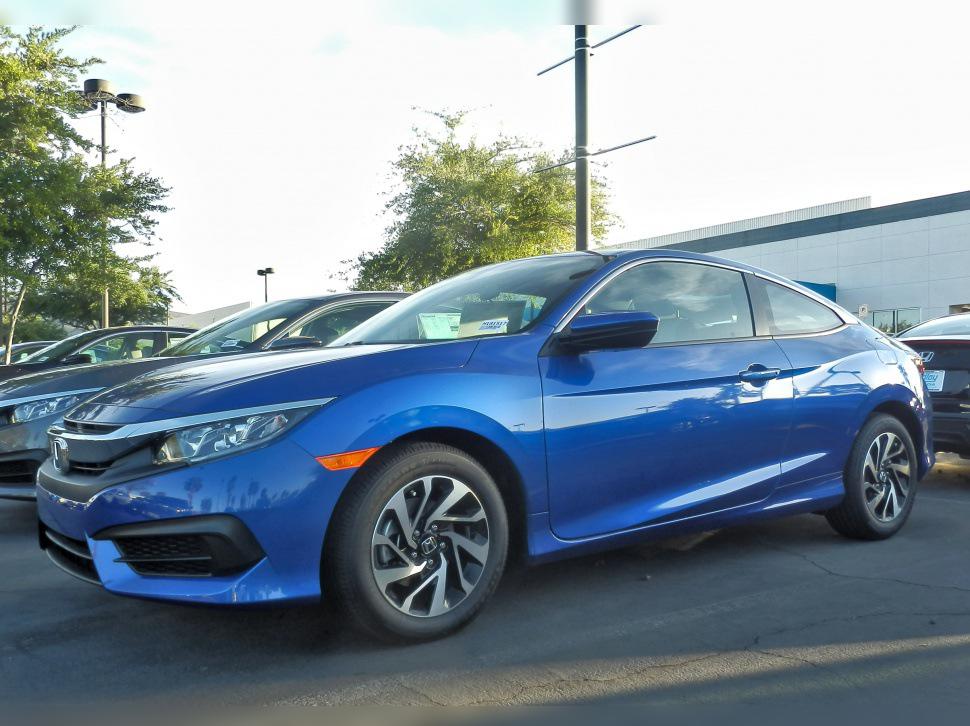
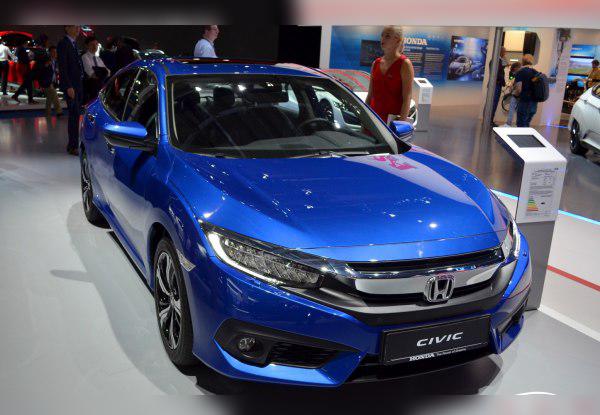
Honda 2.0 i-VTEC (K20C) – Experiences, problems, fuel consumption and used car buying guide
When the engine code K20C is mentioned in the Honda world, most enthusiasts immediately think of the brutal powerplant from the Civic Type R. However, the variant we’re talking about today (specifically the K20C2) is the “civilian”, naturally aspirated 158 hp version that was installed in the tenth-generation Honda Civic (Civic X). This is an engine that represents “old-school” reliability in a modern package.
While Europe was flooded with small 1.0 and 1.5 Turbo engines, this 2.0 naturally aspirated unit was the primary choice for the US market, but it is also often seen in our region through imports or on certain Eastern markets. Is this “big” petrol engine a better choice than modern turbos? The short answer: if you’re looking for longevity – absolutely yes.
In short (TL;DR)
- Exceptional reliability: This is one of the most reliable modern engines. No turbo, no high-pressure direct injection.
- Timing chain instead of belt: Uses a timing chain designed to last as long as the engine itself.
- Ideal for LPG (autogas): Unlike the 1.5 Turbo engine, this 2.0 uses port injection (indirect injection), which makes it perfect and inexpensive to convert to LPG.
- Performance: It’s not a racer. It needs high revs to pull properly (VTEC does its thing), so it may feel lazy to those used to diesel torque.
- CVT gearbox: Most commonly paired with a CVT transmission that requires regular oil changes, otherwise an expensive failure can follow.
- Fuel consumption: Slightly higher in the city compared to turbo competitors, but very economical on the open road.
Contents
- Technical specifications
- Reliability and maintenance
- Specific parts (costs)
- Fuel consumption and performance
- Additional options and modifications
- Gearbox (manual and CVT)
- Buying used and conclusion
Technical specifications
This engine belongs to Honda’s Earth Dreams series, but it is specific in that it has retained a simpler construction for the sake of longevity and lower maintenance costs.
| Specification | Data |
|---|---|
| Engine displacement | 1996 cc (2.0 L) |
| Power | 116 kW (158 hp) at 6500 rpm |
| Torque | 187 - 188 Nm at 4200 rpm |
| Engine code | K20C2 (most common for the 158 hp version) |
| Aspiration | Naturally aspirated |
| Injection type | Multi-Point Injection (MPI) – indirect |
| Valvetrain | DOHC i-VTEC, 16 valves |
Reliability and maintenance
If you’re looking for an engine that will serve you “from here to eternity” with minimal investment, the naturally aspirated K20C is probably the best choice in its class.
Does this engine have a timing belt or a chain?
The engine uses a timing chain. Honda chains in the K-series engines have proven to be very durable. Unlike some European manufacturers where the chain can fail at 100,000 km, here the chain usually lasts the entire life of the vehicle, provided that the oil is changed regularly. There is no scheduled replacement interval; it is only replaced if you hear rattling on a cold start (very rare before 250,000 km).
What are the most common failures on this engine?
The list of failures is surprisingly short:
- Valve cover gasket: As with any Honda, after a certain number of years you may see slight oil “sweating” at the gasket. It’s not an expensive issue and is easy to fix.
- Mass air flow sensor (MAF) or dirty throttle body: Can cause rough idle. Cleaning usually solves the problem.
- Engine mounts: Due to the engine’s weight and vibrations (especially on automatics when in gear at a standstill), the upper mount can wear out after around 150,000 km. You’ll feel it as strong vibration in the cabin.
Note: The bigger issues on Civic X models are related to the A/C system (condenser and compressor) rather than the engine itself.
At what mileage is the “major service” done?
Since the engine has a chain, the classic “major service” (replacement of timing belt, tensioners, water pump) is not done preventively at a fixed mileage. Instead, you perform inspection of the auxiliary (serpentine) belt and the water pump. The serpentine belt is usually replaced at around 100,000 – 120,000 km or when cracks are noticed. The water pump is replaced only if it starts leaking or becomes noisy.
How many liters of oil does this engine take and which viscosity is recommended?
The sump holds approximately 4.0 to 4.4 liters of oil (with filter). Honda strictly recommends 0W-20 oil. This thin oil is crucial for proper operation of the i-VTEC system and the engine’s tight tolerances. Do not experiment with thicker oils (such as 10W-40) as this can lead to poorer lubrication of the chain during cold starts.
Does it consume oil between services?
Generally, it does not consume oil to a worrying extent. Consumption of up to 0.5 liters per 10,000 km is acceptable if driven aggressively at high revs. If it consumes more than that, the problem is usually a clogged PCV valve (crankcase ventilation valve) or, at very high mileage, valve stem seals.
At what mileage are the spark plugs replaced?
The recommended spark plug replacement interval is 100,000 to 120,000 km. Only iridium plugs (NGK or Denso) should be used. Do not install regular copper plugs because access is more difficult and the ignition system is calibrated for iridium.
Specific parts (costs)
Does the engine have a dual-mass flywheel?
It depends on the gearbox. Models with a manual gearbox can have a dual-mass flywheel, but in petrol engines it is subjected to much lower stress than in diesels, so failures before 200,000 km are not common. Models with a CVT gearbox do not have a flywheel in the classic sense; instead, they use a torque converter.
What kind of injection system does it have and are the injectors problematic?
This is a major advantage of this engine: it uses Multi-Point Injection (MPI), i.e. indirect injection into the intake manifold. The injectors are simple, inexpensive (compared to direct injection systems) and very rarely fail. Also, because of this type of injection, the intake valves are “washed” by fuel, so there are no issues with carbon buildup on the valves, which is a common problem on modern direct-injection engines.
Does this engine have a turbocharger?
It does not have a turbocharger. This is a naturally aspirated engine. That means one (expensive) component less to worry about. No intercooler, no oil leaks from the turbo, no turbo lag.
Does this model have a DPF filter or EGR valve?
Being a petrol engine, it does not have a DPF filter or AdBlue system. It has a catalytic converter, which is long-lasting. It does have an EGR system (exhaust gas recirculation), but on petrol engines it rarely clogs to the point of causing problems like on diesels. And even if it does clog, cleaning is straightforward.
Fuel consumption and performance
What is the real-world fuel consumption in city driving?
Although it’s a 2.0 engine, the technology makes it relatively frugal. In pure city driving (stop-and-go), you can expect consumption between 8.5 and 10.5 liters per 100 km. The CVT gearbox helps keep consumption on the lower side in the city by keeping the engine at optimal revs.
Is this engine “lazy” for the weight of the car?
On paper, 158 hp sounds good, but in practice the engine has only 188 Nm of torque, which comes in at 4200 rpm. Compared to the 1.5 Turbo engine (which has 240 Nm at low revs), this engine feels lazy if you drive it at low revs (below 3000). To make this engine really “pull”, you have to rev it. For normal, smooth driving it is perfectly adequate, but for overtaking it demands full throttle.
What is it like on the motorway and at what revs does it cruise at 130 km/h?
On the motorway it is very comfortable. With the CVT gearbox, at 130 km/h the engine spins at a relatively low 2300–2600 rpm, which reduces noise and fuel consumption. With the 6-speed manual gearbox, the revs are somewhat higher (around 3000), but still within a comfortable range. Fuel consumption on the open road can drop to 6.0 – 7.0 l/100 km.
Additional options and modifications
Is this engine suitable for LPG (autogas) conversion?
Yes, it’s an excellent candidate! Because it uses indirect injection (MPI), LPG installation is simple, cheaper (standard sequential systems) and the engine handles LPG very well. There is no need for expensive systems for direct injection or for using petrol while running on gas. If you plan to cover high mileage, this is an ideal engine for LPG conversion.
How much can this engine be safely tuned (Stage 1)?
Honestly? Don’t waste your money. Naturally aspirated engines cannot be effectively “chipped” with software alone. The gain would be negligible (a maximum of 5–8 hp), and you’d just be spending money. These engines are already factory-optimized to deliver as much as they can without physical modifications.
Gearbox
Which gearboxes are available?
- 6-speed manual: A fantastic gearbox, precise, with short throws. One of the best in its class.
- CVT (Continuously Variable Transmission): Honda’s automatic transmission. It has no fixed gears, but simulates gear changes.
Most common gearbox issues and maintenance
Manual gearbox: Almost indestructible. The clutch is a wear item, and replacing the clutch kit is a moderate expense (depends on the market, but not extremely expensive). The oil in the manual gearbox should be changed every 60,000 – 80,000 km.
CVT gearbox: This is where you need to be careful. The CVT is reliable ONLY if it is regularly maintained. The oil in the CVT (specific Honda HCF-2 fluid) must be changed every 40,000 to 60,000 km (or every 2–3 years). If this is neglected, the chain inside the CVT starts to slip, a “whining” noise appears and the gearbox eventually fails. Rebuilding a CVT is very expensive (often more expensive than a used replacement gearbox). Symptoms of a failing CVT include jerking when setting off, hesitation or grinding noises.
Buying used and conclusion
Buying a Honda Civic with the 2.0 naturally aspirated engine is one of the most sensible decisions for a driver who wants peace of mind.
What to check before buying?
- CVT service history: If the car is an automatic and has over 100,000 km on the clock, and there is no proof that the transmission oil has been changed – skip it or accept the risk.
- Air conditioning: Check whether the A/C cools properly. The Civic X has a factory defect with the A/C condenser (radiator) which often corrodes and leaks. Honda extended the warranty for this in some countries, but check it anyway.
- Chain noise: Listen to the engine on the first cold start. There should be no metallic rattling in the first 2–3 seconds.
Final verdict
The Honda Civic 2.0 (K20C) is a car you buy when you’ve had enough of mechanics, turbos, DPFs and overly complex electronics. It’s not the fastest in its class, and the CVT gearbox can be boring for enthusiasts, but its mechanical robustness is a real rarity nowadays. It is ideal for LPG installation and covering high mileage with minimal maintenance costs. Highly recommended for anyone who sees a car as a long-term investment rather than a weekend toy.
Was this content useful to you?
Your opinion helps us to improve the quality of the content.