R18Z4 Engine
- Engine
- 1798 cm3
- Aspiration
- Naturally aspirated engine
- Fuel
- Petrol (Gasoline)
- Fuel injection system
- Multi-port manifold injection
- Power
- 142 hp @ 6500 rpm
- Torque
- 174 Nm @ 4300 rpm
- Cylinders
- 4
- Valves
- 16, 4 per cylinder
- Cylinders position
- Inline
- Valvetrain
- SOHC
- Oil capacity
- 3.7 l
- Coolant
- 5.57 l
# Vehicles powered by this engine


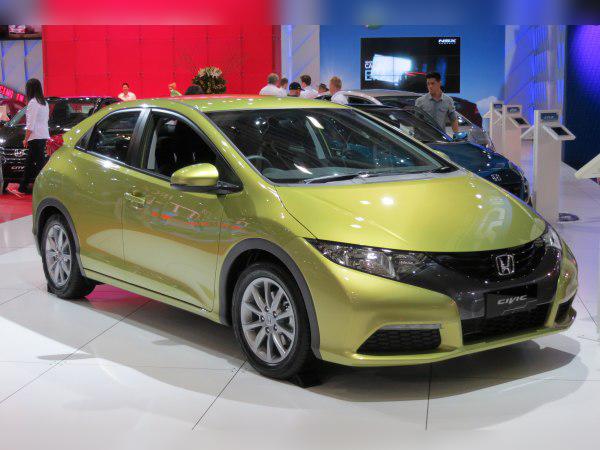
Honda R18Z4 (1.8 i-VTEC) – Experiences, issues, fuel consumption and used-car buying tips
Key points in short (TL;DR)
- Exceptional reliability: This is one of the last “old-school” naturally aspirated engines that can cover very high mileage without expensive failures.
- Timing chain: Uses a chain that is very durable and rarely needs replacement before 200,000–250,000 km.
- Naturally aspirated: No turbocharger, which means fewer parts that can fail, but it needs high revs to really “pull”.
- Ideal for LPG: The engine handles LPG very well, provided that valve clearance is adjusted regularly.
- Oil consumption: Not typical for this engine unless the wrong oil was used or the engine has been neglected.
- Performance: May feel “lazy” to drivers used to diesels or turbo-petrols because of lower torque at low revs.
- Recommendation: A perfect choice for drivers who want peace of mind, low running costs and don’t care about sporty 0–100 sprints.
Contents
- Technical specifications
- Reliability and maintenance
- Specific parts and costs
- Fuel consumption and performance
- Additional options (LPG and tuning)
- Gearbox: Manual and automatic
- Buying used and conclusion
Introduction: The Last of the Mohicans
The R18Z4 engine is an evolution of Honda’s well-known R-series engines. It was primarily installed in the ninth-generation Honda Civic (including the Tourer wagon), and it also found its way into some specific editions of the tenth-generation Civic before small turbo engines completely took over. This is a classic 1.8‑liter naturally aspirated engine with i-VTEC technology.
Why is this engine important? Because it represents a “safe harbor” in a sea of complicated modern engines. While competitors were introducing direct injection, GPF filters and sensitive turbochargers, Honda offered the R18Z4 as an engine that is simple, efficient and incredibly durable. It’s not a born athlete, but it is a tireless workhorse.
Technical specifications
| Engine code | R18Z4 |
| Displacement | 1798 cc (1.8 L) |
| Configuration | Inline 4-cylinder, SOHC, 16 valves |
| Power | 104 kW (142 hp) at 6500 rpm |
| Torque | 174 Nm at 4300 rpm |
| Fuel type | Petrol (Gasoline) |
| Injection | Multipoint (Indirect injection) |
| Induction | Naturally aspirated |
| Camshaft drive | Chain |
Reliability and maintenance
Timing system: Chain or belt?
The R18Z4 engine uses a timing chain to drive the valves. This is great news for owners because Honda’s chain on these engines is extremely high quality. It is not prone to stretching like on some German competitors from that era. In practice, the chain often lasts as long as the engine itself, and an inspection is recommended after 200,000 km or if you hear characteristic rattling at cold start.
Most common issues
This engine is, in everyday slang, “bulletproof”, but there are a few small things to watch out for:
- Auxiliary belt tensioner: It can start to make noise or develop play at around 100,000–150,000 km. Symptoms are squealing or rattling from the side of the engine.
- Valve adjustment: This is not a failure, but a requirement. The engine has no hydraulic lifters; valve clearance must be adjusted mechanically. If this is neglected, the engine may run rough, use more fuel, and in extreme cases valve burning can occur.
- Oil level sensor: Sometimes it can trigger false warnings on the dashboard even though the level on the dipstick is correct.
Service intervals and oil
An oil service is recommended every 10,000 km up to a maximum of 15,000 km (or once a year). Although the manufacturer may state 20,000 km, more frequent changes are crucial for long VTEC system life.
Oil capacity: The engine takes about 3.7 liters of oil with filter.
Recommended grade: Honda primarily recommends 0W-20 for maximum fuel economy and protection at cold start. Alternatively, 5W-30 can be used. The important thing is that the oil meets the required specs (API SN/SM, ILSAC GF-5).
Oil consumption: A healthy R18Z4 engine should not consume noticeable amounts of oil between services. Consumption up to 0.5 liters per 10,000 km can be considered acceptable, especially if driven aggressively on the motorway, but anything above that requires inspection (valve stem seals or piston rings, although that is rare).
Spark plugs
Iridium spark plugs (NGK or Denso) are recommended. Their replacement interval is long, usually around 100,000 to 120,000 km. Do not skimp on spark plugs, as bad plugs can damage the ignition coils (which are expensive).
Specific parts (Costs)
Flywheel and clutch
A big advantage of this petrol engine compared to the diesel versions (1.6 and 2.2 i-DTEC) is the drivetrain. In most cases the R18Z4 uses a conventional solid flywheel (single-mass). This means that when replacing the clutch you won’t face a 500+ euro bill just for the flywheel. The clutch kit itself is relatively affordable. Note: Always check by VIN, as some specific versions for certain markets may have a simpler dual-mass flywheel for comfort, but this is rare on the 1.8 engine.
Fuel injection system
The engine uses classic Multipoint (MPI) fuel injection into the intake manifold. The injectors are extremely reliable, not as sensitive to fuel quality as those on direct injection (GDI) engines, and failures are almost non-existent. Injector cleaning is only needed if uneven running is noticed, which is rare.
Turbo, DPF, EGR, AdBlue
- Turbocharger: None. This is a naturally aspirated engine. No worries about turbo rebuilds.
- DPF filter: None. This is a petrol engine.
- GPF filter: Models before 2018 (most of the 9th generation) do not have a GPF filter. Later 10th-gen Civics may have GPF, depending on the Euro emissions standard.
- EGR valve: Present. It can get dirty from city driving; symptoms are a “flat spot” when accelerating. Cleaning is simple and inexpensive (cost depends on market).
- AdBlue: None.
Fuel consumption and performance
Is the engine “lazy”?
If you’re coming from a turbo diesel, the R18Z4 will initially feel “lazy”. The reason is its 174 Nm of torque, available only at 4300 rpm. To make this engine pull, you have to rev it. Below 3000 rpm it is very tame and tuned for economy. The real power wakes up only above 4000 rpm when VTEC changes the cam profile. For overtaking on country roads, you must downshift (often two gears down).
Fuel consumption (Real-world experience)
- City driving: Expect between 8.5 and 10.5 l/100 km. In heavy stop‑and‑go traffic and in winter, it can go up to 11 liters. The automatic gearbox adds about 1 liter to this figure.
- Open road (secondary roads): This is where the engine shines. With careful driving, you can achieve 5.5 to 6.5 l/100 km.
- Motorway (130 km/h): Consumption is around 7.0–7.5 l/100 km.
Behaviour on the motorway
At 130 km/h in 6th gear (manual gearbox), the engine spins at about 3000–3200 rpm (depending on tyre size and final drive). This is perfectly comfortable for cruising, the engine is not noisy, but for sudden acceleration at 130 km/h you need to shift down to 5th or even 4th gear.
Additional options and modifications
LPG conversion
YES, absolutely. This is one of the best modern engines for LPG conversion. Thanks to indirect injection, installation is standard and relatively affordable.
Important note: Since the engine has no hydraulic lifters and LPG burns at a higher temperature, checking valve clearance is MANDATORY every 30,000–40,000 km when running on LPG. It is also recommended to install a valve lubrication system (“dripper” or electronic additive) to prevent valve seat recession.
Chip tuning (Stage 1)
On a naturally aspirated petrol engine, chip tuning is not worth it. Gains are minimal (maybe 3–5 hp and a few Nm), which you won’t really feel in everyday driving. It’s better to invest that money in quality tyres or regular maintenance.
Gearbox
Variants
- 6-speed manual gearbox: One of the best in its class. Precise, with short throws, a real pleasure to use.
- 5-speed automatic gearbox (in Civic IX): A conventional torque-converter automatic. Very reliable and smooth, but slow to react and increases fuel consumption.
- CVT gearbox (in some Civic X versions): If you’re looking at a 10th‑gen Civic with this engine, it likely has a CVT. It keeps the engine in optimal revs, but can create a “scooter-like” feel under acceleration (engine noise rises while speed builds gradually).
Gearbox maintenance
- Manual: Oil change (Honda MTF-3) is recommended every 60,000–80,000 km. If the gearbox starts to feel notchy when cold (especially shifting into second), an oil change often solves the problem.
- Automatic (5AT): Oil change is mandatory every 40,000–60,000 km. Use only Honda ATF-DW1 fluid. Do not experiment with “universal” oils.
Buying used and conclusion
What to check before buying?
- Cold start: Listen to the engine when it is completely cold. There should be no chain rattle or loud valve ticking.
- Service history: Check when the valves were last adjusted. If the owner doesn’t know what that is, be cautious.
- Air conditioning: On Hondas, the A/C compressor and A/C relay can be weak points (not directly related to the engine, but still a cost).
- Idle speed: The engine should idle smoothly. Fluctuations can indicate a dirty throttle body or EGR valve.
Final verdict
The Honda R18Z4 (1.8 i-VTEC) is one of the most reliable petrol engines of its generation. It is aimed at drivers who appreciate engineering quality, low running costs and longevity, and who are willing to accept a somewhat “calmer” engine character at low revs. If you’re looking for a used car that won’t leave you stranded and whose parts don’t cost a fortune, this is the right choice.
Was this content useful to you?
Your opinion helps us to improve the quality of the content.