L13A Engine
- Engine
- 1339 cm3
- Aspiration
- Naturally aspirated engine
- Fuel
- Petrol (Gasoline)
- Fuel injection system
- Multi-port manifold injection
- Power
- 100 hp @ 6000 rpm
- Torque
- 127 Nm @ 4800 rpm
- Cylinders
- 4
- Valves
- 16, 4 per cylinder
- Cylinders position
- Inline
- Valvetrain
- SOHC
- Oil capacity
- 3.6 l
- Coolant
- 4.61 l
# Vehicles powered by this engine

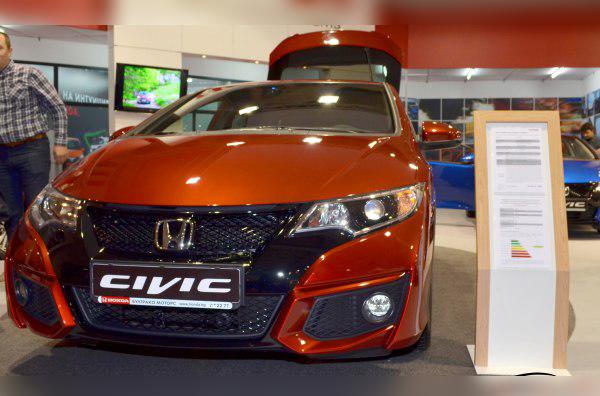
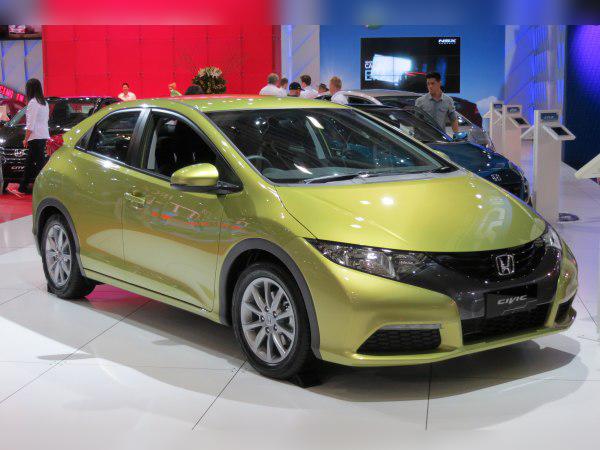
Honda 1.4 i-VTEC (L13A/L13Z) – Experiences, problems, fuel consumption and used car buying guide
Key points (TL;DR)
- Reliability: One of the most reliable engines in its class. Mechanical failures are extremely rare.
- Performance: The main downside. The engine is quite “lazy” for the weight of the ninth‑gen Honda Civic, especially on open roads.
- Maintenance: Chain-driven, no turbo, no dual-mass flywheel. Maintenance is cheap.
- Fuel consumption: Moderate in the city, but can rise on the highway due to high revs.
- Specifics: Requires occasional valve clearance checks and adjustment (mechanical, not hydraulic).
- Recommendation: Ideal for city driving and for drivers who value reliability over performance.
Contents
- Introduction and applications
- Technical specifications
- Reliability and maintenance
- Specific parts and costs
- Fuel consumption and performance
- Additional options (LPG and tuning)
- Gearbox and drivetrain
- Buying used and conclusion
Introduction: Small engine in a big body
The engine designated as L13A (and its evolutions such as the L13Z4 in the ninth‑gen Civic) is the entry ticket into the world of Honda C‑segment cars. Although Honda has a sporty pedigree, this unit was designed with one mission: maximum efficiency and near indestructibility in urban conditions.
It was installed in the popular “spaceship” (eighth‑gen Civic), but also in the model we’re most interested in here – the Honda Civic IX (including the facelift and X Edition). This is a classic Japanese naturally aspirated petrol engine that likes to rev, but due to strict Euro emission standards and the weight of modern bodies, it often leaves drivers divided when it comes to performance. Still, as a used‑car choice, it is a “safe harbor” for your wallet.
Technical specifications
| Parameter | Value |
|---|---|
| Engine displacement | 1339 cc |
| Power | 73 kW (100 hp) at 6000 rpm |
| Torque | 127 Nm at 4800 rpm |
| Engine codes | L13A, L13Z4 (most common in Civic IX) |
| Injection type | Multipoint (indirect injection) |
| Aspiration | Naturally aspirated |
| Cylinders/valves | 4 cylinders / 16 valves (SOHC i-VTEC) |
Reliability and maintenance
Timing system: Chain or belt?
This engine uses a timing chain. Honda chains on L‑series petrol engines are extremely high quality and rarely cause problems. It’s not unusual for the chain to last as long as the engine itself, i.e. over 300,000 km, with regular oil changes. If you hear metallic rattling on a cold start, that’s a sign to check the tensioner, but that’s rare.
Most common issues
To be frank, this engine almost never breaks down. Still, there are a few small things to watch out for:
- Need for valve adjustment: This is not a failure, but a maintenance characteristic many people forget. Honda doesn’t use hydraulic lifters, but mechanical ones. Valve clearances must be checked and adjusted every 40,000 to 100,000 km (check the exact interval in the service book; more frequent checks are recommended if driven hard). Symptoms of out‑of‑spec valves are rough idle or “clicking” noises.
- EGR valve: Although it’s a petrol engine, city driving can lead to clogged EGR passages, which causes the “Check Engine” light to come on and the engine to bog down.
- Oil pressure sensor (VTEC solenoid): Sometimes oil can leak from the VTEC solenoid gasket.
Service intervals and oil
A minor service is recommended every 10,000 to 15,000 km (or once a year). This engine takes relatively little oil, about 3.6 to 3.8 liters (with filter).
Recommended grade: Honda recommends thin oils for efficiency, most commonly 0W-20. However, for higher‑mileage engines in warmer climates, 5W-30 is perfectly acceptable and often a better option. The important thing is that the oil meets the manufacturer’s specifications.
Oil consumption: L13A engines are known for not consuming oil. Consumption between services should be negligible (below 0.5 liters). If the engine uses more than 1 liter per 10,000 km, that points to poor past maintenance (stuck piston rings) or leaks from seals.
Spark plugs and “major service”
This engine uses iridium spark plugs (usually NGK or Denso). They are more expensive, but last a long time. Replacement interval is usually 100,000 to 120,000 km. Don’t experiment with cheap plugs; Honda is sensitive to that.
A classic “major service” (timing belt replacement) doesn’t exist here. Instead, at around 100,000–120,000 km the auxiliary (serpentine) belt is replaced, the water pump is checked and the valves are adjusted.
Specific parts (costs)
Dual-mass flywheel and clutch
Good news: This engine does NOT have a dual-mass flywheel. It uses a classic solid flywheel which is practically lifetime. The clutch kit is standard and replacement falls into the “affordable” category (depends on the market).
Injection system, turbo, DPF, EGR, AdBlue
- Injection: Uses a reliable multipoint injection system. Injectors are simple and very rarely cause problems. They are not as sensitive to fuel quality as on direct‑injection (GDI) engines.
- Turbocharger: The engine does NOT have a turbocharger. That means one (expensive) worry less. No intercooler, no whistling turbo, no oil leaks from the turbo.
- DPF and AdBlue: Being a petrol engine, it does NOT have a DPF filter nor does it use AdBlue. Those are concerns reserved for diesels.
- EGR valve: It does have an EGR valve. It can get clogged with soot, but on petrol engines this happens less often and cleaning is usually an effective solution before replacement is needed.
Fuel consumption and performance
Is the engine “lazy”?
Let’s be honest: Yes, the engine can be described as lazy, especially in the body of the ninth‑gen Civic, which is fairly heavy and safe. With 127 Nm of torque available only at a high 4800 rpm, you can’t expect to be “glued to the seat”.
For overtaking on country roads or accelerating uphill, you’ll need to drop not just one, but often two gears down and rev the engine above 4000 rpm. That’s Honda’s philosophy (VTEC), but it requires some getting used to for drivers coming from turbo diesels. In the city it’s perfectly adequate and quick enough off the line at traffic lights.
Real-world fuel consumption
- City driving: Expect between 7.0 and 8.5 l/100 km. The start‑stop system (if fitted) can help a bit, but the car’s weight takes its toll in stop‑and‑go traffic.
- Open road (rural highways): This is where the engine shines. It’s possible to get consumption down to 5.0 to 5.5 l/100 km.
- Motorway (130 km/h): Due to the lack of a 6th gear on some older variants (Civic IX does have 6 gears), or simply due to lack of power, the engine spins at higher revs. At 130 km/h it’s usually around 3200–3500 rpm. Noise is noticeable and consumption rises to about 7.0–7.5 l/100 km.
Additional options and modifications
LPG conversion
Is it suitable? Conditionally YES. Honda engines have somewhat “softer” valve seats. If you plan to install LPG, you must:
- Install a quality sequential system with OBD connection.
- It is recommended to use a valve saver system (valve protection) or a system that injects petrol at high revs.
- Most important: The valve clearance inspection interval must be halved (every 20,000–30,000 km). If you don’t do this, the valves will recess into the seats and you’ll end up with expensive cylinder head damage.
Chiptuning (Stage 1)
Don’t waste your money. This is a small‑displacement naturally aspirated engine. With a remap you might gain 2–4 horsepower, which is imperceptible in real driving. You’re better off investing that money in quality tyres or fresh oil in the gearbox.
Gearbox
The 1.4 i-VTEC in the Civic IX most commonly comes with a 6‑speed manual gearbox.
- Manual gearbox: One of the best gearboxes in its class. Throws are short, precise and provide real driving pleasure (that “click‑clack” feel). Failures are extremely rare.
- Automatic gearbox: With the 1.4 engine in this generation, a true automatic was rarely fitted. If you come across an i-SHIFT (robotised manual) from older generations, avoid it as it’s jerky and unreliable. The Civic IX 1.4 is predominantly a manual.
Gearbox service: The oil in the manual gearbox should be changed. The recommendation is every 60,000 to 80,000 km. Use only Honda MTF-3 oil. Capacity is about 1.5 to 2 liters. The cost is low and it significantly extends gearbox life and improves shift feel in winter.
Buying used and conclusion
What to check before buying?
- Chain noise: Listen to the engine when it’s completely cold. Rattling for the first 2–3 seconds is acceptable, but if it continues, the chain needs replacing.
- Idle quality: Once the engine is warm, it should run smoothly (“like a clock”). Vibrations or stalling can point to misadjusted valves or a dirty EGR/throttle body.
- Air conditioning: On this engine you can feel the A/C kicking in while driving (loss of power). Check whether the compressor “clicks” and whether it cools efficiently, as the A/C relay is a common weak point on Civics.
- Rust: Even if the engine is great, check the underbody and wheel arches, as that can be more expensive to fix than the engine itself.
Verdict
The Honda Civic with the 1.4 i-VTEC (100 hp) engine is a car you buy with your head, not your heart. It’s intended for drivers who spend most of their time in the city, students, or small families for whom speed is not a priority, but who want to avoid mechanics and expensive repairs.
If you can live with the fact that you’ll have to downshift on uphill sections, this engine will reward you with outstanding reliability and low running costs. For frequent fully‑loaded motorway trips, look instead for the 1.8 i-VTEC or the 1.6 i-DTEC diesel.
Was this content useful to you?
Your opinion helps us to improve the quality of the content.