P10A2 Engine
- Engine
- 988 cm3
- Aspiration
- Turbocharger, Intercooler
- Fuel
- Petrol (Gasoline)
- Fuel injection system
- Direct injection
- Power
- 126 hp @ 5500 rpm
- Torque
- 200 Nm @ 2250 rpm
- Cylinders
- 3
- Valves
- 12, 4 per cylinder
- Cylinders position
- Inline
- Valvetrain
- DOHC
- Oil capacity
- 3.8 l
- Coolant
- 5.9 l
# Vehicles powered by this engine
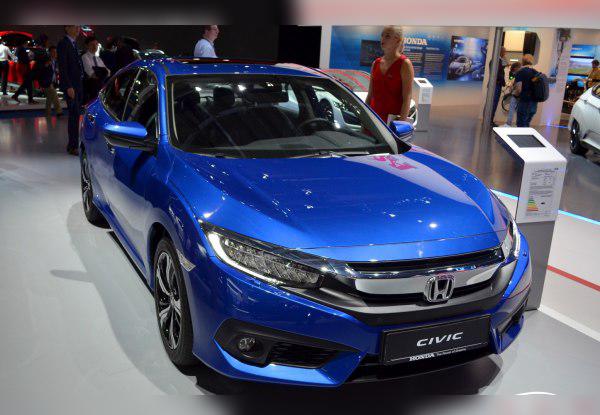
Honda 1.0 VTEC Turbo (P10A2): Experiences, Issues, Fuel Consumption and Maintenance
Key points (TL;DR)
- Little powerhouse: Although it has only 3 cylinders and 1.0 liter of displacement, the engine is surprisingly lively thanks to the turbo.
- Achilles' heel – Timing belt in oil: This engine uses “Wet Belt” technology. If the wrong oil is used or oil changes are delayed, the belt starts to crumble and clogs the oil pump strainer, which can lead to catastrophic engine failure.
- CVT vs Manual: The CVT gearbox is comfortable for city driving but requires regular oil changes. The manual version has a dual-mass flywheel.
- Direct injection: Great for power, but bad for LPG conversions and potentially prone to carbon buildup on the valves.
- Sensitive to maintenance: This is not an engine that tolerates neglect. Service intervals must be strictly followed.
- Recommendation: Ideal for mixed driving, but be cautious when buying a used car with an unknown service history.
Contents
Introduction: Honda Civic X and “Downsizing”
The engine designated P10A2 is Honda’s answer to the global “downsizing” trend (reducing displacement while adding a turbocharger). It is primarily installed in the tenth-generation Honda Civic (Sedan and Hatchback variants). For many Honda enthusiasts, the move to a 1.0 three-cylinder was a shock, given that the brand is known for its high-revving naturally aspirated engines. However, with 126 horsepower, this engine replaces the legendary 1.8 naturally aspirated petrol, offering more torque at lower revs, which makes it more usable in everyday city driving.
Technical Specifications
| Feature | Data |
|---|---|
| Engine code | P10A2 |
| Displacement | 988 cc (1.0 L) |
| Configuration | Inline, 3 cylinders |
| Power | 93 kW (126 hp) @ 5500 rpm |
| Torque | 200 Nm @ 2250 rpm |
| Injection type | Direct injection (GDI) |
| Induction | Mono-scroll turbocharger + intercooler |
| Valve timing drive | Timing belt in oil (Wet Belt) |
Reliability and Maintenance
Timing belt or chain?
This is the most important technical characteristic of this engine. The Honda P10A2 uses a timing belt that runs in oil (Belt-in-Oil technology). Although Honda designed this as a solution to reduce friction and noise, in practice it has proven to be a weak point. Unlike a conventional chain, this belt requires extremely strict adherence to the specified oil standard.
Most common failures
The main problem stems precisely from the “wet belt”. If oil that does not strictly meet Honda’s specification is used, or if oil change intervals are stretched (for example to 20,000 km in city conditions), the belt material starts to degrade and flake. The symptoms are silent killers: rubber particles from the belt fall into the oil pan and clog the oil pump strainer. This leads to a drop in oil pressure, and the driver often notices it only when the oil pressure warning light comes on or when the engine and turbocharger have already suffered serious damage.
There have also been reported issues with the cooling system on early production runs, where overheating can occur if the coolant level is not monitored.
Major service and oil changes
The official interval for timing belt replacement is quite long (often quoted as over 100,000 km or 6 years, depending on the market), but experienced mechanics recommend inspections much earlier. The major service is expensive because access to the belt is complicated.
The engine takes about 3.5 to 4 liters of oil (always check the dipstick). The recommended grade is strictly 0W-20 that meets Honda’s specific standard for engines with a wet belt. Using thicker oil or oil without additives that protect rubber can be fatal for the belt.
Oil consumption and spark plugs
As with most modern turbocharged direct-injection engines, some oil consumption is possible. Up to 0.5 liters per 1,000 km is often considered “within limits” by the manufacturer, but in reality, a healthy engine should not require topping up between services (if the service interval is 10,000 km).
The spark plugs are iridium and more expensive than standard ones. The factory recommends replacement at around 100,000 km, but due to fuel quality and city driving, it is advisable to check and replace them at 60,000 – 80,000 km to protect the ignition coils.
Specific Parts (Costs)
Dual-mass flywheel and clutch
If you drive the version with a manual gearbox, then yes – this engine has a dual-mass flywheel. Its role is to smooth out the vibrations of the three-cylinder engine. Replacing the clutch kit together with the flywheel falls into the expensive category (it depends on the market, but expect a serious expense). Versions with a CVT gearbox do not have a conventional dual-mass flywheel, but a torque converter.
Injection system and turbo
The injection system is direct (Direct Injection). The injectors are precise but sensitive to poor-quality fuel. They are not known for widespread failures, but when they do fail, replacement is costly. A bigger issue with direct injection is carbon buildup on the intake valves, which can manifest as rough idling after higher mileage.
The turbocharger is small and quick-spooling (low inertia). Its lifespan directly depends on oil condition. If the oil pump strainer gets clogged (because of that belt), the turbo is the first component to fail due to lack of lubrication.
DPF/GPF and EGR
Newer models (especially from 2018 onwards, with the introduction of stricter Euro 6d-TEMP standards) are equipped with a GPF filter (Gasoline Particulate Filter), which is the petrol equivalent of a DPF. Clogging issues are less common than on diesels because petrol engines run with higher exhaust temperatures, but they are still possible with exclusively city driving. The engine also has an EGR system, which can get dirty, but it is not as critical a point as on older diesels.
Fuel Consumption and Performance
Real-world consumption and power
In real-world city driving, this engine consumes between 7.0 and 8.5 l/100 km. If you have a heavy right foot, the figure easily goes above 9 liters, because turbo petrol engines are very sensitive to driving style. On the open road, consumption drops to around 5.0 – 6.0 liters.
Is the engine “sluggish”? Absolutely not. With 200 Nm of torque available from as low as 2,250 rpm, a Civic with this engine pulls better in mid-range acceleration than the old 1.8 naturally aspirated unit. The Civic’s body is not too heavy, so the engine copes with it quite well.
Motorway driving
On the motorway the engine behaves civilly. At 130 km/h in sixth gear (or the equivalent CVT ratio), the engine revs a bit higher than a 2.0 diesel, but sound insulation is good. There are no issues maintaining cruising speeds, and overtaking is safe as long as you stay in the turbo’s operating range.
Additional Options and Modifications
LPG conversion
Since the engine has direct injection, LPG conversion is complicated and expensive. It requires “Direct Liquid” systems or systems that inject a mixture of petrol and LPG (to cool the petrol injectors). Cost-effectiveness is questionable unless you cover very high mileage. The general recommendation is: Not recommended if you want to avoid headaches.
Chip tuning (Stage 1)
The engine can be remapped. Stage 1 tunes usually raise power to around 140–145 hp and torque to around 240 Nm. However, be careful. This is a small three-cylinder that is already quite stressed from the factory, and you also have the sensitive “wet belt” and (on manuals) a dual-mass flywheel that has to cope with higher torque. The performance gain is noticeable, but the risk to long-term engine durability increases.
Gearbox
Manual and CVT
This engine comes with two options: a 6-speed manual gearbox and a CVT automatic gearbox.
- Manual gearbox: Honda’s manual gearboxes are synonymous with precision. The gear lever throw is short and sporty. The most common “failure” is wear of the clutch kit and dual-mass flywheel. An oil change in the gearbox is recommended at around 60,000 – 80,000 km, even though the manufacturer sometimes states it is “lifetime” (which should not be taken literally).
- CVT gearbox: This is not a conventional automatic. It has no fixed gears, but a continuously variable ratio. Honda has software-simulated “shifts” to reduce the “scooter” effect (where revs stay high while the car accelerates). CVT maintenance is critical. The oil (HCF-2 fluid) must be changed every 40,000 km (or 2 years) in severe driving conditions. Failures are rare if the oil is changed regularly, but if neglected, an overhaul is very expensive (often more expensive than a used engine).
Buying Used and Conclusion
Buying a used Honda with the P10A2 engine requires caution. Key checks:
- Service history: Was the oil changed on time and was the correct oil used? If there is no proof of servicing, skip the car.
- Engine sound: Listen to a cold start. Three-cylinders naturally sound a bit rougher, but there should be no metallic rattling or knocking.
- Oil warning light: If the oil pressure light goes out slowly after starting, this may be a sign of a clogged pump strainer (a consequence of belt degradation).
- CVT test drive: The gearbox must not jerk, hesitate when setting off, or produce grinding noises.
Conclusion: The Honda 1.0 VTEC Turbo is a technologically advanced engine that offers an excellent balance between performance and efficiency. However, the timing belt-in-oil solution makes it sensitive to neglect. This engine is intended for drivers who want a modern car and are prepared to pay for quality maintenance at authorised or specialised workshops. If you are looking for a “fill up and drive” car without thinking about oil specifications, it may be better to look for older naturally aspirated models.
Was this content useful to you?
Your opinion helps us to improve the quality of the content.