R18Z4 Engine
- Engine
- 1799 cm3
- Aspiration
- Naturally aspirated engine
- Fuel
- Petrol (Gasoline)
- Fuel injection system
- Multi-port manifold injection
- Power
- 140 hp @ 6300 rpm
- Torque
- 174 Nm @ 4200 rpm
- Cylinders
- 4
- Valves
- 16, 4 per cylinder
- Cylinders position
- Inline
- Oil capacity
- 3.7 l
- Coolant
- 5.57 l
# Vehicles powered by this engine
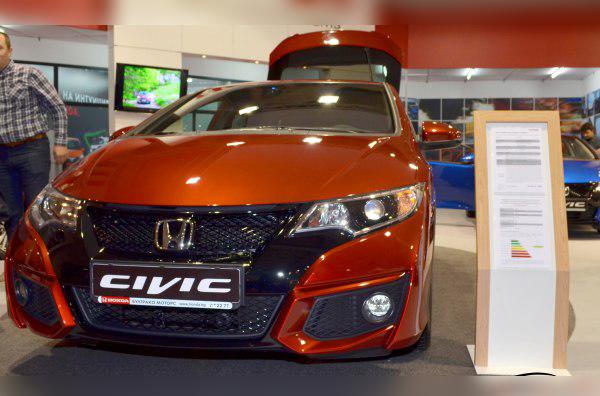
Honda 1.8 i-VTEC (R18Z4): Experiences, issues, fuel consumption and used-buying tips
Key points (TL;DR)
- Tank-like reliability: One of the last “old-school” naturally aspirated engines that can cover huge mileages with minimal maintenance.
- No expensive failures: No turbocharger, no DPF, no sensitive high-pressure injectors.
- Timing chain: Uses a timing chain that is very durable and rarely needs replacement.
- Performance: The engine likes high revs. By modern turbo standards it can feel “lazy” at low rpm.
- LPG (Autogas): An excellent candidate for LPG conversion, but requires regular valve clearance checks.
- Transmissions: Precise manual gearbox or a very reliable but slower 5-speed automatic.
- Recommendation: Ideal for drivers who want peace of mind and low running costs, and don’t race from traffic light to traffic light.
Contents
- Introduction and Models
- Technical Specifications
- Reliability and Maintenance
- Specific Parts and Costs
- Fuel Consumption and Performance
- Additional Options (LPG and Tuning)
- Transmission and Drivetrain
- Buying Used and Conclusion
Introduction and Models
The engine with the code R18Z4 is an evolution of Honda’s R-series engines, specifically adapted for the European market and stricter emission standards. It was primarily installed in the Honda Civic 9th generation (facelift model from 2014).
This is a classic naturally aspirated 1.8-liter petrol engine. In a world where small turbo engines (downsizing) had already started to dominate, Honda stayed true to its philosophy – larger displacement, linear power delivery and the famous i-VTEC system. For many brand enthusiasts, this is “the last real Honda engine” before the switch to 1.0 and 1.5 turbo units in the 10th generation. Its main role is not to pin you to the seat, but to take you to the end of the world without a single breakdown.
Technical Specifications
| Specification | Value |
|---|---|
| Engine code | R18Z4 |
| Displacement | 1799 cc |
| Power | 104 kW (140 - 142 hp) |
| Torque | 174 Nm at 4300 rpm |
| Configuration | Inline 4-cylinder, 16 valves (SOHC i-VTEC) |
| Injection type | Multipoint (Indirect injection) |
| Induction | Naturally aspirated |
| Camshaft drive | Chain |
Reliability and Maintenance
Does this engine have a timing belt or a chain?
The R18Z4 engine uses a timing chain. Honda’s chains on the R-series engines have proven to be extremely durable. Unlike some German competitors from that period, there is no need for preventive chain replacement at 100,000 km. With regular oil changes, the chain often lasts as long as the engine itself (over 300,000 km).
What are the most common issues with this engine?
This engine falls into the “bulletproof” category, but there are a few small things to watch out for:
- Auxiliary belt tensioner: It can start to make noise or develop play at around 150,000 km.
- Oil level sensor: It can sometimes give false readings even when the oil level is fine.
- VTEC solenoid valve: On heavily neglected engines (where oil wasn’t changed regularly), the screen on the VTEC solenoid can clog, causing loss of power and a “Check Engine” light.
- Need for valve adjustment: This is not a failure but a characteristic. The engine has no hydraulic lifters, so mechanical inspection and adjustment of valve clearances is required.
At what mileage is the “major service” due?
Since the engine has a chain, the classic “major service” (belt, tensioner and water pump set) is not done at a fixed interval. However, every 100,000 to 120,000 km it is recommended to replace the auxiliary (serpentine) belt, check the water pump and replace the coolant. The chain is replaced only if there is audible rattling or diagnostics show it is stretched, which is rare before 250,000 km.
How many liters of oil does this engine take and which grade is recommended?
The sump holds approximately 3.7 liters of oil (including the filter). For this engine, due to its “economy” operating mode and tight tolerances, Honda strictly recommends thin oils. The recommended grade is 0W-20. You can also use 5W-30 (especially in warmer climates or on higher-mileage engines), but 0W-20 ensures the best operation of the VTEC system and the lowest fuel consumption.
Does it burn oil between services?
R18Z4 engines are generally “dry” and do not consume oil in alarming quantities. However, as with any VTEC engine that is often driven at high rpm, consumption of up to 0.5 to 0.8 liters per 10,000 km is considered completely normal and acceptable. If it consumes more than a liter per 5,000 km, that points to an issue with piston rings or valve stem seals (often due to poor maintenance in the past).
At what mileage should the spark plugs be replaced?
This engine uses iridium spark plugs (NGK or Denso). The replacement interval is quite long – usually at 100,000 to 120,000 km. Do not experiment with cheap standard plugs, as they can damage the ignition coils.
Specific Parts (Costs)
Does the engine have a dual-mass flywheel?
Petrol engines of this power level usually have a solid (single-mass) flywheel or a very simple dual-mass design that is nowhere near as failure-prone as on diesels. On the Civic 1.8 petrol, even if there is a vibration-damping system, it almost never fails. So there is no real reason to fear the “dual-mass” here.
What type of injection system does it have and are the injectors problematic?
The R18Z4 uses classic Multipoint (MPI) fuel injection into the intake manifold. This is great news for a used car! The injectors are robust, cheap to clean and extremely rarely fail. There are no sensitive high-pressure pumps like on direct injection systems (GDI/FSI).
Does this engine have a turbocharger?
No. The engine is naturally aspirated. That means: no turbo rebuilds, no oil leaks from the turbo, no “turbo lag”. The intake system’s service life is practically unlimited with regular air filter changes.
Does this model have a DPF filter or an EGR valve?
It does not have a DPF filter (nor a GPF – gasoline particulate filter, as it was produced before that became mandatory). It does have an EGR valve, which can get dirty from city driving, but it is easy to clean and not expensive to replace. EGR issues are far less common than on diesel engines.
Does this engine use AdBlue?
No. AdBlue is used only on newer diesel engines.
Fuel Consumption and Performance
What is the real-world fuel consumption in city driving?
Although Honda is known for efficiency, 1.8 liters of displacement in the city does need fuel.
- City (Manual): 8.5 – 9.5 l/100 km.
- City (Automatic): 9.5 – 11.0 l/100 km (in winter and heavy traffic it can be higher).
- Highway / extra-urban: 5.5 – 6.5 l/100 km.
Is this engine “lazy” for the weight of the car?
Drivers often make the mistake of comparing it to diesels. At low revs (below 3000 rpm), the engine operates in a so-called “Atkinson cycle” for fuel savings and feels quite lazy and weak. For this engine to “pull” properly for overtaking, you need to shift down and rev it above 4000 rpm. That’s when i-VTEC changes the cam profile and the car comes alive. So it’s not really lazy – it just needs revs to deliver its power.
What is it like on the motorway and at what rpm does it cruise at 130 km/h?
On the motorway it is very comfortable and quiet. Thanks to the 6th gear (on the manual) or long gearing on the automatic, at 130 km/h the engine spins at about 3000 - 3200 rpm. This ensures decent fuel consumption and not too much noise in the cabin.
Additional Options and Modifications
Is this engine suitable for LPG (autogas) conversion?
Yes, extremely suitable! Thanks to indirect injection, installation is simple and cheaper than on modern engines.
IMPORTANT NOTE: Honda engines have mechanical valve lifters. If you run on LPG, you must check and adjust valve clearances every 30,000 to 40,000 km. If you neglect this, the valves will recess into the seats and you’ll be facing an expensive cylinder head repair.
How much can this engine be safely “chipped” (Stage 1)?
On naturally aspirated petrol engines, chip tuning is a waste of money. The gain is in the range of 3 to 6 hp, which you will not feel in real driving. You’re better off investing that money in quality tyres or fresh gearbox oil.
Transmission
Which manual and automatic gearboxes are fitted?
- Manual: 6-speed gearbox. One of the best in its class, with short and precise throws.
- Automatic: 5-speed conventional automatic (torque converter). This is Honda’s own design, not a CVT (the CVT came later with the 10th generation).
What are the most common issues with the manual and automatic gearboxes?
Manual: Almost indestructible. Sometimes you may get grinding when shifting quickly into second gear if the oil is old. Honda MTF-3 oil is recommended.
Automatic: Very reliable but technologically outdated. It shifts more slowly. It is not prone to failures if the oil is changed regularly (every 60,000 km). There are no mechatronic issues like on DSG gearboxes.
Does this model have a dual-mass flywheel and how much does clutch replacement cost?
As mentioned, the dual-mass flywheel is not an issue here. The clutch kit (pressure plate, disc, release bearing) is a wear item. The cost of replacing the clutch kit is in the mid-range (depending on the market), but significantly cheaper than on diesel versions.
At what mileage should the gearbox be serviced and the oil changed?
- Manual: Honda says “fill for life” in some regions, but in practice you should change the oil every 80,000 - 100,000 km. Use only genuine Honda MTF oil.
- Automatic: Mandatory oil and filter change every 60,000 km (a partial drain-and-fill is often sufficient).
Buying Used and Conclusion
When buying a Honda Civic with the R18Z4 engine, pay attention to the following:
- Cold start: Listen for chain rattling in the first 2–3 seconds. If it rattles longer, that’s a red flag.
- Air conditioning: This is a weak point of the 9th gen Civic. Check if the A/C compressor works and whether the A/C condenser has stone damage, as it is mounted low and unprotected.
- Service history: Check whether the oil was changed on time. These engines do not tolerate “long life” intervals of 30,000 km.
CONCLUSION:
The Honda R18Z4 is an engine for those who value engineering simplicity and reliability above all else. If you can accept that you need to press the throttle for the car to really “go”, and that the automatic is not lightning fast, you will probably get the most reliable used car in its class. Maintenance costs are laughable compared to modern diesels or turbo petrols, and the service life is impressive.
Was this content useful to you?
Your opinion helps us to improve the quality of the content.