K24Z7 Engine
- Engine
- 2354 cm3
- Aspiration
- Naturally aspirated engine
- Fuel
- Petrol (Gasoline)
- Fuel injection system
- Multi-port manifold injection
- Power
- 205 hp @ 7000 rpm
- Torque
- 236 Nm @ 4400 rpm
- Cylinders
- 4
- Valves
- 16, 4 per cylinder
- Cylinders position
- Inline
- Max engine speed
- 7000 rpm
- Valvetrain
- DOHC, i-VTEC
- Oil capacity
- 4.2 l
- Coolant
- 5.5 l
# Vehicles powered by this engine
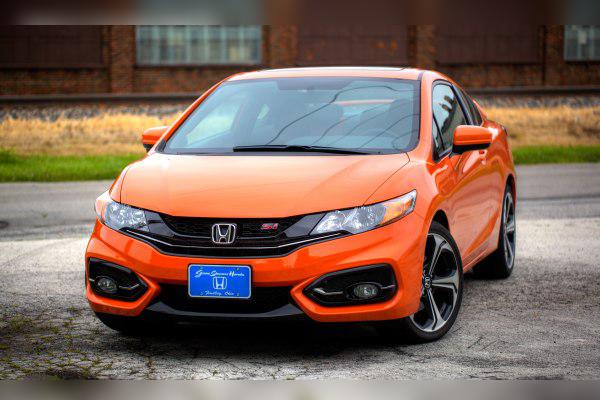
Honda Civic Si K24Z7 2.4 i-VTEC: Experiences, Problems, Fuel Consumption and Buying Used
Key points in short (TL;DR)
- High-potential engine: The K24Z7 is the last big naturally aspirated engine in the Civic Si before the switch to the turbo era. It offers excellent low-end torque compared to the older K20 engines.
- Timing chain: The engine uses a chain for the timing system, which is generally reliable but requires high-quality oil.
- VTC actuator: The most common “issue” is a grinding noise on cold start (VTC actuator), a well-known problem of the K-series.
- Manual transmission only: In the Civic Si this engine comes exclusively with a 6-speed manual gearbox and a limited-slip differential (LSD).
- Oil consumption: With more spirited driving (frequent entry into the VTEC zone), some oil consumption is to be expected.
- Suitable for LPG: It works very well on LPG, but requires regular valve adjustment.
- Recommendation: Ideal for enthusiasts who want Honda reliability and a sporty feel, without the complications that turbochargers bring.
Contents
- Introduction and applications
- Technical specifications
- Reliability and maintenance
- Specific parts and costs
- Fuel consumption and performance
- Additional options and modifications
- Transmission and drivetrain
- Buying used and conclusion
Introduction and applications
The engine designated K24Z7 is the heart of the ninth-generation Honda Civic Si (especially the 2013 facelift Coupe). This is an engine that polarizes Honda fans – while some miss the “screaming” high revs of the old K20 (which revved to 8000+ rpm), others appreciate the K24Z7 for its usability in everyday driving.
With a displacement of 2.4 liters, this unit delivers significantly more torque (236 Nm) at lower revs, which means you don’t have to constantly shift gears to overtake on the highway. Although the redline starts a bit earlier (around 7000 rpm), it still has that distinctive i-VTEC character that changes the sound and performance in the upper rev range. It’s important to note that this engine, in this specification, was primarily intended for the North American market, but through imports it can be found all over the world.
Technical specifications
| Specification | Value |
|---|---|
| Engine code | K24Z7 |
| Displacement | 2354 cc (2.4 L) |
| Power | 153 kW (205 hp) @ 7000 rpm |
| Torque | 236 Nm @ 4400 rpm |
| Induction | Naturally aspirated |
| Injection type | Multi-point (PGM-FI) – indirect |
| Cylinders / valves | 4 / 16 (DOHC i-VTEC) |
| Camshaft drive | Chain |
Reliability and maintenance
Timing system: chain or belt?
The Honda K24Z7 uses a timing chain (camshaft drive). The chain is generally robust and designed to last the life of the engine, but in practice it’s not indestructible. The chain tensioner can fail if the engine is poorly maintained or run on low-quality oil. There is no regular replacement interval like with a belt, but at mileages over 200,000 km you should pay attention to any “rattling” noise from the passenger side, which may indicate a stretched chain.
Most common failures and symptoms
Although this is one of the most reliable engines in its class, there are some specific issues:
- VTC actuator (variable cam timing): This is the best-known problem of the K-series. The symptom is a short, loud “grinding” or “rattling” noise (lasting 1–2 seconds) immediately after a cold start. While it often doesn’t lead to catastrophic failure right away, it’s annoying and should be resolved by replacing the actuator (cam gear).
- Oil leak at the crankshaft seal: Not extremely common, but it does happen at higher mileages.
- Valve adjustment: Unlike many modern engines with hydraulic lifters, this engine requires manual valve adjustment. If you hear a “ticking” noise while the engine is idling, it’s time to check the valve clearances.
Service intervals and oil
Minor service: Recommended every 10,000 km or once a year. Honda also has the “Maintenance Minder” system, which may suggest earlier servicing depending on driving conditions.
Major service: Since the engine uses a chain, there is no classic major service at a fixed mileage. However, inspection of the water pump, accessory belt (for alternator and A/C) and chain tensioner is recommended at around 100,000–120,000 km.
Oil: The engine takes approximately 4.2 to 4.4 liters of oil (always check the dipstick). The recommended viscosity is strictly 0W-20. This thin grade is crucial for proper operation of the i-VTEC system and the narrow oil passages.
Oil consumption
Does it burn oil? Yes, it can. High-revving Honda engines are known to “sip” some oil if driven often in VTEC (high rpm). Consumption of 0.5 to 0.8 liters per 10,000 km is considered acceptable and normal for this type of engine. If it uses more than 1 liter per 5,000 km, that points to problems with piston rings or valve stem seals.
Spark plugs
This petrol engine uses iridium spark plugs. The replacement interval is long, usually around 100,000 to 120,000 km. Don’t cheap out on spark plugs; use only NGK or Denso according to factory specification.
Specific parts and costs
Flywheel and clutch
Good news: the Civic Si K24Z7 usually uses a single-mass (solid) flywheel or a very simple flywheel design that is not prone to the expensive failures seen on diesels. Still, the clutch is a wear item. The price of a clutch kit is average for Japanese cars – not as cheap as for small city cars, but not excessively expensive either (depends on the market).
Fuel injection system and injectors
The engine uses classic port fuel injection. This is a huge advantage for a used car because the injectors are less prone to clogging than with direct injection and, most importantly – there are no issues with carbon buildup on the intake valves, which is a common problem on newer turbo engines. The injectors are extremely durable.
Turbo, EGR, DPF
- Turbo: NONE. This is a naturally aspirated engine. One (expensive) worry less.
- DPF / AdBlue: NONE. This is a petrol engine, so there is no diesel particulate filter or urea system.
- EGR valve: There is an exhaust gas recirculation system, but on petrol engines it rarely clogs badly enough to cause serious problems before 200,000 km.
- Catalytic converter: It has a catalytic converter that can fail if driven with bad spark plugs or if the engine burns a lot of oil. Replacement is expensive (depends on the market).
Fuel consumption and performance
Real-world fuel consumption
Don’t expect miracles from a 2.4-liter engine in city driving.
- City: Expect between 10 and 13 l/100 km, depending on traffic and how heavy your right foot is.
- Highway / open road: Here things are better, consumption drops to 7 to 8 l/100 km with moderate driving.
- Combined: A realistic average is around 9–10 l/100 km.
Is the engine “lazy”?
Absolutely not. With 205 hp and 236 Nm in the Civic Coupe body, this car is very lively. Thanks to the larger displacement, the engine pulls nicely already from 2500–3000 rpm, unlike older Hondas that were “dead” below 5000 rpm. It’s not as explosive as modern turbo engines with 350 Nm, but throttle response is instant and linear.
Highway driving
The gearbox is short-geared for better acceleration. At 130 km/h in sixth gear, the engine spins at about 3000–3200 rpm. This is acceptable for long trips, but can be a bit noisier in the cabin compared to European turbo competitors.
Additional options and modifications
LPG conversion
YES. The K24Z7 is an excellent candidate for LPG because it has port injection. The system is easy to install and the engine handles LPG well.
IMPORTANT: Because of the mechanical valve adjustment, if you run LPG you must check valve clearances more often – ideally every 40,000 km, to prevent the valves from “sinking” into their seats.
ECU remap (Stage 1)
On naturally aspirated engines, a remap doesn’t bring huge power gains like on turbo engines. Still, the K24Z7 does benefit from a tune (most commonly using Hondata FlashPro).
Gains:
- Power increase is small (maybe 10–15 hp with a good intake).
- The main benefit is lowering the VTEC engagement point (so it kicks in earlier) and eliminating the factory “rev hang” (when revs drop slowly after lifting off the throttle).
- Throttle response and mid-range drivability are improved.
Transmission
Transmission type
With this engine in the Civic Si you get exclusively a 6-speed manual transmission. There is no factory automatic option for the Si with this engine. The gearbox comes with a factory helical LSD (limited-slip differential), which drastically improves cornering grip and traction on corner exit.
Most common manual gearbox issues
Honda gearboxes are legendary for their precision, but this model has a couple of weak points:
- Second and third gear: With aggressive driving you may get grinding when shifting quickly into second, or third gear popping out. This is often due to bad or old gearbox oil or worn synchros.
- CMC (clutch master cylinder): The factory clutch master cylinder has an internal mechanism that slows fluid flow to protect the drivetrain, but this often causes a “rubbery” clutch feel and makes fast shifting harder. Many owners replace it with aftermarket parts.
Gearbox maintenance
Gearbox oil (MTF – Manual Transmission Fluid) should be changed every 40,000 to 60,000 km. Always use genuine Honda MTF, as these gearboxes are extremely sensitive to incorrect fluids. The change is cheap (about 2 liters of oil) and crucial for longevity.
Buying used and conclusion
If you’re looking at a Civic Si with the K24Z7 engine, here’s a short inspection guide:
- Cold start: Insist that the engine be completely cold. Listen for a short “krrrr” sound (VTC actuator).
- Test drive: Warm up the engine, then accelerate to redline in 1st and 2nd gear. The VTEC crossover should be noticeable (sound and a slight kick). Check that the gearbox shifts smoothly into every gear at high rpm.
- Exhaust smoke: Bluish smoke at high revs or during engine braking means worn piston rings or valve stem seals.
- Clutch: The pedal should not bite too high and should not produce any “clicking” (possible cylinder issue).
Conclusion:
The K24Z7 is a fantastic engine for those who want a old-school sporty car but with enough modern torque for daily use. It’s not as economical as diesels, nor as fast in a straight line as modern turbo hot hatches, but it offers a level of reliability and driving enjoyment that is rarely found. Maintenance costs are about average (except for original body parts for the Coupe version, which can be expensive and hard to find in Europe). If you find an example that hasn’t been “thrashed to death”, you can buy it with little hesitation.
Was this content useful to you?
Your opinion helps us to improve the quality of the content.