R18Z4 Engine
- Engine
- 1798 cm3
- Aspiration
- Naturally aspirated engine
- Fuel
- Petrol (Gasoline)
- Fuel injection system
- Multi-port manifold injection
- Power
- 143 hp @ 6500 rpm
- Torque
- 174 Nm @ 4300 rpm
- Cylinders
- 4
- Valves
- 16, 4 per cylinder
- Cylinders position
- Inline
- Oil capacity
- 3.7 l
- Coolant
- 5.57 l
# Vehicles powered by this engine
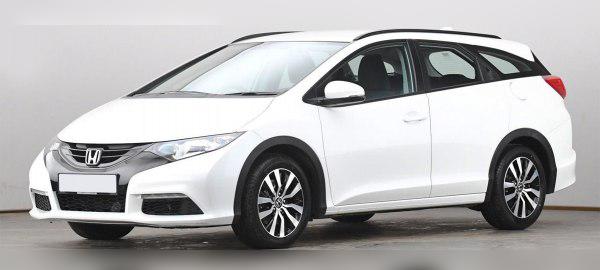
Honda R18Z4 1.8 i-VTEC: Experiences, problems, fuel consumption and buying tips
Key points (TL;DR)
- Tank-like reliability: This is one of the last “old-school” naturally aspirated engines that can cover huge mileages with minimal maintenance.
- No expensive failures: No turbo, no direct injection, no DPF, and the manual gearbox has no dual-mass flywheel.
- Lazy at low revs: Unlike modern turbo petrol engines, you have to rev this engine to make it pull, which not every driver likes.
- Ideal for LPG: It handles LPG very well, but requires regular valve clearance checks.
- Fuel consumption: In the heavy Civic Tourer (estate) body, city consumption can be high, but on the open road it is surprisingly economical.
- Recommendation: A perfect choice for drivers who want peace of mind and low running costs, and are not chasing sporty performance.
Contents
- Introduction and applications
- Technical specifications
- Reliability, maintenance and oil
- Specific parts and fuel injection system
- Fuel consumption and driving performance
- LPG and remapping
- Gearbox: manual vs automatic
- Buying used and conclusion
Introduction: The last samurai of the naturally aspirated school
The R18Z4 engine represents the swan song of Honda’s naturally aspirated petrol philosophy in Europe before the full transition to the turbo era. It was fitted primarily in the Honda Civic IX (ninth generation), and was especially popular in the Tourer (estate) version. This engine was designed with a focus on longevity and efficiency rather than racing performance.
Unlike older Honda engines that loved to scream in the red zone, the R-series engines (including this Z4) use the i-VTEC system primarily for fuel saving at low loads (by keeping the intake valves open longer to reduce pumping losses – a sort of mini Atkinson cycle). This is an engine for the rational buyer who wants to stay away from mechanics as much as possible.
Technical specifications
| Specification | Data |
|---|---|
| Engine code | R18Z4 |
| Displacement | 1798 cc (1.8 L) |
| Power | 104 kW (143 hp) at 6500 rpm |
| Torque | 174 Nm at 4300 rpm |
| Fuel type | Petrol (Gasoline) |
| Aspiration | Naturally aspirated |
| Injection | PGM-FI (multi-point indirect) |
| Cylinders / valves | 4 / 16 (SOHC – single camshaft) |
| Emissions standard | Euro 5 / Euro 6 (depending on model year) |
Reliability and maintenance
Timing chain or belt?
The R18Z4 engine uses a timing chain for valve timing. This is excellent news for owners, as Honda’s chain on these engines is extremely durable. Unlike some German competitors from that period, it is not common here for the chain to snap or stretch at low mileage. With regular oil changes, the chain is designed to last as long as the engine itself (“lifetime”). Preventive replacement is not needed unless you hear a characteristic rattling noise (usually only after 250,000–300,000 km).
Most common issues and maintenance
This engine is considered one of the most reliable petrol engines of the last 15 years. Still, there are a few things to watch out for:
- Valve adjustment: This is crucial! The R18Z4 engine does not have hydraulic lifters. This means valve clearances must be checked and adjusted mechanically. It is recommended to do this every 40,000 km to 100,000 km (more often if you drive aggressively). If neglected, it can lead to burnt valves. Symptoms include rough idle or a “ticking” noise from the engine.
- Auxiliary belt tensioner: It can weaken, which shows up as squealing or knocking from the side of the engine where the belt is.
- Oil level sensor: It can sometimes give false readings on the instrument cluster even when the oil level is fine.
Service intervals and oil
A minor service is recommended every 10,000 km to 15,000 km (or once a year). A classic “major service” (timing belt replacement) does not exist because it has a chain, but at around 100,000–120,000 km the auxiliary (serpentine) belt is replaced, the water pump is checked and the coolant is changed.
Oil: The engine takes about 3.7 litres of oil. Honda strictly recommends “thin” oils due to narrow oil passages and the VTEC system. The best choice is 0W-20 or 5W-30. Using oil that is too thick (e.g. 10W-40) can, in the long run, damage the VTEC actuator.
Oil consumption: Unlike older series, the R18Z4 has revised piston rings and generally does not consume oil in significant amounts. Consumption of 0.5 litres per 10,000 km is acceptable; anything above that requires inspection (often it is just the PCV valve or valve stem seals on high-mileage engines).
Spark plugs
It uses iridium spark plugs (NGK or Denso). They are more expensive but last a long time. Replacement interval is usually every 100,000 km to 120,000 km. Do not experiment with standard plugs – this engine needs a strong, high-quality spark for optimal operation.
Specific parts (costs)
Fuel injection system and injectors
Good news: the engine uses classic MPi (multi-point injection), i.e. indirect fuel injection into the intake manifold. This means there are no issues with carbon build-up on the intake valves (a common problem with direct injection). The injectors are simple, cheap to refurbish or replace, and very rarely cause problems. There is also no high-pressure fuel pump that could fail.
Flywheel and turbo
This engine is every frugal driver’s dream:
- Turbo: NONE. That means no turbo overhauls, no intercooler issues, no oil leaks from the turbo.
- Dual-mass flywheel: In combination with the manual gearbox, this engine most often uses a solid flywheel. The clutch kit is therefore significantly cheaper than on diesels. (Note: Always check by VIN, but there is a 99% chance it’s a standard flywheel).
Emissions equipment (DPF, EGR, AdBlue)
Being a petrol engine, it does NOT have a DPF filter and does not use AdBlue fluid. It has a catalytic converter and an EGR valve. On petrol engines, the EGR valve gets dirty much more slowly than on diesels, so blockages are extremely rare and are solved with simple cleaning.
Fuel consumption and performance
Is it “lazy”?
Let’s be honest – yes, it feels lazy if you are used to a diesel or turbo petrol. With 174 Nm of torque available only at a fairly high 4300 rpm, the Civic Tourer (which is not a light car) requires you to work the gearbox. In city driving, below 3000 rpm, the engine is very smooth and quiet, but there is no “kick in the back”. For overtaking on country roads you need to drop one or two gears and push the engine above 4000 rpm. That’s when i-VTEC wakes up and the car accelerates quite decently.
Real-world fuel consumption
- City driving: This is its weakest point. In the heavy Civic Tourer body, in heavy traffic, expect 8.5 to 10.5 l/100 km. If it’s an automatic, add another half to one litre.
- Open road (country roads): This is where the engine shines. Consumption drops to 5.5 to 6.5 l/100 km.
- Motorway (130 km/h): With the manual gearbox in 6th gear, the engine spins at about 3200–3300 rpm. Consumption is around 7.0 to 7.5 l/100 km. The engine is quiet enough for comfortable cruising.
Additional options and modifications
LPG
This is one of the most common questions. The answer is: YES, this engine is excellent on LPG. Thanks to indirect injection, installation is simple and cheaper (standard sequential systems).
WARNING: Because there are no hydraulic lifters, if you run LPG you must check valve clearances more often, ideally every 20,000 to 30,000 km. LPG burns at a higher temperature and valve seat recession is faster if clearances are not correct. Be sure to install a valve lubrication system (so-called “valve saver” or drip system) as an extra precaution.
Remapping (Stage 1)
Forget about it. On a naturally aspirated, non-turbo engine, a remap will give you maybe 5 to 8 hp, which you will not really feel in everyday driving. It’s a waste of money. You’re better off investing that money in quality tyres or regular servicing.
Gearbox
Manual gearbox
It comes with a 6-speed manual gearbox. Honda gearboxes are known as some of the best in the world – precise, with short throws and extremely reliable. Failures are virtually non-existent if you change the gearbox oil regularly (Honda MTF oil) every 60,000–80,000 km. As mentioned, there is no dual-mass flywheel (except in a few rare specific series – check by VIN), so replacing the clutch kit is affordable (depends on the market, but it’s not expensive).
Automatic gearbox
In the Civic IX with this engine you most commonly find a classic 5-speed automatic gearbox (torque converter), although later models or specific markets could have a CVT.
5-speed automatic: Very robust and reliable. It is not the fastest in shifting and slightly increases fuel consumption, but it is virtually indestructible if the oil is changed regularly.
Maintenance: Changing the oil in the automatic is mandatory every 40,000 to 60,000 km. Use only genuine Honda ATF oil. Failures are rare and most often caused by overheating (towing heavy trailers) or lack of servicing.
Buying used and conclusion
When buying a Civic IX Tourer with this engine, pay attention to:
- Noise on cold start: Listen for any chain rattling for a few seconds after starting.
- Service history: Ask for proof of valve adjustment. If the seller doesn’t know what that is, it probably has never been done – that’s a risk.
- Air conditioning operation: On the Civic IX, the A/C relay or compressor can be a weak point.
- Corrosion: Although better than its predecessor, Honda is still not immune to rust, especially on the underbody and under the rubber seals of the tailgate on Tourer models.
CONCLUSION:
The Honda Civic Tourer with the 1.8 i-VTEC engine is a car for sensible buyers. It’s not a racer, it won’t pin you to the seat at 2000 rpm, but it will faithfully serve you for hundreds of thousands of kilometres without the “drama” that modern diesels or turbo petrols often bring. Maintenance is predictable and relatively affordable. If you need a spacious family estate and cover a lot of kilometres, and you want to avoid the risks of a used diesel, this is probably the best buy in its class.
Was this content useful to you?
Your opinion helps us to improve the quality of the content.