R18Z1 Engine
- Engine
- 1798 cm3
- Aspiration
- Naturally aspirated engine
- Fuel
- Petrol (Gasoline)
- Fuel injection system
- Multi-port manifold injection
- Power
- 142 hp @ 6500 rpm
- Torque
- 174 Nm @ 4300 rpm
- Cylinders
- 4
- Valves
- 16, 4 per cylinder
- Cylinders position
- Inline
- Oil capacity
- 3.7 l
- Coolant
- 5.57 l
# Vehicles powered by this engine
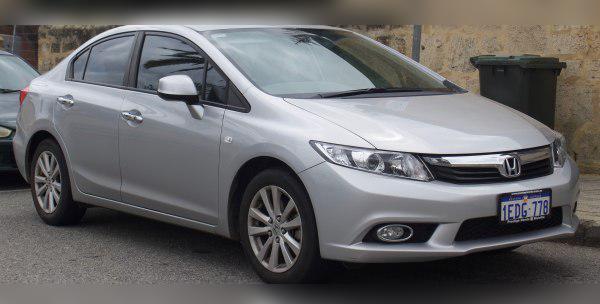
Honda R18Z1 1.8 i-VTEC (142 HP) – Experiences, problems, fuel consumption and buying tips
Key points (TL;DR)
- Exceptional reliability: This is one of the last “good old” naturally aspirated petrol engines. Failures are very rare.
- Simple maintenance: No turbocharger, no direct injection (no carbon buildup), no GPF filter.
- Timing chain: Uses a timing chain designed to last as long as the engine itself, with regular oil changes.
- Lack of torque: Compared to modern turbo engines, it feels “lazy” at low revs. It needs a “heavier right foot” on the throttle for overtaking.
- Ideal for LPG: Handles LPG very well, but requires mechanical valve clearance adjustment.
- Recommendation: A perfect choice for drivers who want peace of mind and minimal maintenance costs, and who are not addicted to brutal acceleration.
Contents
Introduction and engine application
Honda R18Z1 belongs to the R-series of engines that debuted in the mid-2000s, and this particular model is an evolution used in the ninth generation Civic (especially the Sedan version). While European competitors were massively switching to “downsizing” (small turbocharged engines), Honda with this unit remained faithful to the naturally aspirated, larger-displacement philosophy.
This engine is specific because of its i-VTEC system. Unlike the sporty Hondas from the 90s where VTEC was there for “racing”, here the camshaft changes profiles so that under low load the engine operates in the so‑called Atkinson cycle (delayed closing of the intake valves). In practice, this means drastically lower fuel consumption and reduced pumping losses. This is an engine for people who buy a car to drive it for 10 years without headaches.
Technical specifications
| Specification | Data |
|---|---|
| Engine code | R18Z1 |
| Displacement | 1798 cc (1.8 L) |
| Configuration | I4, SOHC (single camshaft), 16 valves |
| Power | 104 kW (142 HP) @ 6500 rpm |
| Torque | 174 Nm @ 4300 rpm |
| Injection type | Multi-point (MPI) – Indirect |
| Aspiration | Naturally aspirated |
| Camshaft drive | Chain |
Reliability and Maintenance
Timing system: Chain or belt?
The R18Z1 engine uses a chain to drive the camshaft. Honda chains on the R-series engines have proven to be very durable. Unlike some European competitors where the chain can snap at 100,000 km, here it’s not uncommon for the chain to last the entire life of the car (over 300,000 km) without needing replacement.
Problem symptoms: If you hear a metallic rattling sound (like coins in a washing machine) on a cold start that doesn’t disappear after a few seconds, it’s a sign that the chain is stretched or the tensioner is failing. Still, this is rare if the oil is changed regularly.
Most common issues
This engine is probably one of the most reliable in its class. Serious mechanical failures are extremely rare. Still, pay attention to:
- Auxiliary (serpentine) belt tensioner: It can start to squeal or make noise. It’s not an expensive repair, but it’s annoying.
- Engine mounts: On older cars, the hydraulic engine mounts can fail, which shows up as increased vibrations in the cabin while the car is idling at a traffic light.
- Oil level sensor: It can sometimes give false readings, so it’s always smarter to trust the dipstick.
Service intervals and oil
Minor service: Recommended every 10,000 km, up to a maximum of 15,000 km or once a year. Ignore extended 30,000 km intervals if you want the chain to last.
Major service: Since the engine has a chain, a classic “major service” is not done at a fixed interval. However, at around 100,000 – 120,000 km you should check valve clearances and replace the auxiliary belt, tensioners and water pump preventively.
Oil: This engine takes approximately 3.7 litres of oil. Honda strictly recommends low-viscosity oils due to tight tolerances and the i-VTEC system.
Recommendation: 0W-20 is the factory recommendation for optimal fuel consumption and cold-engine operation. 5W-30 can also be used, especially in warmer climates or on high-mileage engines.
Oil consumption
The R18Z1 generally does not consume oil in worrying amounts. Between two services (10,000 km), it’s normal for the level to drop by 200–500 ml, which often doesn’t even require topping up. If the engine uses more than 1 litre per 5,000 km, this points to a problem with the piston rings or valve stem seals, often caused by poor maintenance in the past.
Spark plugs
The engine uses iridium spark plugs (NGK or Denso). Replacement interval is long, usually at 100,000 km to 120,000 km. Don’t skimp on spark plugs; use exactly the catalogue-specified ones, as they directly affect coil operation and fuel consumption.
Specific Parts (Costs and Design)
Dual-mass flywheel
Good news: The petrol Civic IX with this engine and a manual gearbox most often uses a standard (solid) flywheel. This drastically reduces clutch replacement costs compared to diesels. (Note: Always check by VIN, as there are rare market-specific variations, but in about 95% of cases there is no dual-mass flywheel.)
Fuel injection system
The engine uses indirect injection (MPI) into the intake manifold. The injectors are extremely durable and not as sensitive to fuel quality as with direct injection (GDI). Also, due to this design, the intake valves are constantly “washed” by fuel, so there are no issues with carbon buildup on the valves, which is a common problem on modern VW or Mazda petrol engines.
Turbo, DPF, EGR, AdBlue
- Turbo: None. The engine is naturally aspirated. One less worry (no turbo rebuilds, intercooler issues, or oil leaks from the turbo).
- DPF / AdBlue: None. This is a petrol engine, so you’re spared the emissions systems that choke diesels in city driving.
- EGR valve: There is an exhaust gas recirculation system. On this engine the EGR valve rarely clogs, and even if it does, cleaning is simple and cheap.
Fuel Consumption and Performance
Real-world fuel consumption
Although it’s a 1.8, the R18Z1 is a fuel economy champion among naturally aspirated engines of this displacement.
- City driving: Expect between 8.5 and 10.5 l/100 km, depending on traffic and whether it’s an automatic or manual (the automatic uses about 0.5–1 litre more).
- Highway / open road: This is where the engine shines. Consumption drops to 5.5 to 6.5 l/100 km with normal driving.
Is the engine “lazy”?
For drivers used to turbo diesels – yes, it will feel lazy. With 174 Nm of torque available only at 4300 rpm, this engine doesn’t “pin you to the seat” at the slightest touch of the throttle.
In practice: In the city it’s perfectly adequate and responsive. The problem appears on country roads when overtaking in 5th or 6th gear. The engine has to rev. If you want acceleration, you must drop two gears and let it “sing” above 4000 rpm. That’s when it shows its 142 HP. This is not a flaw, it’s a characteristic of Honda VTEC engines.
Motorway driving
With the 6-speed manual gearbox, at 130 km/h the engine spins at about 3000 – 3200 rpm (depending on tyre size and final drive). This is perfectly acceptable for a petrol engine. Cabin noise is minimal, and the engine has enough breath to maintain that speed even on inclines, although for stronger acceleration at that speed it will ask for 5th gear.
Additional Options and Modifications
LPG conversion
Yes, it’s excellent on LPG. Thanks to indirect injection, the conversion is simple and relatively cheap (standard sequential system).
Important note: R18 engines do not have hydraulic lifters. Valve clearances are adjusted mechanically (screw and locknut). If you run LPG, you must check valve clearances every 40,000 km. If this is neglected, the valves can recess and burn, which leads to an expensive cylinder head overhaul.
ECU remap (Stage 1)
It’s not worth it. On naturally aspirated engines, a remap gives a negligible 3–5 HP. It’s better to invest that money in quality tyres or fresh oil. No software can make up for the lack of a turbocharger.
Gearbox
Manual and Automatic
- Manual (6-speed): Honda manual gearboxes are probably the best in the industry. Precise, with short throws, a real joy to use. Failures are virtually unheard of.
- Automatic (5-speed): The Civic IX Sedan often comes with a classic 5-speed torque-converter automatic. This is not a CVT (used in some other versions) nor a dual-clutch gearbox. It is a very reliable gearbox, but slow. It shifts slowly and slightly increases fuel consumption.
Gearbox maintenance
- Manual: Oil change every 60,000 – 80,000 km. Use only Honda MTF (Manual Transmission Fluid) – other oils can make shifting harder in winter.
- Automatic: Oil change is mandatory every 60,000 km (partial change or flush method). If the oil is not changed, the gearbox can start to jerk when shifting.
Clutch replacement
The cost of a clutch kit (pressure plate, disc, release bearing) is in the affordable category (not expensive). Since there is no dual-mass flywheel, this is a routine and relatively cheap job.
Buying Used and Conclusion
Before buying, do the following checks:
- Cold start: Listen for chain noise in the first 2–3 seconds. It should become quiet almost immediately.
- Vibrations: While the engine is idling, put your hand on the steering wheel. There shouldn’t be strong vibrations (check engine mounts).
- Air conditioning: Check whether the AC compressor engages immediately. On 9th gen Civics, the AC relay or the compressor itself can be a weak point.
- Service history: Check when the valves were last adjusted (especially if the car runs on LPG).
Final verdict
The Honda Civic with the R18Z1 engine is a car for the rational buyer. If you’re looking for excitement, a turbo “kick” in the back and sports-car performance – skip it.
However, if you want a family sedan that will serve you for the next 200,000 km with only regular servicing, that won’t suddenly leave you stranded because of a failed sensor or clogged DPF, this is probably one of the best used-car purchases on the market. Maintenance is cheap (on the level of a Fiat Punto for regular items), and build quality is typical Japanese.
Was this content useful to you?
Your opinion helps us to improve the quality of the content.