K24Z7 Engine
- Engine
- 2354 cm3
- Aspiration
- Naturally aspirated engine
- Fuel
- Petrol (Gasoline)
- Fuel injection system
- Multi-port manifold injection
- Power
- 201 hp @ 7000 rpm
- Torque
- 230 Nm @ 4400 rpm
- Cylinders
- 4
- Valves
- 16, 4 per cylinder
- Cylinders position
- Inline
- Max engine speed
- 7000 rpm
- Valvetrain
- DOHC, i-VTEC
- Oil capacity
- 4.2 l
- Coolant
- 5.5 l
# Vehicles powered by this engine
Honda K24Z7 (2.4 i-VTEC) – Experiences, issues, fuel consumption and buying tips
Key points (TL;DR)
- Reliability: Extremely robust engine that can cover very high mileage with regular maintenance.
- VTC Actuator: The most common issue is a rattling noise on cold start – annoying, but fixable.
- Maintenance: Requires mechanical valve adjustment at specific mileage intervals.
- Performance: Excellent torque for a naturally aspirated engine; you don’t have to rev it to the redline like older Hondas.
- Transmission: Comes exclusively with a 6-speed manual gearbox and a factory limited-slip differential (LSD), which is a big plus.
- Fuel consumption: Thirsty in the city, acceptable on the highway.
- Recommendation: An ideal choice for enthusiasts who want a reliable sports car without the complications of a turbo system.
Contents
- Introduction and applications
- Technical specifications
- Reliability, maintenance and failures
- Specific parts and systems
- Fuel consumption and performance
- Gearbox and drivetrain
- Tuning and LPG
- Conclusion and buying advice
Introduction: The last of the big-displacement Mohicans
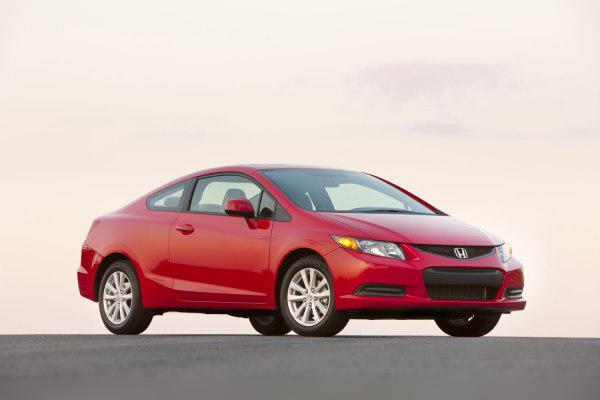
The Honda K24Z7 engine is the swan song of large-displacement naturally aspirated engines in Honda’s compact class. Installed primarily in the ninth-generation Honda Civic Si (Coupe and Sedan), this unit is the successor to the legendary K20 engines, but with a focus on higher torque at lower revs. Unlike European “Type R” models that chased high RPM, the K24Z7 is a “workhorse” that offers power readily available in everyday driving.
This is an engine for drivers who appreciate instant throttle response, linear power delivery and the sound that only a naturally aspirated petrol engine can provide. Although it’s not as “wild” as the older K20A, the K24Z7 is more modern, cleaner and better suited to stricter emission standards, while still retaining a sporty character.
Technical specifications
| Specification | Data |
|---|---|
| Engine code | K24Z7 |
| Displacement | 2354 cc (2.4 L) |
| Power | 150 kW (201 hp) @ 7000 rpm |
| Torque | 230 Nm @ 4400 rpm |
| Configuration | Inline-4, DOHC i-VTEC |
| Fuel injection system | PGM-FI (Port Injection – Indirect) |
| Induction type | Naturally aspirated |
| Camshaft drive | Timing chain |
Reliability and maintenance
Chain, not belt
The K24Z7 engine uses a timing chain to drive the camshafts. This is great news for owners, as the system is designed to last the entire service life of the engine, provided that the oil is changed regularly. However, at high mileage (over 200,000 km) or with poor maintenance, the chain can stretch. Symptoms include chain rattling, a “check engine” light (camshaft position sensor error) and rough running. It is replaced only when needed and is not part of regular scheduled service.
Most common issue: VTC actuator
The Achilles’ heel of this otherwise very reliable engine is the VTC actuator (Variable Timing Control). The problem manifests as a short, loud metallic grinding/rattling noise on cold start, lasting 1–2 seconds.
The cause is a spring inside the actuator that weakens over time and can no longer hold oil pressure, so the gear “flaps” until oil pressure builds up. Although it often doesn’t cause catastrophic damage right away, replacement is recommended because metal shavings are never good for an engine. The repair cost is moderate (depends on the market), but it does require removing the valve cover.
Oil and service intervals
This engine takes approximately 4.2 to 4.4 liters of engine oil. The recommended viscosity is 0W-20 (for better fuel economy and cold starts), although many enthusiasts in warmer climates or with a more aggressive driving style use 5W-30.
Minor service: Recommended every 8,000 to 10,000 km, or once a year.
Major service: Since the engine uses a chain, there is no classic “major service” at a fixed mileage. Instead, the accessory (serpentine) belt and water pump are replaced as needed, usually around 100,000–120,000 km.
Oil consumption: Like most high-revving Honda engines, the K24Z7 can consume some oil, especially if you frequently enter the VTEC zone (high RPM). Consumption of 0.5 to 1 liter per 5,000–8,000 km is considered acceptable if the car is driven hard. Regularly checking the oil level on the dipstick is mandatory!
Spark plugs and valves
This engine uses long-life iridium spark plugs. The replacement interval is usually around 100,000 to 120,000 km.
Very important: The K24Z7 does not have hydraulic lifters. This means it requires mechanical valve adjustment. It is recommended to check valve clearances every 40,000 to 50,000 km. If you hear a ticking noise from the top of the engine or the engine idles roughly, it’s probably time for an adjustment.
Specific parts and systems
Fuel injection system
The engine uses classic port fuel injection (MPi) into the intake manifold. This is excellent from a maintenance standpoint because the injectors are not prone to failure and are cheaper to replace/clean than those on direct injection systems. Also, this engine does not suffer from carbon buildup on intake valves, which is a common problem on newer turbocharged petrol engines.
Turbo, DPF, EGR?
- Turbo: No. This is a pure naturally aspirated engine. No turbo, no intercooler, no boost leak issues. As a result, service life is longer because thermal stress is lower.
- EGR/DPF/AdBlue: Being a petrol engine, it has no DPF or AdBlue system. EGR function (exhaust gas recirculation) is often handled via intelligent valve control (i-VTEC) or an external valve, but clogging is rare compared to diesels. It does have a catalytic converter, which can fail if the engine burns too much oil or has poor combustion.
Fuel consumption and performance
Is the engine sluggish? Absolutely not. With 2.4 liters of displacement and 230 Nm of torque, the K24Z7 has far more low-end pull than the older 2.0 engines. The Civic body (coupe or sedan) is not too heavy for it, so overtaking is easy even without downshifting.
Real-world fuel consumption:
- City driving: Expect between 10 and 13 l/100 km. The large displacement takes its toll in stop-and-go traffic.
- Open road: Things improve here. With normal driving you can expect around 7 to 8 l/100 km.
- Highway: At 130 km/h the engine spins at slightly higher revs (around 3000–3200 rpm in 6th gear), so consumption is about 8–8.5 l/100 km. The engine is strong enough to maintain high cruising speeds effortlessly.
Gearbox: Manual perfection
In Civic Si models, the K24Z7 was paired exclusively with a 6-speed manual gearbox.
- Reliability: Honda manual gearboxes are known as some of the best in the world. The throws are short and precise.
- Limited-slip differential (LSD): Most models with this engine (such as the Si) come with a factory helical LSD. This significantly improves cornering grip and traction on corner exit.
- Flywheel: In sporty versions, Honda usually uses simpler solutions or very robust flywheels. Clutch replacement is a regular maintenance cost. The price of a clutch kit is moderate (depends on the market), but if the flywheel is replaced as well, the cost goes up. Usually only the clutch kit (pressure plate, disc, release bearing) is replaced.
- Gearbox maintenance: The gearbox oil (Honda MTF-3) should be changed every 60,000 km. If the gearbox is hard to shift (grinds when quickly shifting into second or third), an oil change often solves the problem.
- Failures: With aggressive drivers, the 2nd and 3rd gear synchros can wear out.
Additional options and modifications
LPG (Autogas)
Yes, the K24Z7 is suitable for LPG conversion because it has indirect injection. However, keep in mind: the valves are sensitive. If you run on LPG, you must shorten the valve clearance inspection interval to 20,000–30,000 km. It is essential to use a quality system with OBD connection and, optionally, a valve lubrication kit, although regular valve adjustment is the key factor.
Tuning (Remap)
The K24Z7 has one particular feature – the exhaust manifold is integrated into the cylinder head. This means you cannot install a racing header like on older Hondas, which limits maximum power potential.
- Stage 1 (Remap): With devices such as Hondata FlashPro, you can lower the VTEC engagement point and smooth out the power curve. The gain in peak power is small (10–15 hp), but the improvement in the mid-range is huge, making the car much faster in real-world driving.
- Rev hang: The stock map has pronounced rev hang (RPM drops slowly when you press the clutch due to emissions tuning). A remap successfully eliminates this irritating issue.
Buying used and conclusion
Before buying a car with the K24Z7 engine, make sure to do the following:
- Cold start: Insist that the engine be completely cold. Listen for a brief “krrr” noise (VTC actuator).
- Clutch test: The clutch must not be excessively heavy and should engage smoothly and progressively. Check that the gearbox shifts into all gears smoothly at high RPM.
- Oil level: Check the dipstick. If the level is below minimum, that’s a sign of a careless owner. Black oil is not a problem, but low oil level is.
- Vibrations: At idle the engine should run smoothly. If it shakes, engine mounts or valve adjustment may be needed.
Conclusion: The Honda K24Z7 is a fantastic engine. It offers a perfect balance between everyday usability and sporty driving. It’s not the most powerful K-series engine ever made, but it is probably one of the best for a daily driver. If you find an example that has been regularly maintained and not heavily modified, buy it without hesitation – engines like this are no longer being made.
Was this content useful to you?
Your opinion helps us to improve the quality of the content.