R18A1 Engine
- Engine
- 1799 cm3
- Aspiration
- Naturally aspirated engine
- Fuel
- Petrol (Gasoline)
- Fuel injection system
- Multi-port manifold injection
- Power
- 140 hp @ 6300 rpm
- Torque
- 174 Nm @ 4300 rpm
- Cylinders
- 4
- Valves
- 16, 4 per cylinder
- Cylinders position
- Inline
- Max engine speed
- 6800 rpm
- Valvetrain
- SOHC, i-VTEC
- Oil capacity
- 3.7 l
- Coolant
- 4.9 l
# Vehicles powered by this engine
Honda 1.8 i-VTEC (R18A1) – experiences, problems, fuel consumption and used car buying guide
Key points (TL;DR)
- Reliability: Generally a very reliable workhorse, but early models (2006–2009) had a factory defect with cracking engine blocks.
- Maintenance: It uses a timing chain, which makes regular maintenance cheaper. No turbo, no DPF, no complicated systems.
- Performance: This is an "economy VTEC". It’s not a sporty engine like the Type-R units. It needs high revs to pull well and feels lazy at low revs.
- Fuel consumption: Surprisingly economical for a naturally aspirated 1.8, especially on the open road.
- LPG: Handles LPG well, but requires regular manual valve clearance adjustment (no hydraulic lifters).
- Gearbox: Manual gearboxes are excellent, but the bearings can whine. Conventional automatics are slow but reliable.
- Recommendation: An excellent choice for drivers who want simple mechanics and low running costs, provided you check for coolant leaks.
Contents
- Introduction and applications
- Technical specifications
- Reliability and maintenance
- Specific parts and costs
- Fuel consumption and performance
- Extras and modifications (LPG/Tuning)
- Gearbox: Manual vs Automatic
- Buying used and conclusion
Introduction
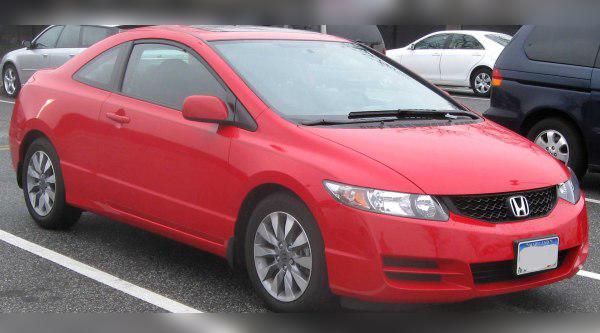
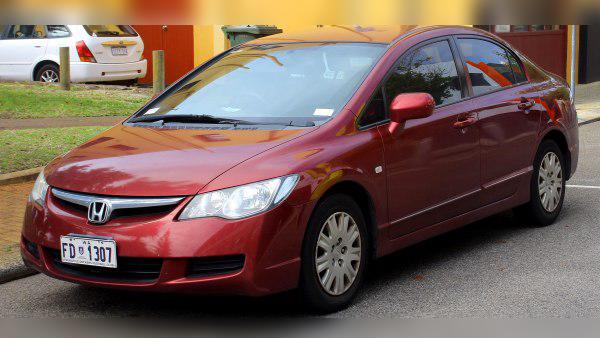
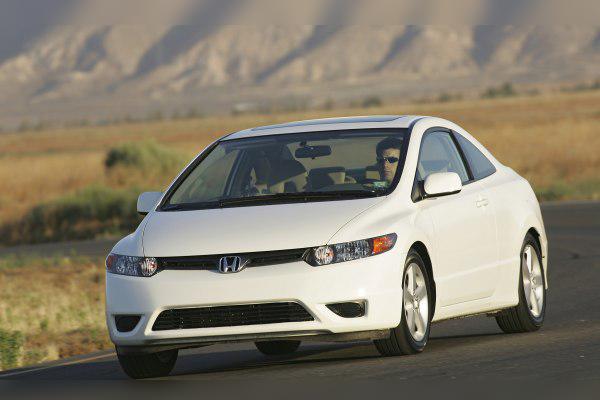
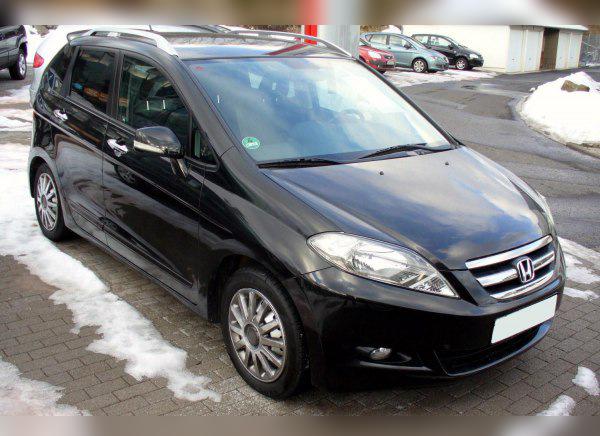
The R18A1 engine (and its European variation R18A2) is Honda’s answer to the mid‑2000s demand for a balance between power and emissions. It replaced the older D17 engines and brought one key feature – an i-VTEC system tuned for economy, not for racing. This engine is most commonly found in the eighth‑generation Civic (the popular “Spaceship” hatchback, but also in sedans and coupes) as well as in the family‑oriented FR-V.
Unlike the legendary K20 engines that scream up to 8000 rpm, the R18 is designed to be a quiet companion that rarely breaks down. However, its reputation was seriously shaken by a casting issue with the block in the first years of production, which we’ll cover in detail below.
Technical specifications
| Engine code | R18A1 (R18A2 variations) |
| Displacement | 1799 cc |
| Power | 103 kW (140 hp) @ 6300 rpm |
| Torque | 174 Nm @ 4300 rpm |
| Injection type | MPI (Multi-Point Injection) – indirect |
| Aspiration | Naturally aspirated |
| Cylinders/valves | 4 cylinders / 16 valves (SOHC) |
| Emissions standard | Euro 4 / Euro 5 (depending on model year) |
Reliability and maintenance
Chain or belt?
The R18A1 uses a timing chain (silent chain). This is great news for owners, as there is no regular, expensive timing belt replacement. The chain is designed to last the life of the engine, but in practice you can expect more than 200,000 to 250,000 km. If the oil is changed regularly, the chain rarely causes issues before this mileage. The first symptom of chain stretch is a metallic rattling noise on cold start or a “Check Engine” light due to camshaft/crankshaft desynchronisation.
Most common failure: Cracking engine block
The biggest and most serious issue with this engine affects models produced between 2006 and early 2009. Due to an error in the aluminium casting process, micro‑cracks could appear in the engine block, usually behind the exhaust manifold.
Symptoms: Loss of coolant without visible leaks under the car (while the engine is running, the coolant evaporates on the hot block), smell of antifreeze in the cabin, or engine overheating. In many countries Honda extended the warranty to 8 or 10 years for this defect, so many engines have already been replaced (“short block” replacement). Models produced after 2009 do not have this problem.
Other minor issues include:
- Auxiliary belt tensioner: The hydraulic tensioner can fail, causing an unpleasant knocking noise at idle.
- Engine mounts: The right‑hand hydraulic engine mount often fails, transmitting strong vibrations to the body.
- Vibrations at idle: Often caused by a dirty throttle body or EGR valve.
Service intervals and oil
Minor services are recommended every 10,000 to 12,000 km (or once a year). Although Honda allows up to 20,000 km, shortening the interval is better for the longevity of the chain and the VTEC system.
Oil capacity: The engine takes about 3.7 litres of oil (with filter).
Viscosity: Honda recommends 0W-20 for maximum fuel economy, but in European climates and for higher‑mileage engines, 5W-30 or 5W-40 (fully synthetic) are more common and perfectly acceptable choices.
Oil consumption: The R18A1 is not known as an “oil burner”. If the engine uses more than 0.5 litres per 10,000 km, this usually points to stuck oil control rings (often due to poor maintenance) or leaks at the seals. Up to 1 litre between services can be tolerated with more aggressive driving, but anything above that requires inspection.
Spark plugs and valves
This engine uses iridium spark plugs (NGK or Denso). Replacement interval is long, usually around 100,000 to 120,000 km. Don’t skimp on plugs – cheap copies can damage the ignition coils.
Important: This engine does not have hydraulic valve lifters. Valve clearances must be checked and adjusted manually. The recommendation is every 40,000 km, and definitely at 100,000 km. If you hear a “ticking” noise from the top of the engine, it’s time for an adjustment.
Specific parts (costs)
Flywheel and clutch
Good news: the R18A1 petrol with a manual gearbox generally does NOT have a dual‑mass flywheel. It uses a conventional solid flywheel. This significantly reduces clutch replacement costs compared to the diesel variants (2.2 i-CTDi). The clutch kit is relatively affordable (varies by market).
Fuel injection system
It uses conventional Multi‑Point Injection (MPI). The injectors are extremely durable and not as sensitive to fuel quality as those in diesels or direct‑injection petrol engines (GDI). Injector failures are very rare.
Turbo, DPF, EGR, AdBlue
- Turbo: None. This is a naturally aspirated engine. One less thing to worry about.
- DPF / AdBlue: None. It’s a petrol engine.
- EGR valve: Present. It can clog with soot, causing rough running or stalling at idle. Cleaning is usually sufficient and not expensive.
Fuel consumption and performance
Real‑world fuel consumption
This is one of the R18’s strongest points. Thanks to the “intelligent” VTEC system, which keeps the intake valves open longer at low loads (Atkinson‑like operating cycle), the engine saves fuel when cruising.
- City driving: Expect between 8.5 and 10.5 l/100 km, depending on traffic and how heavy your right foot is. The automatic uses about 1 litre more.
- Open road: This is where the engine shines. Consumption can drop to 6.0 to 7.0 l/100 km.
- Motorway (130 km/h): Fuel consumption is around 7.5 l/100 km.
Is the engine “lazy”?
It depends on what you expect. With 140 hp it’s not weak, but the 174 Nm of torque only comes in at a relatively high 4300 rpm.
In practice: In town, up to 3000 rpm, the car feels tame and sometimes sluggish for sudden overtakes (“lazy”). To really get this engine to pull the body (especially the heavier Sedan or FR-V), you need to rev it above 4000 rpm. That’s when the typical Honda character wakes up. It’s not a racer, but it’s perfectly adequate for normal and even dynamic driving if you know how to use the gearbox.
On the motorway at 130 km/h in 6th gear (manual), the engine spins at about 3200–3400 rpm (depending on gearing and model), which is acceptable for a petrol and not excessively noisy.
Extras and modifications
LPG conversion
Yes, this engine is suitable for LPG. Since it has indirect injection, the system is simple and cheaper to install.
Caution: Because the engine has no hydraulic lifters and LPG burns at a higher temperature, valve clearances must be checked every 20,000 to 30,000 km when running on gas. If you neglect this, the valves will recess into the seats and you’ll be facing an expensive cylinder head repair. Installing a valve lubrication system (“drip” system) is recommended, but it is not a substitute for proper adjustment.
Chip tuning (Stage 1)
Don’t waste your money. This is a naturally aspirated petrol engine. “Chipping” it will maybe give you 3 to 5 hp, which you won’t feel in real driving. You’re better off investing in quality tyres or fresh oil in the gearbox.
Gearbox
Available gearboxes
The R18A1 comes with:
- 6‑speed manual gearbox: Precise, short throw, genuinely enjoyable to use.
- 5‑speed conventional automatic (torque converter): Fitted to Sedan, Coupe and FR-V models.
- Note: There was also an “i-SHIFT” robotised gearbox in hatchback models, but it is less common in combination with the R18A1 spec for the US/Sedan markets. It’s best avoided.
Gearbox issues
Manual gearbox: Generally robust, but it has one weakness – the input shaft bearings. The symptom is a grinding or whining noise when the gearbox is in neutral, which disappears when you press the clutch. Repair requires removing the gearbox. Clutch replacement costs are moderate (no dual‑mass flywheel).
Automatic gearbox (5‑speed): This is a classic Honda automatic. It is very reliable if maintained properly. It’s not the fastest shifter, but it’s smooth.
Maintenance: The automatic transmission fluid (Honda ATF‑Z1 or the newer ATF‑DW1) should be changed every 60,000 km. Never use “universal” ATF oils – Honda gearboxes are sensitive to that.
Buying used and conclusion
What to check before buying?
- VIN and model year: If the car is from 2006–2009, check whether the engine (block) has already been replaced. Check the coolant level and look for white, dried coolant traces on the engine block behind the radiator.
- Cold start: Listen for chain rattling in the first 3 seconds after starting.
- Air conditioning operation: The A/C compressor relay is a common weak point on these models (8th gen Civic). Check whether the A/C “clicks” on and actually cools.
- Steering rack: Check for play or knocking when turning the wheel at a standstill (the electric power steering can cause issues).
Conclusion
The Honda Civic (or FR-V) with the 1.8 i-VTEC (R18A1) engine is one of the most rational choices on the used car market. Although it doesn’t have the “kick in the back” of diesels or turbo petrols, it offers relaxed driving, good space and, most importantly, predictable maintenance costs.
If you avoid (or properly check) the problematic series with block cracking and regularly adjust the valves, this engine will serve you for hundreds of thousands of kilometres with minimal investment. It’s ideal for drivers who just want to fill up and drive, without living in fear of a “Christmas tree” lighting up on the instrument cluster.
Was this content useful to you?
Your opinion helps us to improve the quality of the content.