R18A2 Engine
- Engine
- 1798 cm3
- Aspiration
- Naturally aspirated engine
- Fuel
- Petrol (Gasoline)
- Fuel injection system
- Multi-port manifold injection
- Power
- 140 hp @ 5700 rpm
- Torque
- 173 Nm @ 4300 rpm
- Cylinders
- 4
- Valves
- 16, 4 per cylinder
- Cylinders position
- Inline
- Valvetrain
- OHC
- Oil capacity
- 3.7 l
- Coolant
- 5.3 l
# Vehicles powered by this engine
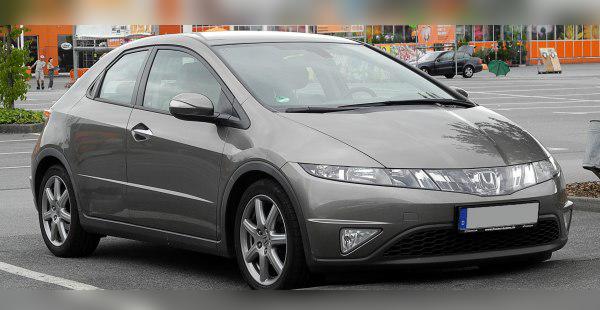
Honda 1.8 i-VTEC (R18A2): Experiences, issues, fuel consumption and buying tips
Key points in short (TL;DR)
- Timing: The engine uses a timing chain which is very reliable and rarely needs replacement before 200,000 km.
- Performance: A naturally aspirated engine that loves revs. Below 3,500 rpm it runs in an economical mode, above that it “wakes up”.
- Maintenance: There are no hydraulic lifters – valve clearance adjustment is mandatory every 40,000 km (especially important if you run LPG).
- Gearbox: The manual gearbox is fantastic. The i-SHIFT (robotized automated) gearbox is jerky, slow and more expensive to maintain – avoid it if you can.
- Fuel consumption: Surprisingly low for a 1.8-liter petrol, often below 7 l/100 km on the open road.
- Most common fault: Not in the engine itself, but around it – radio/AC display and creaking interior plastics, while mechanically it can suffer from oil leaks on the crankshaft seal (less common).
Contents
Introduction: Honda Civic “Spaceship” and the R18A2 engine
The R18A2 engine is the heart of the eighth-generation Honda Civic (hatchback version), a model that earned the nickname “Spaceship” or “UFO” thanks to its futuristic design. Unlike previous Honda engines that were focused purely on high performance, the R18 series was designed with an emphasis on efficiency and flexibility in everyday driving, while still keeping that recognizable Honda character when you press the accelerator to the floor.
This unit is one of the last of the “old school” – a naturally aspirated petrol engine without a turbo and with port fuel injection, which makes it very attractive to used-car buyers who want to avoid expensive repairs of modern turbo systems.
Technical specifications
| Specification | Data |
|---|---|
| Displacement | 1798 cc (1.8 L) |
| Power | 103 kW (140 hp) at 6300 rpm |
| Torque | 173 Nm at 4300 rpm |
| Engine code | R18A2 |
| Fuel type | Petrol (Eurosuper 95/98) |
| Injection system | PGM-FI (multi-point port injection) |
| Induction | Naturally aspirated |
| Camshaft drive | Chain |
Reliability, maintenance and common issues
In terms of reliability, the R18A2 is among the very best in the automotive industry. With regular maintenance, this is an engine that can easily cover more than 300,000 km without being opened.
Timing and major service
The engine uses a timing chain for valve timing, not a timing belt. This means there is no classic “major service” in the sense of replacing a belt at 100,000 km. The chain is designed to last as long as the engine, but in practice it is recommended to check it (listen for rattling) after 200,000 km. If the chain is quiet on a cold start, it is left alone. What does get replaced is the auxiliary (serpentine) belt that drives the alternator and AC, together with the tensioner, which can start to rattle.
Oil and oil consumption
The engine takes approximately 3.7 liters of oil (with filter). Honda recommends viscosity 0W-20 or 5W-30. It is very important to use high-quality oil because the i-VTEC system uses oil pressure to change the camshaft profile. As for oil consumption, the R18A2 is generally a “dry” engine. However, like any VTEC, if you often drive it at high revs (over 5,000 rpm), it can consume a small amount of oil (up to 0.5 liters over several thousand km), which is considered normal. If it uses a liter per 1,000 km, that points to a problem with the piston rings or valve stem seals, but this is rare and usually the result of poor maintenance.
Spark plugs and injectors
The spark plugs are iridium (NGK or Denso) and have a long replacement interval – they are usually changed every 100,000 to 120,000 km. Since this is a petrol engine, questions about diesel injectors do not apply in the same way. Petrol injectors on this engine are extremely durable and rarely cause problems, unless extremely poor-quality fuel is used.
Critical: Valve clearance
The most important maintenance item that many mechanics forget: This engine does not have hydraulic lifters. Valve clearance must be checked and adjusted mechanically every 40,000 km. If this is neglected, the valves can “sink” into the seats, leading to loss of compression and expensive cylinder head repairs. Symptoms of incorrect valve clearance are rough idle or ticking noises from the cylinder head.
Specific parts and costs
Hondas are often said to be expensive to maintain, but that is only partially true. Wear-and-tear parts are widely available and prices are average, while genuine body parts and specific electronic components are the ones that can be expensive (depending on the market).
- Dual-mass flywheel: Fortunately, the R18A2 engine combined with the manual gearbox most often uses a solid (single-mass) flywheel. This makes clutch kit replacement much cheaper compared to the diesel versions (2.2 i-CTDi), which have problematic dual-mass flywheels.
- Turbo and EGR: The engine does not have a turbocharger, which means one (expensive) worry less. It also does not have the kind of complex EGR valves prone to clogging like on diesels, although it does have an EGR system for recirculation which, on petrol engines, runs much cleaner and rarely causes issues.
- DPF and AdBlue: Being a petrol engine, it does not have a DPF filter and does not use AdBlue. This makes it ideal for city driving, where diesels suffer from clogged particulate filters.
Fuel consumption and performance
With the R18A2 engine, Honda achieved a small engineering feat. At low load (cruising, gentle driving), the engine keeps the intake valves open longer (Atkinson cycle), which reduces pumping losses and saves fuel.
Real-world fuel consumption:
- City driving: Expect between 8.5 and 10 l/100 km, depending on traffic and how heavy your right foot is. In winter it can go up to around 11 l/100 km.
- Open road: This is where the engine shines. At speeds of 80–90 km/h it is possible to bring consumption down to 5.5–6 l/100 km.
- Motorway: At 130 km/h in sixth gear, the engine spins at about 3,200–3,400 rpm (depending on the gearbox) and uses around 7–7.5 l/100 km.
Is the engine “lazy”? For the Civic’s body (around 1,200–1,300 kg), 140 hp is “just right”. However, due to its naturally aspirated nature and economy-oriented tuning, the engine feels sluggish below 3,500 rpm. For sudden overtakes, you need to shift down one or two gears and let the engine “sing” above 4,000 rpm, where it delivers full power.
Additional options and modifications
LPG conversion
Can the R18A2 handle LPG? Yes, but with caution. Honda engines have somewhat softer valve seats. Installing an LPG system is possible and can be cost-effective, but it requires a high-quality kit with precise mapping. Most important: If you run LPG, the valve clearance inspection interval must be shortened to 20,000 to 30,000 km. Ignoring this will almost certainly lead to cylinder head damage.
Remapping (Stage 1)
On naturally aspirated petrol engines, “remapping” is mostly a waste of money. A Stage 1 map on this engine might give you an extra 5 to 8 hp at best, which you will not really feel in everyday driving. It is better to invest that money in quality tyres and regular maintenance.
Gearbox: Manual vs. automatic (i-SHIFT)
This is where the biggest trap lies when buying this model.
1. Manual gearbox (6-speed): One of the best gearboxes in its class. The throws are short and precise (a “click-clack” feel), and the clutch is light. Failures are extremely rare. It is recommended to change the gearbox oil every 60,000–80,000 km (Honda MTF oil).
2. Automated gearbox (i-SHIFT): In pre-facelift hatchback versions (5D) you will often find the i-SHIFT gearbox. This is NOT a conventional automatic, but a robotized manual gearbox. It has a clutch, but it is controlled by a computer.
Problems: Jerky gear changes, slow response, indecisive behaviour in city driving. Failures include clutch actuators and software issues, which can be expensive to repair. Drivers used to conventional automatics will find this gearbox frustrating.
3. Conventional automatic (5-speed): Some later versions and sedans were fitted with a classic torque-converter automatic. It is more reliable and smoother than the i-SHIFT, but slightly increases fuel consumption.
Conclusion and buying advice
The Honda Civic 1.8 i-VTEC with the R18A2 engine is, mechanically speaking, one of the smartest used-car choices in its class. You get a spacious car, a futuristic design that still looks fresh, and an engine that rarely breaks down.
Before buying, make sure to check:
- Timing chain noise: Listen to a cold start – there should be no metallic rattling.
- Steering rack: A common issue on the eighth-gen Civic; check for play or noises when turning the wheel while stationary (repairs are not cheap).
- Type of gearbox: The warm recommendation is the manual gearbox. If it has to be an automatic, check whether it is an i-SHIFT and test it thoroughly before purchase to see if you can live with its specific behaviour.
- Air conditioning: The AC relay and compressor clutch coil are known to fail.
This engine is intended for drivers who want peace of mind in terms of reliability, do not cover huge mileages (where a diesel would be more cost-effective), and want a car that has a sporty spirit when it is revved high.
Was this content useful to you?
Your opinion helps us to improve the quality of the content.