L13A7 Engine
- Engine
- 1339 cm3
- Aspiration
- Naturally aspirated engine
- Fuel
- Petrol (Gasoline)
- Fuel injection system
- Multi-port manifold injection
- Power
- 83 hp @ 5700 rpm
- Torque
- 119 Nm @ 2800 rpm
- Cylinders
- 4
- Valves
- 8, 2 per cylinder
- Cylinders position
- Inline
- Valvetrain
- OHC
- Oil capacity
- 3.6 l
- Coolant
- 4 l
# Vehicles powered by this engine
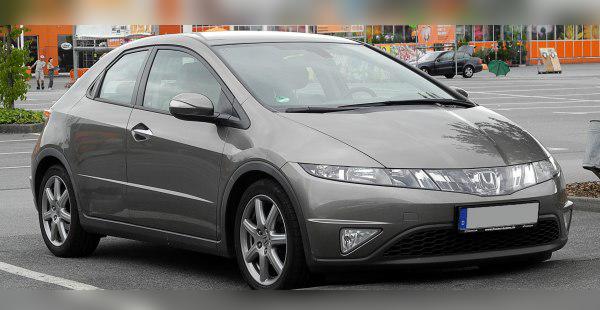
Honda 1.4 i-DSI (L13A7) – Experiences, problems, fuel consumption and used car buying tips
Key points (TL;DR)
- Exceptional reliability: This is one of the most reliable small petrol engines on the market; failures are rare if basic maintenance is done.
- 8 spark plugs: Although it’s a four-cylinder, this i-DSI engine has 8 spark plugs. Owners often forget to replace the rear row, which leads to ignition coil problems.
- Lack of power: With 83 hp in the heavy Civic “Spaceship” body, the engine is sluggish and requires high revs for overtaking.
- Timing chain: It has a timing chain that is very durable and does not require regular replacement.
- i-SHIFT gearbox: Avoid the robotized (semi-automatic) gearbox that was paired with this engine – it’s jerky and expensive to repair.
- No expensive parts: No dual-mass flywheel, turbo, DPF or costly injectors.
- Fuel consumption: Economical in the city, but uses more on the motorway due to short gear ratios.
Contents
- Introduction and applications
- Technical specifications
- Reliability and maintenance
- Specific parts and injection system
- Fuel consumption, performance and driving
- LPG and tuning
- Gearbox (Manual vs i-SHIFT)
- Buying used and conclusion
Introduction and applications
The engine designated L13A7, better known as the 1.4 i-DSI, is the entry-level option for the eighth-generation Honda Civic (popularly called the “Spaceship” or “UFO”). Unlike the more powerful 1.8 petrol or 2.2 diesel, this engine was designed purely with fuel economy and city driving in mind. Its specific feature is i-DSI technology (Intelligent Dual & Sequential Ignition), which means it uses two spark plugs per cylinder that ignite the mixture at different intervals for better combustion. Although on paper it looks underpowered for a C-segment car, this engine has a loyal base of drivers who value simplicity over performance.
Technical specifications
| Specification | Data |
|---|---|
| Engine code | L13A7 (i-DSI series) |
| Displacement | 1339 cc |
| Power | 61 kW / 83 hp (at 5700 rpm) |
| Torque | 119 Nm (at 2800 rpm) |
| Injection type | Multipoint (indirect injection) |
| Number of valves / spark plugs | 8 valves / 8 spark plugs (2 per cylinder) |
| Induction | Naturally aspirated (no turbo) |
Reliability and maintenance
Timing belt or chain?
The L13A7 engine uses a timing chain. Honda petrol engine chains from this era are extremely high quality. It’s not uncommon for them to last as long as the engine itself, i.e. over 300,000 km, provided the oil has been changed regularly. Chain rattling is very rare and usually indicates extremely high mileage or a neglected engine.
Most common failures and symptoms
This is one of the “most boring” engines for mechanics because it rarely breaks down. Still, there are some specifics:
- EGR valve: Due to city driving, the EGR valve can get clogged with soot. Symptoms are jerking during acceleration (usually between 1500 and 2000 rpm) and uneven idle. Cleaning often solves the problem, but sometimes replacement is needed.
- Ignition coils: Since the engine has 8 spark plugs, it also has 8 coils. If spark plugs are not replaced on time, the coils are overloaded and burn out. The symptom is the engine running on “three cylinders” and the “Check Engine” light coming on.
- Valve adjustment: Honda engines do not have hydraulic tappets. Mechanical valve adjustment is required every 40,000 to 60,000 km (or more often if running on LPG). If this is neglected, the engine becomes noisy (you hear a “tapping” sound) or loses compression.
Service intervals and oil
There is no major service in the classic sense (no timing belt replacement). The auxiliary (serpentine) belt and water pump are replaced as needed, usually around 100,000–120,000 km or when bearing noise appears. An oil service is recommended every 10,000 km to a maximum of 15,000 km or once a year.
Oil capacity: The engine takes about 3.6 to 3.8 litres of oil with the filter. The recommended viscosity is 0W-20 or 5W-30. Honda engines prefer high-quality, thinner oils.
Oil consumption: A healthy L13A7 engine should not consume noticeable amounts of oil between services. Consumption up to 0.5 litres per 10,000 km can be tolerated on older examples, but anything above that points to problems with piston rings or valve stem seals (often due to poor maintenance in the past).
Spark plugs – specifics and replacement
This is a key point. The engine has 8 spark plugs. The front row (4 plugs) is easily accessible, while the rear row (4 plugs) is tucked away. Irresponsible mechanics or owners often replace only the front 4, leaving the rear ones factory-fitted for years. This destroys the coils and increases fuel consumption. Spark plugs should be replaced every 40,000 km (standard nickel) or up to 100,000 km (iridium), but it’s recommended to check them more often.
Specific parts (costs)
Dual-mass flywheel and clutch
Good news: This engine does not have a dual-mass flywheel. It uses a conventional solid flywheel that doesn’t fail. The clutch kit is relatively cheap and simple to replace (price: not expensive, depends on the market).
Injection system and turbo
The engine is naturally aspirated, which means it does not have a turbocharger, intercooler or complex hoses that can crack. This drastically reduces potential repair costs. The injection system is standard MPI (multipoint) with petrol injectors that are extremely durable. Injector failures are almost unheard of, unless the fuel used is of extremely poor quality.
DPF, EGR and emissions
As a petrol engine, it does not have a DPF filter (a common diesel issue). It also does not have an AdBlue system. The only emissions-related components that require attention are the catalytic converter and the already mentioned EGR valve and its passages, which can get clogged with soot.
Fuel consumption and performance
Real-world fuel consumption and city driving
Despite the small displacement, this is not an ultra-economical engine in the heavy Civic body (around 1200 kg).
City driving: Expect between 7.0 and 8.5 l/100 km. In harsh winter conditions and on short trips it can go up to 9 litres.
Open road: Here it’s economical and can go down to about 5.5–6.0 l/100 km at speeds up to 90 km/h.
Is the engine “lazy”?
To be honest: Yes, the engine is sluggish. With 119 Nm of torque available only at 2800 rpm, 0–100 km/h takes about 14.6 seconds. In town it’s perfectly adequate and feels lively thanks to short lower gears, but as soon as you hit the open road and load the car (passengers + A/C), you’ll feel the lack of power. Overtaking requires dropping a gear and revving the engine close to the redline.
Behaviour on the motorway
This is not an ideal car for long motorway trips. The gearbox is geared short to compensate for the lack of power. This means that at 130 km/h the engine spins at a high 3500–3800 rpm (in 6th gear). The result is increased cabin noise and fuel consumption rising to around 7.5 l/100 km at that speed.
Additional options and modifications
LPG conversion
Is it suitable for LPG? Yes, but with caution. Honda engines have somewhat softer valve seats. If you install LPG, you should also install a valve lubrication system (“dripper” or additives). In addition, the valve clearance check (adjustment) interval must be shortened to every 20,000–30,000 km. If this is followed, the engine handles LPG very well.
Remapping (tuning)
On a naturally aspirated 1.4-litre petrol engine, a “Stage 1” remap is a waste of money. You might gain 3–4 hp, which is imperceptible in real driving. It’s better to invest that money in quality tyres or refreshing the suspension.
Gearbox
Manual gearbox (6-speed)
This engine is most commonly paired with a 6-speed manual gearbox. It’s one of the best gearboxes in its class – precise, with short throws and very reliable. Failures are extremely rare. The gearbox oil (Honda MTF) should be changed at around 60,000 km or 120,000 km (depending on use, but earlier is recommended).
Automatic gearbox (i-SHIFT) – WARNING!
This is where the biggest trap lies. With the 1.4 engine Honda did not offer a conventional automatic, but a robotized i-SHIFT gearbox. It’s essentially a manual gearbox with a robot operating the clutch instead of you.
- Symptoms of problems: Very slow gear changes, jerking when setting off, the gearbox getting “confused” on inclines, dropping into “N” mode.
- Failures: The clutch actuator often fails and repairs are expensive (costly, depends on the market). The clutch also wears out faster than on the manual version. Regular software calibration is required.
- Recommendation: Avoid the i-SHIFT version unless you are prepared for a specific driving style and potential costs.
Buying used and conclusion
When buying a Honda Civic with the L13A7 engine, pay attention to the following:
- Proof of spark plug replacement: Ask the owner when all 8 spark plugs were replaced. If they don’t know there are 8, that’s a red flag.
- Idle: The engine must idle perfectly smoothly when warm. Jerking indicates a dirty EGR, bad spark plugs or coils.
- Chain noise: Listen to a cold start. Any metal-on-metal rattling suggests a problem with the chain tensioner (rare, but possible).
- Gearbox: If it’s an i-SHIFT, test it on an uphill and when parking. There should be no harsh jerks.
Final verdict: The Honda Civic 1.4 i-DSI is a perfect choice for drivers who spend most of their time in the city, students, or anyone for whom reliability and low running costs are an absolute priority and who don’t care about performance. This is a car that will serve you faithfully for years with minimal investment, provided you avoid the i-SHIFT gearbox and regularly change the oil and spark plugs.
Was this content useful to you?
Your opinion helps us to improve the quality of the content.