L13Z1, L13Z2 Engine
- Engine
- 1339 cm3
- Aspiration
- Naturally aspirated engine
- Fuel
- Petrol (Gasoline)
- Fuel injection system
- Multi-port manifold injection
- Power
- 100 hp @ 6000 rpm
- Torque
- 127 Nm @ 4800 rpm
- Cylinders
- 4
- Valves
- 16, 4 per cylinder
- Cylinders position
- Inline
- Valvetrain
- OHC
- Oil capacity
- 3.6 l
- Coolant
- 4.42 l
# Vehicles powered by this engine
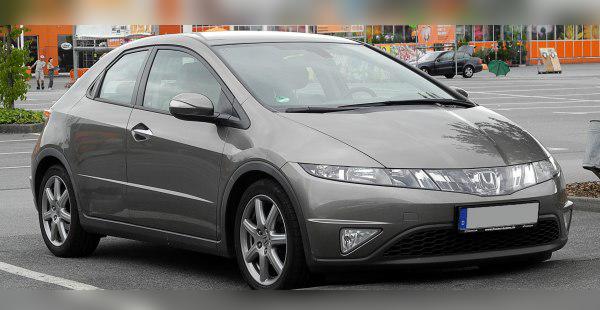

Honda 1.4 i-VTEC (L13Z1 / L13Z2) – Experiences, problems, fuel consumption and buying used
Key points (TL;DR)
- Timing: Uses a timing chain instead of a belt, which is extremely durable and rarely needs replacement.
- Reliability: One of the most reliable small petrol engines on the market. Serious failures are very rare with regular maintenance.
- Performance: With 100 hp and low torque, the engine is lazy at low revs, especially in the heavier Civic body. It needs high revs for overtaking.
- Gearbox: Manual gearboxes are excellent, but avoid the i-SHIFT (robotised) gearbox if you want comfortable driving and cheap maintenance.
- Maintenance: Requires occasional checking and adjustment of valve clearances (mechanical lifters), which many owners neglect.
- Fuel consumption: Very economical for a petrol engine, realistically around 6.5–7.5 l/100 km in mixed driving.
- Recommendation: An ideal engine for city driving and for drivers who value reliability over performance.
Contents
- Introduction: L13Z1 and L13Z2 engines
- Technical specifications
- Reliability and maintenance
- Specific parts and costs
- Fuel consumption and performance
- Additional options (LPG and tuning)
- Gearbox: Manual vs i-SHIFT
- Buying used and conclusion
Introduction: L13Z1 and L13Z2 engines
Honda’s L-series engines are legendary for their efficiency and compact size. The L13Z1 and L13Z2 variants (often labelled as 1.4 i-VTEC) represent the evolution of Honda’s small engines, bringing 16 valves and Honda’s famous i-VTEC variable valve timing system. These engines replaced the older i-DSI units (which had 8 valves and two spark plugs per cylinder).
They were primarily installed in the popular eighth-generation Honda Civic (“Spaceship”) and the Honda Jazz second and third generation. Although they are badged as 1.4, their actual displacement is closer to 1.3 litres (1339 cc), which is important to know for registration in some countries. This is an engine for people who want a “start and drive” experience with no headaches.
Technical specifications
| Specification | Value |
|---|---|
| Engine displacement | 1339 cc (1.3 / 1.4 L) |
| Power | 73 kW / 100 hp at 6000 rpm |
| Torque | 127 Nm at 4800 rpm |
| Engine codes | L13Z1, L13Z2 |
| Injection type | Multipoint (MPI) – indirect |
| Induction | Naturally aspirated (no turbo) |
| Number of cylinders / valves | 4 / 16 (i-VTEC) |
Reliability and maintenance
Chain or belt?
This engine uses a timing chain. Honda’s timing chains on petrol engines are known for their exceptional durability. Unlike some European competitors where the chain can fail at 100,000 km, here the chain often lasts as long as the engine itself. There is no scheduled replacement interval; it is replaced only if you hear rattling or if it stretches, which is very rare before 200,000–250,000 km with regular oil changes.
Most common issues
The L13Z series is almost indestructible, but there are a few minor things that can cause problems:
- Oil consumption: Although not widespread, high-mileage engines driven aggressively can start consuming oil due to stuck piston rings.
- EGR valve: Can get clogged with soot, causing rough idle or weaker throttle response. Cleaning usually solves the problem.
- Valve adjustment: This is not a failure, but a requirement. The engine does not have hydraulic lifters. Valve clearance must be checked and adjusted mechanically. If this is neglected (which is often the case), the engine becomes noisy (ticking) and valve damage can occur.
- Oil level sensor: Can sometimes give false readings on the instrument cluster.
Minor and major service
Minor service is recommended every 10,000 to 15,000 km (or once a year). A classic “major service” (timing belt replacement) does not exist. Instead, at around 100,000–120,000 km the auxiliary (serpentine) belt that drives the alternator and A/C is checked, and the spark plugs and coolant are replaced.
Oil: quantity and grade
The engine takes approximately 3.6 to 4.2 litres of oil (depending on whether the filter is changed; always buy a 4L or 5L can). Honda recommends thin oils for efficiency.
- Recommendation: 0W-20 (factory recommendation for i-VTEC for lower fuel consumption and better VTEC operation).
- Alternative: 5W-30 (often used in warmer climates or on higher-mileage engines).
Oil consumption: A healthy engine should not consume a noticeable amount of oil. Consumption up to 0.5 litres per 10,000 km is acceptable. If it uses more than 1L per service interval, it’s a sign to check the piston rings or valve stem seals.
Spark plugs and injectors
This engine uses 4 iridium spark plugs (one per cylinder, unlike older Jazz models which had 8). Replacement interval is long, usually at 100,000 to 120,000 km. The injectors are conventional, run at low pressure and are extremely durable. Injector failures are almost non-existent if decent-quality fuel is used.
Specific parts (costs)
Dual-mass flywheel and clutch
Good news for your wallet: L13Z engines DO NOT have a dual-mass flywheel. They use a conventional solid flywheel. A clutch kit (disc, pressure plate, release bearing) is relatively cheap to replace compared to diesels (depends on the market, but falls into the “affordable” category).
Turbo, DPF, EGR, AdBlue
- Turbo: None. This is a naturally aspirated engine, which means one (expensive) worry less.
- DPF filter: None. This is a petrol engine.
- EGR valve: Yes. As mentioned, it can get dirty but can be cleaned.
- AdBlue: None.
The absence of these complex systems makes this engine one of the cheapest to maintain in the long term.
Fuel consumption and performance
Real-world fuel consumption
Hondas are known for their efficiency. The 1.4 i-VTEC is frugal:
- City driving: Expect between 7.0 and 8.5 l/100 km. In heavy stop‑and‑go traffic it can reach 9 litres, but rarely more.
- Open road: Can go down to 5.0 to 6.0 l/100 km at speeds up to 90 km/h.
- Motorway (130 km/h): Around 6.5 to 7.5 l/100 km, depending on wind and load.
Is the engine “lazy”?
Yes, quite. With 127 Nm of torque available only at a high 4800 rpm, this engine requires frequent gear changes. In the Honda Jazz it is perfectly adequate because the car is light. However, in the Honda Civic (5D hatchback), which is heavier and has wide tyres, the engine can feel anaemic on climbs or when overtaking. You have to rev it over 4000 rpm for the i-VTEC system to really wake up and deliver power. If you like relaxed, low‑rev “torquey” driving, this engine will feel tiring.
Behaviour on the motorway
At 130 km/h the engine spins at quite high revs (usually around 3500–3800 rpm in 6th gear in the Civic, or even higher with the 5‑speed gearbox in the Jazz). This means noticeable engine noise in the cabin. It’s not an ideal long‑distance cruiser, but it can handle long trips without any problem, just with a bit more noise.
Additional options and modifications
LPG conversion
Petrol i-VTEC engines generally work well on LPG, but with one BIG WARNING: Honda engines have somewhat “softer” valve seats. If you install LPG, it is essential to:
- Install a valve lubrication system (“dripper” or electronic additive system).
- Check valve clearances more often (every 30,000–40,000 km instead of 100,000).
If this is respected, the engine can cover hundreds of thousands of kilometres on LPG with minimal fuel costs.
Remapping (Stage 1)
Don’t waste your money. A small naturally aspirated petrol engine cannot be effectively tuned via remap. The maximum gain would be 2–4 hp, which is imperceptible in real driving. Invest in quality tyres or proper servicing instead.
Gearbox: Manual and i-SHIFT
Manual gearbox
A 5‑speed (mainly Jazz) and 6‑speed (Civic) gearbox are used. Honda’s manual gearboxes are among the best in the world – precise, with short throws (a “click‑clack” feel). Failures are rare, but on high‑mileage cars check the gearbox bearings (a grinding noise that disappears when you press the clutch). Gearbox oil should be changed every 60,000–80,000 km (Honda MTF‑3 recommended).
i-SHIFT (robotised gearbox)
This is where you need to be careful. The i-SHIFT is NOT a conventional automatic. It is a manual gearbox with robots (actuators) that operate the clutch and change gears instead of you.
- Symptoms and issues: Driving is “jerky”, with pauses between gear changes (as if a novice driver were changing gears). Clutch actuators often fail and the software needs to be recalibrated.
- Maintenance: Clutch kit replacement is more expensive than on a normal manual, and actuator repair can be very expensive (depends on the market, but often not cost‑effective).
- Recommendation: Avoid i-SHIFT if you can. If you must consider one, test the car thoroughly – there should be no jolts when setting off or gearbox “confusion”. Later models received a conventional automatic (torque converter) or CVT, which are a better choice.
Buying used and conclusion
When buying a used car with the L13Z engine, pay attention to:
- Engine noise on cold start: Listen to the chain. It should not rattle for more than a couple of seconds.
- Valve noise: If you hear loud ticking when the engine is hot, valve adjustment is needed (service cost).
- Air conditioning: On Civics of this generation, the A/C relay or compressor clutch often fails.
- Gearbox (if it’s i-SHIFT): Does it pull away smoothly? If it jerks, skip that car.
Conclusion
The 1.4 i-VTEC (100 hp) engine is an engineering gem in terms of reliability and efficiency. It’s not a racer, and in the Civic you will often miss power on the open road, but it will serve you faithfully for years with minimal expenses. It is ideal for city drivers, students, or as a second family car. If you’re looking for excitement, look for the 1.8 i-VTEC. If you want peace of mind and cheap maintenance – this is the right choice.
Was this content useful to you?
Your opinion helps us to improve the quality of the content.