R16A1 Engine
- Engine
- 1595 cm3
- Aspiration
- Naturally aspirated engine
- Fuel
- Petrol (Gasoline)
- Fuel injection system
- Multi-port manifold injection
- Power
- 125 hp @ 6500 rpm
- Torque
- 152 Nm @ 4200 rpm
- Cylinders
- 4
- Valves
- 16, 4 per cylinder
- Cylinders position
- Inline
- Coolant
- 6.5 l
# Vehicles powered by this engine
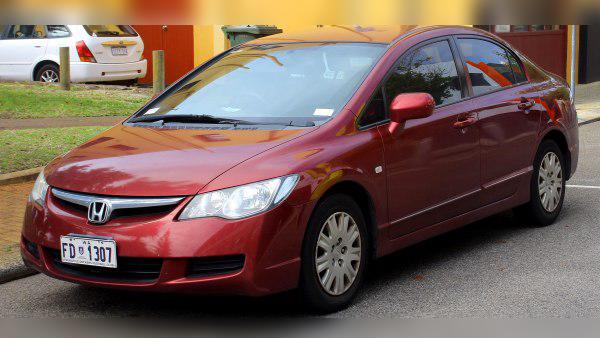
Honda R16A1 1.6 i-VTEC – experiences, issues, fuel consumption and used car buying guide
If you’re looking for “old-school” reliability packed into a relatively modern body, the Honda Civic with the R16A1 engine is probably on your radar. This engine is specific because, unlike the more popular 1.8 i-VTEC (R18), it was intended for markets with strict tax policies tied to engine displacement. Although smaller, it shares the same architecture and durability philosophy. In the text below, as someone who has spent years both under the hood and behind the keyboard, I dissect this powerplant down to the smallest detail.
Key points (TL;DR)
- Timing chain: Uses a reliable chain that rarely causes problems.
- Atmospheric simplicity: No turbo, no direct injection, no dual-mass flywheel (on manuals).
- Rev-happy character: Feels “dead” at low revs, delivers power only above 4000 rpm.
- Great on LPG: Handles LPG installations very well, but requires regular valve clearance checks.
- Fuel consumption: Efficient on the highway, but in the city, especially with an automatic, it likes to drink.
- Recommendation: One of the most reliable petrol engines in its class if maintained regularly.
Contents
- Technical specifications
- Reliability and maintenance
- Specific parts and costs
- Fuel consumption and performance
- Additional options (LPG and tuning)
- Gearbox
- Buying used and conclusion
Technical specifications
| Specification | Value |
|---|---|
| Engine code | R16A1 |
| Displacement | 1595 cc (1.6 L) |
| Power | 92 kW (125 hp) at 6500 rpm |
| Torque | 152 Nm at 4300 rpm |
| Fuel type | Petrol (Gasoline) |
| Injection system | MPI (Multi-Point Injection) |
| Induction | Naturally aspirated |
| Configuration | Inline 4-cylinder, SOHC, 16 valves |
Reliability and maintenance
Honda’s R-series engines (which include the R16 and R18) are considered some of the most mechanically robust designs of the last 20 years. Still, maintenance is key.
Timing system
This engine uses a timing chain, not a belt. Unlike some European competitors from that period, Honda’s chain is extremely durable. It is not scheduled for replacement at a fixed interval. In practice, the chain often lasts as long as the engine itself (over 300,000 km), provided that the oil is changed on time. If you hear a metallic rattling sound on cold start, that’s a sign that the chain has stretched or that the hydraulic tensioner is giving up, but this is rare before 200,000 km.
Most common issues
The R16A1 doesn’t have many systemic flaws, but pay attention to the following:
- Engine mounts: The hydraulic mount (especially the right one, on the passenger side) is prone to failure. The symptom is strong vibrations in the cabin at idle. This is not a cheap part if you buy OEM, and aftermarket mounts often don’t last long.
- Auxiliary belt tensioner: The bearing can start to whine or the spring can weaken, causing unpleasant squealing noises.
- Valve clearance: This is not a fault, but a characteristic. The engine does not have hydraulic lifters. Valve clearance must be checked and adjusted mechanically every 40,000 km (more often if you run LPG). If ignored, the valves can burn.
Service intervals and oil
A classic “major service” (timing belt replacement) does not exist. The auxiliary (serpentine) belt and related rollers are replaced as needed, usually around 100,000 km or when cracks/noises appear. The water pump is replaced when it starts leaking or develops play.
The engine takes approximately 3.7 liters of oil (with filter). Honda recommends thin oils for efficiency and proper VTEC operation. It’s best to use full synthetic 0W-20 or 5W-30. Using thicker oils (10W-40) can lead to poorer chain lubrication and improper VTEC operation.
Oil consumption: A healthy R16A1 should not consume a significant amount of oil. It is normal to top up to 0.5 liters per 10,000 km if driven aggressively. If it consumes more than 1 liter per service interval, check the VTEC solenoid gasket (a common leak point) or the PCV valve before suspecting piston rings.
Spark plugs and injectors
This engine uses iridium spark plugs. Their replacement interval is long, usually around 100,000 to 120,000 km. Don’t cheap out and buy regular nickel plugs, because although access to the plugs is easy, the electronics are calibrated for iridium. The injectors are conventional petrol injectors and extremely durable; they rarely need cleaning before very high mileage.
Specific parts (costs)
When it comes to running costs, the Honda Civic with this engine falls into the “golden middle”. Parts are not as cheap as for some European mass-market cars, but they fail less often.
- Dual-mass flywheel: Good news – versions with a manual gearbox do not have a dual-mass flywheel. They use a classic solid flywheel, which makes clutch replacement significantly cheaper. Automatics use a torque converter.
- Fuel injection system: It uses indirect MPI injection. This is a cheap and reliable system. The injectors are not as sensitive to poor fuel quality as with direct injection.
- Turbo and EGR: The engine does not have a turbocharger, which means one (expensive) worry less. It does have an EGR valve that can get clogged with soot over time (symptoms: rough idle, jerking, check engine light), but it can often be successfully cleaned without replacement.
- DPF and AdBlue: Being a petrol engine, it has no DPF filter and does not use AdBlue fluid. It has a catalytic converter that is long-lasting, unless the engine burns oil or is driven with a poor fuel mixture.
Fuel consumption and performance
This is where expectations need to be managed. The R16A1 is an “old-school” engine – it makes its power high in the rev range.
City driving: Real-world city consumption is between 8.5 and 10.5 l/100 km. If you have an automatic gearbox and a heavy right foot in dense traffic, count on up to 11 liters. It’s not a fuel economy champion in stop-and-go conditions.
Is the engine “lazy”? By today’s turbo standards – yes. The 152 Nm of torque only arrives at 4300 rpm. This means that at low revs (up to 3000 rpm) the car feels sluggish, especially in the heavier Civic Sedan body. To overtake or accelerate uphill, you have to downshift and rev the engine. That’s when it wakes up and shows its 125 hp.
Highway: This is a pleasant cruiser. At 130 km/h, the engine spins at about 3000–3200 rpm (depending on the gearbox; the 5-speed automatic has longer gearing than the manual). Fuel consumption on the open road drops to a reasonable 6.5–7.5 l/100 km. Engine noise becomes more noticeable above 140 km/h due to the car’s modest sound insulation.
Additional options and modifications
LPG installation
The R16A1 is an excellent candidate for LPG. Since it has indirect injection and a metal intake manifold, the system is simple to install and calibrate. But be careful: Honda engines have somewhat “softer” valve seats. If you run LPG, you must check valve clearance every 20,000–30,000 km. Installing a valve lubrication system (“valve saver”) is also recommended for peace of mind, although regular valve adjustment solves 90% of problems.
Chip tuning (Stage 1)
Don’t waste your money. Naturally aspirated petrol engines respond poorly to chip tuning. The gain would be in the range of 3 to 5 hp, which is imperceptible in real driving. You’re better off investing that money in quality tires or a fresh service.
Gearbox
With the R16A1 in the 8th-gen Civic Sedan, you most commonly get two options:
- 5-speed manual gearbox: Honda’s manual gearboxes are legendary for their precision (that “click-clack” feel). They are very reliable. Failures are rare, and the clutch kit (without a dual-mass flywheel) is not expensive (depends on the market, but generally affordable). Gearbox oil (MTF) should be changed every 60,000–80,000 km.
- 5-speed automatic gearbox: This is a conventional automatic with a torque converter, not the robotized i-Shift (which was fitted to the hatchback). This gearbox is very reliable and comfortable, but slower than modern transmissions. Its biggest enemy is old oil. Regular oil changes are mandatory every 40,000 to 60,000 km. Use only Honda ATF-Z1 or the newer ATF DW-1 fluid. If neglected, it can start slipping or shifting harshly.
Buying used and conclusion
Before buying a Civic with this engine, do the following checks:
- Cold start: Listen for chain rattling in the first 3–5 seconds.
- Vibrations: Sit in the car, turn on the A/C and put it in D (if it’s an automatic) while holding the brake. If the whole car shakes, the engine mounts need replacing.
- Steering rack: A common issue on Civics of this generation. Listen for knocking over bumps or “clicking” when turning the steering wheel at a standstill.
- Service history: Ask for proof of valve clearance adjustment.
Conclusion: The Honda Civic 1.6 i-VTEC is a car for the rational buyer. It’s not a sports car, it’s not the quietest in its class, and the interior can look a bit spaceship-weird. However, if your priority is to turn the key in the morning and reach your destination without warning lights, with minimal unexpected maintenance costs, this is the engine for you. It is especially recommendable in combination with the automatic gearbox for relaxed city driving.
Was this content useful to you?
Your opinion helps us to improve the quality of the content.