D17A Engine
- Engine
- 1668 cm3
- Aspiration
- Naturally aspirated engine
- Fuel
- Petrol (Gasoline)
- Fuel injection system
- Multi-port manifold injection
- Power
- 125 hp @ 6300 rpm
- Torque
- 154 Nm @ 4800 rpm
- Cylinders
- 4
- Valves
- 16, 4 per cylinder
- Cylinders position
- Inline
- Valvetrain
- SOHC
- Oil capacity
- 3.5 l
- Coolant
- 3.9 l
# Vehicles powered by this engine
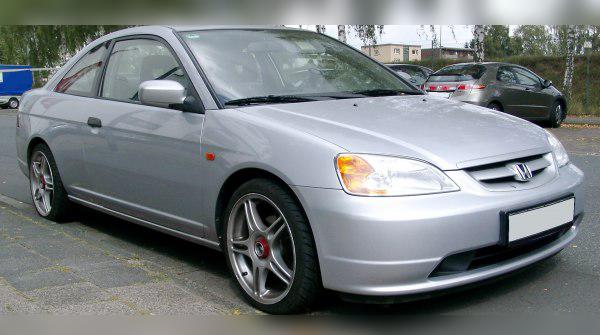
Honda D17A (1.7i) 125 HP: Experiences, issues, fuel consumption and buying tips
Key points in short (TL;DR)
- Reliability: Generally a very reliable old-school engine, but sensitive to overheating.
- Biggest weakness: The head gasket is a weak point, especially if the cooling system is neglected.
- Gearbox: Automatic gearboxes from this era are prone to failure; manuals are “indestructible”.
- Maintenance: Cheap and simple. No dual-mass flywheel and no turbo.
- Performance: Lacks low-end torque. To make it go, you have to rev it (VTEC effect).
- LPG: Handles LPG very well, with mandatory regular valve adjustment.
- Recommendation: Ideal for drivers who want an attractive coupe with low maintenance costs, provided they find a car with a manual gearbox.
Contents
- Introduction and engine applications
- Technical specifications
- Reliability and maintenance
- Specific parts and injection system
- Fuel consumption and performance
- Additional options and LPG
- Gearbox: Manual vs Automatic
- Buying used and conclusion
Introduction and engine applications
The Honda D17A engine represents the final evolutionary step of Honda’s legendary D-series engines. It was primarily installed in the seventh-generation (VII) Honda Civic, most commonly in the Coupe (EM2) variant which was popular in America, but is also often seen on European roads as an imported model. With a displacement of 1.7 liters and an output of 125 HP (in the VTEC version), this engine was designed to offer a compromise between fuel economy and decent performance for its time. Unlike the “angry” Type-R machines, the D17A is a “workhorse” – simple, relatively light and engineered to last, provided certain maintenance rules are followed.
Technical specifications
| Specification | Value |
|---|---|
| Engine displacement | 1668 cc (1.7 L) |
| Power | 92 kW (125 HP) @ 6300 rpm |
| Torque | 154 Nm @ 4800 rpm |
| Engine codes | D17A2 (most common VTEC), D17A8, D17A9 (depending on market) |
| Configuration | Inline 4-cylinder, SOHC (single camshaft), 16 valves |
| Injection type | Multipoint (MPI) |
| Aspiration | Naturally aspirated |
| VTEC system | Yes (on intake valves, optimized for efficiency and high-rpm power) |
Reliability and maintenance
Does this engine have a timing belt or chain?
The D17A engine uses a timing belt. This is a critical item. The recommendation is to replace the belt every 100,000 km or every 5 to 7 years, whichever comes first. This is an interference engine, which means that if the belt snaps, the pistons will hit the valves and cause severe engine damage. When replacing the belt, you must also replace the tensioner and the water pump, which is driven by the same system.
What are the most common issues with this engine?
Although Honda is a synonym for reliability, the D17A has a few specific weak points:
- Head gasket: This is the most well-known problem of the D17 series. Due to overheating (even mild) or age, the gasket fails. Symptoms include loss of coolant without visible leaks, overheating in traffic jams, or exhaust gases present in the cooling system (bubbles in the expansion tank).
- Camshaft/crankshaft position sensor (TDC/Crank Sensor): Failure of these sensors can cause the car to suddenly stall while driving or refuse to start until it cools down.
- Cracked exhaust manifold: The exhaust manifold can crack, which sounds like a “ticking” noise when the engine is cold, and exhaust fumes can enter the cabin.
- Oil leaks: Most commonly from the crankshaft seal, VTEC solenoid or valve cover gasket.
At what mileage should the major service be done?
As mentioned, the major service is done at around 100,000 km. However, if you are buying a used Civic with this engine and you do not have reliable proof of the service, do it immediately. The cost of a major service is negligible compared to the damage from a snapped timing belt.
How many liters of oil does this engine take and which viscosity is recommended?
The sump holds relatively little oil, about 3.2 to 3.7 liters (with filter). The recommended viscosity is 5W-30 or 10W-40 semi-synthetic, depending on climate and mileage. Because the system contains a small amount of oil, it is very important to check the level regularly, as low oil accelerates overheating and wear.
Does it consume oil between services and what amount is considered normal?
Honda VTEC engines are known to “drink” a bit of oil, especially if often driven at high rpm (VTEC zone). Consumption of up to 0.5 liters per 1,000 km is tolerated by factory standards, but in practice a healthy engine should not consume more than 1 liter per 10,000 km (from service to service). If it consumes more, the usual culprits are valve stem seals or stuck oil control rings.
At what mileage should the spark plugs be replaced?
If you use standard nickel spark plugs, they should be replaced every 20,000 to 30,000 km (i.e. every second minor service). If you install iridium spark plugs (often recommended by Honda), the replacement interval extends to 100,000 km.
Specific parts (costs)
Does the engine have a dual-mass flywheel?
No. The D17A engine in the Honda Civic VII comes with a classic solid flywheel. This is great news for owners, because replacing the clutch kit is much cheaper than on modern diesels or turbo petrol engines.
What type of injection system does it have and are the injectors problematic?
It uses a standard MPI (Multi-Point Injection) system. This system is very robust. Petrol injectors on this engine rarely fail. They can get dirty after many years of running on poor-quality fuel, but ultrasonic cleaning usually solves the problem at minimal cost.
Does this engine have a turbocharger?
No, this is a naturally aspirated engine. There is no turbocharger, no intercooler, and no expensive turbo-related valves. That means linear power delivery and one less (expensive) component that can fail. Engine life is longer because it is subjected to less stress.
Does this model have a DPF filter or EGR valve?
It does not have a DPF filter (that’s reserved for diesels). However, it does have an EGR valve (exhaust gas recirculation valve). On D17 engines, the EGR valve can clog up with soot, causing rough idle or jerking under acceleration. Cleaning is possible and not expensive (depends on the market). A catalytic converter is present and can fail if the engine burns oil.
Does this engine use AdBlue?
No, this is an older-generation petrol engine and does not use any additives such as AdBlue.
Fuel consumption and performance
What is the real-world fuel consumption in city driving?
The Civic Coupe with this engine is not particularly heavy, but city driving takes its toll. You can expect consumption of 8.5 to 10.5 liters per 100 km in the city, depending on traffic and how heavy your right foot is. The automatic gearbox increases this figure by about 1 to 1.5 liters.
Is this engine “lazy” for the weight of the body?
The answer is: Yes and No. At low rpm (below 3000 rpm), the engine can feel lazy because it has modest torque (154 Nm). For sudden overtakes or climbs, you need to drop one or two gears. However, once it passes 4500 rpm and VTEC kicks in, the engine becomes lively and happily revs to the redline. For relaxed driving it is perfectly adequate, but for sporty ambitions it demands high revs.
What is the engine like on the motorway and at what rpm does it cruise at 130 km/h?
On the motorway the engine is stable, but can be noisy due to the modest cabin sound insulation of that era. At 130 km/h in fifth gear (manual gearbox), the engine spins at around 3800 to 4000 rpm. This means it is always ready to accelerate without downshifting, but it affects fuel consumption and noise. It is not an ideal long-distance cruiser, but it is perfectly capable.
Additional options and modifications
Is this engine suitable for LPG conversion?
Yes, it is extremely suitable. The D17A handles LPG systems very well. The only, but VERY IMPORTANT note: This engine does not have hydraulic lifters. This means that valve clearance must be adjusted mechanically. While on petrol this is done every 40,000 km, on LPG it is mandatory to check and adjust the valves every 20,000 to 25,000 km. If this is neglected, the valves can “burn”, leading to an expensive cylinder head repair.
How far can this engine be safely tuned (Stage 1)?
On small-displacement naturally aspirated petrol engines, remapping (chip tuning) is a waste of money. You might gain 3 to 5 HP, which you will not feel in real driving. It is better to invest the money in quality tires, brake servicing or refreshing the suspension. Serious power gains require a turbo conversion (which is expensive and risky for this engine block) or a complete engine swap (K20 swap), which is a popular modification for this chassis.
Gearbox
Which manual and automatic gearboxes are fitted?
The D17A comes with either a 5-speed manual gearbox or a 4-speed conventional automatic gearbox.
What are the most common issues with the manual and automatic gearboxes?
- Manual: Very reliable. The most common issue is the input shaft bearing. The symptom is a noise (grinding/whining) when the gearbox is in neutral with the clutch released, and the sound disappears when you press the clutch. The repair is not expensive, but requires removing the gearbox.
- Automatic: This is a weak point of this Civic generation (2001–2005). Automatic gearboxes are prone to overheating and failure, especially if the oil has not been changed regularly. Symptoms include slipping during gear changes, harsh shifts or inability to engage gear. Rebuild is very expensive (depends on the market, but often exceeds the value of the car).
What is the cost of clutch replacement?
Since there is no dual-mass flywheel, the clutch kit (pressure plate, disc, release bearing) falls into the category of affordable parts. Parts prices are in the lower mid-range.
At what mileage should the gearbox be serviced and the oil changed?
- Manual: It is recommended to change the oil (Honda MTF) every 60,000 km. This significantly extends the life of the bearings and synchros.
- Automatic: Mandatory oil change every 40,000 to 60,000 km. Use only oil that meets the Honda ATF-Z1 or newer ATF-DW1 standard. Do not use universal ATF oils without this specification.
Buying used and conclusion
Before buying a Honda Civic with the D17A engine, do the following checks:
- Head gasket test: Warm up the engine, open the bonnet and observe the coolant expansion tank. If you see bubbles while the engine is running, or if the coolant smells like exhaust gases – walk away from that car.
- Gearbox noise: On a manual, listen for noise in neutral (input shaft bearing). On an automatic, check whether it shifts smoothly under full throttle.
- Oil check: Pull out the dipstick. If the oil is at minimum or not showing, the owner has not been taking care of oil consumption.
Conclusion: The seventh-generation Honda Civic Coupe with the D17A engine is a car that still looks attractive and offers cheap maintenance. The engine is durable if you keep an eye on temperature. It is aimed at younger drivers or enthusiasts who want a reliable everyday coupe and do not want complicated modern diesels. If you find a car with a manual gearbox and a healthy cooling system, it is a purchase that pays off.
Was this content useful to you?
Your opinion helps us to improve the quality of the content.