D17A Engine
- Engine
- 1668 cm3
- Aspiration
- Naturally aspirated engine
- Fuel
- Petrol (Gasoline)
- Fuel injection system
- Multi-port manifold injection
- Power
- 120 hp @ 6200 rpm
- Torque
- 152 Nm @ 4500 rpm
- Cylinders
- 4
- Valves
- 16, 4 per cylinder
- Cylinders position
- Inline
- Oil capacity
- 3.5 l
- Coolant
- 3.9 l
# Vehicles powered by this engine
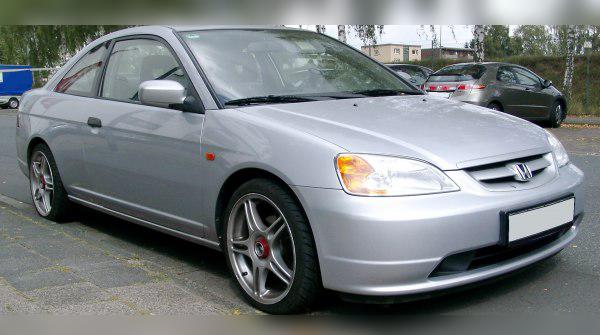
Honda D17A (1.7 16v) – Experiences, Problems, Fuel Consumption and Maintenance
Key points in short (TL;DR)
- Achilles’ heel: Head gasket. This engine is sensitive to overheating and coolant leaks.
- Timing drive: Uses a timing belt that must be replaced regularly. If it snaps, it causes major engine damage.
- Gearboxes: Manual gearboxes are reliable (with minor bearing issues), while automatic gearboxes from this era are problematic and prone to failure.
- Fuel consumption: Very economical for its displacement, especially on the open road.
- Maintenance: Generally cheap to maintain (depends on the market), simple mechanics, but it requires valve adjustment.
- Recommendation: An excellent choice for drivers who want a simple petrol engine, provided that the cooling system works perfectly.
Contents
- Technical Specifications
- Reliability and Maintenance
- Specific Parts and Costs
- Fuel Consumption and Performance
- Additional Options and LPG
- Gearbox: Manual vs Automatic
- Buying Used and Conclusion
The Honda D17A engine represents the final evolutionary step of Honda’s legendary D-series engines. It is most commonly found in Honda Civic VII Coupe models (chassis code EM2). With a displacement of 1.7 liters, this engine was designed to provide a bit more torque than the standard 1.4 and 1.6 engines that were common in the hatchback versions. Although it carries the VTEC badge (in the 120 hp version), it is important to note that this is a SOHC (single cam) VTEC system that is tuned more for fuel economy and flexibility than for racing performance. For Honda enthusiasts, this is an engine that offers a compromise between low fuel consumption and decent dynamics, but it also comes with certain specific weaknesses you should know about before buying.
Technical Specifications
| Specification | Data |
|---|---|
| Engine code | D17A (D17A2, D17A8, D17A9 – depending on the market) |
| Displacement | 1668 cc |
| Power | 88 kW (120 hp) at 6200 rpm |
| Torque | 152 Nm at 4800 rpm |
| Configuration | Inline 4-cylinder, SOHC VTEC, 16 valves |
| Injection type | MPI (Multi-Point Injection) |
| Aspiration | Naturally aspirated |
Reliability and Maintenance
Timing system: Belt or Chain?
The D17A engine uses a timing belt to drive the camshaft. This is crucial information because the engine is of the interference type – meaning that if the belt snaps, the pistons will hit the valves and cause catastrophic damage (bent valves, damaged pistons).
The major service is recommended every 100,000 km or every 5 to 7 years, whichever comes first. When replacing the belt, the tensioner and water pump must also be replaced, because the pump is driven by the timing belt. If the pump seizes, it will tear the belt.
Most common failures and symptoms
The biggest enemy of this engine is the head gasket. D17 engines are known for the head gasket failing somewhere between 150,000 and 200,000 km. The cause is often thermal stress or a clogged radiator.
Symptoms: Loss of coolant without visible leaks, engine overheating in traffic jams or under higher load, and the appearance of air bubbles in the expansion tank (coolant reservoir). If you notice that the system is building up excessive pressure in the radiator hoses, that is a sign the head gasket has blown.
Another common issue is with the camshaft position sensor (CMP) and the crankshaft sensor. The symptom is that the engine suddenly stalls while driving or is hard to start when hot.
Oil: Capacity and Consumption
The oil pan holds approximately 3.5 to 3.7 liters of oil (with filter). Honda recommends 5W-30 for this engine, or 5W-40 for warmer climates.
Does it burn oil? A healthy D17A should not consume a significant amount of oil. However, on examples with more than 200,000 km, oil consumption can occur due to hardened valve stem seals or stuck oil control rings. Consumption of up to 0.5 liters per 1,000 km is often tolerated on older engines, but anything above that requires intervention (usually a cylinder head refresh).
Spark plugs
Since this is a petrol engine, spark plugs are a consumable item. If you use standard (copper/nickel) spark plugs, they should be replaced every 30,000 – 40,000 km. If you install iridium plugs (recommended for smoother running), the replacement interval is up to 100,000 km.
Specific Parts (Costs)
Flywheel and Clutch
Good news: This engine DOES NOT have a dual-mass flywheel. It uses a classic solid flywheel. This means that clutch kit replacement is significantly cheaper compared to modern diesels or turbo petrol engines. The cost of a clutch kit (pressure plate, disc, release bearing) is affordable (Not expensive – depends on the market).
Fuel injection system
It uses a classic MPI system with electronic injectors. The injectors are extremely durable and reliable. They rarely fail, and if a problem does occur, ultrasonic cleaning is usually sufficient. They are not expensive, either used or new.
Turbo, DPF, EGR, AdBlue
- Turbo: None. The engine is naturally aspirated, which means fewer parts that can fail.
- DPF / AdBlue: None. This is an older-design petrol engine.
- EGR valve: It does have an EGR valve. It is common for the EGR passages in the intake manifold to clog with soot, which triggers the “Check Engine” light and causes jerking at light throttle. Cleaning the passages usually solves the problem and is not expensive.
Fuel Consumption and Performance
Real-world fuel consumption
The D17A is an economical engine, especially in the light Civic Coupe body.
City driving: Expect between 8.5 and 10 liters/100 km, depending on traffic and how heavy your right foot is. In winter this can go up to 11 l/100 km.
Open road: This is where the engine shines and can go down to 6.0 to 7.0 liters/100 km with moderate driving.
Is the engine “sluggish”?
With 120 hp and 152 Nm, the engine is not “sluggish”, but it does require revs. This is a classic Honda. Below 3,500 rpm the engine is tame and feels average. To feel the power, you need to rev it above 4,000 rpm. For everyday driving it is perfectly adequate, but overtaking on uphill sections requires shifting down to a lower gear.
Behavior on the motorway
Due to the 5-speed gearbox with relatively short ratios, at 130 km/h the engine spins at a fairly high 3,800 to 4,000 rpm. This means there is noticeable engine noise in the cabin at those speeds. It really lacks a sixth gear for quieter cruising.
Additional Options and Modifications
Is it suitable for LPG?
Yes, but with great caution. Honda engines have relatively “soft” valve seats. If you install LPG, you must have a valve lubrication system (to cool the valves) or, even more importantly, perform regular valve clearance checks.
Important: This engine does not have hydraulic lifters. The valves are adjusted mechanically (screw and locknut). If you run it on LPG, check the valve clearances every 20,000 – 30,000 km, otherwise the valves will “sink” and the cylinder head will be damaged.
Remapping (Stage 1)
On naturally aspirated petrol engines of this displacement, remapping makes almost no sense. You might gain 3 to 5 hp and a barely noticeable improvement in throttle response. It is better to invest the money in quality tires and regular maintenance.
Gearbox
Types of gearboxes
With the D17A you get two options: 1. 5-speed manual gearbox. 2. 4-speed automatic gearbox.
Gearbox failures
Manual gearbox: Very robust and precise. The most common issue is the input shaft bearing. The symptom is a rustling or grinding noise while the gearbox is in neutral, which disappears when you press the clutch pedal. Replacement requires removing and opening the gearbox.
Automatic gearbox: Avoid if possible. Honda automatics from this generation (early 2000s) are notorious for failures. Overheating, clogged internal filters and slipping gears are common. Rebuilds are very expensive (Very expensive – depends on the market) and often exceed the value of the vehicle.
The oil in the manual gearbox (Honda MTF) should be changed every 60,000 – 80,000 km. For automatics, replacement is mandatory every 40,000 – 60,000 km, but even that is no guarantee of long life.
Buying Used and Conclusion
Before buying a Honda Civic with the D17A engine, do the following checks:
- Cylinder head test: Open the radiator cap (while the engine is COLD). If you see traces of oil (“mayonnaise”) or if the coolant smells like exhaust gases, walk away. Warm up the engine and check whether the hoses become rock hard.
- Noise: Listen for rustling from the gearbox in neutral (input shaft bearing).
- Idle speed: If the idle speed “hunts” up and down, the IACV valve is probably dirty or there is a vacuum leak.
Conclusion: The Honda D17A is an old-school engine. It is not a racer, but it is extremely rewarding if you take care of it. Its simplicity means there are no expensive turbocharger or injector failures. However, the potential buyer must be aware of the head gasket risk and must regularly check the coolant level. It is ideal for drivers who want a reliable, good-looking coupe and are willing to pay a bit more for registration (because of the 1.7L displacement) in exchange for Japanese mechanical reliability (provided the gearbox is manual).
Was this content useful to you?
Your opinion helps us to improve the quality of the content.