K20A3 Engine
- Engine
- 1998 cm3
- Aspiration
- Naturally aspirated engine
- Fuel
- Petrol (Gasoline)
- Fuel injection system
- Multi-port manifold injection
- Power
- 160 hp @ 6500 rpm
- Torque
- 191 Nm @ 4000 rpm
- Cylinders
- 4
- Valves
- 16, 4 per cylinder
- Cylinders position
- Inline
- Valvetrain
- DOHC i-VTEC
- Oil capacity
- 4.2 l
- Coolant
- 6.4 l
# Vehicles powered by this engine
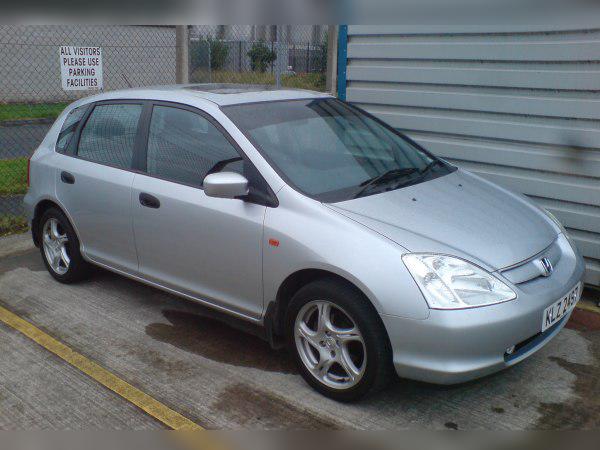
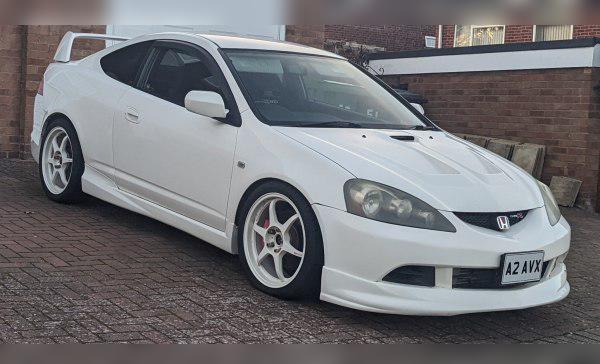
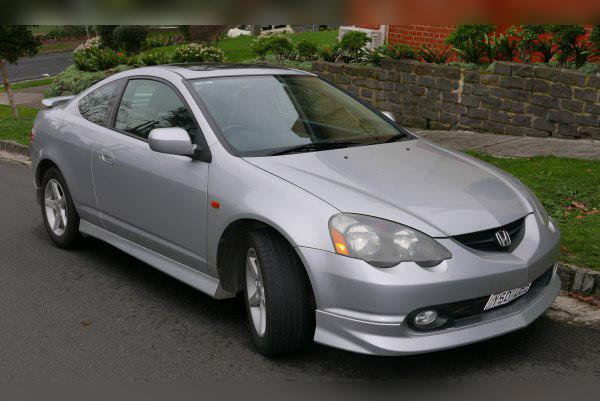
Honda K20A3 2.0 i-VTEC (160 hp): Experiences, problems, fuel consumption and buying tips
Key points in short (TL;DR)
- Not a "true" Type R engine: Although it carries the 2.0 i-VTEC badge, this is an “economy” version of the VTEC system focused on torque rather than high revs like the Type R models.
- Timing chain driven: The engine uses a timing chain which is generally reliable, but requires regular oil changes.
- Camshaft issue: The biggest weakness of this engine is wear of the exhaust cam lobes on the camshaft (the “soft camshaft” problem).
- Oil consumption: Like every Honda, it tends to “drink” a bit of oil if driven in the VTEC zone, but it’s not as alarming as with some modern engines.
- Good for daily driving: Thanks to the i-VTEC system it has enough power at lower revs, which makes it more pleasant in the city than the more aggressive versions.
- Maintenance: Parts prices are reasonable, the engine is simple to work on, but it does require quality spark plugs and oil.
Contents
- Technical Specifications
- Reliability and Maintenance
- Specific Components and Systems
- Fuel Consumption and Performance
- Additional Options and Modifications (LPG & Tuning)
- Gearbox: Manual and Automatic
- Buying Used and Conclusion
Introduction: A bridge between economy and performance
The K20A3 engine is Honda’s answer to the need for a 2.0-liter engine that offers solid performance while retaining civility and reasonable fuel consumption. It was primarily installed in the Honda Civic VII (Type S variants) and the Honda Integra DC5 (base models), i.e. the Acura RSX in North America. Unlike its “wild brother” K20A2 (found in the Type R), the K20A3 uses a different cylinder head and VTEC configuration, focusing on usability in the mid-range. This is an engine for drivers who want reliability and enough power for overtaking, but don’t plan to spend every weekend at the racetrack.
Technical Specifications
| Specification | Data |
|---|---|
| Displacement | 1998 cc (2.0 L) |
| Power | 118–119 kW (160 hp) @ 6500 rpm |
| Torque | 191 Nm @ 4000 rpm |
| Engine code | K20A3 |
| Configuration | Inline 4-cylinder, DOHC, i-VTEC |
| Injection type | Multipoint (MPI) – Indirect |
| Turbo / NA | Naturally aspirated |
Reliability and Maintenance
Timing system: Chain or belt?
The Honda K20A3 engine uses a timing chain. In general, this chain is designed to last the lifetime of the engine, but in practice that depends on regular oil changes. If the oil is changed on time, the chain can easily last over 200,000–250,000 km. However, at higher mileage you should pay attention to the chain tensioner. If you hear metallic rattling on cold start, that’s a sign that the chain has stretched or the tensioner is failing. Replacing the chain set is not cheap, but it’s done rarely.
Most common failures
Although Honda is synonymous with reliability, the K20A3 has a few specific weak points:
- Exhaust camshaft lobe wear (galling/pitting): This is the most serious problem specific to the K20A3 series (and some early K24s). Due to a poorer metal hardening process at the factory, the exhaust cam lobes can start to flake and wear. Symptoms: loss of power and a characteristic ticking/clicking noise from the cylinder head that increases with rpm. This requires camshaft replacement.
- VTEC solenoid (VTC valve): The screen on this valve can clog with deposits from old oil. The symptom is a “Check Engine” light and the engine going into safe mode (doesn’t allow high revs).
- Engine mounts: The front and rear mounts are prone to rubber cracking due to vibration and age, which you feel as a jolt when suddenly applying or lifting off the throttle.
- Crankshaft and camshaft position sensors: They can fail, causing hard starting or stalling while driving.
Service intervals and oil
A minor service is recommended every 10,000 km or once a year. Japanese engines don’t like extended 30,000 km intervals that some European manufacturers prescribe.
Oil quantity and type: The engine takes about 4.2 to 4.5 liters of oil (with filter). The recommended grade is 5W-30 or 5W-40 (fully synthetic). For colder markets or strict factory specs, 0W-20/5W-20 is also mentioned, but for higher-mileage engines in European climate conditions, 5W-30/40 is a better choice for protection.
Oil consumption: Yes, this engine does consume oil, especially if it’s often driven at high revs (VTEC zone). Consumption of 0.5 to 0.8 liters per 5,000 km is considered acceptable for an older VTEC engine. If it uses a liter per 1,000 km, you likely have an issue with piston rings or valve stem seals.
Spark plugs
It uses iridium spark plugs (NGK or Denso are a must). Replacement interval is usually around 100,000 km, although many enthusiasts do it at 60,000–80,000 km as a preventive measure.
Specific Components (Costs)
Fuel injection system
The engine uses a classic multipoint (MPI) fuel injection system. The injectors are extremely reliable and rarely cause issues. If a problem does occur, it’s usually due to dirt and can be solved with ultrasonic cleaning. There are no expensive high-pressure pumps like on direct injection engines.
Flywheel and clutch
Good news: Most models with the K20A3 engine and the 5-speed manual gearbox use a conventional solid flywheel. However, on certain facelifted versions or specific markets (e.g. Honda Accord with similar engines), a dual-mass flywheel may appear for comfort. Still, for the Civic Type S and Integra DC5 Base, the standard is usually a solid flywheel, which significantly reduces the cost of clutch replacement. A clutch kit (pressure plate, disc, release bearing) is moderately priced (not expensive).
Emissions equipment (EGR, DPF, turbo)
This is a naturally aspirated petrol engine. That means:
- No turbocharger: No worries about turbo overhauls, intercoolers or oil leaks from the turbo.
- No DPF filter: That’s a problem reserved for diesels.
- No AdBlue system: One less thing to worry about.
- EGR valve: It is present. EGR passages in the intake manifold can clog with soot after many kilometers, which can lead to rough running or loss of performance, but cleaning is relatively simple.
Fuel Consumption and Performance
Real-world fuel consumption
The K20A3 is quite efficient for an old-school 2.0 engine.
- City driving: Expect between 10 and 12 l/100 km. This heavily depends on how heavy your right foot is. In winter or heavy traffic it can go up to 13 l.
- Highway / open road: This is where it shines, with consumption dropping to 6.5 to 8 l/100 km.
Performance: Is it “lazy”?
The engine is not lazy, but it does require understanding how it works. The K20A3 uses “intelligent” VTEC (i-VTEC) which includes VTC (variable valve timing – cam phasing). Thanks to VTC and a variable-length intake manifold, this engine has excellent torque at low and mid revs (2000–4000 rpm) compared to older Honda engines. The bodies it’s installed in (Civic VII, Integra DC5) are not too heavy (around 1200–1300 kg), so 160 hp moves that mass without any problem.
Note: Don’t expect a “kick in the back” like with a turbo. Power is delivered linearly.
Highway driving
This is its weak spot due to the gearbox. With the 5-speed manual, at 130 km/h the engine spins at a fairly high 3500 to 4000 rpm (depending on gear ratios and tire size). That means more noise in the cabin and higher fuel consumption. It really lacks a 6th gear for quiet cruising.
Additional Options and Modifications
LPG conversion
Yes, the K20A3 works well on LPG, under one condition: valves. Honda cylinder heads have relatively “soft” valve seats. If you’re installing LPG, it is essential to:
- Use a quality sequential system with precise mapping (so the mixture is not lean).
- Install a valve lubrication system (“drip” or electronic additives) – highly recommended.
- Most important: Regularly check valve clearances every 20,000–30,000 km (mechanical adjustment, there are no hydraulic lifters).
Remapping (Stage 1)
On naturally aspirated engines, a simple remap rarely brings dramatic power gains. With a Stage 1 map you can get a realistic 5 to 8 hp and slightly better throttle response. However, on K20 engines, the real deal is Hondata (K-Pro) or similar systems. They allow lowering the VTEC engagement point and more aggressive VTC angle tuning, which significantly improves the “dip” in mid-range power. You won’t gain many peak horsepower, but the car will feel much livelier to drive.
Gearbox
Gearbox options
- Manual: 5-speed gearbox. This is the most common option in Europe.
- Automatic: 5-speed conventional automatic (Sequential SportShift on the Integra).
Most common issues
- Manual gearbox: Honda makes excellent gearboxes, but the synchros for 2nd and 3rd gear can wear out if the car has been driven aggressively (high-rpm shifting). The symptom is grinding when shifting quickly. The gear lever on the Civic VII is mounted on the dashboard (“joystick” style), which is ergonomically great, but the shift cables can stretch.
- Automatic gearbox: Very reliable if maintained properly. It’s not the fastest by today’s standards, but it’s smooth. Problems are rare and usually related to dirty solenoids.
Gearbox maintenance
The oil in the manual gearbox should be changed every 60,000–80,000 km. Always use genuine Honda MTF (Manual Transmission Fluid), as other oils can damage the synchros. For automatics, change intervals are similar or shorter, using only Honda ATF-Z1 or the newer DW-1.
Buying Used and Conclusion
Before buying a car with the K20A3 engine, do the following checks:
- Cold start: Listen for chain rattle. It must disappear immediately after starting.
- Engine head noise: When the engine warms up, open the hood and listen. Do you hear rhythmic metallic ticking on the left side (near the exhaust manifold)? That can be a sign of a worn camshaft.
- VTEC test: When the engine reaches operating temperature, on the road rev it past 4000–5000 rpm. It should pull linearly, without hesitation or warning lights.
- Oil: Check the oil level. If it’s at minimum or below, the owner probably doesn’t monitor oil consumption, which is risky on this engine.
Conclusion: The Honda K20A3 is an excellent daily-driver engine. It offers 80% of the Type R fun with 50% lower running costs and more comfort. It’s ideal for drivers who want reliability and a sporty feel, but are not ready to sacrifice comfort and economy. It’s not a race car, but it’s far from being slow.
Was this content useful to you?
Your opinion helps us to improve the quality of the content.