4EE-2 Engine
- Engine
- 1687 cm3
- Aspiration
- Turbocharger, Intercooler
- Fuel
- Diesel
- Fuel injection system
- Diesel Commonrail
- Power
- 100 hp @ 4400 rpm
- Torque
- 220 Nm @ 1800 rpm
- Cylinders
- 4
- Valves
- 16, 4 per cylinder
- Cylinders position
- Inline
- Valvetrain
- DOHC
- Oil capacity
- 5 l
- Coolant
- 5.33 l
# Vehicles powered by this engine
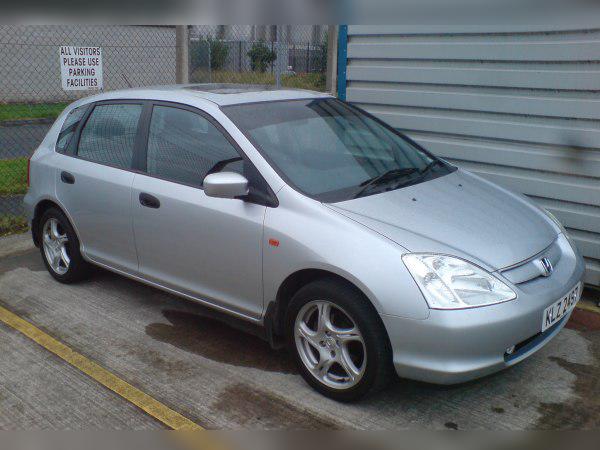
Isuzu heart in a Japanese body: All about the 1.7 CTDi (4EE-2) engine – Experiences, issues and maintenance
Key points in short (TL;DR)
- Engine origin: This is not a “true” Honda engine, but an Isuzu unit (code 4EE-2). That means it’s robust, but has a different character compared to Honda petrol engines.
- Fuel consumption: Extremely economical. On the open road it easily goes below 5 l/100 km.
- Turbo lag: The engine suffers from pronounced turbo lag. Below 2,000 rpm it is quite dead, after which it pulls strongly.
- Alternator: The most well‑known weak point of this engine. It often fails due to poor placement and overheating.
- Dual‑mass flywheel: It is present and represents a significant cost when replacing the clutch kit.
- Recommendation: An excellent choice for drivers who cover a lot of highway mileage and want old‑school diesel reliability, with somewhat more expensive peripheral maintenance.
Contents
Introduction: The first diesel in the Civic
When Honda decided to put a diesel engine into its seventh‑generation Civic (the popular “spaceship” line before the radical eighth gen), they didn’t have an in‑house diesel ready. The solution came through cooperation with Isuzu. The engine we’re talking about today carries Honda’s badge 1.7 CTDi, but in technical documentation it is known as 4EE-2.
This engine is specific because it represents Honda’s transitional phase towards the European diesel market. It was installed primarily in the Honda Civic VII Hatchback 5D. For Honda enthusiasts, this was a cultural shock – an engine that doesn’t like high revs, but offers a lot of torque. Although it wears the Honda badge, it shares many components with Opels of that era (Astra G/H, Corsa C) that used the same Isuzu block (1.7 DTI/CDTI), although the injection system and engine management in the Honda are different and more refined.
Technical specifications
| Parameter | Value |
|---|---|
| Engine displacement | 1687 cc (1.7 L) |
| Power | 74 kW (100 hp) at 4,400 rpm |
| Torque | 220 Nm at 1,800 rpm |
| Engine code | 4EE-2 (Honda designation: 1.7 CTDi) |
| Injection type | Common Rail (Bosch) |
| Charging | Variable geometry turbocharger + intercooler |
| Configuration | Inline 4‑cylinder, 16 valves (DOHC) |
Reliability and maintenance
Timing belt or chain?
The 4EE-2 engine uses a timing belt for valve timing. This is crucial information because a snapped belt leads to catastrophic piston‑to‑valve contact. The recommendation is to do the major service every 80,000 to 100,000 km or every 5 to 7 years, whichever comes first. When replacing it, you must also change the tensioners, idler pulleys and water pump.
Most common failures
Although the mechanical engine block (“bottom end”) is extremely durable and can exceed 400,000 km, it’s the peripherals that cause headaches:
- Alternator: This is the Achilles’ heel of the 1.7 CTDi. It is positioned low and close to the exhaust manifold, so it is exposed to heat, moisture and road grime. The diode plate and regulator often fail. Symptoms are the battery warning light coming on or strange noises (whining).
- Crankshaft sensor: When it fails, the engine stalls while driving or refuses to start until it cools down.
- Oil leak at the oil pump seal: A common issue on Isuzu diesels. When doing the major service, always check the condition of this seal.
- Turbo vacuum solenoids: If the car loses power or goes into safe mode, the problem is often in the solenoid valves that control the turbo’s variable geometry.
Oil: Quantity and grade
The engine takes approximately 4.5 to 5.0 liters of oil (depending on whether the filter is changed; always buy 5 L). The recommended grade is 5W-30 or 5W-40, strictly fully synthetic oil that meets standards for turbo diesels.
Oil consumption: If the engine is healthy, it should not consume a significant amount of oil. Consumption up to 0.5 liters per 10,000 km is considered acceptable. If it uses more, the problem is usually in the turbo letting oil through or in hardened valve stem seals (though that is rarer at lower mileage).
Injectors
The system uses Bosch Common Rail injection. These injectors have proven to be quite durable and less sensitive than some Delphi systems from that era. They can easily last 250,000+ km with good‑quality fuel. They can be refurbished and the price is mid‑range (depending on the market). Symptoms of bad injectors are rough idle, increased smoke under acceleration and hard starting.
Specific parts (Costs)
Dual‑mass flywheel
Yes, this engine has a dual‑mass flywheel (DMF). Its function is to reduce diesel engine vibrations and protect the gearbox. Unfortunately, it is a wear item. Its lifespan is usually between 150,000 and 200,000 km, depending on driving style. Replacement is expensive (often over 500–600 EUR for the kit with clutch, depending on the market and labor), which can be a serious hit to the budget considering the current value of the car.
Turbocharger
The engine uses a single turbocharger with variable geometry (VGT), usually a Garrett (GT1749V). Service life is long if the car is regularly serviced and driven properly (cooling down after fast driving). The main problem is not the turbo itself failing, but soot that jams the variable‑geometry vanes. The symptom is “surging” during acceleration or sudden loss of power (safe mode) at higher speeds. Cleaning is possible and cheaper than a full rebuild.
EGR and DPF
- EGR valve: It is present and often clogs up with a mixture of soot and oil vapors. This leads to black smoke and power loss. Preventive cleaning every few years is recommended.
- DPF filter: Most Civic VII models with this engine (model years 2002–2005) DO NOT have a DPF filter, which is a big plus when buying used, as it eliminates costly repairs. Still, check by VIN, because later models for certain markets could have catalysts that look like a DPF, but the typical problematic DPF is generally not present.
- AdBlue: This engine does not have an AdBlue system. That is technology from newer generations.
Fuel consumption and performance
Real‑world consumption
This is the strongest selling point of this engine.
- City driving: Expect between 6.5 and 7.5 l/100 km, depending on traffic and how heavy your right foot is. In winter it can go up to 8 l.
- Open road: This is where the engine shines. Gentle driving on country roads brings consumption down to 4.0–4.5 l/100 km.
- Motorway (130 km/h): Consumption is around 5.5–6.0 l/100 km.
Sluggishness and turbo lag
Is the engine sluggish? Up to 2,000 rpm – YES, very. This engine has old‑school turbo lag. Below 1,800 rpm practically nothing happens, the car feels sluggish and heavy. However, when the turbo spools up around 2,000 rpm, you get a strong shove in the back (220 Nm) and the car pulls very well up to about 3,500 rpm. The driver has to learn to use the gearbox to keep the engine in the torque band. For the Civic’s body, 100 hp is quite enough for dynamic driving once you master working the gearbox.
Motorway and cruising
At 130 km/h in fifth gear the engine spins at about 2,700 to 2,800 rpm. It’s not too noisy, but you do feel the lack of a sixth gear that would lower revs and noise. The engine has enough power for motorway overtakes without having to shift down, provided you are above 2,000 rpm.
Additional options and modifications
Chiptuning (Stage 1)
The 1.7 CTDi is very suitable for remapping. The stock 100 hp can be safely raised to around 125–130 hp, and torque to about 260–270 Nm.
Warning: Although the engine internals (pistons, crankshaft) can handle this without issues, the clutch and dual‑mass flywheel will wear out much faster. If you plan to chip it, be prepared for earlier clutch kit replacement. Also, pay attention to turbo cooling.
Gearbox
Types of gearboxes
With this engine in the Civic VII you only got a 5‑speed manual gearbox. An automatic gearbox was not available with the diesel in this generation.
Most common gearbox problems
Honda gearboxes are generally precise, but this model has a specific flaw:
- Input shaft bearings: If you hear whining or rustling while the car is idling in neutral with the clutch released, and the noise disappears when you press the clutch, those are the gearbox bearings. This is a common failure. Repair requires removing and opening the gearbox.
- Stiffness: Sometimes the gearbox can be stiff when engaging first or second gear while the oil is cold.
Gearbox service
The oil in the manual gearbox should be changed. The recommendation is every 60,000 to 80,000 km. Use only Honda MTF-3 (Manual Transmission Fluid) or a high‑quality replacement strictly to spec. Honda gearboxes are sensitive to incorrect oil.
Buying used and conclusion
Before buying a Honda Civic with the 1.7 CTDi engine, pay attention to the following:
- Engine noise: Listen for strong whining from the belt side (alternator).
- Clutch: Press the clutch pedal halfway. If you feel strong pulsations in the pedal or hear metallic knocking that disappears when you press it all the way, the dual‑mass flywheel is near the end of its life.
- Turbo test: While driving, in third gear, floor the throttle from 1,500 rpm. The car must not jerk, and once it passes 2,000 rpm it should pull linearly without a black cloud of smoke behind you.
- Gearbox: Listen for whining at idle (bearings).
Conclusion: The Honda Civic 1.7 CTDi is a “marriage of convenience” between Japanese practicality and European (Isuzu) diesel technology. It is not as refined as the later Honda 2.2 i‑CTDi (which is a true masterpiece), and it is a bit rougher and noisier. However, if you need a car with low fuel consumption, a spacious cabin and relatively cheap engine parts (because it shares its base with Opel), it is a good buy. Just set aside a budget for the alternator and possibly the flywheel.
Was this content useful to you?
Your opinion helps us to improve the quality of the content.