D16V1 Engine
- Engine
- 1590 cm3
- Aspiration
- Naturally aspirated engine
- Fuel
- Petrol (Gasoline)
- Fuel injection system
- Multi-port manifold injection
- Power
- 110 hp @ 5600 rpm
- Torque
- 152 Nm @ 4300 rpm
- Cylinders
- 4
- Valves
- 16, 4 per cylinder
- Cylinders position
- Inline
- Oil capacity
- 3.5 l
- Coolant
- 4 l
# Vehicles powered by this engine
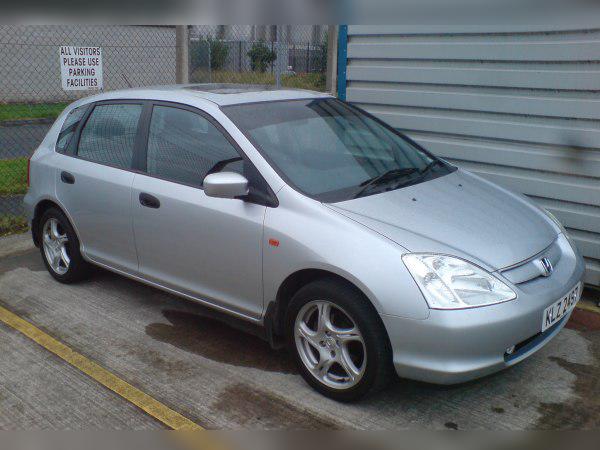
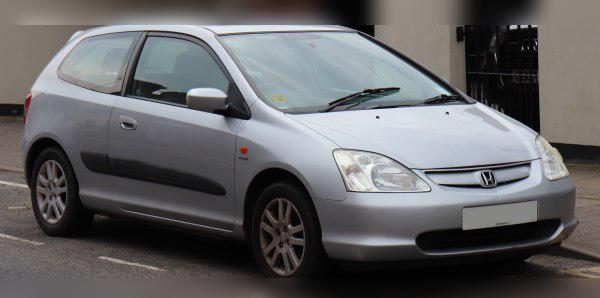
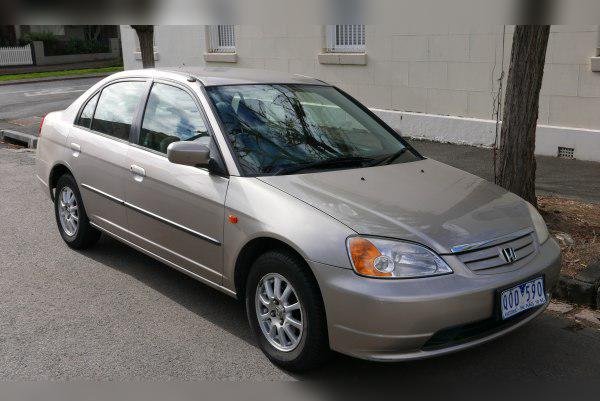
Honda D16V1 1.6 VTEC – Experiences, problems, fuel consumption and buying used
Key points (TL;DR)
- Reliability: Extremely reliable engine, one of the last “old school” Honda engines that can handle very high mileage.
- Major service: Uses a timing belt, not a chain, which requires regular replacement.
- Achilles’ heel: The biggest issue is not the engine itself, but the manual gearbox (input shaft bearing), which often fails on this model.
- LPG (Autogas): The engine works very well on LPG, but requires regular mechanical valve adjustment.
- Performance: VTEC technology here is used for fuel economy, not racing. Decent in the city, noisy on the highway.
- Maintenance: Parts are affordable, there are no complicated systems (no dual-mass flywheel, no turbo).
Contents
Introduction: About the D16V1 engine
The engine designated as D16V1 belongs to Honda’s legendary D-series, which powered the Japanese manufacturer’s models for decades. Specifically, this unit is the heart of the seventh-generation Honda Civic (2001–2005), both in hatchback (5D) and sedan versions.
Unlike the sporty Type R models that rev to the stratosphere, the D16V1 is designed for everyday use, fuel economy and longevity. This is the engine you’ll most often see in Civics on the European market. It represents a transitional period – it kept the simplicity of older engines while gaining more modern injection and ignition systems (COP – Coil on Plug).
Technical specifications
| Parameter | Value |
|---|---|
| Displacement | 1590 cc (1.6 litres) |
| Power | 81 kW (110 hp) at 5600 rpm |
| Torque | 152 Nm at 4300 rpm |
| Engine code | D16V1 |
| Injection type | MPI (Multi-Point Injection) |
| Aspiration | Naturally aspirated |
| Valvetrain | 16V (SOHC VTEC) |
Reliability and maintenance
Belt or chain?
Although many drivers associate Honda with timing chains, the D16V1 engine uses a timing belt. This is important to know because a snapped belt can lead to catastrophic engine damage (piston-to-valve contact).
Major service and intervals
It is recommended to do the major service (replacement of timing belt, tensioner and water pump) every 100,000 to 120,000 km, or every 5 to 7 years, whichever comes first. Along with this service, you should always check and adjust the valve clearance, because this engine does not have hydraulic lifters.
Most common failures
The engine itself is “bulletproof”, but peripheral components can cause issues:
- Camshaft position sensor (TDC sensor): A common problem that causes the engine to stall when warm or to have trouble starting.
- EGR valve: Can get clogged with soot, which leads to rough running or the “Check Engine” light coming on.
- Alternator: Alternator housings on these models were known to crack due to thermal stress, although most have already been replaced by now.
Oil: quantity, grade and consumption
The sump holds about 3.5 to 3.7 litres of oil (with filter). Honda recommends 5W-30 or 5W-40 (fully synthetic).
Does it burn oil? VTEC engines are known to “drink” a bit of oil if driven at high revs (in the VTEC zone). Consumption of up to 0.5 litres per 1,000 km is considered acceptable in the factory manuals, but in reality, a healthy D16V1 should not consume more than 1 litre between oil changes (over 10,000 km). If it burns significantly more, the problem is usually valve stem seals or (less often) oil control rings.
Spark plugs
Standard nickel spark plugs (NGK or Denso are a must for Honda) are replaced every 20,000 to 30,000 km. If you use iridium plugs, the interval extends to 80,000–100,000 km. Do not experiment with other spark plug brands.
Specific parts (costs)
Maintaining this engine falls into the category: Not expensive (depends on the market, but generally cheaper than modern diesels).
Dual-mass flywheel and clutch
Good news: This engine does NOT have a dual-mass flywheel. It uses a classic solid flywheel that practically never needs replacement. The clutch kit is standard and replacement costs are relatively low.
Injection and turbo
The engine is naturally aspirated, so it does not have a turbocharger, which means one (expensive) worry less. The injection system is a classic multipoint setup into the intake manifold. Petrol injectors are extremely durable and rarely fail, unless extremely poor-quality fuel is used.
EGR, DPF and AdBlue
As a petrol engine from the early 2000s, this unit does not have a DPF filter or an AdBlue system. It does have an EGR valve to reduce NOx emissions. The EGR can be cleaned if it gets clogged, which is an inexpensive procedure.
Fuel consumption and performance
City driving
Real-world city consumption is between 8.5 and 10.5 l/100 km. If you have a heavy right foot or drive an automatic, expect to be at the upper end of that range. Consumption increases in winter.
Is the engine “sluggish”?
With 110 hp in a body weighing around 1100–1200 kg, the Civic is no racer, but it’s not sluggish either. For a naturally aspirated engine, it’s quite “elastic”. Up to 3500 rpm it is tame and economical. Real power comes only above 4000 rpm when the VTEC system switches to a more aggressive cam profile. For an average driver, there is more than enough power for overtaking, provided you shift down one or two gears.
Highway driving
This is perhaps the biggest downside for those who travel a lot. The (manual) gearbox has short ratios. At 130 km/h in fifth gear, the engine spins at about 3800–4000 rpm. This means noticeable engine noise in the cabin, and highway fuel consumption does not drop dramatically (around 7–8 l/100 km). It really lacks a sixth gear for cruising.
Additional options and modifications
LPG installation (Autogas)
Yes, this engine is suitable for LPG, but with one big “BUT”. Honda engines have somewhat softer valve seats. If you run LPG, regular valve adjustment every 20,000 to 30,000 km is mandatory. If you neglect this, the valves will “sink” into the seats, you’ll lose compression and eventually have to do a cylinder head overhaul. With regular maintenance and a valve-lube system (recommended), these engines can cover hundreds of thousands of kilometres on LPG.
Remapping (Stage 1)
Since this is a naturally aspirated engine, remapping makes virtually no sense. The gain would be in the range of 3 to 5 hp, which you won’t feel in real driving. It’s better to invest that money in quality tyres and a properly maintained suspension.
Gearbox: manual and automatic
Manual gearbox (5-speed) – Main issue
Here we come to the most important point. The manual gearbox in the 7th generation Civic (with this engine) has a factory weakness: the input shaft bearing.
- Symptoms: You can hear a rustling or grinding noise when the gearbox is in neutral and the clutch pedal is released. When you press the clutch pedal, the noise disappears.
- Solution: The gearbox has to be removed and opened. The bearing itself is not very expensive, but labour costs are. If ignored, the bearing can disintegrate and damage the gearbox casing.
Automatic gearbox (4-speed)
A classic 4-speed automatic (torque converter) was fitted. It is robust and reliable. It doesn’t suffer from the “smart” mechatronic failures seen in modern gearboxes.
- Maintenance: Fluid changes are mandatory every 60,000 km. Use only Honda ATF-Z1 or the newer DW-1 fluid.
- Downsides: The automatic further hurts performance and increases fuel consumption by about 1–1.5 litres.
Buying used and conclusion
When buying a Honda with the D16V1 engine, follow this procedure:
- Listen to the gearbox: Start the car, put it in neutral, release the clutch. If you hear a rattling/grinding noise, the input shaft bearing needs replacement (factor that cost into the price).
- Test drive: Warm up the engine, then rev it past 4500 rpm. It should pull linearly, without hesitation (VTEC activation). Watch the rear-view mirror – blue smoke means it’s burning oil.
- Idle: The engine should idle smoothly. Fluctuating revs (“hunting idle”) often indicate a dirty IACV valve or a vacuum leak.
Conclusion: The D16V1 is an excellent choice for drivers looking for reliable, simple and inexpensive transportation. It’s not a sports car engine, but it has that typical Honda character. It’s ideal as a city car or for beginners. If you find a car with a sorted gearbox and solid bodywork (pay attention to the wheel arches), you’ll have a faithful companion for many years to come.
Was this content useful to you?
Your opinion helps us to improve the quality of the content.