D14Z6 Engine
- Engine
- 1396 cm3
- Aspiration
- Naturally aspirated engine
- Fuel
- Petrol (Gasoline)
- Fuel injection system
- Multi-port manifold injection
- Power
- 90 hp @ 6400 rpm
- Torque
- 120 Nm @ 4800 rpm
- Cylinders
- 4
- Valves
- 16, 4 per cylinder
- Cylinders position
- Inline
- Valvetrain
- OHC
- Oil capacity
- 3.2 l
- Coolant
- 4 l
# Vehicles powered by this engine
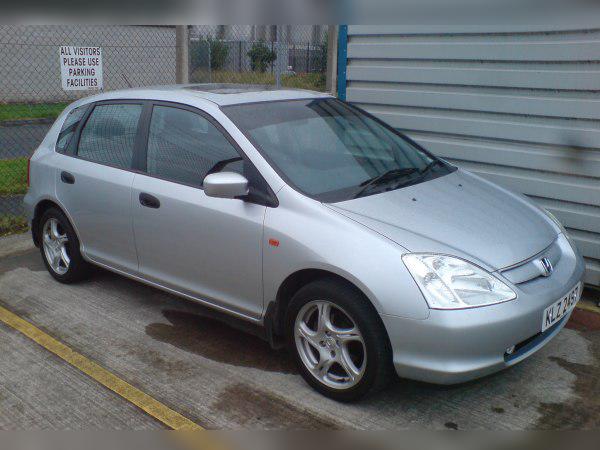
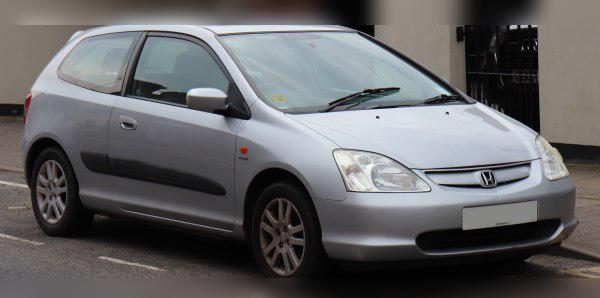
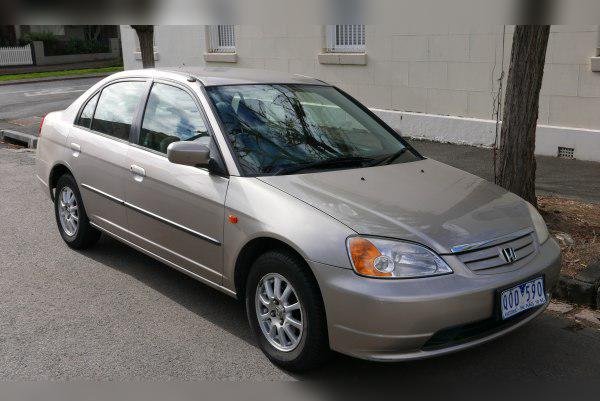
Honda 1.4 16V (D14Z6) – Experiences, problems, fuel consumption and buying tips
Key points in short (TL;DR)
- Durability: The engine itself is extremely reliable (“bulletproof”), one of the last from Honda’s famous D-series.
- Achilles’ heel: Input shaft bearing in the manual gearbox. This is the most common and most expensive issue that affects almost every unit sooner or later.
- Performance: With 90 hp, this is not a racer. The engine needs high revs for overtaking, and the 7th gen Civic body is not light.
- Maintenance: Affordable. No dual-mass flywheel, no turbo, no expensive injectors.
- LPG: Handles LPG well, but requires regular valve adjustment because it has no hydraulic lifters.
- Recommendation: Ideal for city driving and for drivers who want a car that rarely breaks down, provided the gearbox is in good condition.
Contents
- Technical specifications
- Reliability and maintenance
- Specific parts and costs
- Fuel consumption and performance
- LPG and tuning
- Gearbox: manual and automatic
- Buying used and conclusion
The seventh-generation Honda Civic (popularly called the “Spaceship” or “Egg” because of the body shape, although that nickname is more often associated with the eighth generation; the seventh is more of a transitional phase with an MPV-like look) brought a lot of cabin space, and the D14Z6 engine was the entry ticket into the world of Honda for European buyers. It is a classic Japanese naturally aspirated engine designed to last rather than impress with numbers on paper. It was installed in Hatchback (3 and 5 doors) and Sedan versions. Although it doesn’t feature VTEC technology in the sporty sense like the Type-R models, it offers efficiency and longevity.
Technical specifications
| Displacement | 1396 cc (1.4 L) |
| Power | 66 kW (90 hp) at 5600 rpm |
| Torque | 130 Nm at 4300 rpm |
| Engine code | D14Z6 |
| Injection type | Multipoint (indirect injection) |
| Configuration | I4, SOHC, 16 valves |
| Aspiration | Naturally aspirated (no turbo) |
Reliability and maintenance
Timing belt or chain?
The D14Z6 engine uses a timing belt. This is important to know because many people think all Hondas have a chain. On this engine, the belt should be replaced every 100,000 to 120,000 km or every 5 to 7 years (whichever comes first). A snapped belt can cause severe engine damage (piston-to-valve contact), so postponing the service is not recommended.
Most common engine issues
The engine itself is mechanically very robust. The most common problems are not related to the “heart” of the engine but to peripheral components:
- IACV (idle air control valve): It often gets dirty from oil vapors and soot, which leads to fluctuating idle speed or stalling at traffic lights. Cleaning usually solves the problem.
- Ignition coils: On models with individual coils, they can fail, causing the engine to run on 3 cylinders and triggering the check engine light.
- Head gasket: Although not extremely common, on cars that have overheated (due to a faulty thermostat or fan), the head gasket can fail.
- Camshaft position sensor: It can sometimes fail, preventing the engine from starting until it cools down.
Service intervals and oil
A minor service is done every 10,000 km or once a year. The engine takes a relatively small amount of oil, about 3.2 to 3.5 liters (including the filter). The recommended viscosity is 5W-30 or 5W-40 synthetic oil. For older engines with higher mileage, 10W-40 semi-synthetic is an acceptable option, especially in warmer climates.
Oil consumption
A healthy D14Z6 engine should not consume oil in any significant amount. Consumption of up to 0.5 liters per 10,000 km is acceptable. If it uses more (e.g. a liter every 2–3 thousand km), this usually points to valve stem seals (which harden with age) or, less often, to oil control rings (“stuck” rings due to poor maintenance). Blue smoke from the exhaust on cold start is a sign of worn valve stem seals.
Spark plugs
Spark plugs should be replaced every 20,000 to 30,000 km if you use standard copper/nickel plugs (NGK or Denso are OEM and highly recommended). If you opt for iridium plugs, the replacement interval extends to 60,000–80,000 km.
Specific parts (costs)
Dual-mass flywheel and clutch
Good news: This engine does NOT have a dual-mass flywheel. It uses a conventional solid flywheel that is not replaced. The clutch kit (pressure plate, disc, release bearing) is affordable and falls into the cheaper maintenance category (price: not expensive, depends on the market).
Injection system and injectors
The system is a classic multipoint setup. Petrol injectors are extremely reliable and rarely cause issues, unless very poor-quality fuel has been used for years. They are not as prone to clogging as on modern direct-injection engines.
Turbo, DPF, EGR, AdBlue
- Turbo: None. The engine is naturally aspirated, which means fewer parts that can fail.
- DPF / AdBlue: None. This is an old-school petrol engine.
- EGR valve: It does have an EGR valve to meet emissions standards. It can get clogged with soot, which shows up as “jerking” at light throttle or a check engine light. Cleaning is possible and usually solves the problem.
Fuel consumption and performance
Real-world fuel consumption
Although the engine has a small displacement, the 7th gen Civic body is not light, and the aerodynamics (tall roof) don’t help.
- City driving: Expect between 8.5 and 10 l/100 km. In heavy traffic and winter, it can reach 11 l/100 km.
- Country roads: This is where it’s most economical, using about 5.5 to 6.5 l/100 km.
- Motorway (130 km/h): Consumption rises to around 7.5 to 8.5 l/100 km due to high revs.
Is the engine “sluggish”?
Honestly – yes, especially by today’s standards. The modest torque of 120 Nm is available high up (at 4300 rpm). This means you have to use the gearbox more often in city driving. If you turn on the A/C and have four people in the car, uphill sections will require downshifting and full throttle. For relaxed driving it is perfectly adequate, but for overtaking it requires planning and revving it out to the redline.
Behaviour on the motorway
The gearbox has short ratios. At 130 km/h in fifth gear, the engine spins at about 3800–4000 rpm. This means the cabin is quite noisy at those speeds, and the engine lacks “breath” for sudden acceleration without dropping to fourth gear.
Additional options and modifications
LPG conversion
This engine is an excellent candidate for LPG, but with one BIG WARNING: Honda engines of this generation do not have hydraulic valve lifters. Valve clearances are adjusted mechanically (with a screwdriver and spanner).
When running on LPG, combustion temperatures are higher, and the valve “heads” can sink into the seats (valve seat recession). That’s why it is mandatory to check and adjust valve clearances every 20,000 to 30,000 km if you drive on LPG. If you neglect this, you’ll end up with loss of compression and an expensive cylinder head overhaul. Installing a valve lubrication system (“valve saver” drip) is recommended.
Chip tuning (Stage 1)
Forget about it. On a naturally aspirated 1.4-litre engine, a remap will give you maybe 3–5 hp, which is imperceptible in real driving. Your money is better spent on quality tyres or refreshing the suspension.
Gearbox
Manual gearbox (5-speed) – critical point!
The manual gearbox on the seventh-generation Civic (both 1.4 and 1.6 engines) has a well-known factory flaw. It concerns the input shaft bearing.
Symptoms: You can hear a rustling or grinding noise when the gearbox is in neutral and the clutch is NOT pressed. As soon as you press the clutch, the noise disappears. The sound can also be heard in first and second gear.
If this is ignored, the bearing can disintegrate and destroy the gearbox casing. The repair requires removing and opening the gearbox. The bearing itself is not expensive (depends on the market), but labour costs are high due to the amount of work.
The oil in the manual gearbox should be changed every 60,000 km. Always use genuine Honda MTF oil, as Honda gearboxes are sensitive to universal oils.
Automatic gearbox
It is a classic 4-speed torque-converter automatic. It is very reliable if the oil has been changed regularly. It is not quick, “steals” some power from the engine and increases fuel consumption by about 1–1.5 l/100 km, but it is very comfortable in the city. Failures are rare and usually the result of poor maintenance.
Buying used and conclusion
When buying a Civic with the D14Z6 engine, check the following:
- Listen to the gearbox: In neutral, release the clutch. If you hear a rattling noise that disappears when you press the clutch, the gearbox bearing needs replacing. Use this to negotiate a significantly lower price.
- Idle speed: Once the engine is warm, the revs should be stable (around 750–800 rpm). If they “hunt” up and down, the IACV is dirty or faulty.
- Air conditioning: When you turn on the A/C, the revs should rise slightly, not drop so much that the car shakes. A/C compressors on this model are known to cause issues.
- Steering rack: Check for play or knocking when turning the wheel while stationary. The electric power steering rack on this model can develop play (it can be refurbished).
Final conclusion
The Honda Civic 1.4 with the D14Z6 engine is an ideal workhorse. It’s not exciting to drive, the interior feels spartan, and sound insulation is poor. However, if you find a car with a healthy gearbox and solid bodywork, you’ll get one of the most reliable cars on the market with laughably low regular running costs. It is intended for drivers who value reliability and space more than prestige and speed.
Was this content useful to you?
Your opinion helps us to improve the quality of the content.