4EE-2 Engine
- Engine
- 1686 cm3
- Aspiration
- Turbocharger, Intercooler
- Fuel
- Diesel
- Fuel injection system
- Diesel Commonrail
- Power
- 99 hp @ 4400 rpm
- Torque
- 220 Nm @ 1800 rpm
- Cylinders
- 4
- Valves
- 16, 4 per cylinder
- Cylinders position
- Inline
- Valvetrain
- DOHC
- Oil capacity
- 5 l
- Coolant
- 5.33 l
# Vehicles powered by this engine
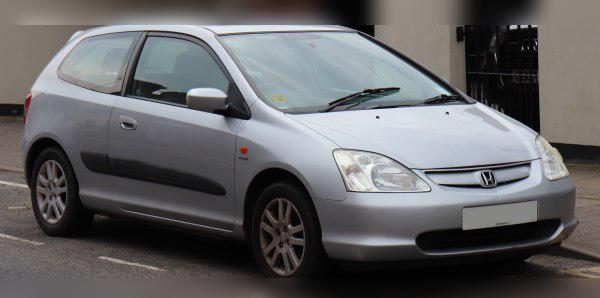
1.7 CTDI (4EE-2) – Isuzu heart in a Honda body: Experiences, issues and maintenance
In short (TL;DR)
- Origin: This is not an original Honda engine, but an Isuzu unit (code 4EE-2). It is known for a durable bottom end, but has some specific peripheral issues.
- Fuel consumption: Extremely economical, one of the main strengths of this engine.
- Performance: Pronounced turbo lag at low revs. The engine is sluggish up to 2000 rpm, then suddenly pulls strongly.
- Major issues: Alternator (often fails), crankshaft sensor and clogged EGR valve.
- Expensive parts: It has a dual-mass flywheel and a variable-geometry turbo, both potentially costly at higher mileage.
- Maintenance: Uses a timing belt, not a chain.
- Recommendation: An excellent choice for drivers who cover a lot of highway miles and want reliable mechanics with low fuel consumption, provided the previous owner changed the oil on time.
Contents
- Introduction and applications
- Technical specifications
- Reliability and maintenance
- Specific parts and costs
- Fuel consumption and performance
- Additional options and modifications
- Gearbox and drivetrain
- Buying used and conclusion
Introduction and applications
The 4EE-2 engine, better known in the Honda world as the 1.7 CTDI, represents an interesting period in Honda’s history. Before Honda developed its fantastic 2.2 i-CTDi engine, it needed a diesel unit for the European market, especially for the popular Civic VII hatchback. The solution was found in cooperation with Isuzu.
This engine is a classic early-2000s diesel: robust, noisy when cold and very frugal. While purists may complain that “it’s not a real Honda”, the fact is that this engine allowed thousands of drivers to run a Civic with minimal fuel costs. Its 99 hp may not sound like much on paper, but in reality it offers perfectly decent performance once the turbo “wakes up”.
Technical specifications
| Parameter | Data |
|---|---|
| Displacement | 1686 cc |
| Power | 73 kW (99 hp) @ 4400 rpm |
| Torque | 220 Nm @ 1800 rpm |
| Engine code | 4EE-2 (Honda designation: 1.7 CTDi) |
| Injection type | Common Rail (Bosch) |
| Charging | Variable-geometry turbocharger + intercooler |
| Number of cylinders / valves | 4 / 16 (DOHC) |
Reliability and maintenance
Although it wears a Honda badge on the cover, maintaining this engine essentially means maintaining Isuzu mechanics. In general, it is considered a reliable engine that can cover high mileage (over 300,000 km) without being opened, but it does require regular attention.
Timing belt or chain?
This engine uses a timing belt for valve timing. This is a key maintenance item. The recommendation is to do a major service (belt, tensioners, water pump) every 100,000 km or 5 years, whichever comes first. A snapped belt leads to catastrophic engine failure (piston-to-valve contact).
Most common failures
In practice, several characteristic issues stand out:
- Alternator: This is the Achilles’ heel of this model. The diode plate or voltage regulator often overheats because the alternator is poorly positioned and exposed to heat. Symptoms are the battery warning light coming on or loss of charging.
- Crankshaft sensor: A known weak point of Isuzu engines. When it fails, the engine may stall while driving or refuse to start when hot.
- Oil leak at crankshaft seal: Not uncommon at higher mileage.
- Overheating: If the cooling system is neglected, the head gasket can fail, although this is a consequence of poor maintenance rather than a systemic flaw.
Oil and service intervals
The engine takes approximately 4.5 to 5 liters of oil (always check the dipstick when filling). The recommended grade is 5W-30 or 5W-40 that meets turbo diesel specifications (ACEA B3/B4). Minor service (oil and filters) should be done every 10,000 to 12,000 km. Shortening the interval significantly extends turbocharger life.
Oil consumption: A healthy 4EE-2 engine should not consume a significant amount of oil. Consumption up to 0.5 liters per 10,000 km is considered acceptable for older engines. If it uses more (e.g. a liter every 2–3 thousand km), the problem is likely in the turbo or piston rings.
Injectors
The system uses Bosch Common Rail injection. The injectors are generally durable and can last over 200,000–250,000 km. However, they are sensitive to poor fuel quality. Symptoms of bad injectors include: rough idle, increased smoke when accelerating and difficult cold starts in winter.
Specific parts (costs)
Maintaining a Honda with this engine can be more expensive than an average European compact, primarily because of certain specific parts.
Dual-mass flywheel: Yes, this engine has a dual-mass flywheel. Its role is to dampen diesel engine vibrations. Its lifespan is usually between 150,000 and 200,000 km. Replacement is expensive (depends on the market, but it is a major cost), and symptoms include rattling when switching the engine off and vibrations in the clutch pedal.
Turbocharger: The engine has a single variable-geometry turbo. Lifespan depends on maintenance, but soot often tends to jam the vanes. The symptom is the engine going into “safe mode” (loss of power) at higher speeds or under hard acceleration. Cleaning the turbo is possible and cheaper than replacement.
DPF and EGR:
- DPF (Diesel particulate filter): Fortunately, most Civic VII models with this engine (produced up to 2005/2006) DO NOT have a DPF filter. This is a big advantage for used-car buyers, as it eliminates one of the most expensive failures on modern diesels. (Note: Always check by VIN for late 2006 models, although it is rare.)
- EGR valve: It is present and often clogs with soot, which chokes the engine. Cleaning is a regular part of maintenance at higher mileage.
- AdBlue: This engine does not have an AdBlue system.
Fuel consumption and performance
This is where the 1.7 CTDI really shines. While it’s no sports engine, its fuel economy is excellent.
- City driving: Real-world consumption is around 6.0 to 7.0 l/100 km, depending on traffic and driving style.
- Highway / open road: It can go down to an impressive 4.2 to 5.0 l/100 km.
- Combined: Expect an average of around 5.5 l/100 km.
Is the engine sluggish?
For the Civic body, 99 hp is sufficient, but there is a catch. The engine suffers from pronounced turbo lag. Below 1800–2000 rpm it feels dead, as if it has no power to pull. When the turbo kicks in (around 2000 rpm), there is a sudden surge of torque (the so‑called “kick”). This takes some getting used to and requires more frequent gear changes to keep the engine in the torque band.
Motorway:
On the motorway it behaves decently. At 130 km/h in fifth gear, the engine spins at about 2800–3000 rpm (depending on tyre size). That’s somewhat higher revs than on newer diesels with 6 gears, so it can be noisier in the cabin, but it still has enough power for overtaking without downshifting.
Additional options and modifications
Remap (Stage 1):
This engine responds very well to remapping. The Isuzu block is robust. A safe Stage 1 can raise power to about 125–130 hp and torque to nearly 280 Nm.
Benefits: The car becomes noticeably livelier, and turbo lag can be partially smoothed out. Fuel consumption in normal driving can even drop slightly.
Risks: Stress on the dual-mass flywheel and clutch increases. If these parts are already near the end of their life, remapping will finish them off quickly.
Gearbox
The Honda Civic VII with the 1.7 CTDI came exclusively with a 5-speed manual gearbox. An automatic transmission was not available with this diesel engine.
- Gearbox reliability: Honda gearboxes are traditionally precise and durable. However, the input shaft bearings can become noisy at high mileage. If you hear a whine that disappears when you press the clutch, it is a sign of gearbox bearing issues.
- Clutch and flywheel: As mentioned, the clutch kit comes with a dual-mass flywheel. The cost of replacing the complete kit (pressure plate, disc, release bearing, dual-mass flywheel) is high (very expensive, depending on the market and brand – LuK, Sachs, Valeo).
- Gearbox service: Honda recommends changing the gearbox oil (MTF – Manual Transmission Fluid) every 60,000 to 80,000 km. Always use genuine Honda MTF or a strictly equivalent alternative, as Honda gearboxes are sensitive to incorrect oil.
Buying used and conclusion
If you are considering buying a Honda Civic 1.7 CTDI, here is what you must check:
- Cold start: The engine should start immediately. If it cranks for a long time, suspect glow plugs, injectors or compression.
- Flywheel noise: Listen for metallic knocking at idle and whether the sound changes when you press the clutch. Also, when switching the engine off, there should be no strong thud/rattle.
- Turbo: Accelerate at full throttle in third gear. There should be no heavy black smoke (a slight puff is OK, a cloud is not) and no loud siren-like whine.
- Alternator: Check whether the lights flicker or the battery warning light is on.
- Maintenance: Ask for proof of timing belt replacement.
Conclusion:
The Honda Civic 1.7 CTDI is a “marriage of convenience” between a Japanese body and Isuzu mechanics. It is not the smoothest diesel in the world and it has that old-school turbo lag, but it is extremely economical and mechanically long-lived if the peripheral issues (alternator, flywheel) are sorted. It is ideal for students, young families or people who commute on open roads and want to forget when they last filled up, as long as they are willing to tolerate a somewhat rougher engine note.
Was this content useful to you?
Your opinion helps us to improve the quality of the content.