D16W4 Engine
- Engine
- 1590 cm3
- Aspiration
- Naturally aspirated engine
- Fuel
- Petrol (Gasoline)
- Fuel injection system
- Multi-port manifold injection
- Power
- 125 hp @ 6600 rpm
- Torque
- 144 Nm @ 4700 rpm
- Cylinders
- 4
- Valves
- 16, 4 per cylinder
- Cylinders position
- Inline
- Valvetrain
- DOHC
- Oil capacity
- 3.3 l
# Vehicles powered by this engine
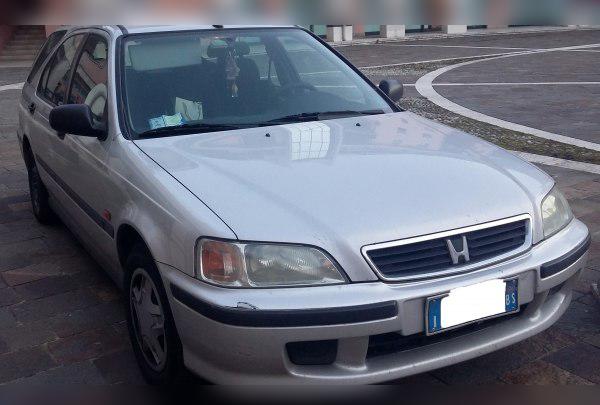
Honda D16W4 (1.6i VTEC) – Experiences, issues, fuel consumption and buying tips
The D16W4 engine belongs to Honda’s legendary D-series and represents the peak of the 1.6 SOHC VTEC evolution before the switch to newer generations. It is most commonly found in the “English” Hondas, specifically in the Civic VI Wagon (Aerodeck) and Fastback models. This is an engine that combines two worlds: fuel efficiency at low revs and the recognizable Honda character when the tachometer needle climbs high.
Although it is considered one of the most reliable petrol engines of its time, years of use take their toll. In this text we will analyze in detail what awaits you if you are planning to buy or maintain this engine.
Key points in short (TL;DR)
- VTEC technology: Offers an excellent balance between power and fuel consumption, but requires regular oil level checks.
- Reliability: Mechanically extremely durable (“bulletproof”), provided it has not been overheated.
- Maintenance: Requires manual valve adjustment (no hydraulic lifters).
- Belt: The engine uses a timing belt, not a chain.
- Performance: “Lazy” at low revs due to low torque, needs high revs for overtaking.
- LPG: Handles LPG very well, with mandatory more frequent valve adjustments.
- Main enemies: Body corrosion around the engine bay and oil consumption due to aged valve stem seals.
Contents
- Technical specifications
- Reliability and maintenance
- Specific parts and costs
- Fuel consumption and performance
- Additional options and modifications
- Gearbox
- Buying used and conclusion
Technical specifications
| Specification | Value |
|---|---|
| Engine displacement | 1590 cc (1.6 L) |
| Power | 92 kW (125 hp) at 6600 rpm |
| Torque | 144 Nm at 5200 rpm |
| Engine code | D16W4 (similar to D16Y8) |
| Configuration | Inline 4-cylinder, SOHC (single cam), 16 valves |
| Fuel injection system | PGM-FI (Multipoint injection) |
| Induction | Naturally aspirated |
Reliability and maintenance
The Honda D16W4 is an engineering gem from the 90s: simple yet efficient. However, maintenance must be meticulous.
Timing belt or chain?
This engine uses a timing belt. The replacement interval is usually 100,000 km or 5 years (whichever comes first). During the major service, the tensioner and water pump must also be replaced. A snapped belt on this engine can cause piston-to-valve contact (interference engine), which means catastrophic engine damage, so do not postpone this service.
Most common issues
Although the engine is robust, there are some typical “weak spots”:
- Distributor: A common problem on Hondas of this era. Symptoms include hard starting, jerking while driving, or the engine stalling. The distributor bearing or the internal electronics often fail.
- Main relay: A known issue with “cold solder joints”. The symptom is that the engine cranks but won’t start when the cabin is hot (in summer), yet starts normally once it cools down. The repair is cheap (re-soldering).
- Valve cover gasket and camshaft seal: Oil leaks are common as the engine ages.
- Thermostat: If it gets stuck open, the engine won’t reach operating temperature, which increases fuel consumption and wear.
Oil and service intervals
The sump holds approximately 3.3 to 3.6 liters of oil (with filter). The recommended grade is 5W-40 or 10W-40 semi-synthetic, depending on climate and engine condition. Minor services are done every 10,000 km or once a year.
Oil consumption: Does it burn oil? Yes, this is a VTEC engine. It is completely normal for the engine to consume up to 0.5 liters per 1,000 km if driven aggressively in the VTEC zone (over 5000 rpm). However, if it burns a liter per 1,000 km under normal driving, this points to stuck oil control rings or hardened valve stem seals, which is common on high-mileage examples.
Spark plugs and valves
Spark plugs (NGK or Denso are factory recommendations) are replaced every 20,000 to 40,000 km, depending on whether they are standard or iridium.
Very important: This engine does not have hydraulic lifters. Valve adjustment is mandatory every 40,000 km (or more often if you run LPG). If this is neglected, the valves can burn and the engine will lose compression.
Specific parts (costs)
The good news is that the D16W4 is relatively cheap to maintain compared to modern diesels or turbo petrol engines.
- Dual-mass flywheel: NONE. The engine uses a conventional solid flywheel, which drastically reduces clutch replacement costs.
- Fuel injection system: Uses Honda’s reliable PGM-FI system. The injectors are extremely durable and rarely cause issues. If they clog, ultrasonic cleaning usually solves the problem.
- Turbocharger: NONE. This is a naturally aspirated engine, which means one less worry (no turbo, intercooler rebuilds, etc.).
- DPF and EGR: No DPF filter. An EGR valve may be present depending on market and model year, but it is not prone to the problematic failures seen on diesels. A catalytic converter is standard.
- AdBlue: NONE. The system does not use any additional exhaust additives.
Fuel consumption and performance
City driving and real-world consumption
In city driving conditions, the D16W4 consumes between 8.5 and 10.5 liters per 100 km. This heavily depends on driving style. If you drive economically (below 3000 rpm), consumption is moderate. If you frequently chase the VTEC sound, consumption easily jumps above 11 liters.
Is the engine “lazy”?
With 144 Nm of torque available only at 5200 rpm, this engine is indeed lazy at low revs, especially in a body style like the Civic Wagon (Aerodeck), which is heavier than the hatchback. Up to 3500–4000 rpm the engine feels tame. To make it pull, you have to rev it. This is not a flaw; it is a characteristic of Honda’s 16V engines – power lives in the revs.
On the motorway
On the motorway at 130 km/h, the engine spins at a fairly high 3800–4000 rpm (in fifth gear). Because of this, it can be noisy in the cabin. In-gear acceleration in fifth is weak; for overtaking you need to drop to fourth, or even third gear.
Additional options and modifications
LPG conversion
This engine is an excellent candidate for LPG. The intake manifold is (usually) metal, and the multipoint injection works well with sequential LPG systems.
Warning: Due to the higher combustion temperatures of LPG, exhaust valve clearances close up faster. It is recommended to install a valve lubrication system (“Flashlube”) or check valve clearances every 20,000 km instead of every 40,000 km.
Remapping (Stage 1)
On naturally aspirated petrol engines of this displacement, “chipping” is a waste of money. A Stage 1 map may give at most 3–5 hp, which you will not feel in real driving. A better investment is proper maintenance, good tyres, or possibly intake and exhaust upgrades if you want a sportier sound, but do not expect miracles in performance without serious mechanical work.
Gearbox
The D16W4 is most commonly paired with a 5-speed manual gearbox (code S40 or similar from that generation). There were also versions with a 4-speed automatic, but they are rare in Europe.
- Manual gearbox: Extremely precise with a short throw (a “click-clack” feel). Failures: The most common issue is the input shaft bearings. The symptom is a rustling/grinding noise when the gearbox is in neutral and the clutch is released. When you press the clutch, the noise disappears. Replacing the bearings solves the problem.
- Automatic gearbox: An old-school hydraulic automatic. Reliable if the oil is changed regularly, but it kills the performance of this small engine and increases fuel consumption. If you want dynamic driving, it is recommended to avoid it.
- Clutch kit: Replacement cost is affordable (depends on the market, but it is on the cheaper side). There is no dual-mass flywheel; the pressure plate, disc, and release bearing are replaced.
- Gearbox oil: Honda is specific here. Only Honda MTF (Manual Transmission Fluid) is recommended. Replacement is advised every 60,000–80,000 km or when the bearings are changed.
Buying used and conclusion
Before buying a car with the D16W4 engine, pay attention to the following:
- Cold start: Watch the exhaust. Blue smoke at startup or when you suddenly blip the throttle means the engine is burning oil (rings or valve stem seals).
- Operating temperature: Check whether the engine overheats. Honda engines have aluminium heads that are sensitive to overheating (warped head).
- VTEC test: Once the engine is warm, in gear go past 5500 rpm at full throttle. You should feel (and hear) a slight change in sound and more aggressive pull. If there is no change, the solenoid may be dirty or the oil level low.
- Corrosion: Although not part of the engine, the biggest enemy of this Civic generation is rust (arches, sills, floor). The engine often outlives the body.
Conclusion:
The Honda D16W4 is an engine for those who want cheap and reliable transportation, yet like to occasionally “stretch” the revs. It is ideal for drivers who understand that power in naturally aspirated engines comes at high revs and who are willing to regularly check the oil level. It is not for those who want lots of low-end torque for towing trailers or effortless overtaking without downshifting. If you find an example that is not rotten and has not been run low on oil – buy it, it will serve you for years with minimal investment.
Was this content useful to you?
Your opinion helps us to improve the quality of the content.