D15Z6, D15Z8 Engine
- Engine
- 1493 cm3
- Aspiration
- Naturally aspirated engine
- Fuel
- Petrol (Gasoline)
- Fuel injection system
- Multi-port manifold injection
- Power
- 114 hp @ 6500 rpm
- Torque
- 134 Nm @ 5500 rpm
- Cylinders
- 4
- Valves
- 16, 4 per cylinder
- Cylinders position
- Inline
- Valvetrain
- SOHC
- Oil capacity
- 3.3 l
# Vehicles powered by this engine
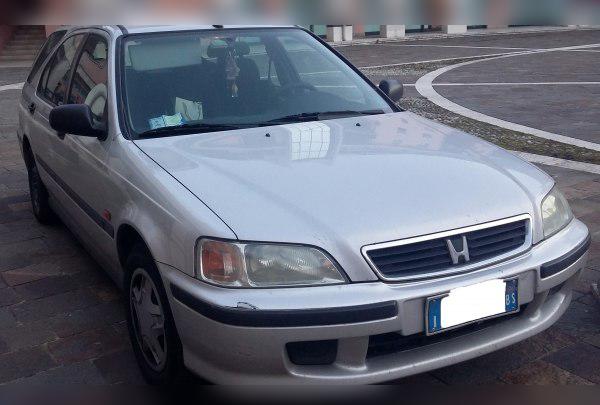
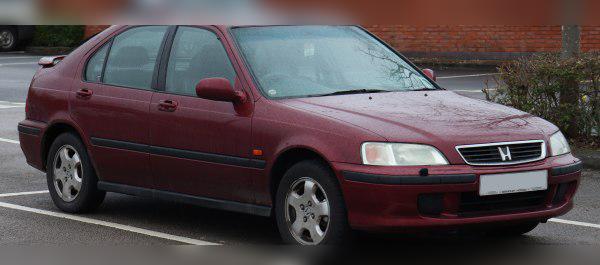
Honda 1.5 VTEC-E (D15Z6, D15Z8): Experiences, problems, fuel consumption and buying tips
Key points in short (TL;DR)
- VTEC-E technology: This engine is designed primarily for fuel economy, not racing. It has a lean-burn operating mode.
- Reliability: Extremely durable unit if the oil level is maintained. Easily goes over 300–400 thousand kilometers.
- Oil consumption: Older examples often consume oil due to valve stem seals or stuck piston rings. Regular dipstick checks are mandatory.
- Timing belt: The engine uses a belt, and if it snaps it can cause catastrophic damage, so the replacement interval must be respected.
- Gearbox: It has very long gear ratios for fuel saving, which makes it a bit “lazy” for city overtakes in higher gears.
- LPG (Autogas): It is suitable, but requires more frequent valve adjustments because Honda uses mechanical lifters and somewhat “softer” valve seats.
Contents
- Introduction and characteristics
- Technical specifications
- Reliability and maintenance
- Specific parts and fuel injection system
- Fuel consumption and performance
- Additional options (LPG and tuning)
- Gearbox and drivetrain
- Buying used and conclusion
Introduction and characteristics
The Honda D-series engines are legendary, and the D15Z6 and D15Z8 versions represent the peak of the evolution of 1.5-liter SOHC (single overhead cam) units in terms of efficiency. These engines were installed in the sixth-generation Civic, specifically in the “English” models (Fastback/Liftback) and Aerodeck (Wagon/Estate) versions that were popular in Europe.
The VTEC-E (Economy) designation is the key. Unlike the sporty VTEC engines that scream at high revs for power, this system at low revs practically operates as a 12-valve engine (it closes one intake valve per cylinder) in order to create swirl in the mixture and allow lean-burn operation. Only at higher revs (usually around 3000–3500 rpm, depending on load) do all valves activate and the engine delivers the full 114 hp. This is an engine for people who want petrol simplicity with diesel-like fuel consumption.
Technical specifications
| Specification | Data |
|---|---|
| Engine code | D15Z6, D15Z8 |
| Displacement | 1493 cc (1.5 L) |
| Power | 84 kW (114 hp) at 6500 rpm |
| Torque | 134 Nm at 5400–5500 rpm |
| Injection type | PGM-FI (Multi-point injection) |
| Valve configuration | SOHC VTEC-E, 16 valves |
| Induction | Naturally aspirated |
Reliability and maintenance
Does this engine have a timing belt or chain?
This engine uses a timing belt. The Honda D-series is known for not being freewheeling (it is an interference engine), which means that if the belt snaps, the pistons will hit the valves and cause catastrophic damage. That’s why it is crucial not to postpone replacement.
At what mileage should the major service be done?
It is recommended to do the major service (replacement of belt, tensioner and water pump) every 100,000 km or 5 years, whichever comes first. Along with the timing belt, be sure to check the camshaft and crankshaft oil seals, as at this age they are prone to leaking.
What are the most common failures on this engine?
Although the engine is extremely reliable, age takes its toll:
- Distributor: This is a weak point of older Hondas. Symptoms include stalling while driving, hard starting or jerking. The ignition module or coil inside the distributor often fails.
- Main fuel pump relay (Main Relay): A well-known issue where cold solder joints crack. Symptom: the car cranks but won’t start when the cabin is hot (e.g. in summer).
- EGR valve and passages: Since this is a VTEC-E engine, it uses an EGR system. The passages in the intake manifold get clogged with soot, which leads to rough running or the “Check Engine” light coming on.
- Cracked exhaust manifold: The exhaust manifold can crack, which sounds like a “hissing” or ticking noise while the engine is cold.
Oil consumption and recommended grade
This engine takes about 3.3 to 3.6 liters of oil (with filter). The recommended grade is a quality 5W-40 or 10W-40 semi-synthetic.
Does it burn oil? Yes, high-mileage D15 engines are prone to oil consumption. Consumption up to 0.5 liters per 1,000 km is often tolerated on old engines, but anything above that points to a problem. The main culprits are valve stem seals (they harden with age) or oil control rings that get stuck due to poor maintenance. If the engine smokes blue on cold start or when engine braking, it’s time for a refresh.
Spark plugs and replacement interval
Spark plugs are replaced every 20,000 to 40,000 km if you use standard copper plugs (NGK ZFR5F-11 or ZFR6F-11). Iridium plugs last longer, but this engine runs perfectly on standard, inexpensive plugs.
Specific parts (Costs)
Dual-mass flywheel and clutch
Good news: This engine DOES NOT have a dual-mass flywheel. It uses a classic solid flywheel that practically never needs replacing. The clutch kit (pressure plate, disc, release bearing) is relatively cheap and simple to replace (exact price depends on the market).
Fuel injection system and injectors
The engine uses the PGM-FI system with four petrol injectors. The injectors are extremely robust and rarely cause problems. If an issue does appear, ultrasonic cleaning is usually enough. There are no expensive high-pressure pumps like on modern diesels or direct-injection petrol engines.
Turbo, DPF, AdBlue?
This is a classic naturally aspirated petrol engine (old school).
- Turbo: None. Engine life is longer because there is no thermal stress from a turbocharger.
- DPF filter: None.
- AdBlue: None.
- EGR valve: It has one. As mentioned, VTEC-E engines use it. Maintenance involves cleaning the valve and the intake manifold passages (“EGR ports”) every few years if the car is driven mostly in the city.
Fuel consumption and performance
Real-world consumption in city and highway driving
This is the strongest selling point of the D15Z6/Z8 engines.
- City driving: Expect between 7 and 9 liters/100 km, depending on traffic and how heavy your right foot is. In winter it can go up to 10 L.
- Highway / open road: This is where the engine shines. It is possible to achieve 5.5 to 6.5 liters/100 km with normal driving. If you drive carefully and follow the “Econo” light (the green light on the dash that indicates economy mode), this petrol engine can consume fuel like a diesel.
Is the engine “lazy”?
For the weight of the Civic body (around 1100–1200 kg for the wagon/fastback), 114 hp is quite enough for smooth driving. However, due to the long gear ratios in the gearbox (designed to reduce fuel consumption) and the low torque at low revs (134 Nm), the engine can feel lazy below 3000 rpm. For overtaking you need to shift down one or even two gears and let the engine rev past 4000 rpm, where it becomes lively.
Behavior on the motorway
The engine is an excellent cruiser. Thanks to the long 5th gear, at 130 km/h the engine runs at relatively low revs (usually around 3000–3500 rpm, depending on the exact gearbox code). This means less noise and lower fuel consumption compared to other 1.4 or 1.6 petrol engines from that period, which at that speed would be “screaming” at 4000+ rpm.
Additional options and modifications
LPG (Autogas) conversion
Yes, this engine is suitable for LPG, but with a big warning. Honda engines have somewhat “softer” valve seats. When running on gas, valve clearances close up faster than on petrol. This engine does not have hydraulic lifters; the valves are adjusted mechanically (screw and locknut). If you run it on LPG, valve clearance checks are mandatory every 15,000–20,000 km. If you neglect this, the exhaust valves will burn, which is an expensive repair. It is also recommended to install a valve lubrication system (“Flashlube”) as a preventive measure.
Chiptuning (Stage 1)
Not worth it. Since this is a small-displacement naturally aspirated engine optimized for economy, “chipping” will give you maybe 3–5 hp, which is imperceptible in real driving. It is better to invest that money in quality tyres and regular maintenance.
Gearbox
Types of gearboxes
- Manual gearbox (5-speed): The most common option. The gearbox code is usually S40 (or variations). Very precise and pleasant to use.
- Automatic gearbox (4-speed): A classic automatic with a torque converter. It is not a CVT (CVT was fitted to some other EK3 Civic variants, but the Fastback/Wagon usually has the classic automatic). It is reliable, but further hurts performance and increases fuel consumption.
Gearbox failures
Manual gearboxes are generally indestructible, but they have one flaw: input shaft bearings. The symptom is a grinding or rustling noise when the gearbox is in neutral, which disappears when you press the clutch. Replacement requires removing and opening the gearbox.
The oil in the manual gearbox should be changed every 60,000–80,000 km. For Hondas you should use only MTF (Manual Transmission Fluid), original Honda or a quality alternative specific for Hondas (often 75W-80 GL-4, but check the specification, as older Hondas sometimes use 10W-40 engine oil in the gearbox as a temporary solution, although MTF is always better).
Buying used and conclusion
Before buying a Honda Civic with this engine, pay attention to the following:
- Exhaust smoke: Have someone rev the engine while you watch the exhaust. Blue smoke means the engine is burning oil (rings/seals). Black smoke means a mixture problem (lambda sensor/injectors).
- “Econo” light: Check whether the green light on the instrument cluster comes on during gentle driving at a steady speed. This is a sign that the VTEC-E system and lambda sensor are working properly.
- Valve noise: Light ticking is normal for a cold Honda, but loud metallic noise indicates poorly adjusted valves.
- Rust: This has nothing to do with the engine, but it is the biggest enemy of these models. Wheel arches, sills and floor are critical areas.
Conclusion:
The D15Z6/Z8 engine is an engineering gem from the 1990s. It offers a rare combination of simplicity, low running costs and fuel consumption that rivals diesels, without expensive failure points (turbo, dual-mass flywheel, injectors). It is ideal for students, novice drivers, but also for families who want reliable transport from point A to point B with minimal expenses. If you find an example that isn’t “rotten” with rust and doesn’t burn excessive oil – go for it.
Was this content useful to you?
Your opinion helps us to improve the quality of the content.