D14A4 Engine
- Engine
- 1396 cm3
- Aspiration
- Naturally aspirated engine
- Fuel
- Petrol (Gasoline)
- Fuel injection system
- Multi-port manifold injection
- Power
- 90 hp @ 6400 rpm
- Torque
- 120 Nm @ 4800 rpm
- Cylinders
- 4
- Valves
- 16, 4 per cylinder
- Cylinders position
- Inline
- Valvetrain
- OHC
- Oil capacity
- 3.3 l
# Vehicles powered by this engine
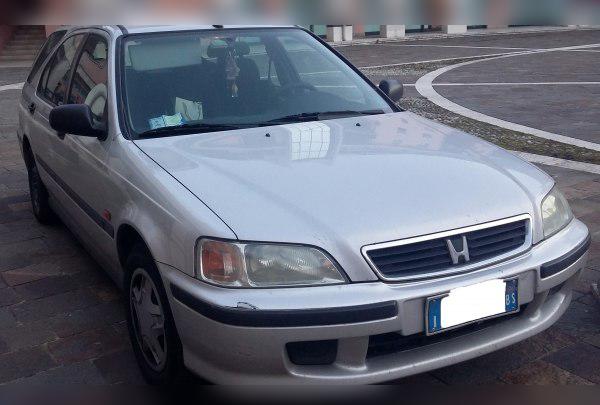
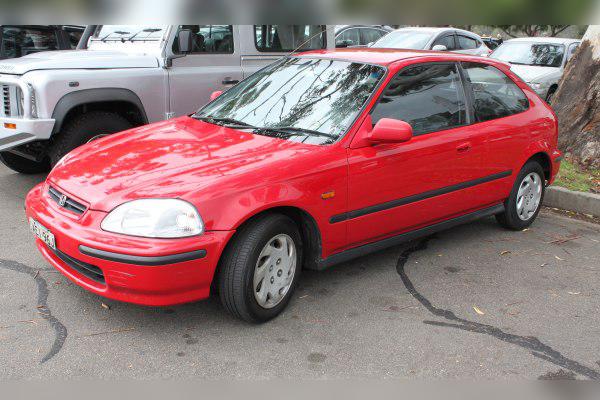

Honda D14A4 (1.4i S) 90 HP – Experiences, issues, fuel consumption and buying tips
Key points in short (TL;DR)
- Legendary reliability: This is one of those engines that, with regular maintenance, easily goes over 300,000+ km without being opened.
- Lack of torque: With only 120 Nm, the engine needs high revs to really pull, which is a classic Honda trait.
- Cheap maintenance: No expensive components like a dual-mass flywheel, turbo or DPF.
- Ideal for LPG: Handles gas very well, but requires regular valve adjustment.
- Noisy on the highway: Due to the short gearbox, at 130 km/h the engine runs at high revs.
- Body corrosion: The engine will probably outlive the bodywork of the car it’s installed in.
Contents
Introduction: The heart of the “sixth generation”
The engine designated as D14A4 belongs to Honda’s famous D-series. This is the engine that defined the reliability of Japanese cars in Europe in the late 90s. It was primarily installed in the sixth-generation Honda Civic (the popular Japanese-built hatchback, but also the UK-built fastback/wagon versions).
Unlike the sporty VTEC models that earned their fame on the track, the D14A4 was a workhorse – a simple 16-valve single overhead cam (SOHC) engine, designed to be economical, durable, and lively enough for the light bodies of that era. Although 90 HP doesn’t sound like much on paper, in practice this engine offers a very direct throttle response.
Technical specifications
| Parameter | Value |
|---|---|
| Displacement | 1396 cc (1.4 L) |
| Power | 66 kW (90 HP) @ 6300 rpm |
| Torque | 120 Nm @ 4500 rpm |
| Engine code | D14A4 |
| Injection type | PGM-FI (Multipoint injection) |
| Configuration | Inline 4-cylinder, SOHC, 16 valves |
| Aspiration | Naturally aspirated |
Reliability and maintenance
Timing system: Belt or chain?
The Honda D14A4 uses a timing belt to drive the camshaft. This is a classic design. The major service (replacement of belt, tensioner and water pump) is recommended every 100,000 km or 5 years, whichever comes first. Although Honda belts are durable, a snapped belt can cause piston-to-valve contact (interference engine), which means an expensive failure. It’s strongly recommended not to take risks and to respect the interval.
Most common issues
This engine is mechanically almost indestructible, but time takes its toll. Here’s what most often fails:
- Distributor: The most common weak point. Symptoms are hard starting, jerking while driving or the engine stalling. Often the bearing in the distributor or the ignition module fails.
- Main fuel pump relay: A well-known issue on older Hondas. Symptom: the engine cranks but won’t start when the cabin is hot (in summer), and once it cools down it starts normally. The cause is cracked/cold solder joints in the relay.
- Valve cover and oil pan gaskets: Oil leaks are standard on cars of this age, but they are cheap to fix.
- Thermostat: If it gets stuck open, the engine struggles to reach operating temperature, which increases fuel consumption and wear.
Oil and spark plugs
The sump holds about 3.3 to 3.5 liters of oil (including the filter). The factory recommendation is usually 10W-40 semi-synthetic, which is perfectly adequate for our climate and the age of the engine. On engines in perfect condition you can also use 5W-40 or 5W-30 for better lubrication on cold starts.
Oil consumption: Does it burn oil? Yes, Honda engines that are driven at high revs (VTEC or not) tend to “drink” a bit of oil. Consumption of up to 0.3 – 0.5 liters per 1000 km is tolerated on older examples, especially if driven aggressively. If it burns a liter per 1000 km, it’s probably valve stem seals or piston rings (which requires an engine refresh).
Spark plugs: They should be replaced every 20,000 to 30,000 km if you use standard copper plugs (NGK or Denso are a must for Honda; avoid other brands). They are very cheap and ensure smooth running.
Specific parts (Costs)
This is where the D14A4 really shines. Maintenance is very affordable (depending on the market), and parts are widely available.
Fuel injection system and flywheel
This engine uses Honda’s PGM-FI multipoint injection system. The injectors are extremely durable and rarely cause problems. Clogging is possible only with very poor fuel, but ultrasonic cleaning solves the issue.
The engine has a solid (single-mass) flywheel. So there is no expensive dual-mass flywheel. The clutch kit is relatively cheap and straightforward to replace.
Turbo, DPF, EGR, AdBlue?
Short and clear:
Turbo: None. This is a naturally aspirated petrol engine.
DPF filter: None.
EGR valve: The D14A4 usually doesn’t have an EGR valve (depending on market and exact year, but most don’t), or if it does, it’s a simple mechanical system that is easy to clean.
AdBlue: None.
The absence of these complicated systems makes this engine ideal for those who want to avoid expensive repairs of modern emission-control systems.
Fuel consumption and performance
Real-world fuel consumption
Fuel consumption is one of this engine’s strong points, provided it’s in good condition (the lambda sensor and thermostat must be working properly).
- City driving: Expect between 8 and 9 l/100 km. If you have a heavy right foot (hard acceleration from light to light), it can go up to 10 liters.
- Country roads: This is where the engine is most economical; you can get it down to about 5.5 – 6.5 l/100 km.
- Highway (130 km/h): Due to the lack of a sixth gear and short gearing, consumption rises to around 7.5 – 8.5 l/100 km.
Is the engine “lazy”?
The Civic VI is a light car (around 1050–1150 kg, depending on body style). For that weight, 90 HP is perfectly adequate for city driving. The car feels eager. However, problems arise when the car is fully loaded with passengers and luggage, or on steep hills. The torque of only 120 Nm is low and comes in at 4500 rpm. This means you’ll often have to shift down and keep the engine at higher revs to maintain pace uphill. That’s not a fault; it’s a characteristic of small-displacement naturally aspirated petrol engines.
At 130 km/h in fifth gear, the engine spins at about 3500 to 4000 rpm (depending on gearbox and tyre size). This means noticeable engine noise in the cabin, which can be tiring on long journeys.
Additional options and modifications
LPG conversion
YES. The D14A4 handles LPG systems very well. The intake manifold is metal (on most variants) or high-quality plastic, and sequential gas injection works perfectly.
IMPORTANT WARNING: This engine does not have hydraulic lifters. Valve clearances are adjusted manually. When running on petrol, they should be checked every 40,000 km. If you run on LPG, you must check and adjust valve clearances every 20,000 km! If you ignore this, the valves will recess (“burn”) into the seats, leading to an expensive cylinder head repair.
Chiptuning (Stage 1)
On naturally aspirated petrol engines of this displacement, “chipping” is a waste of money. You won’t get any noticeable power increase (maybe 2–3 HP, which you won’t feel).
Note: There is a weaker version of this engine (D14A3 with 75 HP) which has a “restriction” in the intake manifold gasket. On that engine, simply replacing the gasket gives you 90 HP (turning it into a D14A4). But since you already have a 90 HP D14A4, that engine is “unlocked” from the factory and there’s no cheap way to gain extra power.
Gearbox
Manual gearbox (S40)
This engine is most commonly paired with a 5-speed manual gearbox (code S40). It’s one of the best gearboxes of its time – precise, with short throws, and a pleasure to use.
Common issues: The most frequent problem is the input shaft bearing. Symptom: a whining/grinding noise when the gearbox is in neutral and the clutch is released. When you press the clutch, the noise disappears. This isn’t an immediate emergency, but over time it gets louder and requires the gearbox to be opened.
Gearbox oil should be changed every 60,000 to 80,000 km. Use only Honda MTF (Manual Transmission Fluid). Other oils can make shifting harder in winter.
Automatic gearbox
It’s rarer, but you can find a classic 4-speed automatic with a torque converter. It is reliable if the oil is changed regularly (every 60,000 km), but it further hurts the performance of this small engine and increases fuel consumption by about 1–1.5 liters. The manual gearbox is recommended unless an automatic is absolutely necessary for you.
Buying used and conclusion
When buying a Honda with the D14A4 engine, pay attention to the following:
- Cold start: The engine should fire up instantly and settle into a stable idle.
- Exhaust smoke: Bluish smoke when revving or downshifting indicates oil consumption (rings/seals). Black smoke indicates poor combustion.
- Valve noise: Light ticking is normal while the engine is cold, but if it’s loud even when hot, the valves probably haven’t been adjusted for years.
- Body inspection (MOST IMPORTANT): Rear arches and sills are the Achilles’ heel of this Civic generation. A good engine is pointless if there’s no solid metal left to bolt the wheels to.
Conclusion
The Honda D14A4 is an engine for people who value simplicity and reliability above all else. It’s not a racer, it’s noisy on the highway and it needs revs to go, but it will always get you home. Maintenance is laughably cheap compared to modern diesels. If you find a car with solid bodywork, this engine is a “bullseye” for a beginner driver, a student, or as a second city car for the family.
Was this content useful to you?
Your opinion helps us to improve the quality of the content.